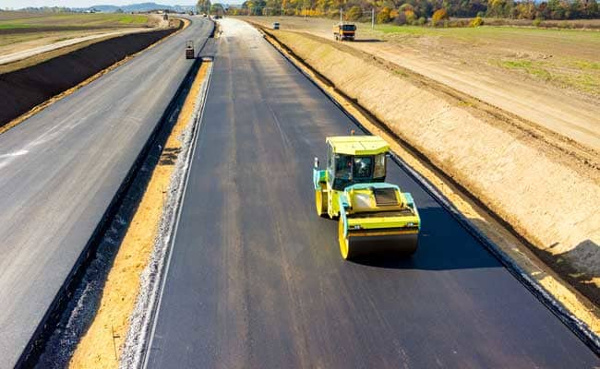
India has successfully demonstrated the use of 60% Reclaimed Asphalt Pavement (RAP) in a major highway construction layer on National Highway-716, marking an important step toward more circular and resource-efficient road building.
The field-scale trial was carried out on NH-716, Chennai–Tirupati Package-I, by the CSIR-Central Road Research Institute (CSIR-CRRI), Oriental Structural Engineers Private Limited (OSEPL) and Ooms Polymer Modified Bitumen Pvt. Ltd. The Ministry of Science and Technology announced the achievement on September 2, 2026.
An important technical distinction is that the project did not construct the entire highway using 60% recycled asphalt. The 60% RAP content was used specifically in the Dense Bituminous Macadam, or DBM, layer, which forms a major structural layer beneath the road surface.
Existing Roads Become a Resource for New Highways
Reclaimed Asphalt Pavement is produced when material is removed from an existing road during rehabilitation or resurfacing. Instead of treating that material as waste, it can be processed and reused in new asphalt mixes.
The reclaimed material already contains two valuable components: aggregate and bitumen. Reusing them can reduce the amount of fresh stone and petroleum-derived binder required for new road construction.
CSIR-CRRI Director Dr Chalumuri Ravi Sekhar said the demonstration shows that RAP should be viewed as an engineering resource rather than waste. The institute sees India’s existing road network as a potential “resource bank” from which valuable materials can be recovered, scientifically treated and reused in future highway projects.
Indigenous REJUBIT Technology Makes High RAP Content Possible
A key component of the NH-716 demonstration was REJUBIT, an indigenous rejuvenating technology jointly developed by CSIR-CRRI and Ooms India.
Bitumen recovered from old pavement becomes harder and more brittle as it ages. Simply adding large quantities of reclaimed asphalt to a new mix can therefore affect flexibility and long-term performance.
REJUBIT is designed to restore important properties of the aged bitumen so that a much larger proportion of reclaimed material can be incorporated into new asphalt while maintaining the required engineering characteristics.
The NH-716 trial marks the progression of this Indian research-led technology from laboratory development toward actual field application under highway construction conditions.
From Laboratory Mix to Live Highway Construction
The significance of the trial lies not only in achieving the 60% RAP level but in demonstrating the complete recycling process under real construction conditions.
The project included recovery and characterisation of reclaimed pavement material, assessment of the aged binder, scientific asphalt-mix design, application of rejuvenating technology, hot-mix production, transportation, laying and compaction.
CSIR-CRRI said this full-scale process provides valuable engineering data and field experience that cannot be obtained through laboratory testing alone.
OSEPL project head Nagaraj noted that the true test of an innovative pavement technology is its ability to move from laboratory design to plant production and finally to construction under actual highway conditions.
Why 60% RAP Is Significant
Road projects traditionally rely heavily on virgin aggregates and fresh bitumen. Both require extraction, processing and transport, while bitumen is derived from petroleum.
Increasing the share of reclaimed pavement can therefore reduce demand for natural stone, lower the requirement for fresh bitumen and reduce the amount of old road material that has to be discarded.
Dr Ambika Behl, Senior Principal Scientist at CSIR-CRRI and project leader for the trial, described reclaimed asphalt as “black gold for the road sector” because it contains valuable aggregate and bitumen that have already been processed and used once.
The 60% level is especially noteworthy because using higher proportions of reclaimed material requires careful engineering. The condition of the old bitumen must be understood, the mix must be redesigned accordingly, and strict quality control must be maintained during production and laying.
Potential to Reduce Pressure on Natural Resources
India is undertaking one of the world’s largest highway-development programmes, creating enormous demand for aggregates, bitumen and other construction materials.
Recycling pavement at scale could reduce pressure on quarrying and help limit the transport of fresh aggregates over long distances. It could also reduce construction waste generated when old asphalt layers are removed during road rehabilitation.
The Ministry of Science and Technology said the NH-716 demonstration provides a pathway toward treating existing highways as repositories of reusable engineering material rather than simply disposing of old pavement.
This approach fits the broader concept of a circular economy, in which materials are recovered and reused repeatedly instead of being discarded after a single lifecycle.
Tamil Nadu Could Become an Important Test Bed
The demonstration was attended by officials from the National Highways Authority of India, the Government of Tamil Nadu, highway companies, researchers and other industry stakeholders.
A. Venkatachalam, Director of the Highway Research Station in Chennai, said Tamil Nadu’s extensive road network creates considerable potential for recycling pavement material.
Wider adoption could reduce consumption of fresh aggregates and bitumen while also reducing waste from rehabilitation projects. The NH-716 trial is expected to provide field data that could support deployment of high-RAP construction on other suitable projects.
Research, Industry and Construction Come Together
The project brings together three different capabilities. CSIR-CRRI contributed scientific research, mix-design expertise and technical guidance. OSEPL provided highway construction and execution capabilities, while Ooms India contributed specialised rejuvenation technology.
The 60% RAP trial section was executed under CSIR-CRRI’s technical guidance. Dr Ambika Behl led the project, while Dr Rajiv Kumar of CSIR-CRRI worked with teams from Ooms India and OSEPL on the design and construction of the trial section.
This type of collaboration is particularly important in infrastructure innovation because technologies must perform not only in research laboratories but also at asphalt plants, construction sites and under long-term traffic loading.
Toward More Circular Highway Construction
The NH-716 field trial does not mean that every Indian road can immediately be built with 60% reclaimed asphalt. Pavement condition, material quality, climate, traffic loads and engineering specifications all influence how much RAP can safely be incorporated into a particular project.
The immediate achievement is that Indian researchers and highway companies have demonstrated that a high proportion of reclaimed material can be successfully produced and laid under real highway construction conditions when supported by appropriate characterisation, rejuvenation technology and quality control.
If longer-term field performance confirms the expected durability, technologies such as REJUBIT could help India reuse increasing quantities of material already embedded in its road network.
The Chennai–Tirupati demonstration therefore represents more than a recycling experiment. It shows how existing highways can gradually become raw-material sources for future infrastructure, reducing dependence on virgin resources while supporting a more sustainable model of road construction.
You may also like
-
Vietnam Expands Business and Investment Links Across India’s Major Economic Hubs
-
India’s GST Collections Rise 14.7% to ₹2.04 Lakh Crore in September
-
SberIndia Lending to Indian Companies Quadruples as India-Russia Trade Finance Expands
-
India Manufacturing PMI Rises to Seven-Month High of 55.1 in September
-
Nothing and Optiemus Announce $100 Million Joint Venture to Expand Smartphone Manufacturing in India
