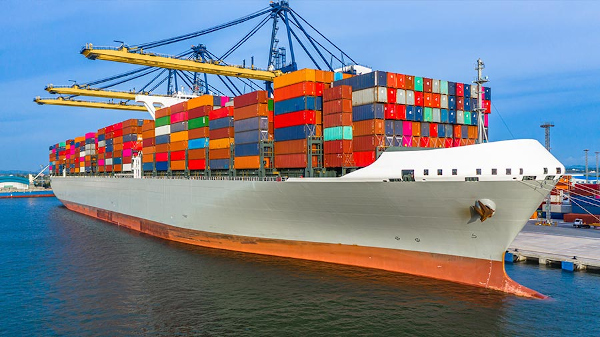
India’s maritime infrastructure is preparing for a significant expansion as two enormous new deep-water ports — Vadhavan in Maharashtra and Galathea Bay in the Andaman and Nicobar Islands — join the country’s established network of 12 operational Major Ports.
The Ministry of Ports, Shipping and Waterways currently lists 12 operational Major Ports under the administrative control of the Government of India: Syama Prasad Mookerjee Port, Paradip, Visakhapatnam, Chennai, Kamarajar, V.O. Chidambaranar, Cochin, New Mangalore, Mormugao, Mumbai, Jawaharlal Nehru and Deendayal Port.
The government has additionally notified Vadhavan Port in Maharashtra and Galathea Bay Port in the Andaman and Nicobar Islands as Major Ports, although neither is yet operational. Both are being developed as strategically important deep-water gateways capable of handling the much larger ships and container volumes expected to shape Indian maritime trade over the coming decades.
This means India should not yet be described as having 14 operational Major Ports. It has 12 operational Major Ports and two additional notified Major Ports under construction.
Among the existing ports, Kamarajar Port in Tamil Nadu has a slightly different institutional structure. It is a wholly owned subsidiary of Chennai Port Authority and operates under the Companies Act, while the other 11 operational Major Ports function under the Major Port Authorities Act, 2021.
The more dramatic transformation will come from Vadhavan.
Being developed in Palghar district on Maharashtra’s coast, Vadhavan has been designed as an all-weather greenfield deep-draft port capable of receiving some of the world’s largest container vessels. The Union Cabinet approved the project in June 2024 with an estimated investment of ₹76,220 crore.
Once fully developed, Vadhavan is expected to provide approximately 298 million tonnes of annual cargo-handling capacity, including about 23.2 million TEUs of container capacity. Its master plan includes nine large container terminals, four multipurpose berths and supporting liquid-cargo and maritime infrastructure.
The port is being developed through Vadhavan Port Project Limited, a joint venture in which Jawaharlal Nehru Port Authority holds 74% and the Maharashtra Maritime Board 26%. Much of the terminal and commercial infrastructure will subsequently be developed through public-private partnerships.
Vadhavan’s strategic importance comes partly from its natural deep-water location. Indian container ports have historically faced draft limitations that restrict the largest mainline vessels, forcing some cargo to be transshipped through foreign hubs. A port capable of directly receiving ultra-large container ships could allow more Indian cargo to move directly between the country and major markets in Europe, the Middle East, Africa, East Asia and the Americas.
The government also expects Vadhavan to support major international trade routes including the India-Middle East-Europe Economic Corridor and the International North-South Transport Corridor.
On the opposite side of India’s maritime geography, Galathea Bay has a very different mission.
The proposed International Container Transshipment Port at Galathea Bay on Great Nicobar Island is being developed largely to capture container traffic that currently moves through foreign transshipment hubs.
Its location close to major east-west international shipping routes gives it considerable strategic potential. Ships travelling between East Asia, Southeast Asia, the Indian Ocean, the Middle East and Europe pass relatively close to the Great Nicobar region, making it possible to build a transshipment hub without requiring vessels to divert far from their normal routes.
The government envisages development of Galathea Bay in four phases, with an ultimate capacity of around 16 million TEUs. Initial plans call for approximately 4 million TEUs of capacity in the first phase. The latest government project estimate cited for the full development is about ₹43,796 crore.
Its role would be different from that of a conventional gateway port. A large proportion of cargo at a transshipment hub does not necessarily enter the domestic economy. Containers arriving aboard large mother ships are transferred to smaller vessels for onward transportation to regional ports, or vice versa.
India has traditionally lost a substantial share of this business to foreign hubs. Developing Galathea Bay, together with the rapidly expanding Vizhinjam International Seaport in Kerala, is part of a broader attempt to retain more Indian-origin and regional transshipment cargo within the country.
The two new Major Ports therefore represent two complementary parts of India’s maritime strategy.
Vadhavan is primarily intended to become a giant western gateway for India’s import-export economy, supported by the industrial and logistics network of Maharashtra and western India.
Galathea Bay is being positioned as an international transshipment hub, exploiting Great Nicobar’s location close to some of the busiest shipping routes in the Indian Ocean.
Their development also comes as India modernises its existing Major Ports through deeper channels, mechanised berths, larger container terminals, rail and road connectivity and digital logistics systems.
Under the PM Gati Shakti National Master Plan, the Ports Ministry has identified 182 port infrastructure and connectivity projects valued at ₹1.09 lakh crore, of which 75 projects worth nearly ₹31,967 crore had already been completed by July 2026.
The longer-term ambition is considerably larger. The government has identified six maritime clusters for development into mega-port complexes by 2047. These include the JNPA-Vadhavan cluster, which is envisioned with more than 500 million tonnes of capacity, and the Galathea South Bay cluster, which is planned to exceed 300 million tonnes when associated infrastructure is included.
India’s port map is therefore entering a period of structural change. The traditional network of Mumbai, Chennai, Cochin, Paradip, Visakhapatnam and the other established Major Ports will remain the backbone of maritime trade, but new deep-water facilities are being designed around the scale of global shipping expected several decades from now.
Vadhavan and Galathea Bay are especially important because they are not simply additional berths added to existing harbours. They are new Major Ports being designed around ultra-large vessels, international container networks and future trade corridors from the beginning.
For the moment, India has 12 operational Major Ports. Once Vadhavan04 and Galathea Bay begin operations, that network will enter a new phase — one in which India aims not merely to handle its growing domestic trade, but to capture a larger share of the global maritime traffic moving past its shores.
You may also like
-
Mankind Pharma to Acquire 70% Stake in Belgian CAR-T Cancer Therapy Developer for €48 Million
-
India Ranks Third Globally in Contracted Clean Hydrogen Volumes, Secures 3 Lakh Tonnes Annually
-
Government Finalises Airfare Pricing Rules to Protect Passengers from Excessive Ticket Charges
-
India’s Inland Waterway Cargo Movement Reaches 218 Million Tonnes, Surpasses 2030 Target Four Years Early
-
SberIndia Partners with Space 1 to Develop Russian-Indian Cooperation Center in New Delhi
