Kautilya

HamiltonJet: The New Zealand Propulsion Technology Powering India’s Fast Attack Craft Fleet

The partnership represents a successful combination of Indian ship design and construction with specialised New Zealand propulsion technology. Indian shipyards built the vessels, integrated their weapons and sensors, and adapted them for domestic operational requirements, while HamiltonJet supplied the waterjet systems that provide speed, acceleration, shallow-water mobility and exceptional manoeuvrability.

India Emerges as World’s Largest Retail GCC Hub with 180 Centres and 2.7 Lakh Professionals

Retail and FMCG companies are expanding their India-based capability centres to support global business priorities. These centres are no longer limited to back-office functions. Many of them now handle advanced work in artificial intelligence, data science, cloud platforms, cybersecurity, e-commerce technology, digital payments, loyalty programmes, consumer analytics and supply chain optimisation.

DRDL Plans Mach 4.5 Trisonic Wind Tunnel to Strengthen India’s Missile and Aerospace Testing Infrastructure

The proposed facility is expected to be a blow-down type trisonic wind tunnel capable of aerodynamic testing across the speed range from Mach 0.2 to Mach 4.5. This means the tunnel can support testing in three major flight regimes: subsonic, transonic and supersonic. For missile and aircraft designers, this is a critical capability because modern aerospace vehicles experience very different aerodynamic behaviour as they move from low-speed flight to the shock-wave dominated supersonic region.

India’s Indigenous Saras Mk-II Moves Toward Prototype Manufacturing

The Saras Mk-II is being developed by CSIR-NAL, Bengaluru, as a multi-role light transport aircraft suited for short regional routes, smaller airports and difficult operating environments. It is expected to support passenger movement, air taxi services, air ambulance operations, executive transport, light cargo, border patrol and other community services.

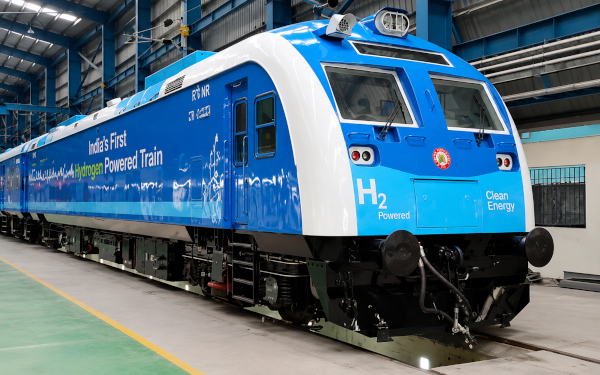
India’s First Hydrogen Train: How Indian Railways Is Engineering the Future of Zero-Emission Rail Transport

The pilot train has been developed for the Jind-Sonipat section of Northern Railway in Haryana, where dedicated hydrogen production, storage and refuelling infrastructure has also been established. Unlike a conventional diesel train, the new trainset will generate electricity onboard using hydrogen fuel cells, producing only water vapour and heat as by-products, thereby eliminating tailpipe carbon emissions.

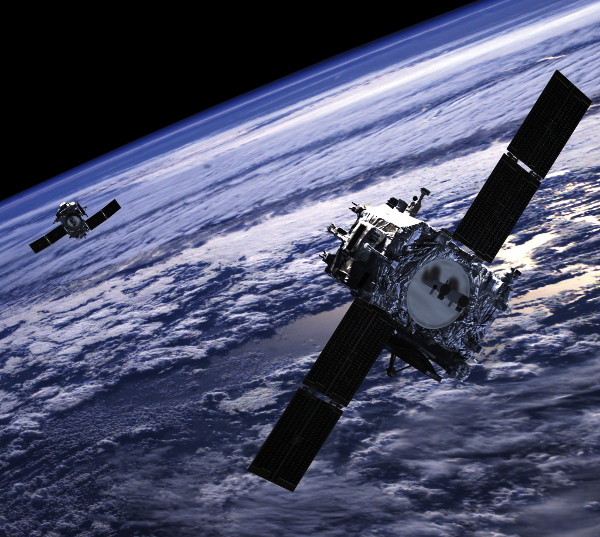
Unravelling the Secrets of Near-earth Space Critical for Satellite Operations

Understanding how the electron density varies with height in the ionosphere is therefore essential for reliable communication and navigation, especially in the equatorial regions where ionospheric dynamics are highly complex. Accurate electron density information up to ~1000 km is essential for continuous monitoring of the ionosphere, as most low Earth orbit (LEO) satellites operate within this altitude range.

India’s Smartphone Manufacturing Push Gets Fresh Momentum After Tariff Cuts On Key Components

The tariff relief covers components that are important for high-value electronics manufacturing, including wireless charging modules for smartphones, lithium-ion cells and display-related components used in sectors such as medical devices and automobiles. Duties of 5% and 7.5% on several such items have been removed, giving manufacturers a clearer cost advantage as they scale local assembly and component integration.