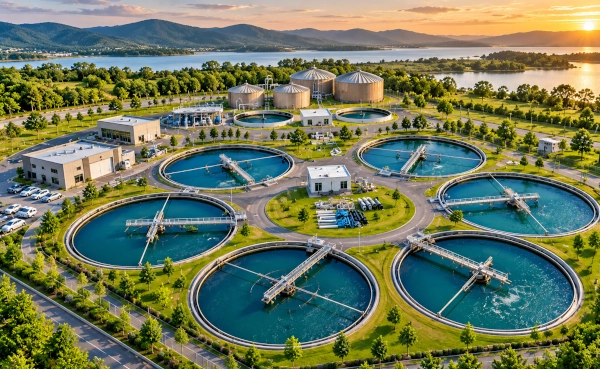
India is accelerating the adoption of advanced aquaculture technologies such as Recirculatory Aquaculture Systems (RAS) and Biofloc systems as part of a broader effort to modernise fish production, strengthen seafood exports and build a more sustainable blue economy.
The fisheries and aquaculture sector has become an increasingly important component of India’s rural economy, supporting nearly three crore fishers and fish farmers and generating employment across production, processing, logistics, marketing and exports.
India is currently the world’s second-largest fish producer, accounting for around 8% of global fish production. It is also the second-largest aquaculture producer, the world’s largest producer and exporter of shrimp and the second-largest producer in capture fisheries.
The sector’s expansion has been supported by sustained public investment. Since 2015, the Government of India has approved or announced more than ₹39,272 crore across fisheries and aquaculture schemes aimed at expanding production capacity, improving infrastructure, promoting technology adoption and strengthening market access.
These interventions have contributed to a sharp rise in output over the past decade.
India’s annual fish production increased from 95.79 lakh tonnes in 2013-14 to a record 198 lakh tonnes in 2024-25, more than doubling within eleven years.
Inland fisheries and aquaculture have been major drivers of this growth. Production from these segments increased by around 147%, rising from 61.36 lakh tonnes in 2013-14 to 151.60 lakh tonnes in 2024-25.
Seafood exports have expanded alongside domestic production. Their value increased from approximately ₹30,213 crore in 2013-14 to a record ₹73,890 crore in 2025-26, reflecting India’s growing presence in international seafood markets despite an increasingly challenging global trade environment.
A major focus of the next phase of growth is the adoption of more efficient and controlled aquaculture systems.
Under the Pradhan Mantri Matsya Sampada Yojana (PMMSY), technologies such as RAS and Biofloc are being promoted alongside cage culture and other modern production methods to improve productivity while reducing pressure on land and water resources.
RAS allows fish to be cultivated in tanks or other controlled systems where water is continuously filtered, treated and reused. Depending on the configuration, such systems can recycle around 90–95% of the water, greatly reducing freshwater requirements compared with many conventional aquaculture methods.
This closed or semi-closed production environment also allows farmers to manage important parameters such as temperature, oxygen levels, water quality and stocking density more precisely.
Because RAS is less dependent on large natural water bodies, it can enable aquaculture in regions where traditional pond farming may not be practical. Units can also be established closer to major cities, processing centres and export hubs, potentially reducing transportation requirements and improving supply-chain efficiency.
Biofloc technology follows a different approach. It uses beneficial microorganisms to convert organic waste and excess nutrients in the water into microbial biomass.
These microorganisms can help maintain water quality while also serving as an additional source of nutrition for some cultured species. The technology can therefore support intensive fish or shrimp farming while reducing the frequency with which water needs to be replaced.
The government’s push towards these advanced systems has already reached significant scale.
Under PMMSY, 9,467 RAS units and 4,573 Biofloc units have been approved, supporting the expansion of year-round aquaculture and increasingly intensive production models.
The technology-driven aquaculture component under PMMSY has been backed by investments of around ₹4,120 crore, reflecting the government’s effort to move fisheries production toward more modern and commercially scalable systems.
RAS and Biofloc could also help India strengthen its position in premium international seafood markets.
Controlled farming environments make it easier to maintain consistent production conditions, improve biosecurity and establish better traceability. These factors are becoming increasingly important for exporters seeking access to markets with stringent food-safety and quality requirements.
The technologies also provide opportunities to diversify aquaculture into higher-value species.
RAS systems are increasingly being used in cold-water fisheries clusters across Jammu and Kashmir, Ladakh, Uttarakhand and Himachal Pradesh, particularly for species such as trout.
Their ability to maintain controlled water conditions makes them suitable for species whose growth depends on specific temperature and water-quality ranges.
Similar systems can support shrimp cultivation in saline and brackish-water environments, while RAS and Biofloc are also being adopted in ornamental fish production, opening opportunities in a specialised segment with both domestic and export potential.
The expansion of modern aquaculture therefore has implications beyond simply increasing fish output. It could allow production to move into new regions, support specialised species and create smaller technology-intensive farming businesses closer to consumption centres.
The next stage of development is expected to involve greater integration between aquaculture and digital technologies.
Digital water-quality sensors, automated feeding systems, artificial intelligence and remote monitoring platforms can help farmers track environmental conditions and optimise feed, oxygen and energy use.
Drone-enabled services could support surveillance, monitoring and farm management in larger aquaculture clusters, while renewable-energy systems could help reduce the operating cost of pumps, aerators and filtration equipment.
Energy efficiency will be particularly important for RAS because continuous water circulation, oxygenation and filtration can create significant electricity requirements. Greater use of solar power, efficient pumps and automated control systems could improve the commercial viability of such farms.
India is also looking to diversify production towards commercially valuable species including shrimp, trout, seabass, tilapia, murrel and pangasius.
Increasing the share of high-value species could improve incomes for fish farmers while helping exporters move toward higher-value processed and specialised seafood products.
The broader opportunity lies in combining modern aquaculture infrastructure with better seed, feed, disease management, cold chains, processing capacity and market access.
Continued training will also be essential because intensive systems such as RAS and Biofloc require greater technical management than conventional fish farming. Water chemistry, stocking density, nutrition, disease control and system maintenance all directly influence productivity and profitability.
With appropriate skills, financing and technical support, these systems could create new opportunities for entrepreneurs, startups, farmer groups and MSMEs entering the fisheries sector.
India’s fisheries transformation increasingly reflects a shift from conventional production expansion toward technology-led, resource-efficient and higher-value aquaculture.
By combining RAS and Biofloc technologies with digital monitoring, renewable energy, improved biosecurity and diversified species, India is seeking to build an aquaculture ecosystem capable of producing more fish with greater efficiency and consistency.
Such a transition could strengthen food and nutritional security, create rural employment, raise farmer incomes and expand seafood exports while reducing pressure on natural resources.
As India advances the goals of Atmanirbhar Bharat and Viksit Bharat, next-generation aquaculture is therefore emerging as an important component of a larger strategy to build a productive, sustainable and globally competitive blue economy.
Source: PIB: https://www.pib.gov.in/PressReleaseDetail.aspx?PRID=2307405®=48&lang=1
You may also like
-
EON Space Labs and Dhruva Space Advance Indian Space Hardware on Transporter-18 Mission
-
SatLeo Labs’ TAPAS-1 Reaches Orbit, Advancing India’s Private Thermal-Imaging Capability
-
TakeMe2Space’s MOI-1A Reaches Space on Falcon 9 Transporter-18 Mission
-
Bank of Baroda Enters Pension Fund Management After PFRDA Appointment
-
SCI and India’s Push for a Larger Indigenous Maritime Fleet
