Kautilya

Leadership Discipline in the Ramayana: Rama’s Rebuke to Sugriva and the Military Value of Command Control

Rama’s rebuke gives the episode its military meaning. He tells Sugriva that such rash conduct does not suit a king. This is a lesson in command responsibility. A ruler carries more than his own life into battle. He carries the morale of his soldiers, the stability of alliances, the rhythm of the campaign and the confidence of the command system. A commander’s personal bravery must serve the army’s mission. When a leader acts alone from impulse, the entire force may be forced to react to his decision.

India’s 12 Deployed Nuclear Warheads: A Quiet Shift in Strategic Deterrence

The reported deployment of 12 warheads should be read in this doctrinal frame. It is not a move toward reckless nuclear signalling. It is a readiness adjustment inside a changing security environment. India faces two nuclear-armed neighbours, Pakistan and China, with live border disputes, expanding missile inventories, and increasingly complex military technologies. A credible deterrent requires survivability, secure command, reliable delivery platforms and the ability to respond after absorbing a first strike.

GeM’s ₹8.69 Lakh Crore MSE Procurement Milestone: Digital Public Buying Becomes a Growth Engine for Small Enterprises

GeM was created to make government buying more transparent, faster and more accessible. The platform allows central ministries, state departments, public sector undertakings and other government-linked institutions to buy goods and services through a digital system. Digital India describes GeM as a unified platform for end-to-end procurement, built on the principles of efficiency, transparency and inclusivity.

PoJK Civilian Killings: India Raises the Question of Accountability

The statement places the unrest in PoJK within a larger human rights frame. India’s response highlights the condition of civilians who face force, fear and political suppression under Pakistani control. When protesters come onto the streets, their demands often reflect deeper anger over governance, economic hardship, lack of rights and exploitation of local resources. The killing and injury of civilians turns that anger into an international concern.

NHAI Brings Mechanized Drain Cleaning and Automated Pothole Repair to Strengthen National Highway Maintenance

The timing of the move is important because the monsoon season places heavy pressure on highway drainage systems. Waterlogging, blocked drains, silt accumulation and damaged road shoulders can reduce road safety and affect traffic movement. By mandating mechanized cleaning of lined drains in urban and built-up areas of National Highways and Expressways, NHAI is giving drainage maintenance a more preventive and time-bound structure.

Assam’s GI-Tagged Tezpur Litchi Reaches Dubai in a Major Boost for North East Agri Exports

The first shipment, dispatched on 7 June 2026, consisted of one metric tonne of GI-tagged Tezpur Litchi. The fruit is widely known for its bright red appearance, rich sweetness, pleasant aroma and superior eating quality. Tezpur’s litchi-growing belt produces several well-known varieties such as Bombaya, Bilati, Elaichi, Piyaji and Sahi, each valued for its distinct flavour and quality.

BEL’s GBMES Order: India’s Army Moves Deeper Into Electronic Intelligence Warfare

GBMES also intercepts and analyses communication signals. This expands its value from radar intelligence to wider battlefield awareness. Communication intercepts can reveal movement patterns, command activity, operational tempo and the intensity of enemy coordination. When radar intelligence and communication intelligence are fused, the Army gains a more complete view of the adversary’s posture. This supports better planning, better deception, better targeting and better defensive preparation.

India’s Space Economy: From ISRO Missions to a $45 Billion Growth Engine

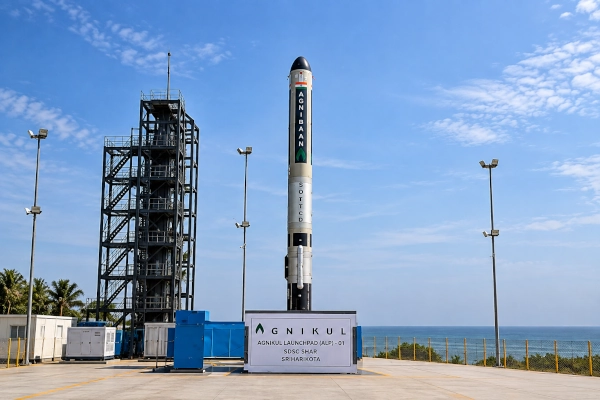
The numbers show the scale of ambition. India’s space economy, valued at about 8.4 billion dollars in 2023, is officially projected to reach around 44 billion dollars by 2033 and about 100 billion dollars by 2040. This means India wants to raise its share in the global space economy from a small base to a much larger position over the coming decade.