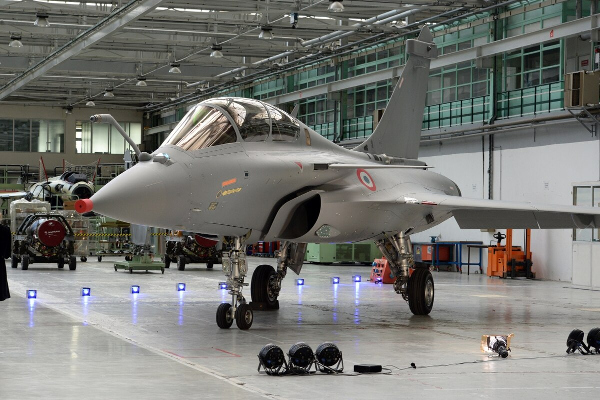
India’s rapidly expanding Rafale ecosystem and the United Arab Emirates’ acquisition of 80 Rafale F4 fighters are creating the foundations for one of the largest concentrations of the French combat aircraft outside Europe. At the same time, Safran and Dassault Aviation are establishing major Rafale manufacturing and maintenance capabilities in India. Together, these developments could eventually transform India from a Rafale operator into an important regional Maintenance, Repair and Overhaul hub supporting Rafale fleets across the Indo-Pacific and potentially the Gulf.
India already operates 36 Rafales with the Indian Air Force and signed an agreement with France in April 2025 for another 26 Rafale Marine aircraft for the Indian Navy, consisting of 22 single-seat fighters and four twin-seat aircraft. The naval deal takes India’s confirmed Rafale inventory to 62 aircraft once deliveries are completed. The Rafale Marine package also contains an important industrial component: the Government of India confirmed that facilities will be established in the country for MRO of aircraft engines, sensors and weapons, alongside production of Rafale fuselage structures.
India’s Rafale fleet could eventually become far larger. In February 2026, the Defence Acquisition Council granted Acceptance of Necessity for the Indian Air Force’s Multi Role Fighter Aircraft programme, formally identifying the proposed aircraft as the Rafale. The government said the majority of these fighters would be manufactured in India. Dassault Aviation has subsequently confirmed that direct negotiations have begun for 114 additional Rafales for the IAF. If that acquisition ultimately becomes a contract, India could operate as many as 176 Rafales across the Air Force and Navy, dramatically increasing the economic justification for establishing a comprehensive domestic support infrastructure.
At almost the same time, another major Rafale fleet is emerging just across the Arabian Sea. The United Arab Emirates ordered 80 Rafale F4 fighters in 2021, representing the largest military export contract ever secured by Dassault Aviation. The first Emirati Rafale was presented at Istres in France in January 2025 and remained at Dassault’s flight-test centre for testing. Dassault has said the first deliveries to the UAE Air Force and Air Defence are scheduled for the end of 2026.
India and the UAE could therefore eventually operate a combined 142 Rafales based on already contracted aircraft, even before taking India’s proposed 114-aircraft follow-on procurement into account. This geographical concentration creates an unusually strong opportunity for regional maintenance infrastructure.
Hyderabad Is Becoming an M88 Engine Support Centre
The strongest evidence that India could assume a wider regional Rafale-support role comes from Safran Aircraft Engines, manufacturer of the Rafale’s M88 turbofan.
Safran broke ground in Hyderabad in November 2025 on the first M88 MRO facility outside France. The approximately 5,000-square-metre facility represents an investment exceeding €40 million and is designed eventually to handle more than 600 M88 engine modules every year. Up to 150 personnel are expected to work at the facility once it reaches full capacity.
More significantly, Safran has explicitly stated that the Hyderabad M88 facility will not be restricted to Indian aircraft. While engines belonging to the Indian Air Force will receive priority, the company says the facility will also conduct MRO work for other M88 export customers.
That statement substantially strengthens the case for India becoming a regional Rafale sustainment centre. India is not merely establishing an engine workshop large enough to meet its own requirements. Safran is creating an export-capable maintenance facility designed from the outset to support the wider international M88 fleet.
The M88’s modular construction makes such an arrangement particularly relevant. Safran describes the engine as having been designed with maintenance considerations built into its architecture. Instead of every maintenance event requiring an entire engine to remain at one location, modules can be removed, inspected, repaired or replaced as necessary. The M88 has accumulated more than one million flight hours across French and export Rafale fleets, while more than 600 engines have been delivered.
For operators located relatively close to India, Hyderabad could consequently become an attractive location for deeper module-level maintenance and overhaul work that cannot economically be performed at every individual airbase.
The UAE Creates a Particularly Interesting Opportunity
The UAE’s 80-aircraft order makes it one of the largest Rafale operators anywhere in the world. Supporting such a fleet over several decades will require a substantial ecosystem involving engines, avionics, sensors, landing gear, weapons-support equipment, structural components, test equipment and specialised technicians.
Routine maintenance will naturally be performed inside the UAE itself. Modern combat-aircraft support models are designed to allow operators to conduct a large proportion of regular servicing at their own bases, and there is no reason to expect Emirati Rafales to be routinely flown to India for ordinary maintenance.
The opportunity for India instead lies in deep maintenance, component overhaul and specialised repair.
An M88 module removed from an Emirati Rafale could theoretically be transported to Hyderabad for inspection or overhaul, repaired at Safran’s dedicated facility and returned to the UAE without the aircraft itself leaving its home base. Similar arrangements could eventually apply to other components if the Indian Rafale industrial ecosystem develops sufficient certified capabilities.
There is currently no announced agreement stating that the UAE will send M88 engines or Rafale components to India, so such an arrangement should not be presented as decided. Nevertheless, Safran’s explicit statement that the Hyderabad facility will serve M88 export customers makes such a scenario technically and commercially plausible.
There is also already precedent for Safran working closely with the UAE on fighter-engine sustainment. Safran has entered a strategic partnership with UAE-based Global Aerospace Logistics for maintenance support of the M53 engines powering the UAE’s Mirage 2000 fleet. That arrangement is separate from Rafale and does not imply that UAE M88 work will automatically move to India, but it demonstrates that the Emirati Air Force already operates within a multinational Safran military-engine support ecosystem.
India Is Building Much More Than an Engine Workshop
India’s opportunity extends beyond the M88.
The April 2025 Rafale Marine agreement specifically calls for the establishment of MRO facilities for Rafale engines, sensors and weapons in India. It also provides for technology transfer to integrate Indian weapons into the aircraft. This means the emerging support architecture could ultimately encompass several major subsystems rather than focusing exclusively on propulsion.
Dassault Aviation is simultaneously localising a major part of Rafale manufacturing.
In June 2025, Dassault and Tata Advanced Systems Limited signed four production-transfer agreements covering Rafale fuselage manufacturing in India. Tata is establishing a dedicated Hyderabad facility that will manufacture the lateral shells of the rear fuselage, complete rear section, central fuselage and front section of the fighter.
The significance of this agreement extends beyond Indian Rafales. Dassault stated that the fuselages manufactured in India are intended to support both Indian requirements and the company’s global Rafale supply chain.
India will therefore possess manufacturing knowledge and tooling associated with some of the aircraft’s most important structural assemblies. Over the long term, this industrial capability could have implications for structural repair and lifecycle support, although any future use for international MRO would depend on certification, contractual arrangements and approval from Dassault and the relevant governments.
Combined with the M88 facility, sensor and weapon MRO infrastructure and India’s growing Rafale inventory, the fuselage-production programme makes Hyderabad particularly important. The city is gradually developing into one of the principal centres of India’s military-aerospace manufacturing sector.
India’s Own Fleet Provides the Economic Foundation
A regional maintenance facility can only succeed if sufficient demand exists to sustain specialised equipment, trained personnel and inventory. India’s own Rafale fleet increasingly provides that economic foundation.
The 36 IAF Rafales already require long-term sustainment. The additional 26 Rafale Marine aircraft will add another service with somewhat different operating conditions, particularly because carrier aviation imposes severe structural and environmental stresses on aircraft.
The Rafale Marine procurement agreement includes performance-based logistics and support arrangements, while the first deliveries are expected before completion of the programme in 2030.
If the proposed 114-aircraft Air Force procurement proceeds, the scale changes dramatically. A 176-aircraft Indian Rafale fleet would require hundreds of M88 engines in operational use and reserve, along with a continuous flow of modules undergoing scheduled and unscheduled maintenance.
That volume would make investment in specialised Indian infrastructure much easier to justify. Once the fixed cost of such facilities is supported by India’s domestic fleet, accepting maintenance work from foreign Rafale operators becomes economically more attractive.
This is how major military-aircraft sustainment hubs generally develop. A large domestic fleet establishes the industrial base, skilled workforce and supply chain. Additional international customers then increase utilisation and reduce the cost of maintaining specialist capabilities.
A Wider Rafale Market Surrounds India
The UAE is not the only potential customer for India’s emerging capabilities.
Indonesia has ordered 42 Rafales, with the first aircraft delivered in early 2026. Qatar operates 36 Rafales, while Egypt has acquired 55. Rafale customers also include Greece, Croatia and Serbia, although European operators have easier access to existing French and European support infrastructure.
From India’s perspective, Indonesia and the Gulf region are therefore particularly interesting.
Indonesia is another major Indo-Pacific Rafale operator and is geographically closer to India than to France. Depending on the commercial arrangements eventually developed by Safran and Dassault, Hyderabad could potentially support selected M88 overhaul requirements from Southeast Asian customers as well.
The Indian facility does not need to replace France as the central Rafale maintenance base to become strategically important. It could instead develop as a second international sustainment node, reducing turnaround times for operators in Asia and the Middle East and adding resilience to Dassault and Safran’s global support network.
Geography Could Work in India’s Favour
India’s location gives such a model additional logic.
Hyderabad sits between the Gulf and Southeast Asia, the two regions where some of the largest new Rafale fleets are emerging. Transporting high-value engine modules or components between these regions and India is considerably simpler than sending every item to Europe.
Shorter logistics chains can mean faster turnaround, lower transportation costs and smaller inventories of spare engines and components required to maintain fleet availability.
The strategic value is equally important. Combat-aircraft operators increasingly recognise that maintenance capacity concentrated in only one country creates vulnerability during crises. A geographically distributed support network provides redundancy.
An Indian MRO centre operating alongside French facilities would therefore strengthen the overall Rafale support architecture rather than compete with it.
India Could Move From Buyer to Lifecycle Partner
The larger transformation underway is India’s changing position within the Rafale programme.
When the first 36-aircraft contract was signed in 2016, India was primarily a customer importing completed fighters from France. A decade later, that relationship is becoming substantially deeper.
India is preparing to manufacture Rafale fuselage sections for the global market. It is establishing the first M88 engine overhaul centre outside France. MRO infrastructure is planned for engines, sensors and weapons. Indian weapons are being considered for integration, and the majority of the proposed 114 additional Air Force fighters are expected to be manufactured domestically if negotiations result in a contract.
That represents movement from aircraft acquisition toward lifecycle participation.
The economic value of a fighter programme does not end when the aircraft leaves the assembly line. A combat aircraft can remain operational for 30 to 40 years, generating continuous demand for overhaul, upgrades, spare parts, structural repair, engines and avionics.
Capturing even part of that lifecycle activity from international Rafale operators could create substantial long-term value for India’s aerospace sector.
India-UAE Defence Ties Add Another Dimension
An eventual UAE role would also fit into expanding strategic relations between New Delhi and Abu Dhabi.
India and the UAE have steadily strengthened defence engagement alongside broader economic and strategic cooperation. Both countries operate French combat-aircraft technology, and the UAE’s transition from Mirage 2000 to Rafale creates additional technical overlap with India’s fighter fleet.
Shared aircraft do not automatically result in shared maintenance infrastructure, and sensitive defence-support arrangements require government approval as well as commercial agreements. Yet operating the same fighter and engine creates opportunities that simply would not exist with unrelated aircraft types.
Training, spare-part management, component overhaul and potentially technical cooperation become easier when countries operate compatible equipment.
The 80-aircraft Emirati fleet is particularly significant because its scale could generate enough maintenance demand to support specialised regional facilities rather than relying entirely on France.
No UAE Rafale MRO Agreement Has Yet Been Announced
The distinction between potential and confirmed arrangements remains important.
Neither India, the UAE, Dassault Aviation nor Safran has publicly announced that UAE Rafales will be maintained in India. There is likewise no confirmation that Emirati M88 modules have been allocated to the Hyderabad facility.
What has been confirmed is that Safran’s Hyderabad M88 centre will serve export customers in addition to India, that India is establishing wider Rafale MRO capabilities, that Dassault is moving Rafale fuselage production to Hyderabad and that the UAE is preparing to operate one of the world’s largest Rafale fleets.
Those facts together create the regional-MRO opportunity.
India Is Emerging as the Rafale’s Second Industrial Centre
The deeper significance of these developments is that India is increasingly becoming more than another country on the Rafale export list.
France will remain the centre of the aircraft’s development, engineering and production ecosystem. However, India’s combination of a potentially enormous domestic fleet, indigenous manufacturing, dedicated M88 overhaul capacity and subsystem MRO infrastructure could make it the Rafale programme’s most important industrial location outside France.
The UAE’s 80-aircraft fleet strengthens the business case because it places another major Rafale operator close to India’s developing support infrastructure. Indonesia adds another large customer to India’s east, while Qatar and Egypt further expand the potential regional market.
Whether India ultimately maintains Emirati Rafales will depend on future decisions by the governments, Dassault, Safran and the UAE Air Force. But the industrial pieces required to make such cooperation possible are already falling into place.
In that scenario, the combined growth of the Indian and Emirati Rafale fleets would have consequences extending far beyond combat-aircraft numbers. It could help establish India as one of the most important centres for sustaining the Rafale and its M88 engine anywhere outside France.
You may also like
-
Rajnath Singh to Lead Indian Delegation at ASEAN Defence Summit in Philippines, Strengthening Indo-Pacific Security Cooperation
-
Bengaluru Startup Paar Autonomy Develops AI-Powered Drone Systems for GPS-Denied Environments
-
Sigma Advanced Systems Secures Fresh ₹973 Crore NATO Artillery Ammunition Order
-
India Advances Indigenous Defence and Space Technologies Through Naval Innovation, Drones and Advanced Electronics
-
Thales Seeks Indian Partnerships for Next-Generation Missiles, Radars and Electronic Warfare Systems
