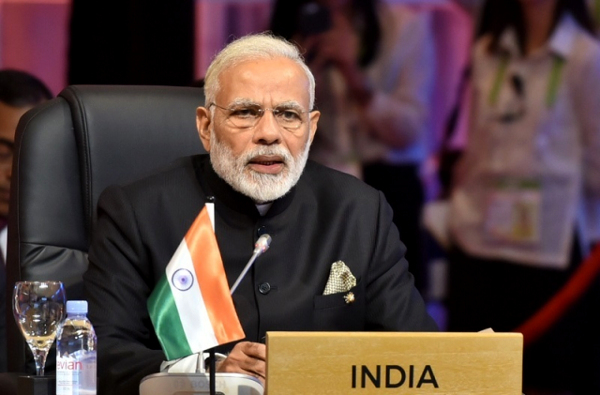
Prime Minister Narendra Modi has begun a four-day visit to Uzbekistan and the Kyrgyz Republic from 29 August to 1 September 2026, placing trade, investment, defence, connectivity, energy and regional security at the centre of India’s renewed engagement with Central Asia.
The visit begins with a State Visit to Tashkent on 29–30 August, where Prime Minister Modi will hold talks with Uzbekistan President Shavkat Mirziyoyev, before travelling to Bishkek to participate in the 26th Summit of the Shanghai Cooperation Organisation on 31 August and 1 September.
In his departure statement, the Prime Minister said the visit would strengthen India’s strategic partnerships in Central Asia, deepen civilisational links with the region and advance cooperation aimed at peace, stability and prosperity.
Fourth Visit to Uzbekistan
Prime Minister Modi’s visit to Uzbekistan is being undertaken at the invitation of President Mirziyoyev and will be his fourth visit to the Central Asian country.
The two leaders are expected to hold delegation-level discussions covering the full range of the India-Uzbekistan Strategic Partnership.
Priority areas include trade and investment, defence cooperation, digital connectivity, energy, education and people-to-people exchanges.
The talks will also examine ways in which India’s long-term development vision of Viksit Bharat 2047 can interact with Uzbekistan’s national development priorities.
The relationship between India and Uzbekistan has expanded considerably in recent years, supported by frequent high-level political engagement and growing economic cooperation.
Trade and Investment Set for Further Push
Economic ties are expected to receive particular attention during the Tashkent discussions.
Earlier in August, India and Uzbekistan agreed to pursue a substantial expansion in bilateral commerce, with Commerce and Industry Minister Piyush Goyal calling for bilateral trade to be doubled within three years.
India has encouraged companies from the two countries to move beyond conventional buyer-seller relationships towards co-investment, co-manufacturing and co-innovation.
Areas identified for greater economic cooperation include mining, textiles, healthcare, pharmaceuticals, agriculture, digital technologies and advanced manufacturing.
The two countries have also been working to address non-tariff barriers and improve the institutional framework supporting bilateral investment.
The growing commercial agenda reflects the broader objective of transforming India’s historically close relationship with Uzbekistan into a more substantial economic partnership.
Critical Minerals and Mining Gain Importance
Mining and mineral resources are emerging as particularly promising areas.
Uzbekistan possesses significant reserves of minerals and metals, while India’s rapidly expanding manufacturing, renewable-energy and technology industries are creating increasing demand for secure supplies of critical raw materials.
During recent bilateral exchanges, India has highlighted opportunities for Indian companies to participate in Uzbekistan’s mining sector.
Greater cooperation could potentially extend across exploration, mineral processing, technology and downstream manufacturing.
The sector complements India’s wider effort to develop diversified international partnerships for critical and strategic minerals.
Digital Connectivity Offers New Possibilities
Digital cooperation is another major component of the relationship.
India has built large-scale digital public infrastructure supporting payments, identity, financial inclusion and delivery of public services.
Uzbekistan is simultaneously undertaking an extensive digital transformation of its economy and government systems.
This creates opportunities for cooperation involving digital platforms, financial technology, cybersecurity, telecommunications and technology services.
The inclusion of digital connectivity among the principal subjects of the Prime Minister’s discussions demonstrates how technology is becoming an increasingly important pillar of India’s engagement with Central Asia.
Defence and Security Cooperation
India and Uzbekistan maintain longstanding defence and security relations.
The two countries have conducted joint military exercises and maintain mechanisms for defence dialogue and professional military exchanges.
Central Asia’s geographic position also gives India and Uzbekistan common security interests, particularly regarding terrorism, extremism, organised crime and instability originating from Afghanistan and surrounding regions.
The defence component of Prime Minister Modi’s visit is therefore expected to complement the broader security discussions that will subsequently take place at the SCO Summit.
Energy Cooperation Could Expand
Energy is another natural field for deeper cooperation.
Uzbekistan possesses substantial hydrocarbon and mineral resources and is simultaneously expanding renewable-energy capacity.
India’s rapidly growing economy requires increasing quantities of energy and critical raw materials, providing scope for partnerships in conventional energy as well as newer clean-energy technologies.
Energy cooperation is consequently expected to feature prominently in discussions between Prime Minister Modi and President Mirziyoyev.
Ancient Cultural Connections Remain Central
India’s ties with Uzbekistan extend far beyond contemporary diplomacy.
For centuries, Central Asia and the Indian subcontinent were connected through trade routes that carried merchants, scholars, ideas, languages, artistic traditions and cuisine across the region.
Prime Minister Modi is scheduled to visit the Shastri Memorial in Tashkent, which commemorates former Prime Minister Lal Bahadur Shastri.
Shastri died in Tashkent on 11 January 1966, shortly after signing the Tashkent Declaration following the 1965 India-Pakistan war.
The visit therefore carries particular historical significance for India.
Prime Minister Modi will also visit the Mahatma Gandhi Centre at the Tashkent State University of Oriental Studies, reflecting the continuing academic and cultural relationship between India and Uzbekistan.
Education Strengthens People-to-People Ties
Educational exchanges have become another important bridge between the two countries.
More than 16,000 Indian students are studying in Uzbekistan, while over 3,000 Uzbek officials, professionals and students have benefited from India’s ITEC training programmes and scholarships.
Medical education has been an especially important component of the growing Indian student presence.
These exchanges are helping create long-term personal and institutional connections alongside the expanding political and economic relationship.
From Tashkent to Bishkek
After completing his Uzbekistan programme, Prime Minister Modi will travel to Bishkek in the Kyrgyz Republic at the invitation of President Sadyr Zhaparov.
The Prime Minister will participate in the 26th SCO Summit, scheduled for 31 August and 1 September.
The gathering assumes particular significance because 2026 marks 25 years since the establishment of the Shanghai Cooperation Organisation.
India became a full member of the grouping in 2017 and has since used the platform to advocate greater regional cooperation while repeatedly emphasising security and respect for sovereignty.
India’s SCO Vision: Security, Connectivity and Opportunity
Prime Minister Modi has identified three principles around which India’s approach to the SCO will be organised: Security, Connectivity and Opportunity.
Security remains a central concern.
India is expected to emphasise the need for collective action against terrorism, separatism and extremism, which New Delhi views as persistent threats to regional stability.
India has repeatedly maintained that there can be no justification for terrorism and that states must avoid double standards when responding to terrorist organisations.
The SCO provides India with a forum in which these concerns can be discussed directly with countries across Eurasia.
Connectivity Must Respect Sovereignty
Connectivity will constitute the second major pillar of India’s engagement.
Central Asia is geographically separated from India by difficult political and physical barriers despite its historical proximity to the subcontinent.
New Delhi has therefore supported transport corridors that can improve India’s access to Central Asian and Eurasian markets.
Projects such as the International North-South Transport Corridor and India’s development of Chabahar Port in Iran are important components of this strategy.
India has consistently argued that connectivity projects must respect the sovereignty and territorial integrity of participating countries.
Improved transport infrastructure could substantially expand Indian trade with landlocked Central Asian economies if logistical and political barriers can be reduced.
Opportunity Through Trade and Technology
The third pillar — Opportunity — reflects India’s interest in creating stronger economic relationships across the SCO region.
Central Asia possesses significant reserves of hydrocarbons, uranium, critical minerals and other resources, while India offers a large consumer market and growing capabilities in pharmaceuticals, information technology, digital infrastructure, manufacturing and services.
Greater interaction between businesses, investors and governments could therefore create substantial opportunities on both sides.
India’s expanding economic engagement with Uzbekistan provides a practical example of how this approach can be translated into bilateral projects.
Bilateral Meetings Expected on SCO Sidelines
Prime Minister Modi is also expected to hold bilateral meetings with leaders attending the SCO Summit.
Such meetings often provide an opportunity to address both bilateral questions and larger geopolitical developments.
The summit brings together countries representing a substantial portion of the Eurasian landmass and population, making it an important platform for discussions involving security, trade, connectivity and regional stability.
Prime Minister Modi will also hold talks with Kyrgyz President Sadyr Zhaparov during his stay.
India and the Kyrgyz Republic share longstanding political, defence and cultural relations, supported by regular institutional exchanges and military cooperation.
World Nomad Games Add a Cultural Dimension
The Prime Minister’s visit to Bishkek will also include participation in the Opening Ceremony of the 6th World Nomad Games.
The Games will be held in the Kyrgyz Republic from 31 August to 6 September 2026, with the opening ceremony taking place at Bishkek Arena.
Participants and visitors from more than 100 countries are expected.
The World Nomad Games celebrate traditional sports and cultural practices associated with the nomadic civilisations of Central Asia.
The programme includes traditional competitions alongside cultural and scientific activities, with major events also scheduled in the Issyk-Kul region.
Prime Minister Modi’s attendance adds an important cultural dimension to an otherwise heavily diplomatic visit.
Central Asia Holds a Distinct Place in India’s Foreign Policy
India views Central Asia as part of its extended neighbourhood and maintains historical ties with the region stretching back centuries.
The modern relationship has strategic significance because Central Asia lies at the crossroads of Russia, China, Afghanistan, Iran and the wider Eurasian region.
The region is also rich in energy resources, uranium and increasingly important critical minerals.
For India, however, geography remains a significant challenge because it lacks a direct land connection to the five Central Asian republics.
Greater diplomatic engagement, alternative transport corridors and digital connectivity therefore form important elements of India’s approach.
Uzbekistan Emerging as a Key Indian Partner
Within Central Asia, Uzbekistan occupies a particularly important position.
It is the region’s most populous country and possesses considerable industrial, agricultural and mineral potential.
Political and economic reforms undertaken under President Mirziyoyev have also opened additional opportunities for international investment.
India and Uzbekistan have consequently intensified engagement across government, business and education.
Recent initiatives aimed at doubling bilateral trade, encouraging cross-investment and strengthening cooperation in mining, healthcare, digital technologies and manufacturing indicate that economic relations are moving into a more ambitious phase.
The Prime Minister’s State Visit provides an opportunity for the two governments to translate this momentum into specific projects and agreements.
A Strategic Central Asian Journey
Prime Minister Modi’s visit therefore combines three distinct dimensions of India’s Central Asia policy.
The Tashkent leg is focused predominantly on strengthening a bilateral strategic partnership built around trade, investment, defence, energy, digital cooperation and deep historical ties.
The Bishkek leg places India within the wider Eurasian security and economic architecture of the Shanghai Cooperation Organisation.
The World Nomad Games provide a third cultural dimension, highlighting India’s historic civilisational links with Central Asia.
Together, the engagements reflect New Delhi’s attempt to build a Central Asia relationship that extends well beyond diplomacy.
India is increasingly seeking practical partnerships involving commerce, connectivity, security, technology, energy, education and culture.
As Prime Minister Modi begins the four-day journey, the central message is therefore one of deeper Indian engagement with a region that has connected the subcontinent with Eurasia for centuries — and which is again becoming increasingly important to India’s economic and strategic future.
You may also like
-
INS Trishul Arrives in UK for Exercise KONKAN 2026 as India and Royal Navy Expand Maritime Cooperation
-
INS Sahyadri Arrives in Russia for Exercise INDRA 2026 to Strengthen India-Russia Naval Cooperation
-
India and Qatar Deepen Strategic Partnership with Focus on Energy Security, Trade and West Asia
-
India and Singapore Deepen Economic Cooperation Amid Global Energy Challenges
-
Colombia Explores Indigenous BEL Counter-Drone Systems to Combat Drug Cartels and Strengthen India-Colombia Defence Cooperation
