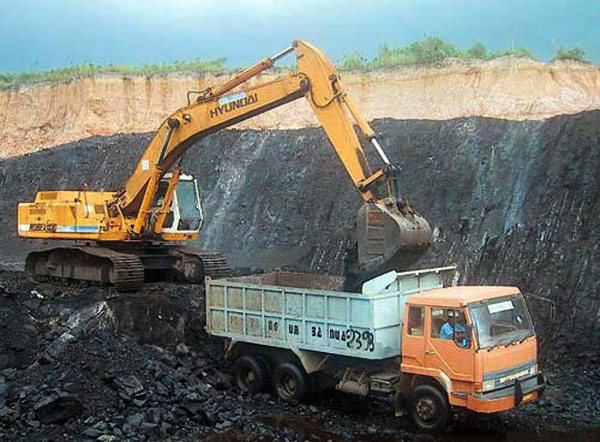
NLC India Ltd.’s Talabira II & III Open Cast Coal Mine in Odisha has recorded its highest-ever annual coal production and dispatch in FY 2025-26, strengthening domestic coal availability while expanding the use of digital logistics, automated monitoring and modern mining technologies.
Located across Sambalpur and Jharsuguda districts, the mine produced 19.14 million tonnes of coal during FY 2025-26, representing year-on-year growth of 11.28%. It also achieved a record daily output of 126,138 tonnes on March 21, 2026, while production during March reached an all-time monthly high of 3.39 million tonnes.
Annual coal dispatch rose to a record 17.69 million tonnes during the financial year. Around 10.72 million tonnes was supplied to the power sector, while 6.97 million tonnes went to non-regulated consumers. Coal from the mine supports power generation across several states, including Odisha, Chhattisgarh, Jharkhand, Madhya Pradesh, Karnataka, Andhra Pradesh, Tamil Nadu and West Bengal.
Since the beginning of commercial operations, cumulative production from Talabira II & III has reached 72.23 million tonnes, while cumulative dispatch stood at 70.89 million tonnes as of August 14, 2026. The sustained increase in output has made the mine an increasingly important component of India’s domestic coal-supply network.
Technology has played a major role in improving efficiency. The mine operates a Digital Logistics Management System that uses RFID-based vehicle verification, AI-enabled cameras and digitally controlled entry and exit points to monitor coal movement. Average entry-gate processing time has fallen from 1.42 minutes to 0.54 minutes per vehicle, while tare weighment time has declined from 1.34 minutes to 0.48 minutes.
Mining operations also incorporate GPS-based fleet management, geo-fencing, drone surveying, 3D terrestrial laser scanning, mechanised truck loading and continuous ambient-air-quality monitoring. Surface miners are equipped with dust-suppression systems, while CCTV surveillance provides additional operational oversight.
Environmental management has expanded alongside production. Plantation activities have covered more than 52 hectares inside and outside the mining lease, with nearly 1.3 lakh saplings planted. Dust-control measures include wet drilling, water sprinklers, fog cannons, wind barriers, fixed sprinkling systems, truck-washing facilities and mechanised road cleaning. Solar lighting has also been introduced within mine infrastructure and surrounding villages.
Safety measures include structured traffic management, reinforced blasting procedures, mandatory protective equipment, regular training and digital near-miss reporting. Talabira II & III has reported no fatal accidents since inception and has maintained a Five-Star Rating under the coal sector’s mine-performance assessment framework for five consecutive financial years from FY 2020-21 to FY 2024-25.
The project currently supports 3,277 employment opportunities, including 1,277 direct jobs and around 2,000 indirect positions in transportation and allied activities. Skill-development initiatives have also been extended to project-affected families, rural youth and women.
Community-development spending reached ₹5.32 crore in FY 2025-26, covering healthcare, drinking water, education, rural infrastructure, school transport, sports and solar lighting. A further ₹4.20 crore was spent during FY 2026-27 up to July on water supply, healthcare, school and Anganwadi infrastructure, rural roads, community facilities and water-body rejuvenation.
The record production and dispatch achieved at Talabira II & III underline its growing contribution to India’s energy security. At the same time, the increasing use of digital logistics, automated monitoring, modern surveying and environmental-control systems shows how large-scale coal production is being combined with higher operational efficiency, safety and technology-driven management.
You may also like
-
India to Track Challenges Faced by Women Entrepreneurs in New National Business Survey
-
India Updates Vehicle Rules to Strengthen E85 and E100 Flex-Fuel Technology
-
Adani Green Energy Expands Battery Storage to 6.63 GWh at Khavda, Strengthening India’s Renewable Power Infrastructure
-
Manastu Space Secures ₹116 Crore Government Support to Develop Indigenous Green Propulsion Systems
-
GeM’s AABHAR Collection Showcases 294 Indigenous Products, Strengthens Market Access for Indian Artisans
