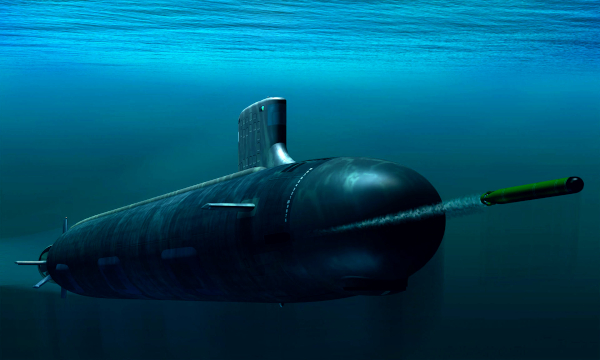
India’s Defence Research and Development Organisation is advancing a new generation of vibration-isolation technologies aimed at reducing one of the less visible but critically important signatures of naval vessels: machinery-generated underwater noise. Research led by scientists from DRDO’s Naval Physical & Oceanographic Laboratory (NPOL) in Kochi has demonstrated a low-frequency anti-vibration mount using a nitrile-butadiene-rubber and short-carbon-fibre composite, providing another indigenous technology that could contribute to quieter future Indian naval platforms.
The development is particularly significant because acoustic signature is one of the most important determinants of survivability at sea. A modern warship or submarine may carry sophisticated radars, missiles and electronic-warfare equipment, yet engines, generators, pumps, compressors, ventilation systems and other rotating machinery continuously produce mechanical vibration. Unless this vibration is isolated effectively, it can travel through machinery foundations into the hull and eventually radiate into the surrounding water as detectable sound.
DRDO itself identifies suppression of such vibration as an important element of naval acoustic-signature management. NPOL has been developing multiple anti-vibration technologies intended to minimise machinery vibrations transmitted into the hull and reduce interference with sound-sensitive equipment aboard naval vessels. DRDO’s current hydro-structures technology programme lists composite anti-vibration mounts, vibro-acoustic baffles, distributed rubber isolation pads, low-frequency passive mounts, magnetorheological-fluid mounts and shear-thickening-fluid autonomous mounts among the technologies under development at NPOL.
A New Approach to Low-Frequency Vibration
The latest research focuses on a particularly difficult part of the vibration spectrum: low-frequency vibration. Conventional rubber isolation systems can perform effectively once vibration frequencies rise sufficiently above the natural resonance of the mounting system, but isolating machinery operating at lower frequencies presents a much greater engineering challenge.
The NPOL-led research, published in Advances in Military Technology in 2025, investigated the use of nitrile butadiene rubber, or NBR, reinforced with short carbon fibres to develop an improved passive anti-vibration mount. Three different mount designs were optimised using the stress-strain characteristics of five NBR compositions containing different quantities of short-fibre reinforcement. The designs were then evaluated through material testing, finite-element modelling, structural analysis and experimental validation.
Among the configurations tested, the researchers found that Model-2 using a carbon-fibre loading of two parts per hundred rubber, or 2 phr, produced the best vibration-damping performance for the low-frequency application examined in the study. This is important because the objective is not simply to make the rubber softer. Naval machinery mounts must simultaneously carry substantial static loads, withstand continuous cyclic operation, retain their properties over long periods and absorb vibration without introducing excessive movement or instability.
The use of carbon-fibre reinforcement allows engineers to alter the mechanical behaviour of the rubber matrix and seek a better balance between structural strength, stiffness and damping. The result is a composite material that can be engineered more precisely for demanding naval environments than an unreinforced elastomer.
Why Machinery Noise Can Reveal a Warship
Every mechanical system aboard a vessel produces a characteristic vibration spectrum. Propulsion machinery, diesel generators, cooling pumps and other equipment generate combinations of frequencies that can propagate through the ship’s structure.
Once mechanical vibration reaches the hull, part of that energy can enter the surrounding seawater as acoustic energy. A sufficiently sensitive passive sonar does not have to transmit anything to detect such noise. It simply listens.
This gives acoustic intelligence an important role in undersea warfare. The machinery signature of a ship or submarine can potentially contribute not only to detection but also to classification and tracking when combined with other acoustic information.
Reducing vibration at the machinery foundation therefore attacks the problem before much of the energy reaches the hull. Instead of attempting to manage radiated noise only after it has entered the structure, an isolation mount mechanically separates vibrating equipment from the platform supporting it.
NPOL researchers explicitly note that vibration produced by onboard machinery can adversely affect the stealth of marine platforms and that supplementary passive anti-vibration mounts remain necessary even when designers attempt to reduce vibration at its source.
Acoustic Stealth Goes Beyond Propeller Noise
The public discussion surrounding naval stealth often concentrates on propeller cavitation, hull design and anechoic coatings, particularly when submarines are involved. Machinery isolation is another essential component of the same acoustic-management problem.
Propellers and hydrodynamic flow generate one category of noise. Internal machinery creates another. Pumps, turbines, electrical machines and auxiliary systems can introduce structural vibration throughout a vessel.
A quiet propulsion system therefore does not automatically produce a quiet naval platform if its supporting machinery remains mechanically coupled to the hull.
This explains why navies invest considerable effort in mounting machinery on resilient foundations and isolating pipes, electrical equipment and other mechanical connections that can provide secondary paths for vibration.
For submarines the requirement becomes even more demanding. Unlike a surface combatant, a submarine depends heavily on remaining acoustically inconspicuous for survival. Lower machinery signatures can increase the distance at which an adversary must approach before achieving a useful passive-sonar detection, although actual detection performance depends on many other variables including ocean conditions, platform speed, sonar characteristics and background noise.
DRDO has not publicly identified a specific submarine class or surface combatant scheduled to receive the newly reported NBR-carbon-fibre mount. The research should therefore be viewed as a validated enabling technology rather than evidence that a particular Indian Navy vessel has already been modified.
NPOL Has Been Working on the Problem for Years
The new composite mount is not an isolated experiment. It forms part of a long-running NPOL programme involving several methods of controlling naval vibration.
DRDO has already developed rubber anti-vibration mounts for naval platforms whose functions include protecting onboard machinery against shock generated by underwater explosions and reducing the transmission of machinery vibration into the hull. DRDO’s technology documentation states that these elastomeric mounts provide both shock protection and vibration isolation.
Its existing composite anti-vibration mounts are designed for significantly different load classes and are intended to provide high load capacity, low creep and high cyclic-fatigue life. DRDO’s export compendium lists composite mounts in 220-kg and 1,200-kg rated-load variants, while separate rubber mounts are offered in capacities ranging from 15 kg to 220 kg. These existing systems illustrate the breadth of machinery sizes that naval vibration-control technology must accommodate.
NPOL is also pursuing a considerably more sophisticated concept using magnetorheological fluid, or MR fluid. Unlike a conventional passive rubber mount whose properties are essentially fixed, an MR-fluid semi-active mount uses sensors, electronics and a controllable fluid chamber to modify its damping characteristics.
DRDO research has demonstrated a closed-loop MR anti-vibration mount incorporating a MEMS vibration sensor and controller. The system adjusts current flowing through a solenoid, changing the behaviour of the MR fluid and therefore the damping produced by the mount. Tests reported by DRDO researchers showed additional damping at resonance compared with a conventional passive resilient rubber mount and an earlier onset of vibration isolation.
DRDO’s current technology roadmap also includes shear-thickening-fluid autonomous mounts, suggesting that India is examining passive, semi-active and adaptive methods rather than relying on a single solution.
Making the Ship Quieter Can Also Help Its Own Sonar
Reducing vibration is useful not only because an enemy sonar may be listening. A naval vessel also has to prevent its own machinery from interfering with its sensors.
Modern anti-submarine warfare ships carry extremely sensitive sonar equipment intended to detect faint underwater contacts. Noise and structural vibration generated aboard the host vessel can reduce the quality of the acoustic environment in which those sensors have to operate.
NPOL has already demonstrated this principle in work involving an underwater acoustic communication system. DRDO developed a specially formulated polymer-based acoustic isolator intended to reduce own-ship noise affecting the system. Testing showed that introducing the isolator improved the performance of the receiver arrangement by reducing the influence of platform-generated acoustic and vibration interference.
That creates a double benefit for acoustic-signature reduction. Better isolation can make a naval platform less conspicuous to an opponent while simultaneously producing a quieter environment for its own sonar, communications equipment and other acoustically sensitive systems.
For an anti-submarine warfare vessel, this distinction can be operationally important. The ship is simultaneously attempting to find a quiet submarine while avoiding unnecessary acoustic interference from its own machinery.
Greater Relevance as Submarines Become Quieter
The importance of vibration isolation is likely to increase as submarine technology advances.
Modern conventional submarines increasingly employ advanced batteries, air-independent propulsion technologies, improved electric motors and better acoustic treatments. Nuclear submarines are also adopting quieter pumps, improved machinery isolation and advanced propulsor designs.
As the acoustic signature of a potential target falls, the self-noise of the searching platform becomes correspondingly important. Extracting a weak submarine contact from ambient ocean noise is already a demanding signal-processing problem. Unnecessary machinery noise generated by the detecting vessel makes the task more difficult.
India is simultaneously investing heavily in sonar development. NPOL’s current technology work includes low-frequency projector arrays, active and passive receiver signal processing and low-frequency towed arrays. Vibration-control technology therefore complements the sensors themselves by helping create a better acoustic environment around the platform carrying them.
Particularly Important for India’s Future Naval Construction
The timing of these technologies is relevant to India’s broader naval modernisation.
India is moving toward increasingly indigenous construction of destroyers, frigates, anti-submarine warfare vessels and submarines. As domestic content rises, acoustic-management technologies that were once dependent on specialised foreign suppliers become increasingly important areas for indigenous research.
Vibration mounts may appear less dramatic than missiles or radars, but they are examples of the underlying engineering technologies that determine the actual performance of a combat platform.
A modern ship contains hundreds of systems capable of producing noise and vibration. Acoustic stealth therefore emerges from the cumulative treatment of numerous individual sources rather than from one single piece of equipment.
Indigenous development also gives Indian engineers greater ability to design isolation systems specifically around machinery selected for future naval platforms. Load characteristics, operating frequencies, temperature, salt exposure, shock requirements, available installation space and expected service life can all influence the mount required for a particular application.
NPOL’s research into several mount technologies suggests that future Indian naval platforms could ultimately use different isolation solutions for different categories of equipment rather than attempting to apply one universal design.
From Passive Rubber to Adaptive Isolation
The broader direction of DRDO’s programme is especially noteworthy. Traditional passive mounts continue to offer advantages because they are mechanically simple, reliable and require no external control system. The new NBR-carbon-fibre research seeks to improve the performance available from that basic approach at lower frequencies.
Semi-active technologies add another layer. Magnetorheological mounts can change damping characteristics in response to measured vibration, potentially allowing a system to adapt as machinery speed and vibration frequency change.
Autonomous fluid-based mounts could push this concept further by responding dynamically to operating conditions.
In future warships and submarines, acoustic-signature management could therefore become increasingly active. Sensors distributed around machinery spaces could detect changes in structural vibration while adaptive isolation systems alter their response to suppress troublesome frequencies.
Such an architecture would represent a significant progression from the traditional concept of placing machinery on fixed rubber pads.
A Small Component With Strategic Importance
The low-frequency mount developed and validated by NPOL demonstrates how seemingly modest materials research can contribute directly to naval survivability.
An anti-vibration mount is physically small compared with the warship surrounding it. Yet numerous such devices positioned beneath critical machinery can influence how much internally generated vibration ultimately reaches the hull and surrounding water.
That has implications for acoustic stealth, onboard sensor performance, machinery protection and crew comfort.
The research also demonstrates the importance of indigenous expertise in areas that receive relatively little public attention. Naval acoustic stealth depends on a combination of hydrodynamics, materials science, structural engineering, signal processing, propulsion technology and vibration control. No single technology can make a large naval vessel silent.
DRDO’s work at NPOL increasingly addresses that challenge as an integrated acoustic-management problem. The organisation is developing not just sonars to detect an adversary, but also materials and mechanical systems intended to prevent Indian vessels from advertising their own presence.
The newly validated NBR-carbon-fibre low-frequency anti-vibration mount adds another tool to that effort. The available research does not establish that the mount has already been installed aboard an operational Indian warship or submarine, and DRDO has not identified a specific platform for integration. What it does demonstrate is that India has developed and experimentally validated an indigenous material-and-mount configuration specifically aimed at a difficult area of naval vibration isolation.
As passive sonar becomes more sensitive and undersea surveillance networks grow more capable, reducing every avoidable source of radiated noise will become increasingly important. Future naval stealth will depend not only on the shape of a hull or the design of a propeller, but on what happens deep inside machinery compartments where pumps, generators and propulsion systems continuously attempt to transmit their vibration into the structure around them.
By preventing more of that vibration from reaching the hull in the first place, DRDO’s expanding family of low-frequency, composite and adaptive isolation technologies could help India’s future warships and submarines become harder to hear — and therefore harder to find.
You may also like
-
Rajnath Singh to Lead Indian Delegation at ASEAN Defence Summit in Philippines, Strengthening Indo-Pacific Security Cooperation
-
Bengaluru Startup Paar Autonomy Develops AI-Powered Drone Systems for GPS-Denied Environments
-
Sigma Advanced Systems Secures Fresh ₹973 Crore NATO Artillery Ammunition Order
-
India Advances Indigenous Defence and Space Technologies Through Naval Innovation, Drones and Advanced Electronics
-
Thales Seeks Indian Partnerships for Next-Generation Missiles, Radars and Electronic Warfare Systems
