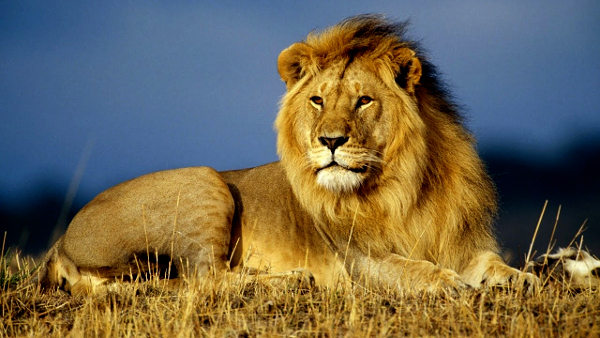
Gujarat’s Barda Wildlife Sanctuary is emerging as an important new stronghold for the Asiatic lion (Panthera leo persica), following the species’ return to the region after an absence of approximately 144 years. A scientific study published in the international journal PLOS ONE has found that Barda’s forests, grasslands and available prey resources offer favourable conditions for supporting a resident lion population, strengthening efforts to expand the species’ range beyond its traditional stronghold in Gir.
The study, titled Beyond Gir: Barda Wildlife Sanctuary as a Potential Stronghold for Asiatic Lions, was published on September 9, 2026, and received renewed attention in wildlife reports on October 15. Conducted by researchers associated with the Gujarat Forest Department and Banda University of Agriculture and Technology, the investigation examined the movements, habitat preferences, social organisation and feeding behaviour of lions inhabiting Barda.
The findings represent an important development in India’s wildlife conservation efforts. With Gujarat’s Asiatic lion population increasing from 674 in 2020 to 891 in 2025, establishing additional secure habitats has become increasingly important for the species’ long-term survival. Barda’s emerging lion population demonstrates how natural dispersal, scientific monitoring and active habitat management can contribute to the restoration of wildlife in historically occupied landscapes.
Asiatic Lions Recolonise Barda After Their Last Recorded Presence in 1879
Barda Wildlife Sanctuary lies across the Porbandar and Devbhumi Dwarka districts of Gujarat, covering approximately 192.31 square kilometres. Located in the Saurashtra region, the sanctuary contains a mosaic of dry forests, grasslands, scrub vegetation and rugged hills that provide habitats for several species of wild animals.
Historical records indicate that Asiatic lions once inhabited the Barda landscape, but their last documented presence dates to 1879. The species subsequently disappeared from the region as its geographical range contracted across western India. For more than a century, the surviving Asiatic lion population remained concentrated primarily within Gir and its surrounding landscape.
The return of lions began in 2023, when a male lion naturally dispersed into Barda. Recognising the conservation potential of the sanctuary, the Gujarat Forest Department subsequently introduced five female lions to support the establishment of a breeding population.
The initiative produced encouraging results. By August 2025, the sanctuary supported 17 lions, comprising six adults and 11 cubs, according to information released by the Union Ministry of Environment, Forest and Climate Change.
The presence of cubs is particularly significant because it demonstrates successful reproduction within the restored habitat. The emerging population indicates that Barda can provide important resources required by breeding lions, including suitable shelter, access to prey and space for establishing territories.
Scientific Study Tracks Lion Movements and Habitat Preferences
To understand how the returning lions were adapting to Barda, researchers conducted a detailed ecological investigation using satellite-based tracking and dietary analysis.
The study involved six radio-collared lions, comprising one male and five females. Researchers analysed their movements to determine home-range sizes, preferred habitats and patterns of spatial overlap.
The findings revealed an average home range of approximately 70.55 square kilometres, with an average core-use area of 10.92 square kilometres. These measurements provide insight into the space requirements of lions occupying the sanctuary and the surrounding landscape.
The researchers observed differences in how lions used different habitat types. At the broader home-range level, they showed a preference for mixed forests, while grasslands were more strongly selected within their core activity areas.
This pattern highlights the importance of maintaining a diverse habitat structure rather than concentrating conservation efforts on a single vegetation type. Forested areas provide cover and suitable conditions for resting and movement, while grasslands offer opportunities for hunting and other activities.
The study also examined the spatial overlap between individual lions. Researchers identified greater overlap across their broader home ranges than within their core-use areas, indicating the development of spatial organisation among the animals.
These observations provide valuable information for managing the growing lion population and protecting the habitats most frequently used by the species.
Wild Pigs Form Major Component of Lions’ Diet in Barda
One of the study’s important findings concerns the feeding behaviour of lions in the newly occupied habitat.
Researchers analysed lion scat samples to identify prey species and understand the dietary resources available within Barda.
The results showed that wild pigs accounted for 55% of recorded prey occurrences, making them the most frequently identified prey species in the dietary analysis.
Domestic cattle accounted for approximately 17% of occurrences, indicating that lions also interact with livestock in the surrounding landscape.
These findings demonstrate the importance of maintaining healthy wild prey populations while reducing circumstances that may bring lions into conflict with livestock owners.
Wild pigs are adaptable animals capable of occupying different habitats, including forests, agricultural margins and scrubland. Their availability provides an important food resource for large carnivores in the Barda landscape.
However, a sustainable lion population benefits from access to a diverse prey base. Greater availability of wild herbivores can support predator populations and help reduce their dependence on domestic livestock.
The Gujarat Forest Department has therefore undertaken measures to strengthen Barda’s prey population, including the reintroduction of spotted deer and sambar.
Spotted Deer and Sambar Reintroduction to Strengthen Prey Availability
The restoration of wild herbivore populations forms an important component of Gujarat’s conservation strategy for Barda Wildlife Sanctuary.
Spotted deer (Axis axis) and sambar (Rusa unicolor) are important prey species for large carnivores across several Indian forest ecosystems. Their presence can improve the availability and diversity of natural food resources for lions.
Increasing wild prey availability can also contribute to healthier predator-prey relationships and improve the sanctuary’s capacity to support a resident lion population.
The Gujarat Forest Department’s prey augmentation initiatives complement broader habitat management activities, including grassland restoration and the protection of important wildlife areas.
Grasslands play an essential role in supporting herbivores by providing grazing areas, while adjoining forests and scrub habitats offer shelter and cover. Maintaining these different habitat types helps sustain a more balanced ecological system.
The researchers emphasised that long-term prey management, habitat restoration and continued monitoring will be necessary to consolidate Barda’s emerging lion population.
The study’s findings provide a scientific foundation for these activities by identifying the habitat characteristics and food resources used by lions after their return.
Gujarat’s Asiatic Lion Population Reaches 891 in 2025
The re-establishment of lions in Barda comes against the background of a substantial increase in Gujarat’s Asiatic lion population.
According to the Gujarat Forest Department’s 16th Lion Population Estimation, conducted between May 10 and 13, 2025, the state’s lion population reached 891 individuals, compared with 674 recorded in 2020. This represents an increase of 217 lions, or approximately 32.2%, over five years.
The population has also expanded geographically, with lions establishing themselves in several areas beyond the traditional Gir forest landscape. These include forest reserves, agricultural landscapes, river corridors and other habitats across Saurashtra.
The 2025 assessment identified nine satellite lion populations, including newly established groups in Barda Wildlife Sanctuary and other parts of Gujarat. The emergence of these populations demonstrates the species’ ability to occupy suitable habitats outside its traditional protected-area stronghold.
Population expansion also creates new conservation responsibilities. Lions moving through agricultural areas and settlements require adequate habitat connectivity, protection from accidental deaths and measures to reduce conflicts with local communities.
The Gujarat Forest Department has responded through scientific monitoring, veterinary support, habitat restoration and the involvement of local communities in wildlife conservation.
Barda Emerges as a Second Stronghold Beyond Gir
The establishment of a breeding lion population in Barda represents an important opportunity to strengthen the geographical distribution of Asiatic lions.
Although Gir and its surrounding landscape remain the principal stronghold of the species, the emergence of additional breeding populations can reduce the risks associated with concentrating a species within a limited geographical area.
Large carnivore populations face threats from infectious diseases, habitat degradation, accidental deaths and conflicts with people. Maintaining suitable habitats across different locations can strengthen the overall resilience of the species.
Barda’s geographical position within the Saurashtra landscape makes it an important component of Gujarat’s wider lion conservation programme. Its combination of forests, grasslands and rocky terrain provides ecological conditions that can accommodate large carnivores and their prey.
The successful reproduction of lions in Barda offers encouraging evidence of the habitat’s suitability. At the same time, the scientific study emphasises the importance of continued monitoring, prey augmentation and habitat management to maintain the emerging population.
The researchers also acknowledged that their findings were based on six monitored lions and a relatively short dietary assessment. Continued ecological studies will help refine management strategies as the population develops.
Protecting Wildlife Corridors and Reducing Human–Lion Conflict
The expansion of Asiatic lions beyond protected forests has increased the importance of landscape-level conservation planning.
Lions frequently move through areas containing villages, agricultural fields, grazing lands and transportation infrastructure. These movements create opportunities for population expansion but also increase the possibility of encounters with people and livestock.
Maintaining safe wildlife corridors is therefore essential for allowing lions to disperse between suitable habitats. Such corridors support movement between populations and help maintain opportunities for genetic exchange.
The Gujarat Forest Department has undertaken satellite telemetry studies to understand lion movements, habitat preferences and the use of corridors across the Greater Gir landscape. These investigations provide information for identifying important movement routes and areas requiring additional conservation attention.
Local participation remains another important component of lion conservation. Community awareness programmes, wildlife trackers and village-level response networks help residents understand lion behaviour and report animal movements.
Measures to reduce livestock predation and respond to wildlife emergencies can improve coexistence between local communities and expanding lion populations.
The restoration of natural prey species within Barda is particularly important in this context because it strengthens the food resources available to lions inside suitable wildlife habitats.
Barda’s Restoration Strengthens India’s Asiatic Lion Conservation Programme
The return of Asiatic lions to Barda Wildlife Sanctuary illustrates the results that can emerge when natural wildlife dispersal is supported by planned conservation measures.
The arrival of a male lion in 2023, followed by the introduction of five females, established the foundation for a new breeding population. The presence of 17 lions by August 2025 provided an encouraging indication of the sanctuary’s ability to support the species.
The September 2026 scientific study has added important ecological evidence by examining how the animals use the landscape, interact spatially and obtain food.
Its findings highlight the value of maintaining mixed forests, grasslands and healthy wild prey populations while strengthening measures to prevent human–wildlife conflict.
Barda’s development as an additional lion habitat is particularly significant for a species whose global wild population remains concentrated in Gujarat. Expanding the number of secure habitats within the region strengthens conservation planning and provides opportunities for further scientific research.
The recovery of Asiatic lions in Barda after approximately 144 years stands as an important achievement in India’s wildlife conservation efforts. With continued scientific monitoring, habitat restoration and community participation, the sanctuary is becoming a valuable part of Gujarat’s expanding lion conservation landscape and a promising refuge for future generations of Asiatic lions.
References
- Mohan Ram, Aradhana Sahu, Nityanand Srivastava, Rohit Chaudhary, Lahar Jhala and Yashpal Zala. Beyond Gir: Barda Wildlife Sanctuary as a Potential Stronghold for Asiatic Lions. PLOS ONE, September 9, 2026. DOI: 10.1371/journal.pone.0354096.
https://doi.org/10.1371/journal.pone.0354096 - Gujarat Forest Department, Government of Gujarat. Report on the 16th Lion Population Estimation, May 2025. Official population assessment covering Asiatic lion numbers, population expansion and conservation management.
https://girlion.gujarat.gov.in/Documents/Uploads/NewsUpdates/Lion_Population_Estimation_2025_Report_L.pdf - Ministry of Environment, Forest and Climate Change, Government of India. World Lion Day 2025: Asiatic Lion Conservation and Development of Barda Wildlife Sanctuary. Press Information Bureau, August 2025.
https://www.pib.gov.in/PressReleaseIframePage.aspx?PRID=2154818 - Ministry of Environment, Forest and Climate Change, Government of India. Parliament Question: Population of Asiatic Lions in Gir Forests. February 5, 2026.
https://www.pib.gov.in/PressReleasePage.aspx?PRID=2223755
You may also like
-
India’s Ramsar Sites Reach 103 as Sukhna Wetland and Sauj Jheel Receive International Recognition
-
India Expands Global Big Cat Conservation as International Big Cat Alliance Opens New Headquarters
-
Satpura Tiger Reserve’s Barasingha Population Crosses 300 as Madhya Pradesh Plans New Wildlife Corridors
-
Karnataka’s Tiger Population Could Cross 700 as New Census Builds on Official Count of 563
-
Project Cheetah Expands as Veerangana Durgavati Tiger Reserve Becomes Madhya Pradesh’s Third Cheetah Habitat
