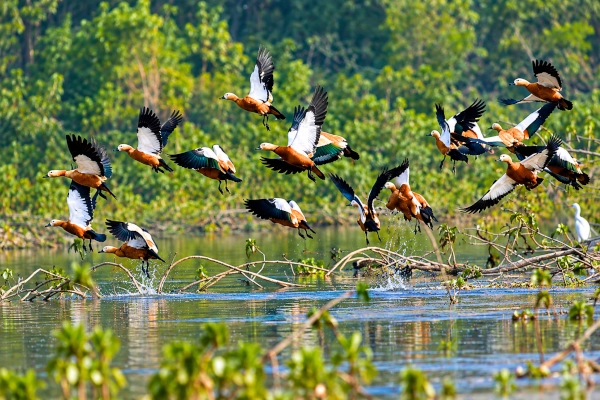
India has reached a new milestone in wetland conservation, with the addition of Sukhna Wetland in Chandigarh and Sauj Jheel in Uttar Pradesh to the Ramsar List of Wetlands of International Importance. The two new designations have increased India’s total number of Ramsar sites to 103, reflecting the country’s expanding efforts to conserve biodiversity, protect freshwater ecosystems and strengthen environmental sustainability.
Union Minister for Environment, Forest and Climate Change Bhupender Yadav announced the development on October 15, 2026. The Minister highlighted the importance of wetlands in protecting biodiversity, improving water security, supporting climate resilience and sustaining local livelihoods. He also congratulated Chandigarh and Uttar Pradesh on the international recognition of their wetlands and encouraged travellers to explore these ecologically important destinations.
The Ramsar Convention Secretariat separately confirmed the inclusion of both wetlands, recognising their ecological importance and their role in supporting diverse wildlife, particularly resident and migratory waterbirds.
Sukhna Wetland: A Vital Freshwater Ecosystem at the Foothills of the Himalayas
Sukhna Wetland, located in Chandigarh at the foothills of the Shivalik Hills, has received Ramsar recognition as Site No. 2602. The wetland is an important freshwater reservoir that supports aquatic biodiversity while providing recreational, educational and environmental benefits to the surrounding urban population.
The wetland contains a variety of habitats, including open water, shoreline vegetation, scrubland and adjoining forest areas. These habitats provide feeding, breeding, resting and wintering grounds for numerous resident and migratory birds travelling along the Central Asian Flyway, one of the world’s major migratory bird routes.
Among the notable species associated with Sukhna Wetland are the vulnerable common pochard (Aythya ferina), the endangered Pallas’s fish eagle (Haliaeetus leucoryphus) and the endangered black pond turtle (Geoclemys hamiltonii). The presence of these species highlights the wetland’s importance for biodiversity conservation and the protection of threatened wildlife.
Sukhna Wetland also plays an important role in regulating water and sediment movement from its surrounding catchment. Conservation measures include controlling soil erosion, managing sediment inflow and removing invasive vegetation. Its international recognition strengthens the importance of maintaining ecological balance within Chandigarh’s rapidly developing urban environment.
Sauj Jheel: An Important Bird Habitat in Uttar Pradesh’s Ganga Floodplain
Sauj Jheel in Uttar Pradesh has been designated Ramsar Site No. 2603, recognising its significance as a freshwater wetland supporting large populations of waterbirds. The shallow lake lies within the Ganga River floodplain and forms part of a wider network of wetlands that sustain biodiversity across the region.
Surrounded by agricultural landscapes, Sauj Jheel contains diverse wetland vegetation, including sacred lotus (Nelumbo nucifera) and wild sugarcane (Saccharum spontaneum). These plant communities provide essential nesting grounds, shelter and food resources for birds and other wetland-dependent wildlife.
The wetland regularly supports more than 30,000 waterbirds, making it an important habitat for both resident and migratory species. It has also received recognition as an Important Bird and Biodiversity Area from BirdLife International. Notable species recorded at Sauj Jheel include the vulnerable sarus crane (Grus antigone) and greater spotted eagle (Clanga clanga).
Located close to the Saman Bird Sanctuary, another Ramsar site, Sauj Jheel contributes to ecological connectivity between neighbouring wetland habitats. Conservation priorities include regulating fishing activities, protecting breeding areas and managing livestock access to sensitive sections of the wetland.
Ramsar Convention Recognises Wetlands of International Importance
The Ramsar Convention is an international treaty adopted in Ramsar, Iran, in 1971 to promote the conservation and wise use of wetlands. India became a contracting party in 1982 and has progressively expanded its network of internationally recognised wetlands.
Ramsar designation acknowledges wetlands that meet internationally established ecological criteria, including their importance for biodiversity, threatened species and waterbird populations. The recognition encourages conservation planning, sustainable management and cooperation among government agencies, researchers and local communities.
Wetlands provide several essential ecological services. They help regulate water flows, recharge groundwater, retain sediments, store carbon and support aquatic and terrestrial biodiversity. Many wetlands also contribute to agricultural productivity, fisheries, tourism and other livelihood activities.
Protecting these ecosystems is particularly important as wetlands face increasing pressures from pollution, encroachment, invasive species, altered water flows and changing climatic conditions. Effective management helps preserve their ecological functions while allowing communities to benefit from their resources sustainably.
Amrit Dharohar Initiative Strengthens India’s Wetland Conservation Efforts
India’s expanding Ramsar network complements national initiatives aimed at improving wetland conservation and encouraging community participation in environmental management.
The Amrit Dharohar initiative promotes the conservation of Ramsar sites while supporting sustainable livelihood opportunities, nature tourism and community engagement. The programme recognises that wetland protection can deliver ecological benefits alongside economic opportunities for people living near these ecosystems.
The inclusion of Sukhna Wetland and Sauj Jheel provides further opportunities to strengthen ecological monitoring, habitat management and public awareness. Responsible nature tourism and birdwatching can also encourage greater appreciation of these ecosystems while supporting local tourism-related activities.
Union Environment Minister Bhupender Yadav emphasised that the latest additions reflect India’s commitment to safeguarding its natural heritage and strengthening the ecological, climatic and livelihood benefits provided by wetlands.
India’s 103 Ramsar Sites Reflect Growing Commitment to Biodiversity Conservation
The designation of Sukhna Wetland and Sauj Jheel has brought India’s Ramsar site network to 103, extending international recognition to two ecologically important freshwater habitats.
While Sukhna Wetland demonstrates the importance of conserving biodiversity alongside expanding urban centres, Sauj Jheel highlights the ecological value of floodplain wetlands surrounded by agricultural landscapes. Both ecosystems provide critical habitats for waterbirds and other wildlife while contributing to broader environmental stability.
The latest designations reinforce India’s continuing efforts to protect its wetland heritage through scientific management, biodiversity conservation and community participation. By strengthening the protection of these ecosystems, India is preserving vital natural resources and supporting a healthier environment for future generations.
References
- Press Information Bureau, Ministry of Environment, Forest and Climate Change, Government of India. India’s Ramsar Site Tally Reaches 103 with Addition of Sukhna Wetland (Chandigarh) and Sauj Jheel (UP). October 15, 2026.www.pib.gov.in
- Convention on Wetlands (Ramsar Convention). India Adds Two More Wetlands of International Importance to the List. October 15, 2026.www.ramsar.org/news/india-adds-two-more-wetlands-international-importance-list
- Ramsar Sites Information Service. Official Ramsar site records for Sukhna Wetland (Site No. 2602) and Sauj Jheel (Site No. 2603).rsis.ramsar.org
- Ministry of Environment, Forest and Climate Change, Government of India. Wetlands of India Portal.indianwetlands.in
You may also like
-
India Expands Global Big Cat Conservation as International Big Cat Alliance Opens New Headquarters
-
Satpura Tiger Reserve’s Barasingha Population Crosses 300 as Madhya Pradesh Plans New Wildlife Corridors
-
Karnataka’s Tiger Population Could Cross 700 as New Census Builds on Official Count of 563
-
Project Cheetah Expands as Veerangana Durgavati Tiger Reserve Becomes Madhya Pradesh’s Third Cheetah Habitat
-
Kashmir Markhor Population Rises to 227 as Kazinag Conservation Efforts Show Results
