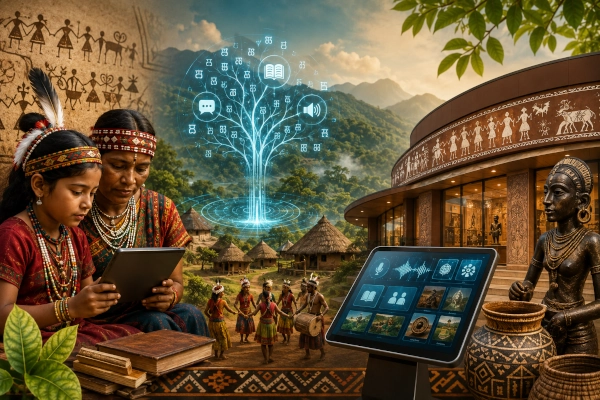
India has begun a major national initiative to strengthen the preservation of tribal languages while transforming tribal museums into more interactive centres of cultural memory. The three-day National Conclave on Tribal Languages and Museums is being held in Mysuru from August 24 to 26, bringing linguistic preservation, traditional knowledge and museum development together on a common national platform for the first time.
India’s tribal communities preserve several hundred languages and dialects, many of which remain unwritten or have limited presence in formal education. As transmission between generations weakens, the disappearance of these languages could also result in the loss of traditional knowledge relating to ecology, agriculture, medicinal practices, oral history and community customs. The conclave therefore aims to create a broader national framework for documenting and revitalising vulnerable languages with direct participation from tribal communities.
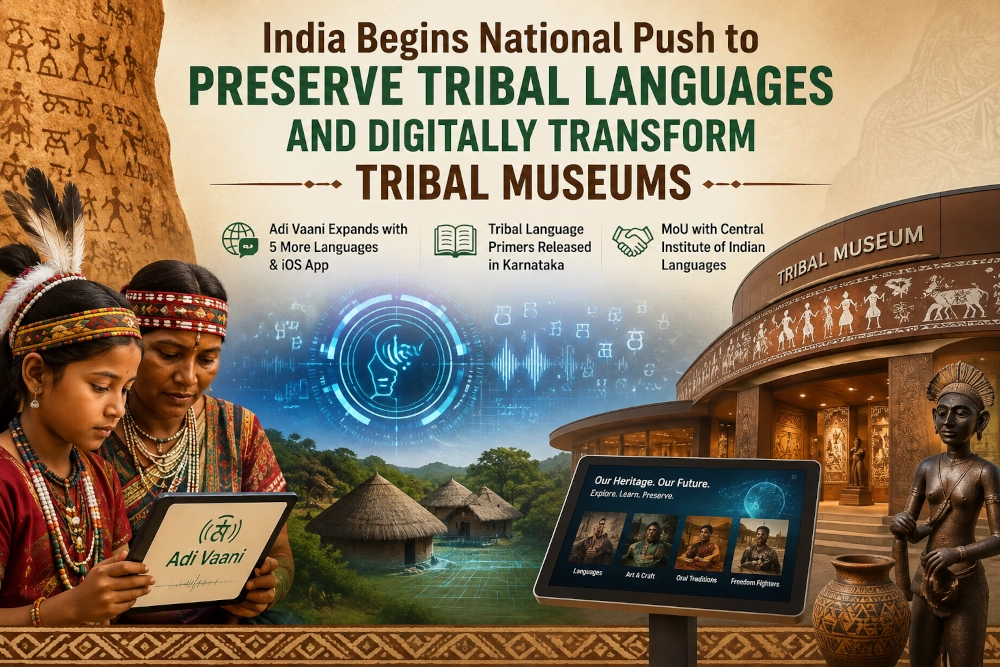
Technology forms an important part of the initiative. The Adi Vaani digital platform is receiving a major upgrade that includes an iOS application, five additional languages and new features. The conclave will also examine technologies such as automatic speech recognition, text-to-speech systems, machine translation and digital corpus building, potentially allowing languages with limited written resources to enter modern digital ecosystems. Discussions will also address questions surrounding protection and commercial use of linguistic data.
The inaugural programme includes the release of tribal-language primers developed in Karnataka and an MoU between the Ministry of Tribal Affairs and the Central Institute of Indian Languages. A new chatbot platform is also scheduled for launch, strengthening the use of digital tools in tribal-language preservation and public access.
Another major component focuses on education. Experts, Tribal Research Institutes and community representatives will examine models for multilingual education that allow children from tribal communities to encounter their mother tongues within the schooling system instead of relying entirely on languages unfamiliar to them. Community-led revitalisation projects that can be expanded nationally are expected to be identified during the discussions.
The initiative extends beyond language preservation to India’s growing network of tribal museums. The Centre has sanctioned 11 Tribal Freedom Fighter Museums across ten states, four of which have already been inaugurated. The Mysuru conclave will work towards a common framework for developing these institutions as centres for research, storytelling, conservation and representation of tribal participation in India’s freedom struggle.
Museum specialists will also examine the use of augmented and virtual reality, interactive kiosks and contemporary exhibition technologies. The objective is to move beyond static collections and create institutions where oral traditions, historical narratives, artefacts and community knowledge can be experienced within their proper cultural context.
The conclave is expected to work towards a Declaration on Tribal Languages, identify preservation models that can be expanded nationally and establish a shared vision for tribal museums. Taken together, the programme represents an attempt to use modern digital technology not as a replacement for living traditions, but as a tool for documenting and transmitting India’s diverse indigenous linguistic and cultural heritage.
You may also like
-
Malava in the Mahabharata: The Ancient Warrior People Behind the Malwa Region
-
Avanti in the Mahabharata: The Ancient Kingdom of Ujjain and the Malwa Region
-
Karusha in the Mahabharata: The Ancient Kingdom of Baghelkhand and the Vindhyan Heartland
-
Indian Woodblock Craft Helps Preserve Indigenous Australian Designs for Future Generations
-
Surasena and Chedi in the Mahabharata: The Ancient Kingdoms of Mathura-Braj and Bundelkhand
