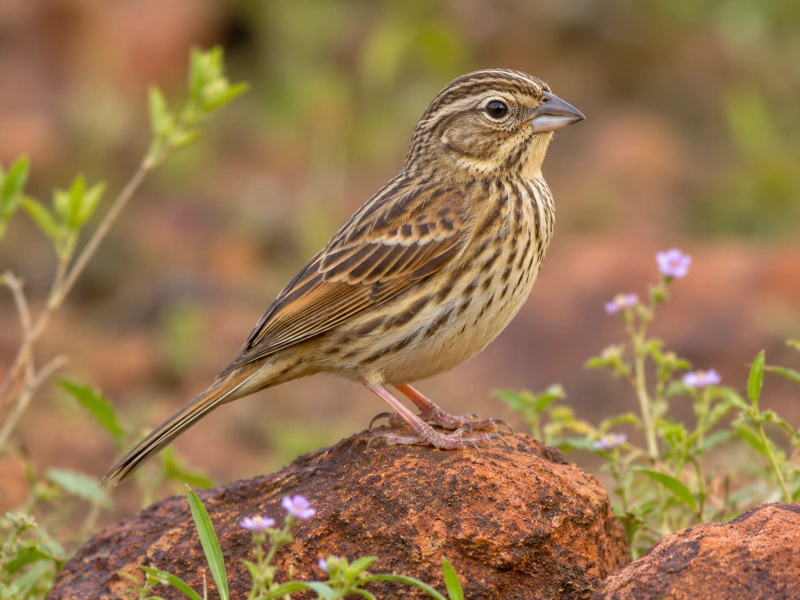
A rare striolated bunting (Emberiza striolata) has been spotted in the laterite landscape of Gurupura near Mangaluru in Karnataka, marking what local birdwatchers believe to be the first documented occurrence of the species in coastal Karnataka. The sighting, recorded on November 15, 2026, and reported on November 17, has attracted attention among ornithologists and wildlife enthusiasts because the bird is generally associated with dry, rocky and semi-arid habitats rather than the humid coastal environments of southwestern India.
The bird was observed between 7:30 AM and 8:00 AM by three birdwatchers, K. Vivek R. Nayak, Arnold M. Goveas and K. Ramachandra Bhakta, during a birdwatching expedition in the Gurupura area. The observation is considered particularly significant because the striolated bunting is rarely documented in southern India, with previous confirmed records occurring primarily in the drier interior regions of Karnataka.
According to Nayak, the species had not previously been documented in coastal Karnataka, making the observation an important addition to the region’s reported bird records. The sighting has also been described as potentially only the second occurrence in southern India, although that claim requires examination of historical ornithological records before it can be established conclusively.
The development comes during an unusually productive period for birdwatchers around Mangaluru, where several uncommon migratory and resident bird species have been documented in recent weeks.
Striolated Bunting: A Bird Associated with Dry and Rocky Landscapes
The striolated bunting belongs to the family Emberizidae, which includes small seed-eating passerine birds commonly known as buntings. The species is generally associated with rocky hillsides, open scrublands, dry grasslands and semi-arid environments where sparse vegetation provides suitable feeding and nesting opportunities.
The bird has a relatively compact body, a short and strong conical bill adapted for consuming seeds, and distinctive streaked plumage that helps it blend into its surroundings. Its colouration generally includes combinations of brown, grey, buff and chestnut, with noticeable markings around the head and throat.
Striolated buntings are distributed across parts of Africa, West Asia, Central Asia and the Indian subcontinent. Within India, the species is more frequently associated with dry regions in the northwestern and western parts of the country.
Its occurrence in coastal Karnataka is therefore noteworthy because the Mangaluru region experiences a substantially different climatic environment, characterised by high monsoon rainfall, relatively humid conditions and a mosaic of coastal wetlands, agricultural land, laterite plateaus and wooded habitats.
The observation suggests that suitable microhabitats within the coastal landscape may occasionally provide opportunities for species usually associated with drier regions.
Earlier Records Establish the Species’ Presence in Karnataka
Although the latest observation is being described as coastal Karnataka’s first record, the striolated bunting has previously been documented elsewhere in the state.
An important earlier sighting occurred on November 1, 2020, near Vutkoor village in Raichur district. The bird was observed in grassland and scrub vegetation near a stream and was subsequently photographed.
The record was published in the ornithological journal Indian BIRDS, establishing the species’ presence in Karnataka and extending the documented southern distribution of the bird.
More recently, research published in the Journal of the Bombay Natural History Society in May 2026 provided evidence of probable breeding activity involving striolated buntings in Yadgir district.
The study, conducted by Chethan Chennegowdaramane Manjunath Hirikara, Ankush Nirmalkar and Basavaraj Mulage, documented the birds in rocky scrub habitats around Surapura in northern Karnataka.
Researchers observed territorial behaviour, singing males, interactions between individuals and courtship activities that suggested the presence of a local breeding population.
These findings are significant because they demonstrate that the species is not necessarily restricted to occasional passage through Karnataka. At least in some suitable dry habitats, it may also undertake breeding activities.
The Gurupura sighting adds an interesting coastal dimension to this emerging understanding of the species’ distribution.
Gurupura’s Laterite Landscape Provides an Unusual Habitat
The location of the latest sighting is important because Gurupura lies within the laterite-dominated landscapes surrounding Mangaluru.
Laterite plateaus and associated scrublands are distinctive habitats formed under tropical weathering conditions. Their surfaces frequently include exposed reddish rock, shallow soils, seasonal grasses and scattered vegetation.
During the monsoon, some laterite habitats support temporary pools and seasonal plant growth, while during drier periods they may resemble open scrubland.
These changing environmental conditions create a variety of microhabitats suitable for different groups of birds, insects and other wildlife.
Open laterite areas can provide feeding opportunities for seed-eating birds, particularly where grasses and other herbaceous plants produce seeds.
The presence of a striolated bunting in Gurupura may therefore reflect the availability of habitat conditions resembling those found in parts of the species’ more typical dry-country range.
However, a single observation cannot establish whether the bird is a regular visitor, an occasional wanderer or part of a previously overlooked population.
Further observations and systematic surveys would be necessary to determine the frequency and seasonal pattern of its occurrence along the Karnataka coast.
Mangaluru Records Several Uncommon Bird Sightings
The striolated bunting observation is part of a series of unusual bird records reported from Mangaluru and its surrounding areas during November 2026.
One of the most notable recent sightings involved a willow warbler (Phylloscopus trochilus) recorded at the Kenjar grasslands. Birdwatchers described the observation as Karnataka’s first documented record of the species and potentially only its fifth confirmed occurrence in India.
The willow warbler is a small migratory songbird that breeds across Europe and northern Asia and undertakes long-distance migrations, primarily towards Africa.
Another unusual observation involved the black-breasted weaver (Ploceus benghalensis), which was reported from Jokatte near Mangaluru. Local birdwatchers identified the sighting as a possible first record for the coastal districts of Dakshina Kannada and Udupi.
The Tytler’s leaf warbler (Phylloscopus tytleri) was also recorded at the Kenjar grasslands on November 15.
This species breeds in mountainous regions of Asia and migrates to wintering areas that include parts of southern India.
Together, these observations demonstrate the diversity of bird species that may occur across the coastal Karnataka landscape during seasonal movements.
They also highlight the value of regular field observations in identifying uncommon species and improving the documentation of regional bird diversity.
Coastal Karnataka’s Birding Habitats Gain Greater Recognition
Mangaluru and its surrounding districts contain a varied landscape of rivers, estuaries, wetlands, laterite formations, agricultural fields, open scrublands and forest patches.
These habitats support resident bird populations while also providing feeding and resting opportunities for migratory species.
Several locations around Mangaluru have become increasingly important to local birdwatchers, including Gurupura, Kenjar, Jokatte, Manjalpade, Kandavara, Kompadavu and Borugudde.
Each location offers different environmental conditions, allowing observers to document species associated with distinct habitats.
The Kenjar grasslands have attracted attention because of unusual migratory bird records, while areas such as Gurupura contain open laterite and scrubland environments.
Wetlands around the city support waterbirds and other species dependent on aquatic habitats, while wooded areas provide opportunities to observe forest-associated birds.
The striolated bunting observation reinforces the importance of maintaining this diversity of habitats.
It also demonstrates that areas outside formally designated wildlife sanctuaries and national parks can make valuable contributions to biodiversity documentation.
Citizen Science Contributes to Bird Distribution Research
The discovery highlights the important role played by amateur birdwatchers and citizen-science networks in documenting India’s bird diversity.
Many unusual bird records originate from regular observers who spend considerable time examining local habitats and photographing species.
Such observations can contribute to scientific understanding when accompanied by reliable information about identification, location, date and habitat.
Photographs, field notes and verified digital checklists can provide evidence that allows ornithologists to assess unusual records and compare them with previously documented occurrences.
The Coastal Karnataka Birders Network has emerged as an important informal community for birdwatching and the exchange of field observations across the coastal region.
According to local birdwatchers, the network includes approximately 200 to 300 members, with a smaller group regularly participating in field expeditions.
The growing number of observations from these enthusiasts has helped draw attention to the birdlife of Mangaluru and surrounding districts.
The latest striolated bunting sighting provides another example of how local participation can contribute to the documentation of species distributions.
Formal evaluation of the observation against existing ornithological records will be useful in determining its status as a regional first.
Importance of Conserving Laterite Plateaus and Open Scrublands
The Gurupura observation also highlights the ecological importance of laterite plateaus and open scrub habitats.
These landscapes are sometimes regarded as unproductive or degraded because they lack the dense tree cover associated with conventional forests.
However, laterite formations and natural scrublands can support specialised plant communities, seasonal vegetation and wildlife adapted to exposed environments.
Birds that depend on open ground, sparse vegetation and grass seeds may use these habitats for feeding and resting.
The conservation importance of such landscapes is often overlooked when attention is concentrated primarily on forests, wetlands and charismatic large animals.
Unusual bird sightings provide opportunities to improve understanding of these ecosystems and encourage more systematic biodiversity assessments.
Protecting habitat diversity is particularly important in rapidly developing coastal regions, where changes in land use can alter the availability of open spaces, scrublands and natural vegetation.
The striolated bunting’s appearance at Gurupura therefore offers a useful opportunity to examine the contribution of laterite habitats to regional bird diversity.
An Encouraging Addition to Coastal Karnataka’s Bird Records
The reported observation of a striolated bunting near Mangaluru represents an important development for the region’s birdwatching community.
The sighting is noteworthy because the species is generally associated with dry and rocky landscapes and has only a limited documented presence in southern India.
Earlier scientific records from Raichur and Yadgir establish the bird’s occurrence in Karnataka, while the latest observation suggests that it may occasionally reach habitats much farther southwest.
The recent series of uncommon sightings around Mangaluru also demonstrates the importance of continued bird monitoring across varied coastal environments.
Further documentation, including independently reviewed photographs and records, will help establish the Gurupura observation’s place within the known distribution of the species.
The sighting reinforces the contribution of local birdwatchers to biodiversity research and highlights the ecological value of Karnataka’s laterite plateaus, scrublands and other open habitats.
As citizen-science initiatives expand and more habitats receive systematic attention, observations such as this can contribute to a more complete understanding of India’s birdlife and support conservation efforts across landscapes that remain comparatively underexplored.
You may also like
-
Ladakh’s Black-Necked Crane Population Rises Nearly 25% to 108, Marking Important Conservation Progress
-
Scientists Discover Five New Horned Frog Species in Arunachal Pradesh
-
Rare Spotted Flycatcher Recorded in Gadag, Reported as North Karnataka’s First Sighting
-
Bar-headed Geese Return to Maharashtra’s Nandur Madhmeshwar Wildlife Sanctuary
-
Three Butterfly Species Recorded for First Time in Kerala’s Silent Valley National Park
