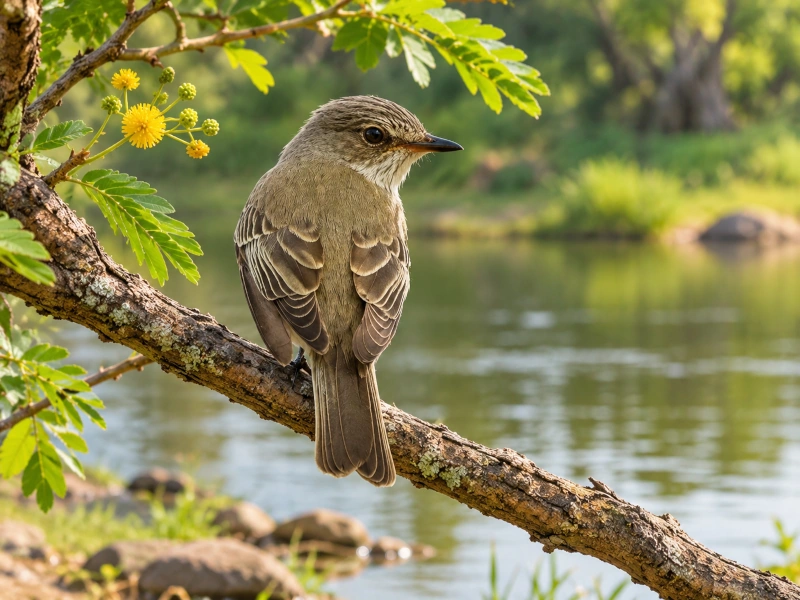
A rare migratory Spotted Flycatcher (Muscicapa striata) has been recorded in the Nagavi–Beldhadi hill region of Gadag district in Karnataka, attracting the attention of birdwatchers and wildlife researchers. The observation, reported on 16 November 2026, is being described as the first documented record of the species in North Karnataka.
The bird was observed on 8 October 2026 by Kiran Kammar, an ornithologist and wildlife researcher from Gadag, while he was returning from a birdwatching expedition in the Nagavi–Beldhadi hills. According to the published account, Kammar noticed a small bird catching insects near the ground before returning to the branch of an acacia tree.
On examining its physical characteristics, including its upright posture, beak structure and distinctive streaking on the breast, Kammar identified the bird as a Spotted Flycatcher. The observation is particularly noteworthy because the species is generally encountered in India as a passage migrant, with most records concentrated in the northwestern and western parts of the country.
A Long-Distance Migrant from Europe and Asia
The Spotted Flycatcher belongs to the family Muscicapidae, commonly known as the Old World flycatchers. It breeds across a vast geographical region extending from Europe through parts of northern and central Asia, including Siberia, before undertaking long-distance seasonal migrations towards Africa.
Unlike many migratory birds that spend the winter in the Indian subcontinent, the Spotted Flycatcher generally uses parts of India as a passage route during its autumn migration. According to Bird Count India, the species is predominantly recorded in northwestern and western India, particularly during September, as birds travel towards their African wintering grounds.
The species’ return migration generally follows a different geographical route, with many birds moving northwards through the Arabian Peninsula rather than retracing their autumn passage through India.
The observation in Gadag during October falls within the species’ broader autumn migration period. However, its occurrence in the Nagavi–Beldhadi hills is notable because the region lies away from the principal Indian passage areas identified in available migration records.
The sighting adds a potentially important observation to the documented distribution of the Spotted Flycatcher in Karnataka and highlights the value of monitoring migratory birds beyond their commonly recorded routes.
Identifying the Spotted Flycatcher
The Spotted Flycatcher is a small migratory songbird measuring approximately 14–15 centimetres in length and weighing around 14–20 grams. Its plumage is relatively subdued, consisting of greyish-brown upperparts, pale underparts and fine streaking across the crown and breast.
Unlike brightly coloured flycatchers, the species has a comparatively inconspicuous appearance that allows it to blend into woodland and scrub habitats. Young birds generally possess more prominent spotting, while adults display finer streaking.
One of the bird’s most recognisable characteristics is its feeding behaviour. It frequently perches upright on exposed branches, watches for insects and makes short flights to capture prey before returning to the same or a nearby perch.
The behaviour described during the Gadag observation is consistent with the feeding habits documented for the species. Its reliance on exposed perches and open spaces makes woodland edges, scattered trees and scrub vegetation suitable habitats during migration.
Ecological Importance of Gadag’s Scrub Forests
The Nagavi–Beldhadi hills form part of the dry landscapes of northern Karnataka, where scrub vegetation, scattered trees and rocky terrain provide habitats for several resident and migratory bird species.
Although dense forests often receive greater attention in wildlife conservation, open scrublands and dry woodland ecosystems also play an important ecological role. These habitats support birds, reptiles, small mammals and numerous insect species adapted to relatively dry environmental conditions.
For insectivorous migratory birds such as the Spotted Flycatcher, the availability of suitable resting places and feeding opportunities is particularly important during long-distance journeys.
The Gadag observation draws attention to the potential importance of these landscapes as temporary stopover habitats for migratory birds travelling between breeding and wintering grounds.
The district is also known for other bird habitats, including Magadi Lake and the Kappatagudda landscape, which contribute to the region’s wider ecological diversity.
The observation reinforces the importance of protecting scrub forests, scattered native trees and other natural habitats that may support migratory birds during their seasonal movements.
Conservation Status and Importance of Bird Monitoring
The Spotted Flycatcher is classified as Least Concern on the IUCN Red List, reflecting its extensive geographical distribution and substantial global population. However, international conservation assessments indicate that its population is declining.
Changes in habitat quality, the loss of suitable breeding and feeding areas, and pressures encountered along migration routes are among the factors relevant to the conservation of long-distance migratory birds.
The species depends on suitable habitats across multiple countries during different stages of its annual migration. Consequently, its conservation cannot be restricted to breeding or wintering areas alone. Stopover habitats used during migration are also important components of its ecological requirements.
Birdwatching observations and systematic surveys contribute valuable information about such species, particularly when sightings occur outside their commonly documented geographical ranges.
The Gadag record provides an opportunity for further documentation of migratory birds in northern Karnataka. Additional observations, photographic records and systematic surveys would help establish whether the Spotted Flycatcher is an occasional visitor to the region or passes through more frequently than existing records suggest.
A Noteworthy Addition to Karnataka’s Birdwatching Records
The reported Spotted Flycatcher sighting in the Nagavi–Beldhadi hills illustrates how field observations by local birdwatchers and researchers can contribute to understanding India’s avian diversity.
Although the species is known to migrate through parts of the Indian subcontinent, its appearance in Gadag has attracted attention because of its reported rarity in North Karnataka.
The observation also highlights the ecological significance of landscapes that are often overlooked in discussions of wildlife conservation. Dry scrublands, scattered trees and open woodland habitats can provide valuable feeding and resting opportunities for birds undertaking long-distance migrations.
The Gadag sighting underlines the importance of continued ornithological surveys, careful documentation of unusual bird records and conservation of natural habitats across Karnataka.
Further research and monitoring can help improve knowledge of migratory bird movements through the region, contributing to a more comprehensive understanding of India’s role in international bird migration.
You may also like
-
Bar-headed Geese Return to Maharashtra’s Nandur Madhmeshwar Wildlife Sanctuary
-
Three Butterfly Species Recorded for First Time in Kerala’s Silent Valley National Park
-
Rare Willow Warbler Recorded for First Time in Karnataka at Mangaluru Grasslands
-
Scientists Discover New Flowering Plant Disporopsis crispata in Arunachal Pradesh, First Record of Genus in India
-
Critically Endangered Spoon-Billed Sandpiper Returns to Bengal Coast After 8,000-Km Migration from Russia
