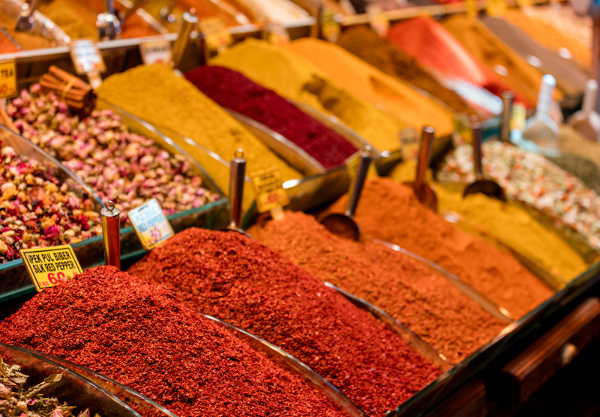
Meghalaya is set to receive a major boost in organic agriculture with the inauguration of the Northeast’s largest organic spice processing plant at Bhoirymbong in Ri Bhoi district. Union Finance Minister Nirmala Sitharaman’s visit to the state marks an important moment for farmers, producer companies, agro-processing and the wider rural economy of the Northeast.
The plant has been developed by the Eastern Ri Bhoi Organic Farmer Producer Company and is designed to process 10,346 metric tonnes of spices annually. The scale of the facility makes it a landmark for the region. More importantly, it is expected to directly benefit nearly 5,500 organic farmers, giving them a stronger link between cultivation, processing, branding and commercial markets.
This is the real importance of the project. Meghalaya has rich natural advantages in spice cultivation. Turmeric, ginger, chilli, black pepper and bay leaf are among its important spice crops. Many farmers in the state already follow traditional and low-chemical cultivation practices, giving Meghalaya a strong base for organic and natural farming. The challenge has been value addition, organised processing, quality control, packaging and access to premium markets.
The new spice processing plant addresses this gap. Farmers usually earn less when they sell raw produce immediately after harvest. Value is added later through cleaning, drying, grading, grinding, packaging, testing, branding and marketing. When this value chain stays outside the village or state, farmers receive only a small part of the final price. A processing plant located close to production clusters can change this equation.
For Meghalaya, this facility can become a bridge from farm output to market-ready products. Ginger can be processed into dried slices, powder, paste and oleoresin-linked raw material. Turmeric can be cleaned, cured, dried, powdered and packaged. Chilli, black pepper, bay leaf and other spices can be graded and branded for domestic and export markets. This gives local farmers a better chance to move from bulk commodity sales to organised premium products.
The project also strengthens the Farmer Producer Company model. FPCs are important because they give small farmers collective strength. A farmer working alone may find it difficult to negotiate prices, access machinery, meet quality standards or reach large buyers. A producer company can aggregate produce, manage processing, connect with buyers, maintain traceability and create branded products. Eastern Ri Bhoi Organic Farmer Producer Company’s role therefore makes the plant more than an industrial unit; it makes it a farmer-centred market institution.
The timing is significant because the Northeast is increasingly being positioned as a natural and organic product hub. Each state of the region has unique agricultural strengths, from spices and fruits to bamboo, tea, coffee, floriculture and medicinal plants. Meghalaya’s spice identity is especially strong because of its turmeric, ginger, black pepper, chilli and forest-based aromatics. With better processing infrastructure, these products can reach national and global buyers in a more organised form.
Lakadong turmeric gives Meghalaya a strong brand advantage. This high-curcumin turmeric from the Jaintia Hills has earned recognition for quality and identity. Its GI recognition has given Meghalaya a valuable agricultural brand that can be protected, promoted and expanded through proper quality systems. The new processing ecosystem can help ensure that premium products are cleaned, processed and packed in a way that matches market expectations.
The plant also fits into the larger idea of rural industrialisation. India’s agricultural future depends not only on increasing production but also on increasing farmer income through value addition. Processing plants, cold chains, warehouses, testing laboratories, packaging units and logistics networks can turn rural districts into production hubs. This creates jobs beyond farming: machine operation, sorting, grading, transport, packaging, quality testing, accounting, marketing and export coordination.
For Ri Bhoi district, the facility can support local employment and enterprise. Bhoirymbong’s location can help connect farmers from nearby production clusters with processing and commercial channels. It can also encourage younger entrepreneurs to enter organic food, spice branding, e-commerce, farm tourism, packaging, logistics and allied services. Such projects can reduce distress migration by creating economic opportunities closer to villages.
The export potential is also strong. Global demand for organic spices is rising because consumers are looking for traceable, natural, chemical-conscious and region-specific food products. Indian spices already have a strong global reputation. Meghalaya can build a distinctive place within that market by combining organic certification, local identity, GI-linked products, traditional cultivation and modern processing.
Quality will be the key. Organic spice markets demand consistency, food safety, residue control, proper drying, low moisture, microbial safety, clean packaging and traceability. A large processing plant can help farmers meet these standards. It can also support common branding, quality testing and better buyer confidence. This is especially important for export markets, where certification and compliance decide access.
The plant has wider policy relevance. It supports India’s push for farmer-producer organisations, rural value chains, organic farming, Northeast development, women-led livelihoods and agri-exports. Many farmers in Meghalaya are women, and spice cultivation often involves women’s labour in planting, harvesting, drying, sorting and household-level processing. A stronger organised value chain can increase their role in the rural economy.
The Finance Minister’s programme in Meghalaya also includes the conference on Leveraging Externally Aided Projects in the North-Eastern States. This connects the spice plant with a larger development conversation. The Northeast needs infrastructure, market access, logistics, human capital, tourism, agriculture and climate-resilient livelihoods. Organic spice processing belongs directly to this development model because it links local resources with modern markets.
Meghalaya’s future growth can be built around high-value local products. The state has hills, rainfall, biodiversity, traditional farming systems and strong community institutions. These strengths can support a new rural economy based on organic spices, fruits, flowers, medicinal plants, ecotourism and processed foods. The Bhoirymbong plant is an example of how this vision can move from policy to ground-level infrastructure.
The success of the plant will depend on steady farmer mobilisation, reliable raw material supply, transparent procurement, quality training, certification support, market linkages and professional management. Farmers must receive clear price benefits for supplying quality produce. Buyers must trust the processing standards. The producer company must function as a real farmer-owned commercial platform.
This project can also help change the image of the Northeast in India’s agricultural economy. The region is often discussed through connectivity challenges and small production volumes. Organic spice processing shows another possibility: small farmers producing premium crops, organised through producer companies, supported by modern processing, and connected to higher-value markets.
The inauguration of the Northeast’s largest organic spice processing plant is therefore a major development signal. It is about farmers, markets, quality, local enterprise and regional identity. It gives Meghalaya a stronger platform to turn its spice wealth into income, jobs and brand value.
If implemented with professional standards, the Bhoirymbong plant can become a model for the entire Northeast. It can show how farmer-owned institutions, organic cultivation and value-added processing can work together. It can help Meghalaya move from raw spice production to branded organic products. It can give thousands of farmers better market access and place the state more firmly on India’s premium spice map.
You may also like
-
Vietnam Expands Business and Investment Links Across India’s Major Economic Hubs
-
India’s GST Collections Rise 14.7% to ₹2.04 Lakh Crore in September
-
SberIndia Lending to Indian Companies Quadruples as India-Russia Trade Finance Expands
-
India Manufacturing PMI Rises to Seven-Month High of 55.1 in September
-
Nothing and Optiemus Announce $100 Million Joint Venture to Expand Smartphone Manufacturing in India
