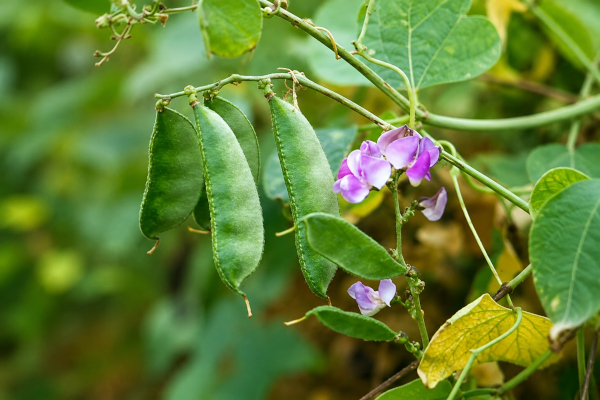
Nishpava is the Ayurvedic name associated with the hyacinth bean, lablab bean or Indian bean, a familiar climbing vegetable cultivated across many parts of India. Its pods and seeds appear in regional cuisines under names such as avara, avarai, sem, avare and chikkudu. Ayurveda places Nishpava among the shimbi dhanyas, the group of edible legumes valued for nourishment, strength and their ability to form substantial meals when combined with suitable spices and careful cooking.
The accepted botanical name is Lablab purpureus (L.) Sweet, while Dolichos lablab L. is an older botanical synonym frequently retained in Ayurvedic publications and traditional food compendia. The plant belongs to the Fabaceae family. The Sanskrit name is written as Nishpava, Nispava or Nispavah in different transliteration systems.
Names of Nishpava
| Language or tradition | Name |
|---|---|
| Sanskrit | Nishpava, Nispava, Rajashimbi |
| English | Hyacinth bean, lablab bean, Indian bean, flat bean |
| Hindi | Sem, Shimi, Bhatvas |
| Malayalam | Avara, Amara |
| Tamil | Avarai, Motchai |
| Kannada | Avare |
| Telugu | Chikkudu |
| Bengali | Rajashimbi |
| Botanical name | Lablab purpureus (L.) Sweet |
| Older botanical synonym | Dolichos lablab L. |
| Family | Fabaceae |
Several cultivated varieties exist, producing green, pale, violet or deep-purple pods and seeds of different colours. This diversity explains the wide range of regional names associated with the plant.
How to Identify the Nishpava Plant
Nishpava is usually recognised as a vigorous twining or scrambling climber that grows over fences, trellises, shrubs and supporting poles. Depending on the variety and growing conditions, it may behave as an annual crop or continue as a short-lived perennial. Its slender stems commonly grow between one and six metres in length.
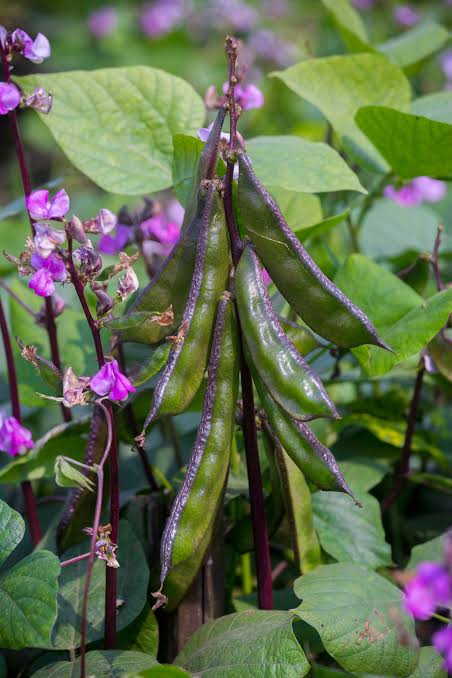
The leaves are compound and generally consist of three broad leaflets. Each leaflet is ovate, triangular or slightly heart-shaped, with a pointed tip. The leaf surface may feel smooth or lightly hairy. Long flower stalks arise from the leaf axils and bear clusters of attractive pea-shaped flowers. Their colour ranges from white and cream to mauve, crimson and purple.
The pods are among the easiest identifying features. They are broad, flattened and slightly curved, usually containing two to five seeds. Pod colour varies between green, pale green and purple according to the cultivar. Mature seeds may be white, cream, reddish-brown, dark brown or almost black. They are compressed and often display a prominent pale seed scar along one edge.
Parts Used
The following parts are traditionally used as food:
- Tender immature pods
- Fresh green seeds
- Mature dried seeds
- Occasionally tender leaves in regional food traditions
Ayurvedic culinary references place particular importance on the seeds. Mature beans require soaking, dehusking where practical and complete cooking before consumption.
Nishpava in Ayurvedic Dietetics
Ayurveda studies food according to taste, physical qualities, digestive effect, potency, post-digestive transformation and its influence on the doshas. Nishpava is considered a substantial legume with a pronounced effect on digestion. Its qualities change significantly according to freshness, maturity, soaking, dehusking, cooking method, spices and the other ingredients in the meal.
Traditional Ayurvedic summaries describe Nishpava through the following profile:
| Ayurvedic attribute | Traditional description |
|---|---|
| Rasa – taste | Madhura and Kashaya — sweet and astringent |
| Guna – qualities | Guru, Ruksha and Sara — heavy, dry and mobility-promoting |
| Virya – potency | Ushna — heating |
| Vipaka – post-digestive effect | Amla — sour |
| Dosha influence | May increase Vata and Pitta when used excessively; selected preparations are used in Kapha-oriented diets |
| Primary culinary character | Nourishing, substantial and strongly influenced by preparation |
The guru quality indicates that the mature bean can require a strong digestive capacity. Its ruksha character contributes dryness, while ushna virya gives it a heating influence. Asafoetida, turmeric, rock salt, warm water and suitable fats are therefore frequently used to make pulse preparations more balanced and digestively comfortable.
Traditional Ayurvedic Importance
A Substantial Nourishing Legume
Nishpava has long served as a plant-based source of nourishment in Indian households. Like other pulses, it contributes protein, carbohydrates and fibre to the meal. Contemporary agricultural reviews also recognise hyacinth bean as a valuable protein-rich crop suited to tropical cultivation.
Support for Appetite
Classical preparations combine Nishpava with pungent and aromatic substances such as Hingu, Haridra and Saindhava Lavana. These ingredients support agni, improve the taste of the preparation and help relieve aruchi, a state associated with diminished interest in food or an impaired perception of taste.
Kapha-Oriented Culinary Use
Ayurvedic food descriptions associate properly spiced Nishpava preparations with Kaphaghna or Kapha-reducing action. Its dry and heating characteristics make it suitable for selected meals designed for heaviness, sluggishness and excessive Kapha, while portion size and digestive strength remain important.
Traditional Use in Shotha
Ayurvedic summaries also associate Nishpava with Shothahara, the traditional alleviation of swelling. This remains a classical description rather than a substitute for medical investigation of persistent swelling, which may arise from several health conditions.
Role in Classical Pulse Combinations
Nishpava was frequently combined with other legumes rather than being treated as an isolated ingredient. This approach produced a wider range of flavours, textures and digestive effects. The combination also illustrates the Ayurvedic concept of samskara, through which processing transforms the qualities of food.
The Importance of Proper Processing
Hyacinth beans contain naturally occurring antinutritional substances, especially in mature dry seeds. Studies of the crop describe tannins, phytates, trypsin inhibitors and cyanogenic compounds in certain varieties. Soaking, dehusking, boiling, pressure cooking and germination can substantially reduce these constituents and improve digestibility. Mature seeds should therefore be soaked and cooked until completely soft. Raw or partially cooked mature beans are unsuitable for consumption.
A practical household method is to soak the dry seeds overnight, discard the soaking water, rinse them thoroughly and cook them in fresh water. Pressure cooking is especially useful for mature seeds. Tender pods and fresh green seeds also require adequate cooking.
Classical Recipe: Kulattha Soopa
Horse Gram and Five-Pulse Soup with Nishpava
The following classical soup brings together five legumes in equal proportions. Nishpava forms one-fifth of the pulse mixture and is accompanied by warming spices, rock salt and aromatic ingredients.
Ingredients
| Ingredient | Common identity | Proportion |
|---|---|---|
| Kulattha | Horse gram | 1 part |
| Masha | Black gram | 1 part |
| Nishpava | Hyacinth bean | 1 part |
| Tuvari or Arhara | Pigeon pea | 1 part |
| Chanaka | Chickpea | 1 part |
| Haridra | Turmeric powder | As required |
| Hingu | Asafoetida | As required |
| Saindhava Lavana | Rock salt | As required |
| Jala | Water | Sufficient quantity |
| Karpura | Food-grade edible camphor | A minute quantity |
| Sugandhita Pushpa | Suitable edible aromatic flowers | As required |
Each pulse represents one-fifth of the total pulse mixture.
Method of Preparation
Dehusk the horse gram, black gram, Nishpava, pigeon pea and chickpea where practical. Wash them thoroughly and soak the mature dry pulses for several hours or overnight.
Drain the soaking water and rinse the pulses again. Place them in a heavy vessel or pressure cooker with sufficient fresh water. Cook over moderate heat until every pulse becomes completely soft.
Add turmeric, asafoetida and rock salt. Continue cooking until the ingredients blend into a soup-like consistency. More hot water may be added according to the desired thickness.
Finish the soup with an exceptionally small quantity of natural food-grade edible camphor. Aromatic edible flowers may be used in accordance with culinary tradition and safe identification. Serve the soup warm and consume it freshly prepared.
The CCRAS–FSSAI Ayurveda Aahara Compendium records this preparation as Kulattha Soopa, classifies it as a drinkable preparation and traces it to Pākadarpaṇam, verses 1/121–126. The compendium describes the finished soup as heating, bitter, pungent and dry, with traditional indications connected with aruchi and the balancing effect produced by the complete formulation.
Understanding the Recipe Through Ayurveda
The recipe demonstrates that the properties of a finished dish extend beyond the qualities of one ingredient. Nishpava by itself is traditionally described as heavy, dry and heating. In the soup, it is combined with horse gram, black gram, pigeon pea and chickpea. Turmeric and asafoetida contribute warmth and aromatic pungency, while rock salt improves flavour and supports the overall culinary transformation.
Slow cooking or pressure cooking softens the pulses and changes their texture. The use of water creates a fluid preparation, making the combination easier to consume than dry roasted beans. This interaction of ingredients, heat, water and seasoning reflects ahara samskara, the purposeful transformation of food through culinary processing.
Modern Household Adaptation
For a manageable family portion, take approximately two tablespoons of each pulse. This produces ten tablespoons of mixed legumes. Soak the mixture overnight and cook it with enough water to form four to six servings.
A small quantity of ghee may be added during serving when it suits the individual’s diet and digestive capacity. The classical recipe itself should remain the basis, while the consistency may be adapted to household preference.
About the Pākadarpaṇam Manuscript Tradition
Pākadarpaṇam, also written as Pākadarpaṇa, is a Sanskrit treatise devoted to the science and art of cooking. The work is traditionally attributed to King Nala, celebrated in Indian literature for his mastery of cuisine. Scholarly descriptions present the text as a collection of approximately 761 verses arranged across eleven chapters. It discusses a wide range of subjects, including rice preparations, pulses, soups, vegetables, meat dishes, milk products, beverages, sweets, aromatic substances, seasonal food practices and principles of wholesome eating.
The text treats cookery as a refined discipline in which taste, digestion, health, season, ingredients and culinary skill work together. Its recipes demonstrate a sophisticated awareness of processing methods, ingredient combinations and the effect of food on the body. Kulattha Soopa, cited from verses 1/121–126, illustrates this approach by combining five different legumes with digestive spices and aromatic finishing substances.
Who May Find Nishpava Suitable?
Nishpava may suit people who possess a steady appetite and good digestive strength, especially when served warm, fully cooked and appropriately seasoned. Tender pods are generally lighter in culinary use than mature dried seeds. Small or moderate servings allow the digestive system to adapt to the bean’s heaviness and fibre content.
People with a tendency towards gas, abdominal distension, acidity, burning sensations or highly sensitive digestion may require smaller portions and gentler combinations. An Ayurvedic physician can assess suitability according to prakriti, vikriti, agni, season, age and accompanying health conditions.
Precautions
Mature Nishpava seeds must be soaked and cooked thoroughly. Discarding the soaking water and boiling the beans in fresh water improves their culinary safety.
Use only food-grade natural edible camphor in recipes, in an extremely small quantity. Camphor intended for rituals, fragrances, pest control or external applications is unsuitable for food.
Every aromatic flower added to food must be positively identified as an edible species and sourced free from pesticides and decorative chemicals.
Large servings may feel heavy and may contribute to gas or digestive discomfort. Begin with a modest portion.
Persistent loss of appetite, swelling, breathing difficulty, abdominal pain or digestive disturbance requires qualified medical assessment.
Nishpava as Food and Medicine
Nishpava represents the Ayurvedic understanding that an ordinary cultivated bean can become a purposeful food through correct identification, suitable processing and intelligent combination. Its value lies in the relationship between ingredient and preparation. Soaking removes part of its heaviness, cooking makes the seed tender, water converts the pulse mixture into soup, and spices guide its digestive action.
The Kulattha Soopa of Pākadarpaṇam preserves this culinary wisdom in a practical form. Five legumes, each possessing its own qualities, are brought together with turmeric, asafoetida, rock salt and aromatic substances. The result is a warming, sustaining preparation that connects India’s agricultural heritage, Sanskrit culinary literature and Ayurvedic principles of wholesome eating.
REFERENCES
- Central Council for Research in Ayurvedic Sciences (CCRAS) and Food Safety and Standards Authority of India (FSSAI). Ayurveda Aahara Compendium. Entry: “Kulattha Soopa,” citing Pākadarpaṇam, Chapter 1, Verses 121–126. The formulation combines Kulattha, Masha, Nishpava, Tuvari and Chanaka with turmeric, asafoetida, rock salt, edible camphor and aromatic flowers.
https://ccras.nic.in/wp-content/uploads/2024/10/03102024-FSSAIs-Ayurveda-Aahara-Compendium.pdf - Food Safety and Standards Authority of India. Ayurveda Aahara Compendium. Official compilation of Ayurvedic foods, beverages and classical dietary preparations.
https://www.fssai.gov.in/upload/uploadfiles/files/Ayurveda%20Aahara%20Compendium.pdf - Royal Botanic Gardens, Kew. Plants of the World Online: Lablab purpureus (L.) Sweet. Accepted botanical name, taxonomic classification and synonyms.
https://powo.science.kew.org/taxon/urn:lsid:ipni.org:names:501411-1 - India Biodiversity Portal. Lablab purpureus — Hyacinth Bean. Botanical description, distribution and identification information.
https://indiabiodiversity.org/species/show/264642 - Maass, B. L.; Knox, M. R.; Venkatesha, S. C.; Angessa, T. T.; Ramme, S.; and Pengelly, B. C. “Lablab purpureus—A Crop Lost for Africa?” Tropical Plant Biology, Volume 3, 2010, pp. 123–135.
DOI: 10.1007/s12042-010-9046-1
https://link.springer.com/article/10.1007/s12042-010-9046-1 - National Center for Biotechnology Information. “Lablab purpureus—A Crop Lost for Africa?” Review of the crop’s botanical characteristics, food value, cultivation and traditional importance.
https://www.ncbi.nlm.nih.gov/pmc/articles/PMC5977054/ - Pākadarpaṇam. Sanskrit culinary treatise traditionally attributed to King Nala. The text discusses rice preparations, pulses, soups, vegetables, beverages, sweets, aromatic substances, seasonal diets and principles of wholesome cooking. Kulattha Soopa is cited from Chapter 1, Verses 121–126.
Health Disclaimer
This article presents traditional Ayurvedic and culinary information for educational and cultural purposes. It does not provide medical diagnosis, treatment or an individual dietary prescription. Ayurvedic qualities and traditional indications should be interpreted according to constitution, digestive strength, age, season, health status and professional guidance. People with chronic illness, food allergies, digestive disorders or prescribed dietary restrictions should consult a qualified healthcare professional before making significant dietary changes.
You may also like
-
Bharat Biotech’s Nucelion and VeGen Bio Partner to Manufacture Advanced Dual-Target CAR-T Cancer Therapy in India
-
Ayurveda and Anger: How Emotional Excess Affects Physical and Mental Health
-
Ayurveda and Stress: Daily Practices for Mental Balance and Emotional Well-Being
-
Ayurveda and Bowel Routine: Why Regularity Matters for Digestive Health
-
Why Ayurveda Warns Against Suppressing Hunger, Thirst and Sleep
