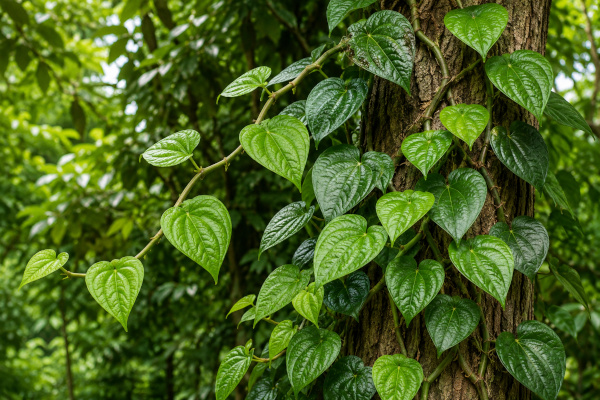
Nagavalli, commonly known as betel leaf or paan leaf, is a fragrant, heart-shaped leaf valued in Ayurveda, temple culture, hospitality and traditional Indian food practices. Botanically known as Piper betle L., it belongs to the Piperaceae family. In Indian homes, Nagavalli has long been associated with freshness of the mouth, stimulation of digestion, ceremonial offerings and post-meal use. Ayurveda views it as an aromatic leaf with warming, sharp and cleansing qualities, especially useful when used in proper quantity and in suitable food combinations.
Names and Identity
Sanskrit name: Nagavalli
Common name: Betel leaf
Botanical name: Piper betle L.
Family: Piperaceae
Part used: Leaf
Traditional use: Food adjunct, digestive support, mouth freshener, aromatic wrapper in classical recipes
Ayurvedic Nature of Nagavalli
In Ayurvedic understanding, Nagavalli is generally considered ushna in potency, meaning it carries a warming influence. Its aromatic and slightly pungent character supports deepana and pachana, the stimulation and support of digestive fire. It is traditionally used after meals in controlled quantity because it awakens taste, refreshes the mouth and assists the digestive process.
Its sharp and fragrant nature makes it suitable in preparations where heaviness needs balancing. For this reason, classical food traditions use Nagavalli along with heavier ingredients such as black gram, sesame oil and fried foods. The leaf adds aroma, warmth and digestive stimulation to a dense preparation.
Effect on Doshas
Nagavalli is traditionally understood as supportive for Kapha-related heaviness because of its warming and aromatic nature. It may also support Vata when used with oil, warm food and proper preparation. Due to its ushna quality, people with strong Pitta aggravation, acidity, burning sensation, mouth ulcers or heat-related conditions should use it carefully under proper guidance.
Traditional Benefits
Nagavalli is valued in Ayurveda and traditional food culture for its ability to awaken appetite, improve taste perception, freshen the mouth and support digestion after food. Its aromatic compounds are also studied today for antimicrobial potential, especially in relation to oral and food-preservation contexts. Modern reviews describe betel leaf as a plant rich in bioactive compounds such as chavicol and chavibetol, with antimicrobial activity being one of its notable studied properties.
In household tradition, Nagavalli is also used as a natural wrapper for food. This is important because the leaf does more than hold the food together; it gives fragrance, warmth and digestive balance to the preparation.
Classical Recipe Reference: Alikamatsya / Alikamacca
A classical preparation called Alikamatsya or Alikamacca, described as black gram fritters, uses Nagavalli as an important supporting ingredient. The preparation is referenced with Bhavaprakasha Nighantu 12/66–67 and Bhojana Kutuhala, Siddhānnaprakaraṇa, Bhakṣyaviśeṣa section.
In this recipe, Masha or black gram flour is mixed with water and kneaded into a dough. The dough is divided into small portions of about 10–20 grams. A portion of the dough is placed over a large Nagavalli leaf, covered with another leaf and wrapped. The wrapped portions are placed in a stainless-steel pot with water and cooked gently on low heat by steaming. Once fully cooked, the dough is removed, cut into pieces and fried in sesame oil until golden in colour. It may be eaten as such or dipped in kwathita, similar to a kadhi-style preparation.
This recipe shows the intelligent food science of Ayurveda. Black gram is nourishing, strengthening and heavy, while Nagavalli adds aroma, warmth and digestive assistance. Sesame oil contributes unctuousness and strength. The combination becomes a rich, nourishing food suitable for strength-building, while the use of Nagavalli helps balance the heaviness of Masha.
Properties Mentioned in the Recipe Tradition
The preparation is described as brimhana, meaning nourishing to body tissues. It is also guru, or heavy to digest, and ushna, warming in potency. When prepared in the steamed and fried form, or when soaked in kwathita, it is traditionally said to support nourishment, taste, vigour, strength and digestive cleansing. The dry form is described as slightly aggravating to Pitta, while the preparation is traditionally mentioned as useful in Vata-related conditions such as facial paralysis and lockjaw, under proper Ayurvedic supervision.
Manuscript and Textual Importance
The reference to Nagavalli in this food preparation shows how Ayurvedic manuscripts treated food as medicine. Bhavaprakasha Nighantu is a respected Ayurvedic nighantu tradition that records the qualities of herbs, foods and substances. Bhojana Kutuhala belongs to the Indian knowledge stream where cooking, digestion, health and seasonal suitability are brought together. The recipe of Alikamatsya reflects this classical method: ingredients are selected not only for taste, but also for their effect on digestion, strength, doshas and bodily nourishment. Nagavalli’s presence in the recipe highlights its role as both a culinary leaf and a medicinal food adjunct.
Precautions
Nagavalli should be used in moderation, especially by people with Pitta aggravation, acidity, burning sensation, mouth ulcers or heat-related complaints. A clear distinction should also be maintained between the medicinal or culinary use of the leaf and the chewing habit of betel quid with areca nut or tobacco. The International Agency for Research on Cancer has classified betel quid with tobacco, betel quid without tobacco and areca nut as carcinogenic to humans, with oral cancer risk being a major concern.
Conclusion
Nagavalli is one of India’s deeply rooted Ayurvedic leaves, carrying value in digestion, hospitality, ritual practice and classical cooking. Its use in the Alikamatsya recipe shows the precision of traditional food science: heavy black gram is paired with warming betel leaf, sesame oil and gentle steaming before frying. In this way, Nagavalli becomes a bridge between flavour and medicine, reminding us that Ayurveda looked at every leaf, grain and oil through the lens of balance, strength and digestive wisdom.
You may also like
-
Ayurveda and Mental Fatigue in the Digital Age: Ancient Wisdom for a Calm and Focused Mind
-
Bharat Biotech’s Nucelion and VeGen Bio Partner to Manufacture Advanced Dual-Target CAR-T Cancer Therapy in India
-
Ayurveda and Anger: How Emotional Excess Affects Physical and Mental Health
-
Ayurveda and Stress: Daily Practices for Mental Balance and Emotional Well-Being
-
Ayurveda and Bowel Routine: Why Regularity Matters for Digestive Health
