GI Produce of India — 14
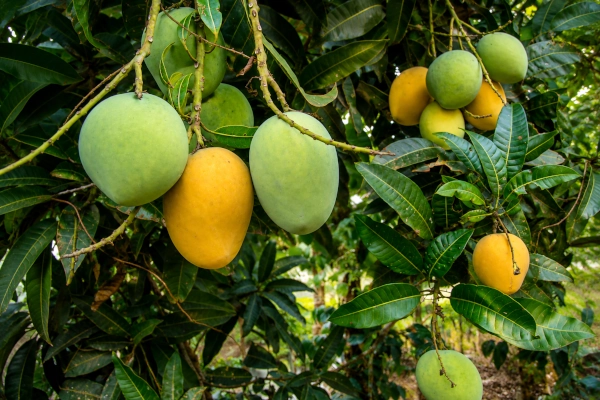
In the green midlands of Kannur, where lateritic hills rise between Kerala’s coastal plain and the Western Ghats, the village of Kuttiattoor has given its name to one of the state’s most distinctive traditional mangoes. The Kuttiattoor Mango, or Kuttiattoor Manga, ripens to an attractive yellow-orange colour and is prized for its characteristic flavour, aroma, juicy flesh and distinctive balance between firmness and softness.
Unlike several famous Indian mangoes that developed their reputations through large commercial orchards and long-distance trade, Kuttiattoor Mango emerged from Kerala’s homestead agricultural landscape. Large spreading trees have traditionally grown around houses, ancestral properties and mixed farms, and the cultivar became so numerous around Kuttiattoor that the place itself came to be identified as a mango-growing village.
The fruit received formal Geographical Indication protection in September 2021, but the agricultural tradition behind it is much older. Kerala’s official GI documentation records thousands of trees across the Kuttiattoor landscape, while local history connects some surviving specimens with several centuries of cultivation. The GI therefore protects not merely a mango variety but a living orchard culture deeply associated with the people, soils and seasonal rhythms of North Malabar.
Kuttiattoor — A Mango Village in Kannur
Kuttiattoor lies in Kannur district of northern Kerala, within a landscape shaped by undulating lateritic terrain, intense southwest monsoon rainfall and the highly diversified homestead farming characteristic of North Malabar. Coconut, arecanut, jackfruit, banana, pepper and numerous fruit trees traditionally share space around houses, allowing mango trees to form part of a mixed agricultural ecosystem rather than isolated commercial plantations.
The Kuttiattoor mango has spread beyond the panchayat that gave it its modern name. Kerala Agricultural University research examined the cultivar in Kuttiattoor and neighbouring areas including Kolachery, Mayyil, Koodali, Munderi and Malappattanam, while related mango populations have also been identified elsewhere in the wider Kannur region. This broader distribution reflects generations of farmers exchanging seed, seedlings and planting material across neighbouring villages.
Despite this wider presence, Kuttiattoor remains the symbolic centre of the mango’s identity. Kerala’s official GI portal describes the fruit as being found predominantly in Kuttiattoor and portrays the village as a landscape where the cultivar continues to stand prominently across household compounds and agricultural land.
A Landscape of Laterite and Monsoon Rain
The environmental character of Kuttiattoor differs greatly from the dry mango belts of northern and central India. Kannur experiences a humid tropical climate and receives heavy rainfall during the southwest monsoon, creating lush vegetation and strongly weathered reddish soils across much of the upland landscape.
Lateritic terrain can appear difficult for agriculture because prolonged tropical weathering removes several readily available nutrients from the soil. Yet perennial trees such as mango develop extensive root systems, and generations of Kerala farmers have maintained fertility through leaf litter, household organic matter, livestock manure and the complex nutrient cycling of traditional homestead systems.
The seasonal alternation between intense monsoon rain and comparatively dry winter months is particularly important for mango. Trees receive abundant moisture during the rainy season, but flowering begins after rainfall has declined, allowing the crop to develop through Kerala’s relatively dry early months before ripening ahead of the following southwest monsoon.
An Early-Flowering Mango
One of the most useful characteristics of Kuttiattoor Mango is its early flowering habit. Kerala’s official GI portal records that flowering can begin around the second week of November, with peak flowering generally occurring during the latter half of December.
This early reproductive cycle enables the fruit to mature before Kerala enters its wettest period. Mango flowering is vulnerable to persistent rain and high humidity because fungal diseases can damage panicles, while successful fruit set depends on suitable weather during a relatively short biological window.
Once fruit has set, the mangoes grow through January, February and March as temperatures rise gradually across Kannur. The cultivar’s ability to complete much of its crop before the arrival of the southwest monsoon gives farmers an important commercial advantage because the harvest reaches markets before heavy seasonal rain makes orchard work and fruit handling considerably more difficult.
The March-to-May Mango of North Malabar
Kuttiattoor Mango belongs to the early mango season of Kerala, with fruit normally becoming available through March, April and into May. Kerala’s GI portal records peak maturity from late March through April, with harvesting continuing into approximately the middle of May before the southwest monsoon begins.
This seasonal timing differentiates Kuttiattoor from many famous northern Indian mangoes whose main crops arrive in June and July. By the time Dusseheri, Langda or Chausa begin dominating markets farther north, much of the traditional Kuttiattoor harvest in Kannur has already been completed.
The early harvest can improve market value because locally produced fruit enters the market when consumers are beginning to anticipate the annual mango season. It also reduces exposure to the torrential monsoon rainfall that characterises northern Kerala from June onwards.
A Mango That Turns Orange-Yellow
One of the clearest identifying characteristics of a ripe Kuttiattoor Mango is its yellow-orange exterior. The same warm colour continues into the pulp, creating a visually attractive fruit whose ripe appearance contrasts strongly with the greener surface of its mature but unripe stage.
APEDA describes Kuttiattoor Mango as being especially known for the orange-yellow colour of its flesh, its taste and its flavour. The organisation also characterises the pulp as neither excessively soft nor unusually firm, with medium juiciness that produces a balanced eating texture.
Kerala Agricultural University’s detailed characterisation similarly found mature fruit with green skin that developed yellow-orange coloration at ripeness, while the flesh became medium orange. The research also recorded the absence of skin speckling as a consistent characteristic, supporting the attractive clean appearance for which the fruit is locally known.
A Clean, Speckle-Free Ripe Skin
The absence of prominent speckles or patches on ripe Kuttiattoor fruit is more than a minor horticultural observation. Kerala’s official GI information specifically identifies the clean appearance of the ripe skin as a characteristic that increases the visual appeal of the mango in the market.
Consumers frequently judge fruit quality before they ever smell or taste it, and clean skin therefore contributes directly to commercial value. Although harmless surface marks do not necessarily alter eating quality, a smooth and uniformly ripened mango is more easily presented as premium fresh fruit.
This characteristic gives Kuttiattoor a useful marketing advantage because its internal qualities are accompanied by an attractive exterior. The fruit can therefore appeal both to traditional consumers familiar with its taste and to new buyers encountering the cultivar for the first time.
Broad, Rounded Fruit Rather Than a Long Mango
Scientific characterisation of Kuttiattoor Mango shows that the fruit is comparatively broad, with an almost rounded or broad-elliptic appearance rather than the strongly elongated shape seen in several other Indian cultivars. Kerala Agricultural University measurements placed fruit length at roughly 8.78 to 9.18 centimetres and width around 8.11 to 8.30 centimetres, producing a length-to-width ratio only slightly above one.
This near-rounded form contributes to the distinctive appearance of the fruit. Mature mangoes possess rounded shoulders and lack a strongly pronounced neck or exaggerated beak, creating a substantial, compact fruit that looks different from pointed varieties such as Totapuri.
The consistency of these traits across several panchayats was important during scientific characterisation because it helped demonstrate that the mango represented a recognisable cultivar rather than merely an assortment of unrelated local seedlings. Kerala Agricultural University specifically notes that several important fruit characters remained relatively stable across the different areas examined.
The Flesh — Juicy, Aromatic and Moderately Firm
Kuttiattoor Mango is not a completely fibreless dessert mango, nor does it possess extremely fibrous flesh. Scientific evaluation classified the firmness, juiciness, flesh texture and fibre associated with both stone and skin broadly within a medium range, producing a distinctive eating quality rather than an extreme characteristic in any one direction.
This balanced texture allows ripe fruit to remain substantial when cut while still providing enough juice for fresh eating. The medium-orange pulp carries the characteristic flavour and aroma repeatedly emphasised in Kerala’s official descriptions of the cultivar.
For local consumers, these qualities matter more than comparisons based solely on sweetness. Kuttiattoor’s identity is built from the combination of colour, fragrance, juicy texture and the particular flavour developed under Kannur’s growing conditions.
Sweetness With a Gentle Acidity
Laboratory analysis carried out through Kerala Agricultural University found total soluble solids ranging roughly from 12.62° to 15.4° Brix, with an overall mean close to 14.45° Brix. Titratable acidity remained comparatively low, averaging approximately 0.18 per cent, helping produce the pleasant sweet profile associated with ripe fruit.
These figures demonstrate why Brix alone should never be used to rank traditional mangoes. Several premium cultivars produce significantly higher soluble-solids readings, but mango flavour also depends upon aroma compounds, acidity, pulp texture, carotenoids and the relationship between sweetness and ripeness.
Kuttiattoor’s popularity developed through generations of eating rather than laboratory measurements. Scientific analysis is valuable because it documents the cultivar objectively, but the enduring reputation of the mango ultimately reflects the complete sensory experience of the ripe fruit.
The Orange Colour Has a Biochemical Basis
The warm orange coloration of Kuttiattoor pulp reflects the presence of carotenoid pigments. Kerala Agricultural University’s biochemical characterisation found carotenoid levels varying across samples, while ascorbic acid and other nutritional components were also measured as part of the cultivar’s scientific documentation.
Carotenoids contribute both to colour and nutritional value, helping give fully ripened mango pulp its characteristic yellow-to-orange appearance. The intensity varies naturally with fruit maturity, tree condition and environmental influences, so no two mangoes need appear perfectly identical.
The important point is that the orange-yellow flesh repeatedly recognised by consumers also emerged clearly in formal horticultural studies. This agreement between traditional observation and scientific characterisation strengthened the evidence used to establish the cultivar’s distinct identity.
A Polyembryonic Mango — An Unusual Biological Advantage
One of the most scientifically interesting characteristics of Kuttiattoor Mango is its strong tendency towards polyembryony. Kerala Agricultural University research found that nearly 90 per cent of examined seeds produced multiple embryos, while ICAR research independently characterised Kuttiattoor accessions as polyembryonic.
Polyembryonic mango seeds can contain more than one embryo, and some resulting seedlings may arise from maternal tissue rather than conventional sexual reproduction. This means certain seedlings can be genetically much closer to the mother plant than ordinary sexually produced mango seedlings, although careful selection and propagation remain important when maintaining a commercial cultivar.
The characteristic gives Kuttiattoor special scientific value beyond its role as a table fruit. Mango breeders and horticultural researchers are interested in polyembryonic germplasm because it can offer useful rootstock and propagation characteristics, making the cultivar part of a broader genetic resource for Indian mango improvement.
The Large Spreading Kuttiattoor Tree
Traditional Kuttiattoor mango trees are impressive structures. Kerala Agricultural University characterised mature trees as tall and spreading, with an average height of nearly 15 metres and broad semicircular crowns extending more than 13 metres on average.
Such dimensions explain why individual trees can dominate Kerala homesteads and create enormous areas of shade. An old mango tree becomes part of the architecture of a property, influencing the crops that can grow underneath it and often serving as a familiar landmark for several generations of the same family.
Large trees can also create management difficulties because harvesting fruit from the upper canopy becomes labour-intensive and potentially dangerous. Modern orchard systems often prefer more manageable trees, but the towering traditional specimens remain important repositories of local germplasm and agricultural history.
A Tradition Linked With the Nileshwaram Royal Family
Local history preserved by Kerala’s official GI portal connects the Kuttiattoor mango with the Nileshwaram royal family. According to this tradition, mango planting material was brought centuries ago from Nileshwaram to prominent ancestral households in Kuttiattoor, including Kavu Illam at Veshala and the Chathoth tharavad.
This account belongs primarily to regional oral and community history rather than a fully documented archival chronology, so it is best understood as part of the mango’s traditional origin narrative. Nevertheless, the survival of the story demonstrates how strongly the cultivar became associated with particular households before spreading more widely across the countryside.
Traditional cultivars often preserve precisely this kind of memory. Trees can live for centuries and planting material passes from household to household, while written documentation may appear only much later when researchers begin formally studying the variety.
Why It Was Called Nambiar Mango
Before the geographical name Kuttiattoor became dominant, the fruit was widely known as Nambiar Manga in parts of Kannur. Kerala’s official GI history preserves a local explanation that a Nambiar who regularly carried the fruit from Kuttiattoor to the Irikkur market became so strongly associated with the mango that buyers began calling it Nambiar Manga.
The name reflects an older social landscape in which particular mango trees and cultivars could become associated with specific households and communities. According to the same official historical narrative, the trees were initially concentrated more strongly within certain ancestral properties before becoming widely distributed through ordinary homesteads during the social and landholding changes of the twentieth century.
Today, the geographical name Kuttiattoor Mango provides a broader identity based on place rather than community. The older name nevertheless remains historically important because it preserves a memory of how the fruit was recognised and traded before modern producer organisations and GI registration existed.
Kannapuram, Kunjimangalam and Other Local Names
The mango’s identity extends beyond the name Nambiar Manga. Different pockets of Kannur have used names including Kannapuram Manga, Kunjimangalam Manga and Vadakkumbhagam Manga for closely related fruit, reflecting the highly localised naming traditions of Kerala’s older agricultural landscape.
Kerala Agricultural University’s research found the mango cultivated in Kunjimangalam to be closely similar to the Kuttiattoor type. The investigation was undertaken partly to establish whether these geographically dispersed mangoes represented meaningful variants or the same broad cultivar tradition.
Such naming diversity is common among old landraces because plants were exchanged long before standard nursery catalogues existed. A mango travelling to another village could gradually acquire the name of that locality, household or trader even while retaining essentially the same horticultural characteristics.
A Three-Hundred-Year-Old Tree in Local Memory
Kerala’s official GI heritage portal reports that a mango tree estimated to be around 300 years old survives at Veshala Kavu Illam in Kuttiattoor. The site presents this venerable specimen as potentially among Kerala’s oldest surviving mango trees, making it an extraordinary living link with the cultivar’s historical landscape.
An age estimate for an old mango tree should naturally be treated with some caution unless supported by detailed dendrological investigation. Even so, the presence of exceptionally old trees in traditional properties strongly supports the conclusion that Kuttiattoor mango cultivation predates modern commercial horticulture by many generations.
These old specimens deserve conservation for more than sentimental reasons. They may preserve valuable genetic material and can provide scions for propagation, allowing a living biological lineage to survive even after individual ancient trees eventually decline.
From Ancestral Trees to Tens of Thousands of Mango Trees
The cultivar gradually spread throughout Kuttiattoor and surrounding areas until mango became one of the defining features of the locality. Kerala’s Industries Department GI portal records an estimated 50,000 trees across roughly 300 hectares, with production around 6,000 tonnes in the landscape described by the state’s heritage programme.
These numbers help explain why Kuttiattoor acquired a reputation as a mango village rather than merely the birthplace of one rare tree. The cultivar became sufficiently common to create a seasonal local economy involving harvesting, roadside sales, household consumption and processing.
The dispersed nature of those trees is equally important. Production does not necessarily occur within 300 hectares of uniform orchard blocks, because Kerala’s mango trees are frequently integrated into homesteads and mixed agricultural land, creating a more complex landscape than plantation statistics alone suggest.
Heavy Crops and the Need to Support Branches
Traditional Kuttiattoor trees can carry remarkable fruit loads during productive seasons. Kerala’s GI heritage account describes branches becoming so heavily laden that growers sometimes provide physical supports to prevent them from breaking under the combined weight of developing mangoes.
Heavy bearing can be economically attractive, but it creates biological stress for the tree. Branches must support increasing fruit weight while also resisting summer winds and maintaining enough leaves to supply carbohydrates to the developing crop.
Growers therefore depend on practical knowledge accumulated through repeated seasons. Supporting overloaded branches, monitoring fruit development and harvesting before structural failure are simple but important orchard practices that help convert a heavy flowering season into an actual marketable crop.
The Traditional Homestead Mango
Kuttiattoor Mango differs from orchard systems in which every tree is planted at uniform spacing and managed as part of a single-variety commercial block. Much of the cultivar’s historical population survives inside Kerala homesteads, where mango grows alongside coconut palms, arecanut, jackfruit and numerous annual crops.
This mixed system helps conserve genetic diversity because households often retain trees for flavour and family preference even when they are not the highest-yielding commercial option. A tree may survive for generations because grandparents valued its fruit, because it provides shade around the house or because neighbours recognise it as part of the locality’s heritage.
The disadvantage is that harvesting and marketing become fragmented. Thousands of households producing different quantities of mango at slightly different times require collective organisation if the fruit is to reach larger markets efficiently.
The Problem of Mangoes Falling Back to the Soil
For years, abundance itself created a problem in Kuttiattoor. The combination of numerous mature trees and limited organised processing meant that a substantial quantity of fruit could remain unharvested or fall to the ground during peak production.
This problem is common in traditional homestead fruit systems. Individual households may produce far more mangoes than they can consume, while local markets become saturated when thousands of trees ripen simultaneously.
The challenge therefore was not merely increasing production but capturing value from fruit already being produced. Kuttiattoor’s later producer organisations and processing initiatives grew directly from the recognition that a celebrated mango could still generate poor returns if farmers lacked aggregation, storage and value-addition systems.
The 2006 Processing Initiative
Kerala’s official GI history records an important turning point in 2006, when a growers’ organisation established a processing unit to reduce wastage and help producers obtain better prices. The initiative recognised that fresh-fruit sales alone could not absorb every mango produced during the concentrated harvest period.
Processing extended the economic life of the crop. Fruit that could not be sold immediately in premium fresh markets could be converted into products capable of surviving well beyond the brief March-to-May harvesting season.
This transition also changed how farmers understood Kuttiattoor Mango commercially. Instead of viewing surplus fruit as inevitable waste, producers increasingly began treating the crop as raw material for a larger food-processing and branding opportunity.
The Kuttiattoor Mango Producer Company
A more organised institutional structure emerged with the formation of the Kuttiattoor Mango Producer Company Limited in 2016. Kerala’s official GI portal records that the organisation was created under the Companies Act and brought together growers across Kuttiattoor and other panchayats of Kannur district.
The same state source records more than 600 farmer members associated with the organisation and notes institutional support from NABARD, Kerala’s Agriculture Department, Kerala Agricultural University and agricultural extension organisations. Such collective organisation is particularly important in a dispersed homestead system because individual growers may possess only a few productive mango trees.
A producer company allows fruit to be aggregated, processed and marketed under a common identity. It also gives growers a collective institution capable of applying for intellectual-property protection, coordinating quality standards and developing products that would be difficult for isolated households to commercialise independently.
From Fresh Mango to Jam, Squash and Pickle
Kuttiattoor Mango has increasingly entered a value-added product economy. Kerala’s GI portal records products including squash, jam, pickle, salted mango preparations and mango-based processed foods, along with mango pulp and grafted planting material marketed through the producer organisation.
This diversification provides an economic outlet for fruit that may not meet the appearance standards of premium fresh markets. A mango with superficial damage can still contain excellent pulp, and converting such fruit into processed products prevents both food loss and loss of farmer income.
Value addition also carries the geographical identity beyond the harvest season. Consumers may eat fresh Kuttiattoor mangoes only for a few months, but jam, squash or pulp can preserve the flavour and name of the cultivar throughout the year.
Traditional Ripening in North Malabar
Local Kuttiattoor mango culture includes traditional methods of ripening harvested fruit. Households have historically used hay and leaves of locally available trees, allowing mature mangoes to soften and develop colour gradually without depending upon artificial ripening chemicals.
Such methods reflect a period when mango ripening occurred almost entirely within households and local markets. Mature fruit could be arranged in dry plant material, covered and checked over succeeding days until aroma, colour and softness indicated that the mango was ready to eat.
Modern commercial handling requires more standardised systems when large quantities are involved, but traditional ripening remains part of the cultural memory surrounding Kuttiattoor Mango. It demonstrates how production knowledge extends beyond the tree to include harvesting, storage and preparation for consumption.
Kerala Agricultural University Gives the Mango a Scientific Identity
One of the most important steps towards GI protection was the scientific characterisation undertaken by Kerala Agricultural University. The university studied Kuttiattoor mango trees and fruit across the core cultivation region, documenting morphological and biochemical characteristics that could distinguish the cultivar from ordinary local mango populations.
Researchers measured tree height, canopy form, leaf characteristics, fruit dimensions, skin thickness, flesh colour, juiciness, fibre, soluble solids, acidity, carotenoids and seed behaviour. They also compared trees from different panchayats and found substantial consistency in several defining fruit and tree characters.
This scientific work gave formal evidence to what local growers had long understood through experience. Kuttiattoor Mango was not merely a marketing name attached to any mango produced within one village; it possessed identifiable horticultural characteristics capable of supporting geographical recognition.
Genetic Research Reveals Diversity Within the Cultivar
Research by scientists associated with ICAR-Indian Institute of Horticultural Research also examined Kuttiattoor mango accessions and found substantial diversity in morphological, biochemical and genetic data. At the same time, all of the examined accessions displayed polyembryonic seed behaviour, reinforcing one of the broader biological characteristics associated with the group.
This internal diversity is important because traditional cultivars often consist of related local selections rather than the perfect genetic uniformity found in modern clonal plantations. Small variations can appear in fruit dimensions, maturity timing, flavour and biochemical characteristics while the population remains recognisably part of the same horticultural tradition.
Conservation should therefore avoid reducing Kuttiattoor Mango unnecessarily to a single tree or clone. Preserving superior mother trees from several parts of the traditional production landscape can maintain useful diversity while ensuring that the characteristic qualities recognised under the GI remain intact.
The Road to Geographical Indication Protection
The formal application for Kuttiattoor Mango (Kuttiattoor Manga) was filed with India’s Geographical Indications Registry on 4 September 2019. The application received GI Application No. 660 under Class 31 for agricultural goods, with the Kuttiattoor Mango Producer Company Limited named as applicant and Kerala identified as the geographical area.
The application was subsequently published in Geographical Indications Journal No. 135, made available on 30 April 2020. The GI process examined the relationship between the mango’s distinguishing characteristics, its recognised production landscape and the historical reputation developed by growers in Kannur.
Formal registration followed on 14 September 2021, when Certificate No. 383 was issued. Intellectual Property India and APEDA currently record the registration as valid through 3 September 2029, after which protection can continue through renewal under India’s GI framework.
GI Details at a Glance
- Geographical Indication: Kuttiattoor Mango (Kuttiattoor Manga)
- State: Kerala
- Product: Agricultural
- Class: 31
- Application Number: 660
- Date of Filing: 4 September 2019
- GI Journal: No. 135
- Journal Availability Date: 30 April 2020
- Certificate Number: 383
- GI Certificate Date: 14 September 2021
- Registered Proprietor: Kuttiattoor Mango Producer Company Limited
- Geographical Area: Kerala
- Registration Valid Until: 3 September 2029
The GI Protects More Than a Variety Name
The geographical indication does not mean that a mango tree biologically related to Kuttiattoor can grow only inside Kerala. Plant material can be propagated elsewhere, and related mango populations already exist in different pockets of Kannur under locally varying names.
What the GI protects is the geographical identity and reputation of Kuttiattoor Mango. It connects the protected name with the recognised Kerala production landscape, the characteristics documented in that environment and the producer community that maintained the fruit.
This distinction becomes important as the mango becomes better known outside Kannur. A visually similar orange-yellow mango should not automatically acquire the commercial identity of Kuttiattoor simply because using the famous name may attract a higher price.
Traceability Can Turn Reputation Into Farmer Income
GI recognition creates an opportunity, but the certificate alone does not guarantee higher returns. Consumers must eventually be able to identify genuine fruit through authorised growers, producer organisations, appropriate packaging and reliable supply chains.
This is particularly important in Kuttiattoor because production is distributed across numerous homesteads and small holdings. Without aggregation and traceability, authentic fruit from local growers can easily lose its identity once mixed within conventional wholesale markets.
The producer company can therefore play a central role in linking individual mango trees with a collective geographical brand. If buyers trust that Kuttiattoor-labelled fruit genuinely comes from the recognised producer network, the reputation built over generations can translate into a measurable premium for farmers.
A Kerala Mango With Wider Market Potential
APEDA now includes Kuttiattoor among India’s recognised GI mangoes, placing it alongside varieties such as Alphonso, Gir Kesar, Banaganapalle and Malda’s famous mangoes within the country’s geographically protected fruit portfolio. APEDA’s description specifically highlights the cultivar’s orange-yellow flesh, taste and flavour as its important identifying characteristics.
The opportunity for Kuttiattoor is not necessarily to imitate the enormous commercial supply chains of better-known mangoes. Its strongest identity lies in being a traditional Kerala fruit linked with North Malabar’s homestead landscape and an early harvesting season.
Premium regional branding, direct marketing and carefully developed interstate distribution may therefore offer greater value than attempting to convert Kuttiattoor into a generic mass-market commodity. The GI gives growers a framework through which rarity and provenance can become strengths rather than limitations.
Mango Festivals Help Introduce the Variety to New Consumers
Kerala Agricultural University’s College of Agriculture at Padannakkad includes Kuttiattoor among the mango varieties displayed and sold during its annual Malabar Mango Fest. The event introduces farmers and consumers from Kannur, Kasaragod and Kozhikode to indigenous and improved cultivars while also spreading horticultural knowledge.
Such festivals have an important conservation function because consumers cannot value a traditional cultivar they have never encountered. Displaying Kuttiattoor alongside Mallika, Imam Pasand, Dusseheri, Priyoor, Totapuri, Moovandan and other mangoes allows buyers to recognise how dramatically Indian mangoes differ in appearance, season and eating quality.
For growers, these events also create direct market opportunities. A GI mango can be explained and tasted as a distinctive product rather than disappearing anonymously into a mixed wholesale basket.
Early Harvest Could Become a Commercial Advantage
The Kuttiattoor season creates an opportunity that deserves stronger market development. Fruit maturing from March onwards can reach consumers before many of India’s largest mango-producing regions begin their peak harvests, reducing direct competition during the earliest part of the season.
Early fruit also arrives at a time when consumer anticipation is especially high. The first good mangoes of the year frequently attract premium prices because buyers have gone many months without fresh seasonal fruit.
To take advantage of this window, growers need coordinated maturity assessment, rapid collection and organised marketing. Harvesting too early merely to reach the market first would damage flavour and ultimately weaken the GI reputation, so quality must remain more important than calendar advantage.
Processing Remains Essential During Heavy Crop Years
Even with improved fresh-fruit marketing, value addition will remain critical because mature Kuttiattoor trees can produce large crops simultaneously. Local demand alone may not absorb the entire harvest when thousands of homestead trees reach maturity within the same few weeks.
Pulp, squash, jam, pickle and other products provide a buffer against market saturation. They also allow farmers to recover value from fruit that is too small, externally blemished or fully ripe for premium transportation but remains perfectly suitable for processing.
A stronger local processing ecosystem could therefore stabilise prices during peak production. Instead of allowing surplus mangoes to fall beneath trees, the crop can become raw material supporting year-round rural enterprises.
The Possibility of a Kuttiattoor Mango Park
Kerala’s official GI heritage documentation records ambitions to develop additional infrastructure, including a mango park and expanded value-added product range around Kuttiattoor. Such a facility could potentially bring together aggregation, grading, processing, storage, nursery production and visitor-oriented mango promotion within the producing region.
The greatest value of such infrastructure would come from keeping more of the mango economy close to growers. Shipping ungraded fresh fruit away from the district transfers much of the downstream value to traders, while local processing and branding allow producer communities to participate in higher-value stages of the supply chain.
A mango park could also provide a centre for conserving local germplasm and demonstrating traditional varieties. In a region where old mango trees are scattered across thousands of private properties, a documented collection would create an additional safeguard against genetic loss.
Conserving the Ancient Trees
Old Kuttiattoor mango trees deserve attention as biological heritage. Their age, size and continued productivity provide a living record of how long the cultivar has occupied North Malabar’s homestead landscape.
Development pressure creates a significant threat because a large mango tree occupies valuable space around houses and roads. When an ancient tree is removed without its genetic material being preserved, a unique local line may disappear permanently.
Before old trees decline or are cut, growers and horticultural institutions can document their characteristics and preserve them through grafting. A carefully maintained network of mother trees would allow the next generation of Kuttiattoor orchards to remain connected genetically with the historic population that created the GI reputation.
The Importance of Local Names and Related Mango Populations
Names such as Nambiar Manga, Kannapuram Manga and Kunjimangalam Manga should not be dismissed merely because Kuttiattoor has become the official GI identity. They preserve evidence of the routes through which related mango populations travelled across Kannur and became embedded within particular communities.
Scientific comparison of these populations can reveal whether some represent nearly identical selections, distinct local strains or useful genetic relatives. Such work could help improve understanding of Kuttiattoor’s origin while identifying material with desirable characteristics such as earlier harvest, stronger colour, disease tolerance or improved fruit quality.
A strong GI system should therefore encourage documentation rather than simplification. Protecting a recognised commercial identity can coexist with conserving the wider genetic and cultural diversity from which that identity developed.
Climate Variability and the Early Mango Season
Kuttiattoor’s early flowering pattern makes it sensitive to changing weather during November and December. Unexpected rain, high humidity or unusual temperature conditions during flowering can influence disease pressure, pollination and eventual fruit set.
Later, unusually hot and dry conditions can create moisture stress while fruit is developing. Conversely, an early onset of pre-monsoon rain may interfere with the final stages of harvesting and increase disease or handling problems.
The future of the cultivar will therefore depend increasingly upon local weather advisories, tree nutrition, soil-moisture conservation and integrated pest management. Traditional knowledge remains valuable, but scientific monitoring can help growers respond when seasonal patterns become less predictable.
Preserving a Polyembryonic Genetic Resource
The cultivar’s strong polyembryonic tendency gives it value beyond immediate fruit sales. Polyembryonic mangoes form an important part of the genetic resources used by horticulturists for rootstock studies and propagation research, meaning Kuttiattoor may contribute traits useful to mango cultivation elsewhere in India.
Scientific conservation should therefore maintain multiple representative accessions rather than focusing only on the visually most attractive fruit. Genetic diversity within the Kuttiattoor population may contain useful characteristics relating to vigour, adaptation to humid tropical environments or seed behaviour.
The mango’s GI status can help draw attention to this scientific importance. A traditional fruit protected because of local reputation can simultaneously become a resource for future horticultural improvement.
A Mango That Represents Kerala’s Homestead Agriculture
Kuttiattoor Mango is particularly significant because it represents a form of agriculture that differs from the plantation image associated with many commercial fruits. Its great trees stand within lived landscapes, sharing space with homes, wells, coconut palms, jackfruit trees and the everyday activities of rural families.
This integration gives the cultivar cultural depth but also makes conservation more complicated. Decisions about whether an old tree survives may depend on household construction needs, inheritance patterns or changing lifestyles rather than purely agricultural economics.
Creating stronger economic value around authentic fruit can therefore support conservation indirectly. A tree regarded as a valuable GI-producing asset has a better chance of being maintained than one viewed merely as an inconvenient source of seasonal fruit.
From Nambiar Manga to Kuttiattoor Mango
The changing name of the fruit mirrors the transformation of the landscape around it. What was once remembered primarily as Nambiar Manga, associated with particular households and local trading traditions, gradually became identified more broadly with Kuttiattoor itself.
That shift allowed the mango to become a shared geographical symbol. Growers across different social and household backgrounds could participate in an identity based on place, while the village name increasingly travelled with the fruit into markets beyond Kannur.
The geographical indication completes this transformation by giving the place-based name legal recognition. Kuttiattoor is no longer merely where the mango happens to grow; it has become the central word through which the cultivar is introduced to consumers across India.
Kannur’s Orange-Gold Mango Heritage
A ripe Kuttiattoor Mango carries the colours of the North Malabar summer. The mature green fruit gradually develops a yellow-orange exterior, while the pulp inside deepens towards orange and releases the aroma and flavour that generations of Kannur families learned to recognise.
Behind that fruit lies a much larger story involving lateritic soil, heavy monsoon rainfall, ancestral homesteads and trees that can survive for generations. The cultivar travelled through neighbouring villages under different local names, became abundant enough to create problems of seasonal wastage, and eventually inspired growers to organise processing and collective marketing.
Scientific characterisation by Kerala Agricultural University helped establish its distinct horticultural identity, while the 14 September 2021 GI registration placed formal legal protection around a reputation built long before intellectual-property terminology reached the villages of Kannur.
The challenge now is to convert that recognition into conservation and sustainable income. Genuine planting material, old-tree preservation, organised fresh-fruit marketing, processing and traceability can ensure that the name Kuttiattoor benefits the growers whose landscape made the mango famous.
Kuttiattoor Mango is therefore more than Kerala’s orange-yellow seasonal fruit. It is a living expression of North Malabar’s homestead agriculture—an early-ripening, aromatic mango rooted in Kannur’s lateritic highlands, carried through generations under names such as Nambiar Manga and finally protected under the geographical identity of the village that made it famous.
You may also like
-
Manastu Space Secures ₹116 Crore Government Support to Develop Indigenous Green Propulsion Systems
-
GeM’s AABHAR Collection Showcases 294 Indigenous Products, Strengthens Market Access for Indian Artisans
-
Balaghat Chinnor Rice of Madhya Pradesh: The Fragrant Heritage Grain with GI Recognition
-
Indian Semiconductor Companies Propose New Manufacturing and Chip Design Investments in Madhya Pradesh
-
CSIR-CRRI Partners with Industry to Develop Advanced Indigenous Airport Runway and Pavement Materials
