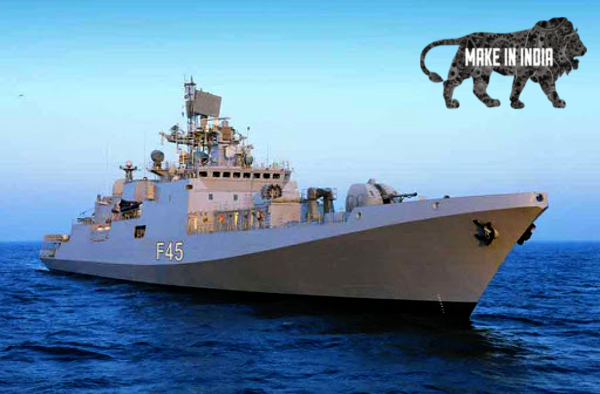
The Indian Navy is preparing for what the government has described as the largest single-year addition to its force levels, with plans to induct or commission 18 warships during 2026. Defence Minister Rajnath Singh disclosed the figure while addressing the second edition of the Indian Navy Commanders’ Conference 2026 at Nausena Bhawan in New Delhi on September 29.
The planned induction reflects the accelerating pace of India’s naval modernisation and the growing output of the domestic shipbuilding ecosystem. It also comes as the Navy expands its operational responsibilities across the Indian Ocean Region and deploys increasingly sophisticated indigenous surface combatants, anti-submarine warfare vessels, survey ships and other specialised platforms.
Singh described 2026 as a historic year for the Navy and said the induction or commissioning of 18 warships would represent the largest annual force accretion in its history.
Indigenous Shipbuilding Becomes Central to Naval Expansion
A defining feature of the Navy’s current expansion is the increasing share of Indian-designed and Indian-manufactured systems aboard new warships. Rajnath Singh said recently commissioned naval platforms now contain more than 75 per cent indigenous content.
This level of localisation extends beyond the hull and basic ship structure. Indian shipyards and defence companies are supplying increasingly sophisticated combat-management systems, radars, electronic warfare equipment, communication systems, anti-submarine warfare systems, missile launchers and other mission-critical equipment.
The indigenous content of several recently commissioned vessels illustrates this transition. INS Mahendragiri, the sixth Project 17A stealth frigate inducted in July 2026, has more than 75 per cent indigenous content. The vessel incorporates modern surface-to-surface and surface-to-air missile capabilities, anti-submarine warfare systems, electronic warfare equipment and network-centric combat systems.
Earlier in June, INS Dunagiri, INS Sanshodhak and INS Agray were commissioned together in Kolkata. All three were designed in India and constructed by Garden Reach Shipbuilders & Engineers, with participation from more than 200 Indian MSMEs. Their indigenous content exceeded 75 per cent.
Indian Shipyards Drive Fleet Modernisation
India’s naval expansion is increasingly supported by a network of domestic shipyards led by Mazagon Dock Shipbuilders Limited, Garden Reach Shipbuilders & Engineers and Cochin Shipyard Limited, alongside private-sector companies and hundreds of specialised suppliers.
Project 17A stealth frigates represent one of the most visible examples of this shipbuilding programme. These vessels combine reduced radar signatures with advanced sensors, surface-to-surface missiles, medium-range surface-to-air missiles, anti-submarine weapons and helicopter-operating capability.
At the same time, India is inducting new generations of Anti-Submarine Warfare Shallow Water Craft designed to detect and engage underwater threats in coastal and littoral waters. New survey vessels are strengthening hydrographic and oceanographic capabilities, while additional missile vessels, offshore patrol vessels and other surface platforms are progressing through various stages of construction.
The Ministry of Defence has also confirmed that construction has begun on additional Next Generation Missile Vessels at Cochin Shipyard. These ships are being designed around advanced weapons and sensors, with major role-defining equipment being developed and manufactured domestically.
Navy Moves From Import Dependence Towards Indigenous Capability
The expansion of India’s naval fleet represents a broader shift in defence procurement. Instead of relying primarily on foreign ship designs and imported equipment, India has progressively expanded its domestic capabilities in naval architecture, warship construction, propulsion integration, sensors, weapons and combat-management systems.
The Indian Navy’s Warship Design Bureau has played a central role in this transition, designing multiple classes of frontline vessels now entering service.
More than 40 indigenously built warships and submarines have been inducted into the Navy over the past few years, according to government figures released during the commissioning of three naval platforms in Kolkata in June.
Domestic warship construction also creates a broader industrial effect. Large naval projects generate orders for steel producers, electronics companies, engineering firms, propulsion-system suppliers and specialised MSMEs producing thousands of components required aboard modern warships.
India Looks Towards Exporting Warships
Rajnath Singh also outlined a broader ambition for India’s naval shipbuilding industry. He said the country should eventually move beyond meeting its own requirements and begin exporting Indian-built warships to friendly foreign countries.
The objective follows the wider expansion of India’s defence exports and the government’s effort to position the country as a dependable supplier of defence equipment.
Warship exports would represent a significantly more complex stage of that transition because naval vessels combine propulsion, weapons, sensors, communications, electronic warfare and combat-management technologies into a single platform. India’s growing experience in designing and constructing different categories of naval vessels provides an expanding industrial foundation for pursuing such opportunities.
The government’s RAKSHA defence diplomacy framework released in September 2026 has also identified indigenous defence exports as one of the pillars of India’s international defence engagement.
Naval Expansion Accompanies Wider Blue-Water Role
Fleet modernisation is taking place alongside a significant expansion of the Navy’s operational footprint. Rajnath Singh pointed to deployments by Indian warships in the South China Sea, Mediterranean Sea and Atlantic Ocean as evidence of the Navy’s growing blue-water capabilities.
Such deployments allow Indian naval forces to operate for extended periods far from the country’s coastline while supporting maritime diplomacy, surveillance, training, humanitarian operations and cooperation with partner navies.
The Navy has also assumed responsibilities under multinational maritime-security frameworks. India recently took command of Combined Task Force-154 under the Combined Maritime Forces, while naval personnel from numerous countries participated in Operation Southern Readiness in Kochi.
These engagements complement the Navy’s traditional responsibilities in the Indian Ocean Region, where it conducts anti-piracy operations, maritime surveillance, disaster response and protection of commercial shipping.
Energy Security Adds New Dimension to Naval Operations
The Defence Minister also linked naval preparedness directly with India’s economic and energy security.
India imports around 85–90 per cent of its crude oil and approximately half of its natural gas requirements through maritime routes. Disruption to major sea lanes can therefore have direct consequences for fuel supplies, industrial activity and the wider economy.
During instability in West Asia, the Indian Navy has been involved in Operation Urja Suraksha, aimed at helping ensure the safe movement of Indian-flagged commercial vessels, including LPG tankers, through strategically sensitive maritime areas such as the Strait of Hormuz.
The increasing complexity of maritime traffic and so-called grey-zone activities has also prompted calls for stronger maritime surveillance, faster information processing and more advanced response mechanisms.
A Larger and More Indigenous Indian Navy
The planned induction or commissioning of 18 warships in 2026 marks an important stage in the continuing transformation of the Indian Navy.
The significance lies not only in the number of vessels entering service but also in how they are being produced. Indian shipyards, naval designers, defence public sector companies, private manufacturers and MSMEs are progressively taking responsibility for larger portions of the technology and industrial work required to build modern combat vessels.
With indigenous content exceeding 75 per cent in several new warships and additional classes under construction, India’s naval modernisation is increasingly being supported by domestic design and manufacturing capabilities. The record induction programme planned for 2026 brings that transition into sharper focus as the Navy expands its fleet, strengthens its blue-water reach and develops a more deeply rooted indigenous maritime defence ecosystem.
References
- DD News — India First Responder, Preferred Security Partner in Indian Ocean Region: Rajnath Singh, September 29, 2026.
- Press Information Bureau, Ministry of Defence — Indian Navy to Host Second Edition of Commanders’ Conference 2026 at Nausena Bhawan, New Delhi, September 28, 2026.
- Press Information Bureau, Prime Minister’s Office — Commissioning of INS Dunagiri, INS Sanshodhak and INS Agray, June 21, 2026.
- Press Information Bureau, Ministry of Defence — Indian Navy Commissions Made-in-India Advanced Stealth Frigate INS Mahendragiri, July 11, 2026.
- Press Information Bureau, Ministry of Defence — Steel Cutting of Second Next Generation Missile Vessel for Indian Navy at Cochin Shipyard Limited, September 18, 2026.
- Press Information Bureau, Ministry of Defence — RAKSHA Defence Diplomacy Document Outlining India’s Strategic Roadmap and Vision for Global Partnerships, September 3, 2026.
You may also like
-
Sigma Advanced Systems Secures Fresh ₹973 Crore NATO Artillery Ammunition Order
-
India Advances Indigenous Defence and Space Technologies Through Naval Innovation, Drones and Advanced Electronics
-
Thales Seeks Indian Partnerships for Next-Generation Missiles, Radars and Electronic Warfare Systems
-
Indian and Australian Armies Conduct Jungle and Coastal Warfare Drills in AUSTRAHIND 2026
-
Sagar Defence Unveils Autonomous Vessel at SWAVLAMBAN 2026, Expands Manufacturing
