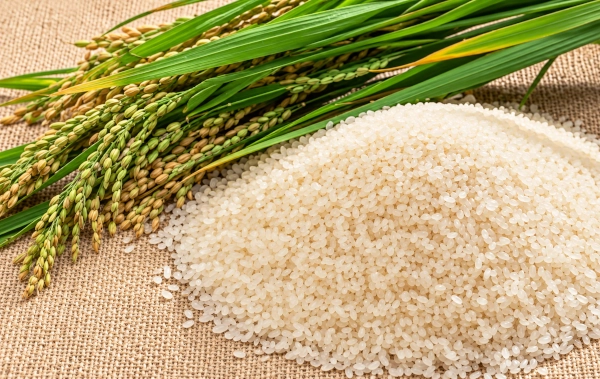
Among the many indigenous rice traditions of Northeast India, Joha Rice of Assam stands apart for its distinctive fragrance, fine grain and exceptional eating quality. Unlike Basmati, whose identity is closely associated with long grain and elongation after cooking, Joha belongs to Assam’s own group of short- to medium-grained aromatic rice varieties. For generations, it has been grown in relatively small quantities and reserved for special meals, festive preparations and occasions where aroma and taste matter more than yield.
Joha is not a single uniform cultivar. The name represents a diverse group of scented rice landraces and improved varieties adapted to different parts of Assam. Traditional types such as Kola Joha, Kon Joha, Kunkuni Joha, Manimuni Joha and Kalijeera, together with improved varieties such as Keteki Joha and Bokul Joha, form part of this wider aromatic rice heritage. Scientific studies have confirmed substantial genetic and morphological diversity within the Joha group, reinforcing its identity as a distinct rice tradition rather than an Assamese version of Basmati.
The connection between the grain, Assam’s environment and its traditional cultivation ultimately led to Joha Rice of Assam receiving Geographical Indication protection, formally recognising the rice as an agricultural product whose reputation and distinctive qualities are associated with the state.
Geography — Rice Shaped by Assam’s River Valleys
Assam’s agricultural landscape is dominated by the great Brahmaputra Valley, while the Barak Valley forms another important rice-growing region in the south of the state. Heavy monsoon rainfall, alluvial soils, numerous rivers and wetlands, and pronounced seasonal changes have produced an extraordinary diversity of rice adapted to different depths of water, soil conditions and cropping seasons.
Joha varieties are cultivated across different agro-climatic zones of Assam, although individual landraces often developed strong associations with particular local environments. Research on traditional Joha has recorded cultivars from both the Brahmaputra and Barak valleys, demonstrating how farmers maintained locally adapted aromatic rice populations over generations.
The climatic cycle is particularly important to Joha cultivation. Many traditional varieties are photoperiod-sensitive and flower as the monsoon withdraws and temperatures begin to fall. Assam Agricultural University notes that varieties such as Kola Joha and Kon Joha require cooler conditions for flowering, linking the development of the crop closely with Assam’s seasonal transition from the humid monsoon to the cooler months.
This combination of traditional genetics, local soils, rainfall and seasonal temperature patterns forms the environmental foundation of Joha rice.
History — Assam’s Traditional Scented Rice
Rice has shaped Assam’s agriculture, food traditions and rural economy for centuries, and farmers developed numerous varieties suited to different environments and culinary purposes. Within this enormous rice diversity, Joha emerged as the principal category of fine aromatic rice, valued not for producing the largest harvest but for providing superior aroma, taste and cooking quality.
Traditional farming families preserved Joha seed from one season to another, allowing numerous locally named varieties to survive. Scientific surveys continue to reveal the scale of this diversity. One study examined 22 traditional aromatic Joha landraces, while later research characterised twenty popular indigenous Joha cultivars and found substantial differences in their physical, biochemical and genetic characteristics.
This diversity is an important part of Joha’s agricultural heritage. Names such as Kola Joha, Kunkuni Joha, Kon Joha and Manimuni Joha refer to rice lines selected and maintained within local farming systems rather than a single standardised commercial grain distributed across the state.
Modern agricultural research has sought to preserve these qualities while overcoming some of the limitations of traditional Joha. Assam Agricultural University has developed improved aromatic varieties such as Keteki Joha and Bokul Joha, which retain desirable fragrance and cooking characteristics while offering higher yields and shorter plant stature than many traditional landraces.
What Makes Joha Rice Special
The defining characteristic of Joha is its natural fragrance. Its aroma becomes particularly noticeable during cooking and is one of the main reasons consumers traditionally regarded Joha as a premium rice. Research into aromatic compounds in the grain has identified 2-acetyl-1-pyrroline, commonly known as 2AP, among the compounds associated with its characteristic fragrance.
Joha is generally characterised by fine kernels, pleasant texture, good cooking quality and strong palatability. Unlike long-grained Basmati, many Joha cultivars are relatively short or medium in grain length. Genetic studies have also demonstrated a clear distinction between Joha and Basmati accessions, supporting the recognition of Joha as an independent aromatic rice population.
Even within the Joha group, considerable variation exists. Kola Joha types can possess medium or slender grains, while Kon Joha varieties are generally small and slender. Some cultivars express particularly strong fragrance, while others have been selected for better yield, lodging resistance or adaptation to specific field conditions.
Traditional Joha varieties often have one major disadvantage: productivity. Many are tall, late-maturing and susceptible to lodging, while their yields can be considerably lower than those of modern high-yielding rice. Their superior eating quality and premium market value, however, have allowed farmers to continue cultivating them despite this disadvantage.
Traditional Cultivation
Joha is primarily associated with Assam’s Sali or Kharif rice season, the state’s main monsoon-season rice crop. Farmers generally establish the crop during the rainy months, while maturation and harvesting extend into the cooler part of the year.
Traditional varieties are suited to different types of land. Kola Joha and Kunkuni Joha, for example, are adapted to rain-fed shallow lowlands, while Kon Joha types perform well on medium land with clay soils. This variation demonstrates how Joha cultivation developed as part of Assam’s highly specialised system of matching particular rice varieties with individual field environments.
Many traditional Joha plants are relatively tall and require a long growing period. Kola Joha types generally mature in roughly 150 to 160 days, while some Kon Joha types can take around 170 days. Their photoperiod sensitivity means seasonal day length and cooler flowering conditions remain important elements of cultivation.
Improved varieties have helped broaden the possibilities for commercial production. Bokul Joha and Keteki Joha generally mature in about 150–160 days and can yield around 3.5–4 tonnes per hectare under suitable conditions, compared with substantially lower yields for many traditional Joha cultivars. These varieties represent an effort to increase farmer returns without sacrificing the aromatic and culinary characteristics for which Joha is valued.
Season, Cuisine and Market
Joha has traditionally occupied a premium place in Assamese households. Rather than being treated simply as bulk everyday rice, its aroma and fine eating quality make it particularly suitable for pulao, kheer and other special preparations, as well as meals prepared during festivals and family occasions. Assam Agricultural University specifically identifies Joha varieties for such premium and festive uses.
Its relatively limited production and lower yield compared with mainstream rice varieties have historically kept Joha in a speciality market. This scarcity, however, also contributes to its higher value. Consumers are willing to pay more for genuine aromatic rice, providing farmers with an opportunity to compensate for lower productivity through premium pricing.
The GI identity is now helping Joha move beyond its traditional regional market. In March 2026, the Agricultural and Processed Food Products Export Development Authority facilitated the first export consignment of GI-tagged Joha Rice from Assam to the United Kingdom and Italy. The shipment consisted of 25 metric tonnes and marked an important step in positioning Joha as an internationally recognised speciality rice.
Official figures released at the time showed that Joha was cultivated across approximately 21,662 hectares in Assam during FY2024–25, producing an estimated 43,298 metric tonnes. These numbers illustrate how a rice once cultivated largely for regional consumption is gradually developing a wider premium market while remaining rooted in Assam’s traditional agricultural system.
GI Information
- GI Name: Joha Rice of Assam
- State: Assam
- Category: Agricultural
- Class: 30
- GI Application Number: 439
- Date of Filing: 10 September 2013
- Applicants: Assam Agricultural University and Seuj Satirtha
- Geographical Area: Assam
- GI Journal Number: 92
- Certificate Number: 287
- Certificate Date: 27 April 2017
- Current Registration Valid Until: 9 September 2033
- Country: India
Joha Rice of Assam represents far more than an aromatic grain. It is the product of generations of farmers who learned to match rice varieties with Assam’s soils, rainfall, wetlands and seasonal rhythms. Its relatively modest yield prevented it from becoming an ordinary mass-market crop, but the same traditional characteristics preserved an aroma and flavour that modern consumers increasingly regard as exceptional.
The GI protection and the emergence of export markets now offer Joha an opportunity to move from a celebrated regional speciality to a globally recognised premium rice. Its greatest strength, however, remains unchanged: the unmistakable fragrance of a grain whose identity was formed in the rice fields of Assam.
You may also like
-
Sagar Defence Unveils Autonomous Vessel at SWAVLAMBAN 2026, Expands Manufacturing
-
Rajnath Singh Calls for Aatmanirbharta 2.0 in Defence at SWAVLAMBAN 2026
-
Defence Acquisition Council Clears ₹2.12 Lakh Crore Proposals, 82% Earmarked for Indian Industry
-
Manastu Space Secures ₹116 Crore Government Support to Develop Indigenous Green Propulsion Systems
-
GeM’s AABHAR Collection Showcases 294 Indigenous Products, Strengthens Market Access for Indian Artisans
