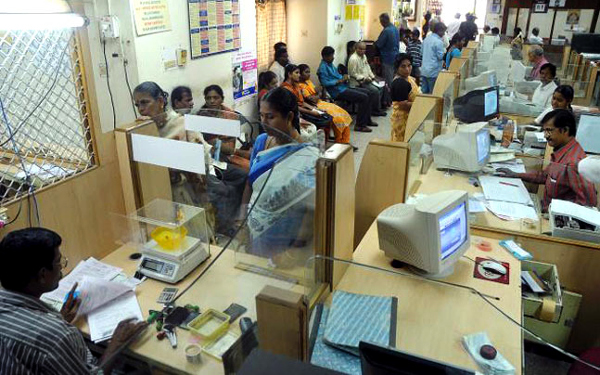
India’s financial inclusion drive has entered a new phase. The country is moving beyond bank account ownership toward wider use of credit, insurance, pensions and digital payments.
The Reserve Bank of India’s Financial Inclusion Index reached 70.0 in March 2026. It stood at 43.4 in March 2017. The index measures access, usage and quality of financial services.
The expansion reflects more than a decade of policy reforms and digital infrastructure development. Government programmes have also brought millions of households into the formal financial system.
Bank Account Ownership Reaches 89%
The World Bank Global Findex 2025 shows that account ownership in India has reached 89%. The figure highlights the rapid expansion of formal financial access since 2011.
India has also built a vast network to take banking closer to citizens.
As of July 17, 2026, the country had more than 1.81 lakh bank branches. Meanwhile, banking outlets were available within five kilometres of 99.92% of villages as of March 6, 2026.
India Post Payments Bank further strengthens last-mile access. More than 1.65 lakh post offices support its network. IPPB serves over 11 crore customers across 5.57 lakh villages and towns.
The country also has more than 17.36 lakh Business Correspondents. They provide doorstep banking services in unbanked and under-banked areas.
Jan Dhan Forms the Foundation
The Pradhan Mantri Jan Dhan Yojana, launched in 2014, remains a major pillar of financial inclusion.
The scheme provides basic savings accounts to unbanked adults. It also connects account holders with remittances, credit, insurance, pensions and Direct Benefit Transfers.
Jan Dhan account holders receive RuPay debit cards and accident insurance. Eligible customers can also access an overdraft facility of up to ₹10,000.
The JAM Trinity — Jan Dhan, Aadhaar and mobile connectivity — links these accounts with digital identity and communication networks.
The system supports Direct Benefit Transfers and helps reduce intermediaries and leakages in welfare delivery.
By August 10, 2026, cumulative Direct Benefit Transfers had reached ₹52,89,019 crore across 320 schemes involving 56 ministries.
Insurance and Pension Coverage Expands
Financial inclusion has also widened access to low-cost insurance.
The Pradhan Mantri Jeevan Jyoti Bima Yojana provides life insurance cover of ₹2 lakh. As of June 30, 2026, the scheme had recorded 27.78 crore gross enrolments.
The Pradhan Mantri Suraksha Bima Yojana offers accident insurance at an annual premium of ₹20. It provides ₹2 lakh for accidental death or full disability.
Gross enrolments under PMSBY reached 58.66 crore by June 30, 2026.
India has also expanded pension access through the Atal Pension Yojana.
The scheme had 9.29 crore subscribers by the end of June 2026. Women accounted for about 49.16% of subscribers.
Mudra Pushes Credit to Small Businesses
Access to formal credit forms another major part of India’s financial inclusion strategy.
The Pradhan Mantri Mudra Yojana provides collateral-free loans of up to ₹20 lakh. It supports small enterprises across manufacturing, trading, services and allied agricultural activities.
During the financial year ending March 2026, Mudra recorded 4.48 crore accounts. Banks sanctioned ₹5.65 lakh crore and disbursed ₹5.54 lakh crore.
Street vendors have also gained access to formal credit through PM SVANidhi.
By May 2026, the programme had supported more than 75.5 lakh beneficiaries. Lenders had disbursed over 1.12 crore loans worth more than ₹17,800 crore.
UPI Becomes the Digital Backbone
Perhaps the most visible change has come through digital payments.
The government describes Unified Payments Interface, or UPI, as the backbone of India’s digital payments ecosystem.
Between FY2016-17 and FY2025-26, UPI transaction volume increased nearly 12,000-fold. Transaction value rose almost 4,000-fold during the same period.
In July 2026 alone, UPI processed 2,365.8 crore transactions. Their total value reached ₹29,87,880.49 crore.
The network also had 741 banks live on UPI during the month.
The PIB backgrounder notes that the International Monetary Fund has recognised UPI as the world’s largest real-time payment system by transaction volume.
Financial Literacy Reaches More Citizens
Expanding access alone does not guarantee effective use of financial services. India has therefore increased its focus on financial literacy.
The National Centre for Financial Education conducts workshops and awareness programmes across the country.
By August 10, 2026, NCFE had conducted 31,082 workshops reaching more than 10.68 lakh beneficiaries. Women accounted for 65% of participants.
The Financial Education Programme for Adults has separately conducted 19,266 workshops and reached more than 6.48 lakh people.
Financial Inclusion Moves From Access to Empowerment
India’s financial inclusion strategy now covers several interconnected areas. Banking access, digital payments, insurance, pensions and formal credit increasingly operate as part of a common ecosystem.
The expansion of branches and Business Correspondents has improved physical access. Jan Dhan and JAM have connected households with government transfers. UPI has made everyday digital payments widely accessible.
Insurance and pension schemes have added financial protection. Mudra, PM SVANidhi and other credit programmes have brought small borrowers closer to formal finance.
This shift marks an important change in India’s development model. The goal is no longer limited to opening bank accounts. It increasingly focuses on helping citizens save, borrow, insure, invest and transact within the formal financial system.
Source: Press Information Bureau, Government of India, “Financial Inclusion in India: Banking Every Citizen, Empowering Every Household,” August 12, 2026.
You may also like
-
TDB Backs Panacea Medical Technologies to Develop Indigenous 32-Slice CT Scanner in Karnataka
-
Koraput Kalajeera Rice: Odisha’s Fragrant ‘Prince of Rice’ Preserved by Generations of Tribal Farmers
-
Mormugao Port Becomes India’s First Major Port to Secure Private 5G Network Authorisation
-
PM Modi Inaugurates ₹3,350 Crore Development Projects in Ladakh
-
AXISCADES Expands Global Technology Footprint with US Acquisition Plan and Swiss Company Takeover
