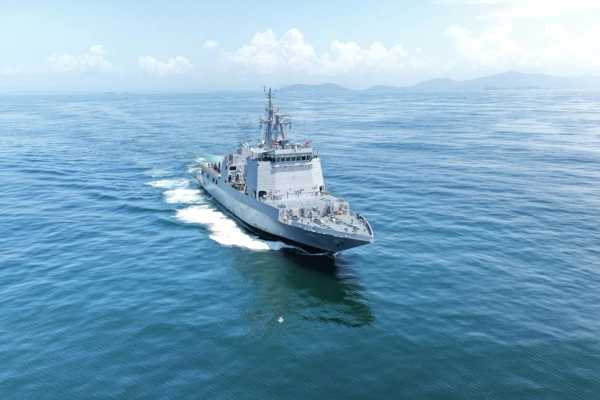
The Indian Navy is preparing to commission Samarthak, its first indigenous Multi-Purpose Vessel (MPV), at Naval Base Karwar in Karnataka on October 16, 2026. Built by Larsen & Toubro (L&T) under the Government of India’s Make in India initiative, the vessel will strengthen the Navy’s capabilities in maritime surveillance, patrol operations, unmanned systems deployment and specialised maritime support missions.
Samarthak is the first of four Multi-Purpose Vessels planned for induction into the Indian Navy. The new class of ships is designed to undertake diverse operational responsibilities, ranging from routine maritime security duties to advanced technology trials, humanitarian assistance and salvage operations. This versatility will allow the Navy to employ the vessel across different operational environments and mission requirements.
The Ministry of Defence announced the forthcoming commissioning on October 13, 2026, describing Samarthak as an important addition to India’s indigenous naval capabilities. Its induction will also mark another milestone in the growing participation of India’s private defence industry in the construction of specialised naval platforms.
Larsen & Toubro Builds India’s First Multi-Purpose Vessel
The construction of Samarthak by Larsen & Toubro demonstrates the expanding capabilities of India’s private-sector shipbuilding industry. The company has developed expertise in naval engineering, specialised ship construction and the integration of advanced defence systems. Its participation in the Multi-Purpose Vessel programme contributes to India’s efforts to establish a stronger domestic industrial base for naval requirements.
Unlike conventional warships designed primarily around a specific combat role, Multi-Purpose Vessels are developed to undertake several types of maritime operations. Their design allows naval commanders to use them for surveillance, security assignments, equipment testing and operational support. This flexibility is particularly valuable for a navy responsible for protecting extensive maritime interests and supporting a wide range of activities across the Indian Ocean.
Samarthak’s construction under the Make in India initiative reflects the Indian Navy’s continuing commitment to domestic shipbuilding. The programme also creates opportunities for Indian engineering companies, equipment manufacturers and specialised technology providers to participate in naval development. As the first vessel in a planned series of four, Samarthak will establish an important foundation for expanding this category of naval platforms.
Samarthak Designed for Maritime Surveillance and Patrol Operations
Maritime surveillance and patrol will form the primary operational responsibilities of Samarthak. The Indian Navy maintains a continuous presence across strategically important waters, monitoring maritime activity and supporting security operations along vital shipping routes. Vessels capable of undertaking sustained surveillance and patrol duties contribute to the Navy’s ability to maintain awareness of developments at sea.
India’s maritime interests extend across the Arabian Sea, Bay of Bengal and wider Indian Ocean region. These waters contain major international shipping routes, commercial maritime infrastructure and important approaches to Indian ports. Maintaining security across such an extensive maritime environment requires a combination of major warships, patrol vessels, surveillance aircraft and specialised support platforms.
Samarthak will complement these existing capabilities by providing a flexible vessel suitable for surveillance and security assignments. The Ministry of Defence has also identified Low Intensity Maritime Operations (LIMO) among the ship’s intended responsibilities. These operations generally involve maritime security activities conducted below the threshold of major naval combat, allowing suitable naval platforms to undertake patrol, monitoring and other security-related missions.
Indian Navy to Use Samarthak as Mothership for Unmanned Maritime Systems
One of the most significant features of Samarthak is its intended role as a mothership for unmanned and autonomous maritime systems. Unmanned technologies are becoming increasingly important in modern naval operations because they can extend surveillance capabilities, support specialised missions and reduce the need to expose personnel directly to hazardous operating environments.
A mothership provides an operational platform from which compatible unmanned systems can be deployed, supported and recovered. Depending on the equipment installed, such platforms can facilitate the operation of autonomous surface vessels, underwater vehicles and other specialised maritime technologies. This arrangement allows a larger naval vessel to support equipment designed for tasks that may be difficult, dangerous or inefficient for conventional crewed platforms.
The Indian Navy has been expanding its interest in autonomous technologies as part of its broader modernisation programme. Samarthak’s planned mothership capability will provide an additional platform for integrating these emerging systems into maritime operations. Although the Ministry of Defence has not identified the specific unmanned platforms intended for deployment from the ship, the inclusion of this capability demonstrates the growing importance of autonomous technologies in India’s future naval requirements.
Specialised Platform for Naval Target Deployment and Equipment Trials
Samarthak is also designed to function as a target deployment and trials platform, supporting the development and evaluation of naval equipment. Modern maritime systems require extensive testing before they can be integrated into operational warships. These assessments help researchers and naval personnel evaluate equipment performance under realistic environmental and operating conditions.
Naval trials may involve the deployment of specialised targets, assessment of sensors and evaluation of other maritime technologies. Suitable support vessels are essential for conducting these activities because testing at sea presents challenges that cannot always be reproduced in shore-based facilities. Dedicated trials platforms also allow the Navy to organise evaluations without unnecessarily diverting frontline combat vessels from their principal operational responsibilities.
The inclusion of target deployment and trials capabilities will enable Samarthak to contribute to the testing and evaluation of maritime technologies. This role complements India’s broader efforts to strengthen indigenous defence research, equipment development and systems integration. It also provides opportunities for closer coordination between the Indian Navy, defence research organisations and domestic manufacturers developing equipment for maritime applications.
Humanitarian Assistance and Disaster Relief Capabilities
Beyond its defence-related responsibilities, Samarthak is designed to undertake Humanitarian Assistance and Disaster Relief (HADR) operations. The Indian Navy plays an important role in responding to natural disasters, maritime emergencies and humanitarian crises, particularly in coastal and island regions where access to affected communities may become difficult.
Naval vessels can provide essential assistance during emergencies by transporting relief supplies, supporting evacuation operations and delivering personnel and equipment to affected areas. Their ability to operate independently at sea makes them valuable when roads, ports or other civilian infrastructure have suffered damage. The availability of vessels with flexible operational arrangements can strengthen the Navy’s capacity to respond to different humanitarian situations.
Samarthak also has provision for conversion into a limited hospital ship, adding a medical support dimension to its operational capabilities. Such a configuration could provide additional facilities for treating casualties or delivering medical assistance during designated missions. The Ministry of Defence has described this as a conversion capability rather than a permanent hospital arrangement, indicating that the vessel’s medical role would depend on the equipment and facilities installed for particular assignments.
Salvage Operations Expand the Vessel’s Maritime Support Role
Another responsibility identified for Samarthak is its ability to support maritime salvage operations. Naval salvage activities can involve assistance to damaged vessels, recovery of maritime equipment and specialised operations involving ships or other assets affected by accidents and emergencies. Such missions often require coordinated technical support and equipment suited to challenging maritime conditions.
The ability to participate in salvage-related activities increases Samarthak’s usefulness beyond routine surveillance and patrol. Maritime emergencies can develop unexpectedly, and the availability of a suitable support platform may improve the Navy’s ability to undertake necessary recovery or assistance operations. This capability is especially relevant for a maritime force operating across extensive ocean areas and supporting both military and humanitarian responsibilities.
Although detailed specifications concerning Samarthak’s salvage equipment have not been disclosed, the inclusion of this role demonstrates the vessel’s broad operational design. By combining surveillance, trials, unmanned systems support and emergency assistance capabilities, the Indian Navy intends to develop a platform that can contribute to several categories of maritime operations.
Indigenous Sensors and Combat Systems Strengthen Samarthak’s Capabilities
Samarthak incorporates an integrated combat suite comprising indigenous sensors, weapons and electronic systems. According to the Ministry of Defence, these systems have been designed and optimised for operations in demanding maritime environments. Their integration is intended to provide the vessel with the equipment necessary to support its assigned naval responsibilities.
Modern naval platforms depend on the coordinated operation of surveillance sensors, communication equipment, electronic systems and other onboard technologies. An integrated arrangement allows these components to function together, supporting situational awareness and operational decision-making. The selection and integration of suitable equipment are particularly important for a Multi-Purpose Vessel expected to undertake different missions.
The use of indigenous systems reflects India’s continuing efforts to strengthen domestic capabilities in naval electronics, sensors and defence technology. Although the Ministry has not disclosed the individual equipment models or the precise percentage of indigenous content, Samarthak’s construction and systems integration represent another contribution to India’s naval manufacturing ecosystem.
Karwar Naval Base to Host Commissioning on October 16
The commissioning ceremony for Samarthak is scheduled to take place at Naval Base Karwar on October 16, 2026. Located on India’s western coast, Karwar is an important naval installation overlooking the Arabian Sea. The base supports Indian naval operations and forms part of the country’s expanding maritime infrastructure.
Karwar has been developed under Project Seabird, a major naval infrastructure programme intended to provide facilities for fleet operations, maintenance and other maritime requirements. Its location offers access to the Arabian Sea while supporting the Navy’s operational presence along India’s western seaboard. The development of naval infrastructure at Karwar forms part of the country’s wider efforts to strengthen maritime preparedness.
The forthcoming commissioning will formally bring Samarthak into the Indian Navy’s service. As the first vessel of its class, the ship will mark the beginning of a new phase in the Navy’s Multi-Purpose Vessel programme. Its introduction will add a specialised indigenous platform capable of supporting operational assignments and the development of emerging naval technologies.
Samarthak’s Crest Symbolises Strength, Intelligence and Agility
The official crest of Samarthak features a powerful Indian elephant emerging from the waves, representing the qualities of strength, intelligence and agility. The Ministry of Defence has identified these characteristics as central to the symbolism of the vessel’s crest, reflecting its intended versatility and ability to undertake demanding maritime assignments.
The elephant is a familiar symbol of strength and determination in Indian cultural traditions. Its appearance amid ocean waves creates an identity suited to a naval platform designed for diverse missions. The combination reflects both the vessel’s Indian origins and its role in maritime service.
Samarthak carries the Sanskrit motto “विजयार्थम् एकनिष्ठता”, translated by the Ministry of Defence as “Victory is Our Sole Aim.” The motto expresses the determination and commitment associated with the ship’s operational responsibilities. Together, the crest and motto establish a distinctive identity for the first vessel in the Indian Navy’s new Multi-Purpose Vessel series.
Private-Sector Shipbuilding Strengthens India’s Defence Self-Reliance
The construction of Samarthak by Larsen & Toubro highlights the growing contribution of private-sector companies to India’s naval shipbuilding programmes. While public-sector shipyards remain central to the construction of major naval vessels, private manufacturers are increasingly participating in specialised platforms, engineering systems and maritime defence technologies.
Developing a strong domestic shipbuilding industry requires expertise across several interconnected fields, including naval architecture, structural engineering, propulsion integration, electronic systems and manufacturing. Programmes involving specialised vessels encourage collaboration between shipbuilders, equipment suppliers and technology developers. They also help expand the industrial capabilities needed to meet future defence requirements.
Samarthak’s development under the Make in India initiative reflects this broader approach to naval self-reliance. The vessel combines domestic construction with indigenous combat-related systems and a design intended to support multiple operational requirements. Its induction will contribute to the Indian Navy’s efforts to modernise its fleet while strengthening India’s capabilities in specialised maritime manufacturing.
The programme also demonstrates the importance of maintaining a diverse shipbuilding ecosystem capable of delivering different categories of naval platforms. As India’s maritime responsibilities continue to evolve, specialised vessels will remain an important complement to aircraft carriers, destroyers, frigates, submarines and other major combat assets.
Samarthak Marks a New Chapter in Indigenous Naval Modernisation
The forthcoming commissioning of Samarthak represents an important milestone in India’s efforts to build a versatile and technologically capable naval fleet. As the first of four planned Multi-Purpose Vessels, the ship will introduce additional capabilities for maritime surveillance, patrol, equipment trials, unmanned systems support, humanitarian assistance and salvage-related operations.
Its construction by Larsen & Toubro and the integration of indigenous sensors, weapons and electronic systems demonstrate the contribution of India’s domestic defence industry to modern naval requirements. The vessel’s multi-role configuration will provide the Indian Navy with operational flexibility while supporting the testing and integration of emerging maritime technologies.
With Samarthak scheduled to enter service at Karwar on October 16, 2026, the Indian Navy is advancing its commitment to indigenous shipbuilding, maritime preparedness and technological self-reliance. The ship’s induction will strengthen India’s capacity to undertake specialised naval missions and support the continued development of a modern, adaptable and increasingly self-reliant maritime force.
References
1. Press Information Bureau, Government of India
Ministry of Defence
Indian Navy Set to Commission Indigenous Multi Purpose Warship Samarthak
Published: October 13, 2026, 4:22 PM
https://www.pib.gov.in/
2. Indian Navy — Ministry of Defence
Official information on naval shipbuilding, maritime operations and indigenous capability development.
https://www.indiannavy.nic.in/
3. Larsen & Toubro Limited
Official information on defence manufacturing, naval engineering and shipbuilding capabilities.
https://www.larsentoubro.com/
You may also like
-
India and Czech Republic Agree to Expand Defence Industrial Cooperation During Rajnath Singh–Karel Havlíček Talks
-
Indian Army’s Assam Regiment Wins Gold at Cambrian Patrol 2026 in UK, Excelling Among 140 International Entries
-
Bengaluru’s Flying Wedge Defence Unveils FWD Supreme AI-Piloted Combat Aircraft Prototype
-
GE Aerospace to Double India Supply Chain Spending to $400 Million by 2030, Strengthening Indigenous Manufacturing
-
India Emerges as a Global Hub for Multinational Military Exercises, Bridging Diverse Defence Partnerships
