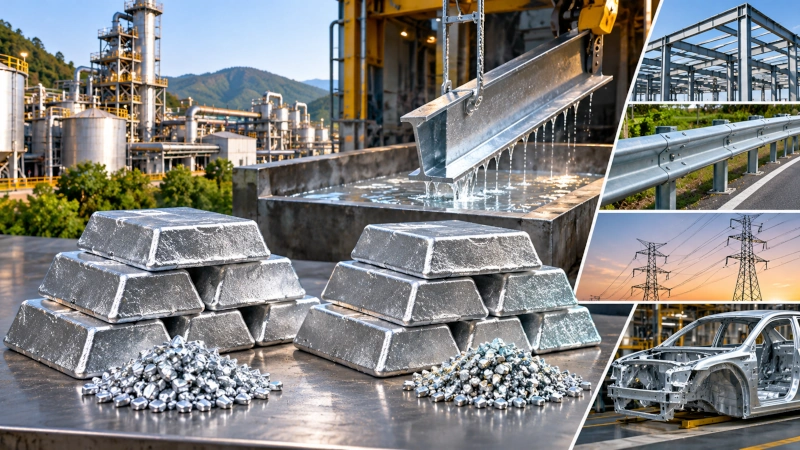
Hindustan Zinc Limited, a Vedanta Group company and one of the world’s largest integrated zinc producers, has launched two specialised zinc alloys, VedAZ and VedAyush, aimed at improving galvanising efficiency, corrosion resistance and the durability of steel products. The new alloys are designed to address the evolving requirements of India’s infrastructure, automotive, engineering and manufacturing industries while strengthening the company’s portfolio of value-added metals.
The products were officially introduced on November 3, 2026, with Hindustan Zinc confirming their launch through a regulatory disclosure to the stock exchanges. VedAZ is a zinc-aluminium master alloy developed to improve control over industrial galvanising processes, while VedAyush is a zinc-aluminium-magnesium alloy intended to enhance corrosion protection and coating performance. Both products are being introduced in India and are intended for domestic as well as international markets, reflecting the company’s strategy to expand beyond conventional primary zinc production into specialised industrial materials.
VedAZ Designed to Improve Galvanising Efficiency and Coating Quality
VedAZ has been developed to address operational challenges associated with maintaining consistent coating quality during galvanising. The process involves applying a protective zinc-based coating to steel or iron to reduce corrosion and extend the service life of industrial components. Maintaining appropriate bath chemistry and coating characteristics is particularly important for manufacturers producing galvanised materials used in construction, transportation and engineering applications.
The specialised zinc-aluminium master alloy is designed to provide greater control over aluminium concentrations in galvanising baths, helping manufacturers maintain stable chemical conditions during coating operations. According to Hindustan Zinc, this controlled composition can support uniform coating thickness, improved surface finish and greater consistency across manufactured products.
Another important objective of VedAZ is to reduce dross formation and associated zinc losses during galvanising. Dross consists of unwanted solid residues that accumulate during processing and can affect material utilisation and operational efficiency. By improving process control and reducing waste, the alloy is intended to help manufacturers optimise zinc consumption while maintaining the protective characteristics required of galvanised steel.
The development is relevant to industries where consistent coating performance is essential for large-scale production. Engineering manufacturers, automotive component suppliers and steel-processing companies increasingly require specialised materials that can meet demanding technical specifications while improving production efficiency and reducing material wastage.
VedAyush Targets Enhanced Corrosion Resistance in Demanding Environments
VedAyush has been developed as a zinc-aluminium-magnesium alloy intended to provide improved corrosion protection, coating adhesion and surface stability. The addition of magnesium is designed to enhance the protective characteristics of zinc-based coatings, particularly where manufactured components are exposed to moisture, salt and other corrosive environmental conditions.
The alloy is aimed at applications requiring durable protective coatings, including infrastructure installations, automotive components, consumer appliances, power transmission equipment and industrial systems. These applications often involve long operating periods during which deterioration of exposed metal surfaces can increase maintenance requirements and shorten equipment service life.
According to Hindustan Zinc, VedAyush is particularly suited to addressing corrosion-related challenges in coastal areas, high-humidity environments and demanding industrial locations. The company expects the alloy’s composition to support improved coating performance and longer-lasting protection for steel components used in these conditions.
The potential applications extend across several important sectors of the Indian economy. Coastal infrastructure, electricity transmission networks, industrial equipment and transportation systems all depend on corrosion-resistant materials to maintain structural integrity and operational reliability. Improved coating technologies can therefore contribute to infrastructure durability and more efficient use of materials, although the performance of individual products will depend on application conditions and manufacturing processes.
Corrosion Protection Becomes Increasingly Important for Indian Infrastructure
The introduction of the new alloys comes as corrosion management receives greater attention across India’s industrial and infrastructure sectors. Steel structures and mechanical components are routinely exposed to environmental conditions that can lead to deterioration, making protective coatings important for maintaining long-term performance and reducing maintenance costs.
Hindustan Zinc cited a 2026 report by the Confederation of Indian Industry and Nomura Research Institute estimating that corrosion-related losses in India amount to approximately 4.3% of the country’s gross domestic product annually. The estimate highlights the scale of the economic challenge associated with material degradation, although it represents a broader assessment of corrosion losses rather than potential savings attributable to the company’s newly launched products.
Galvanising remains an important method of protecting steel used in bridges, industrial structures, transmission towers, construction materials and automotive components. Developments in zinc alloy technology can help manufacturers improve coating consistency and address specific operating requirements, particularly as infrastructure investments increase demand for durable and reliable materials.
The introduction of specialised alloys also reflects a broader movement towards application-specific industrial metals. Rather than supplying a single standard material for all manufacturing processes, producers are increasingly developing alloy compositions suited to particular coating technologies, environmental conditions and customer requirements.
Rajasthan Facility Supports Specialised Zinc Alloy Manufacturing
Hindustan Zinc manufactures specialised zinc alloys through its wholly owned subsidiary, Hindustan Zinc Alloys Private Limited. The subsidiary operates a zinc alloy melting and casting facility at Rajpura Dariba in Rajasthan, with an annual production capacity of 30,000 tonnes.
The facility forms part of Hindustan Zinc’s integrated industrial operations and supports the development of zinc alloy grades tailored to different manufacturing applications. By combining primary zinc production with downstream alloy manufacturing, the company aims to strengthen domestic availability of specialised materials and support customers requiring consistent product specifications.
The introduction of VedAZ and VedAyush adds to an existing portfolio that includes HZDA-3 and HZDA-5, two zinc die-casting alloy grades developed for precision manufacturing applications. These products are intended for industries requiring suitable casting characteristics, dimensional stability, mechanical properties and corrosion resistance.
Hindustan Zinc has also confirmed that its HZDA-5 alloy has received Bureau of Indian Standards certification, complementing the existing certification of HZDA-3. The certifications strengthen the company’s product standardisation framework and support its efforts to serve industrial customers with specialised zinc-based materials.
Hindustan Zinc Expands Value-Added Metals Strategy
The launch forms part of Hindustan Zinc’s strategy to increase the contribution of value-added products to its overall business. The company is seeking to expand its presence in specialised industrial materials by developing products that address the technical requirements of customers in infrastructure, automotive manufacturing, engineering and consumer industries.
Amarendu Prakash, Chief Executive Officer and Whole-time Director of Hindustan Zinc, highlighted the company’s intention to strengthen its value-added zinc portfolio by supplying specialised grades suited to different manufacturing processes. He indicated that the company’s integrated operations and alloy manufacturing capabilities provide a foundation for developing customised products, expanding customer relationships and increasing the value derived from its zinc production.
Hindustan Zinc currently supplies products to more than 30 countries and accounts for approximately 74% of India’s primary zinc market, according to the company. Its established production infrastructure and international commercial network provide a potential platform for introducing specialised alloy grades to customers in domestic and overseas markets.
The launch of VedAZ and VedAyush represents a further step in India’s development of application-specific metal products for industrial manufacturing. While the company has outlined the intended technical advantages of both alloys, their commercial impact will depend on customer adoption, operational performance and the scale of demand across galvanising and downstream manufacturing industries.
By expanding its specialised alloy portfolio and using its existing manufacturing infrastructure in Rajasthan, Hindustan Zinc is seeking to strengthen its position in higher-value zinc products. The development could support Indian galvanisers and manufacturers seeking greater process efficiency, consistent coating quality and improved corrosion protection, while contributing to the domestic availability of advanced industrial materials.
Source: Hindustan Zinc Limited, official company press release and stock-exchange disclosure, November 3, 2026.
You may also like
-
JNK India Secures Major Overseas Engineering Order Worth ₹300–600 Crore for Nigerian Energy Project
-
Chennai Space Startup Inbound Aerospace Seeks $10 Million to Develop Reusable Spacecraft
-
ISRO’s Space Supply Chain Opens New Opportunities for Indian Companies as Gayatri Rubbers Enters Aerospace Sector
-
Maestros Electronics Wins ₹1.67 Crore Order to Equip Four Indian Navy Ships with Telemedicine Systems
-
BAE Systems Explores Indian Manufacturing Partnership for Bofors TRIDON Mk2 Air Defence System
