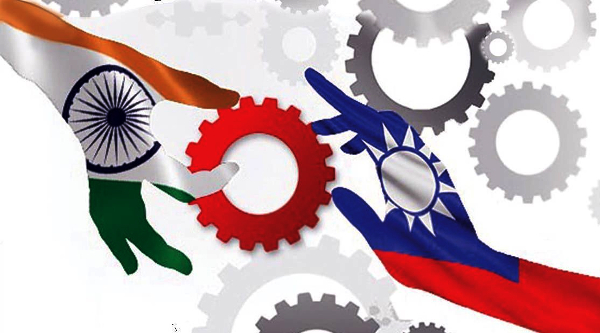
A new India–Taiwan investment platform is taking shape around advanced manufacturing and deep technology, with Asiana Fund and Taiwan-based JC Capital launching a ₹1,000-crore Advanced Manufacturing & Innovation Fund aimed at Indian growth-stage technology companies.
The fund will invest in businesses working across semiconductors, computing, advanced manufacturing, robotics, aerospace, defence, materials and sustainability. Its stated objective goes beyond financial investment, with the partners seeking to build stronger technology, supply-chain and commercial links between Indian companies and Taiwan’s established industrial ecosystem.
₹600-Crore Corpus With ₹400-Crore Greenshoe
The Asiana–JC Capital Advanced Manufacturing & Innovation Fund has been structured with a primary corpus of ₹600 crore and a ₹400-crore greenshoe option, taking its total potential size to ₹1,000 crore.
The sponsors are expected to contribute more than 20 per cent of the fund corpus, giving the platform a substantial direct commitment from its promoters. The fund plans to build a portfolio of approximately 12 to 15 companies, while reserving capital for follow-on investments in companies that continue to scale.
The investment strategy is centred mainly on Series A and Series B companies rather than very early-stage startups. This places the fund in a segment where companies have usually moved beyond initial technological validation but still require significant capital to expand manufacturing, refine intellectual property and enter international markets.
Semiconductors and Computing Form a Core Investment Area
Semiconductors are one of the principal areas targeted by the new fund.
The partners have identified opportunities in semiconductor design, computing platforms, compound semiconductors, secure silicon and related technologies. This focus comes as India attempts to move beyond electronics assembly and build capabilities across chip design, fabrication, packaging, materials and equipment.
India’s semiconductor programme has entered a second phase through Semicon 2.0, which was approved with an outlay of ₹1,27,500 crore. The programme places greater emphasis on research, chip design, semiconductor equipment, materials, additional fabrication facilities, packaging and talent development.
The new India–Taiwan investment platform fits naturally into this environment because Taiwan possesses one of the world’s deepest semiconductor ecosystems, while India is attempting to build more indigenous technology companies capable of participating in that value chain.
Advanced Manufacturing and Robotics Also in Focus
The fund is not limited to semiconductors.
Advanced manufacturing and robotics form another major investment theme, including technologies involving precision engineering, automation, motion-control systems, machine vision and industrial equipment.
The initial deal pipeline reportedly includes companies developing motion-control technologies for electric vehicles and robotics, robotic vision systems and optoelectronics, indicating that the fund is looking at technologies that can serve multiple industrial sectors rather than narrowly defined software businesses.
These sectors require large amounts of patient capital because companies often have to finance engineering teams, prototypes, testing facilities, manufacturing infrastructure and certification before achieving large commercial revenues.
Aerospace and Defence Included in Investment Mandate
Aerospace and defence are also explicitly included within the fund’s mandate.
India has been encouraging domestic development of drones, avionics, sensors, communications equipment, propulsion systems, electronics and other defence technologies under its wider indigenisation programme.
Many such companies face the same financing challenge seen in semiconductor startups. Product-development cycles can be long, qualification requirements are demanding and revenues may arrive only after several years of engineering work.
By targeting growth-stage companies in these sectors, the fund could provide capital at the stage when startups are attempting to move from prototypes and limited production into larger manufacturing programmes.
Taiwan Brings Industrial Experience, Not Just Capital
The importance of JC Capital’s participation lies partly in Taiwan’s industrial environment.
Taiwan sits at the centre of global semiconductor manufacturing and also possesses strong capabilities in electronics, precision machinery, industrial automation, components and supply-chain management.
Asiana Fund has described the partnership as an India–Taiwan technology bridge intended to support technology partnerships, supply-chain integration, commercialisation and international market access in addition to capital investment.
For Indian companies, access to this network could be particularly valuable when they need specialist suppliers, contract manufacturers, equipment partners or customers in East Asian markets.
Indian Deep-Tech Companies Need More Patient Capital
The new fund arrives at a time when financing remains one of the major constraints facing Indian deep-tech companies.
Unlike many consumer internet businesses, semiconductor and advanced-manufacturing startups can require years of development before generating meaningful revenue. Chip companies must pay for engineering teams, electronic-design-automation tools, intellectual-property licences, prototype fabrication, packaging and testing before a commercial product reaches the market.
Industry executives have increasingly argued that India needs specialised investors willing to support these longer development cycles rather than applying investment models designed primarily for software or consumer businesses.
The Asiana–JC Capital fund represents one attempt to fill this gap by concentrating on companies with intellectual property and industrial technologies rather than generalist startup investments.
India Is Creating a Larger Deep-Tech Financing Architecture
The private fund also sits within a rapidly expanding national financing framework for research and advanced technology.
India’s Research, Development and Innovation Scheme has a corpus of ₹1 lakh crore over six years and includes provisions for financing high-risk and high-impact technology development through mechanisms such as Deep-Tech Funds of Funds.
Private investment is beginning to enter this space more aggressively. Members of the India Deep Tech Alliance have already invested around ₹2,170 crore across 56 deep-tech startups, spanning artificial intelligence, quantum technologies, robotics, space, energy, climate technologies, biotechnology and digital infrastructure.
The combination of government-backed capital and specialist private investment could give Indian companies more options as they move through different stages of development.
India–Taiwan Economic Relationship Is Broadening
India–Taiwan commercial ties have traditionally been associated with electronics, contract manufacturing and information technology.
The new fund suggests that the relationship is beginning to extend further into intellectual property, industrial innovation and technology investment.
Rather than treating India simply as a manufacturing location or large consumer market, the investment model seeks to identify Indian companies that can build their own products and technologies and then connect them with Taiwanese industrial networks.
That represents a potentially important shift in the nature of the economic relationship.
A Bridge Between Indian Innovation and Taiwanese Supply Chains
The value of the fund will ultimately depend on whether it can provide more than capital.
Indian semiconductor and manufacturing startups often need access to specialised suppliers, production partners and global customers just as urgently as they need financing.
Taiwan possesses precisely these dense industrial networks.
If the fund can connect Indian companies with Taiwanese manufacturers, engineering partners and technology markets, it could help accelerate the commercialisation of Indian intellectual property while giving Taiwanese firms additional exposure to India’s rapidly expanding industrial base.
A Private-Sector Initiative With Strategic Significance
The Asiana–JC Capital fund is a private-sector investment initiative rather than a government-to-government agreement between India and Taiwan.
That distinction is important.
Its significance lies in the commercial links it could create between the two technology ecosystems rather than in any change in formal diplomatic relations.
Even so, the sectors it targets—semiconductors, aerospace, defence, robotics and advanced manufacturing—are increasingly central to economic security and supply-chain resilience.
The creation of a ₹1,000-crore India–Taiwan investment platform therefore illustrates how private capital is beginning to connect two technology ecosystems that possess complementary strengths.
India offers a growing pool of engineers, startups, industrial demand and new manufacturing capacity. Taiwan brings mature semiconductor and advanced-manufacturing networks.
The new fund is an attempt to place capital between those two systems and convert that complementarity into companies, products and supply chains capable of competing globally.
References
Asiana Fund — Announcement of the Asiana–JC Capital Advanced Manufacturing & Innovation Fund, September 2026.
YourStory — Asiana Fund and Taiwan’s JC Capital Launch ₹1,000-Crore Fund, 18 September 2026.
Itfy — Beyond Capital: Architecting the India–Taiwan Deep-Tech Innovation Corridor, 18 September 2026.
Press Information Bureau, Ministry of Electronics and Information Technology — India Building Semiconductor Future, 17 September 2026.
Press Information Bureau — Semicon 2.0 Implementation Approach, 17 September 2026.
Department of Science and Technology — Research, Development and Innovation Fund framework.
You may also like
-
India’s Economic Warfare Challenge: Strategic Autonomy, Energy Security and the Rise of a Global Power
-
India-US Trade Deal Stalemate: Why Washington’s Tariff Pressure Has Failed to Secure an Agreement
-
US Double Standards in Foreign Policy: 16 Recent Cases Involving India, Russia, China and Global Trade
-
India’s Arctic Energy Ambitions: Russian Oil, LNG and a New Sea Route to Indian Ports
-
India and Russia Explore Joint Icebreaker Construction as Maritime Industrial Cooperation Expands
