India has taken another step towards expanding the use of ethanol-based automotive fuels, with the Ministry of Road Transport and Highways reporting amendments to the Central Motor Vehicles Rules, 1989, on 26 October 2026. The changes concern regulatory provisions applicable to vehicles designed to operate on high-ethanol fuels, including E85 and E100, and form part of India’s continuing efforts to diversify transportation fuels.
The updated provisions address the regulatory treatment of ethanol-compatible vehicles, particularly requirements associated with emissions and vehicle certification. E85 refers to a fuel blend containing approximately 85% ethanol, while E100 denotes fuel consisting essentially of ethanol. These fuels require vehicles with appropriately designed engines, fuel systems and supporting components.
India’s regulatory framework already recognised high-ethanol and flex-fuel vehicles through earlier amendments to the Central Motor Vehicles Rules. The latest development should therefore be understood as a further refinement of an existing framework rather than the introduction of an entirely new vehicle category.
The changes are relevant to India’s automotive manufacturing industry, ethanol producers and the wider transition towards alternative transportation fuels. By developing regulations that accommodate different ethanol blends, India aims to create conditions for manufacturers to introduce vehicles capable of using a broader range of domestically produced fuels.
Government Updates Regulatory Framework for High-Ethanol Vehicles
The Ministry of Road Transport and Highways reported amendments concerning vehicles designed to operate on high concentrations of ethanol. The provisions relate to the framework under which such vehicles are assessed for compliance with applicable emission and certification requirements.
Automotive regulations play an important role in determining how manufacturers develop, test and introduce vehicles using different fuel technologies. Before a new vehicle configuration can enter the market, manufacturers must demonstrate compliance with the relevant technical and regulatory standards.
For high-ethanol vehicles, these requirements extend beyond conventional petrol-engine certification because ethanol has different chemical and physical characteristics. Engine calibration, fuel-system materials and emissions-control technologies must be suitable for the fuel combinations specified by the manufacturer.
India previously introduced regulations recognising E85 and E100 vehicles, including amendments notified in 2016 and 2021. Subsequent notifications have further addressed fuel compatibility, reference fuels and vehicle approval procedures.
The October 2026 announcement forms part of this continuing regulatory development, supporting an automotive framework that accommodates conventional petrol, ethanol blends and dedicated alternative-fuel vehicle configurations.
Understanding E85 and E100 Automotive Fuels
Ethanol is an alcohol-based fuel that can be produced from agricultural feedstocks and other suitable biomass. It contains oxygen within its chemical structure and can be blended with petrol or used in engines specifically designed for high-ethanol operation.
E85 generally contains about 85% ethanol, with the remaining portion consisting primarily of petrol. The exact composition can depend on applicable fuel specifications and operating requirements.
E100 represents essentially pure ethanol fuel manufactured to the relevant automotive specification. Although the designation refers to 100% ethanol, commercial fuel specifications may allow small quantities of other constituents within prescribed limits.
Ethanol differs from petrol in several important respects. It has a higher octane rating, which can provide advantages in engines specifically designed to take advantage of its combustion characteristics. However, ethanol also contains less energy per litre than petrol, which can influence fuel consumption.
Vehicles operating on high-ethanol fuels must therefore account for these characteristics through appropriate engineering.
An engine designed exclusively for conventional petrol cannot automatically be assumed to operate safely or efficiently on E85 or E100. Compatibility depends on the manufacturer’s specifications and the vehicle’s certified operating capabilities.
Flex-Fuel Vehicles Can Operate on Different Ethanol Blends
Flexible-fuel vehicles are designed to operate on petrol and a range of approved petrol–ethanol mixtures. Their fuel-management systems can adjust engine operation according to the characteristics of the fuel being used.
Modern flex-fuel systems typically use electronic engine controls to manage parameters such as fuel delivery and ignition timing. Depending on vehicle design, the system may determine fuel composition through dedicated sensing arrangements or appropriate engine-control strategies.
Because ethanol and petrol have different combustion characteristics, the engine must deliver fuel in quantities suitable for the mixture being used. High-ethanol operation may require changes in fuel-system capacity and engine calibration.
The materials used in fuel tanks, seals, pumps, injectors and fuel lines must also be compatible with the intended ethanol concentrations. Manufacturers select suitable materials and components to maintain durability and reliable operation.
Flex-fuel technology offers the possibility of using different approved fuel blends without requiring drivers to use a single fixed ethanol concentration.
However, the precise range of supported fuels differs between vehicle models. A vehicle certified for E20 cannot automatically be treated as compatible with E85 or E100.
Manufacturers must specify the permitted fuel combinations, and vehicle owners must follow those requirements.
Existing E85 and E100 Regulations Provide the Foundation
India’s efforts to establish a regulatory framework for high-ethanol vehicles began well before the latest announcement.
In July 2016, the Ministry of Road Transport and Highways amended the Central Motor Vehicles Rules to establish emission-related provisions for vehicles capable of operating on E85 and E100.
The amendment addressed newly manufactured vehicles fitted with spark-ignition engines designed to operate on petrol or high-ethanol fuel mixtures. It also established the relationship between flex-fuel vehicles and prevailing emission standards.
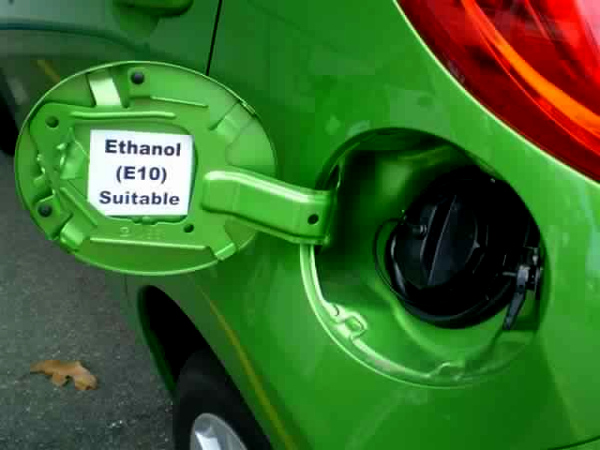
Further changes in March and October 2021 addressed ethanol compatibility and related certification requirements. These provisions required manufacturers to identify the ethanol blends supported by their vehicles and communicate the compatibility information through visible vehicle markings.
Additional regulatory developments in 2024 and 2025 addressed reference fuels, vehicle approval requirements and the technical standards applicable to ethanol-compatible engines.
This regulatory history demonstrates that India’s approach to flex-fuel technology has evolved through successive changes rather than a single notification.
The October 2026 development adds to this established framework as policymakers and manufacturers continue preparing for wider use of alternative transportation fuels.
Ethanol Compatibility Remains a Manufacturer Responsibility
An important aspect of India’s flex-fuel regulations concerns the responsibility of vehicle manufacturers to establish and declare fuel compatibility.
Different concentrations of ethanol place different demands on engine components, fuel delivery systems and emission-control equipment. Manufacturers must therefore design and validate their vehicles for the fuels they intend them to use.
Earlier Central Motor Vehicles Rules amendments explicitly required manufacturers to declare supported ethanol blends and display the relevant compatibility information on vehicles.
This approach helps distinguish vehicles developed for conventional petrol blends from those designed for high-ethanol operation.
For consumers, the distinction is important because a vehicle’s ability to operate on E20 does not necessarily mean it can safely use E85 or E100.
High-ethanol fuels should be used only where the manufacturer has certified the vehicle for the relevant fuel.
The reported October 2026 amendment does not establish a requirement for existing vehicle owners to convert their vehicles to E85 or E100 operation. Nor does it imply that all petrol vehicles become compatible with these fuels.
High-Ethanol Fuels Require Specialised Automotive Engineering
The development of vehicles capable of operating on high concentrations of ethanol presents several engineering challenges.
Ethanol has different fuel properties from petrol, including differences in energy content, vapourisation characteristics and interactions with certain materials. These differences must be considered when designing an engine and its fuel supply system.
The higher octane rating of ethanol can allow suitable engines to operate with combustion strategies that differ from those used in conventional petrol engines. Such benefits depend on engine design and calibration rather than the fuel alone.
At the same time, ethanol’s lower volumetric energy content means that more fuel may be needed to provide a comparable amount of energy. Manufacturers must account for this when designing fuel delivery systems and evaluating vehicle efficiency.
Cold starting, fuel evaporation and long-term material compatibility are additional considerations for high-ethanol vehicles.
Emission-control systems must also function effectively across the approved operating conditions. A manufacturer seeking certification must demonstrate compliance with the relevant emission standards and testing procedures.
These engineering requirements create opportunities for Indian automotive manufacturers, component suppliers and research institutions to develop technologies suitable for ethanol-based transportation.
Ethanol Production Supports India’s Domestic Fuel Industry
Ethanol blending has become an important component of India’s strategy to diversify transportation fuels and increase the domestic contribution to the country’s energy requirements.
India produces fuel ethanol from permitted agricultural feedstocks and related industrial processes. Sugarcane-based feedstocks and grain-based production pathways have played important roles in the development of the domestic ethanol industry.
The expansion of ethanol production has encouraged investment in distilleries, processing infrastructure, storage systems and fuel distribution facilities.
Greater use of domestically produced ethanol can reduce the amount of petrol required in a given fuel blend, although the actual effect on petroleum imports depends on fuel demand, blending levels and other factors.
Ethanol production also creates opportunities for agricultural processing industries and associated supply chains.
However, expanding high-ethanol fuel use requires coordination between fuel producers, oil-marketing companies, vehicle manufacturers and regulatory authorities.
A vehicle designed for E85 or E100 can deliver its intended benefits only when the appropriate fuel is available and meets the required specifications.
The development of suitable fuel distribution infrastructure is therefore an important consideration alongside automotive technology.
Environmental Benefits Depend on Production and Vehicle Technology
Ethanol is often discussed as a means of reducing dependence on fossil-derived transportation fuels. Its environmental performance, however, depends on how the ethanol is produced and how it is used.
Because ethanol can be manufactured from renewable biological feedstocks, it offers opportunities to reduce the fossil-carbon component of transportation energy.
Nevertheless, the complete environmental impact must account for agricultural production, processing energy, transportation, land use and other factors associated with the fuel supply chain.
The greenhouse gas benefits of ethanol can vary considerably between different production pathways.
At the vehicle level, combustion characteristics and emission-control technologies also influence exhaust emissions. The use of high-ethanol fuel does not automatically eliminate pollutants or guarantee lower emissions of every regulated substance.
For these reasons, vehicle certification and emission standards remain essential elements of any transition towards wider ethanol use.
The development of high-ethanol vehicles can contribute to a diversified transportation energy system, but environmental gains depend on appropriate technology, sustainable production practices and effective regulation.
New Opportunities for Indian Automotive and Component Manufacturers
The continuing development of India’s flex-fuel regulations creates opportunities for domestic automotive manufacturers and component suppliers.
Vehicles capable of operating on high-ethanol fuels require specialised fuel-system components, electronic engine management technologies and materials compatible with different ethanol concentrations.
Indian manufacturers already possess substantial capabilities in engine production, automotive electronics, fuel injection, sensors and precision engineering.
Adapting these capabilities to high-ethanol applications could support further development of indigenous automotive technologies.
Research institutions and engineering centres can contribute through work involving combustion efficiency, material compatibility, vehicle emissions and fuel-system optimisation.
Automotive testing agencies also have an important role in validating new vehicle configurations against applicable safety and emission standards.
The expansion of flex-fuel technology could consequently create industrial opportunities extending beyond vehicle assembly to include components, testing equipment and supporting engineering services.
Commercial adoption will nevertheless depend on vehicle affordability, technical performance, consumer acceptance and the availability of suitable fuel.
E85 and E100 Are Distinct from India’s E20 Blending Programme
India’s ethanol blending programme has encouraged the use of petrol containing increasing proportions of ethanol. E20, which contains approximately 20% ethanol, is an important part of this wider transition.
However, E20 and high-ethanol fuels such as E85 and E100 have different implications for vehicle engineering.
Vehicles designed for E20 operation must meet the compatibility requirements associated with that fuel blend. By contrast, vehicles intended to operate on E85 or E100 must accommodate much higher ethanol concentrations.
The differences influence fuel-system design, combustion management and associated testing requirements.
Consequently, expanding E20 availability does not mean that existing vehicles can automatically operate on higher ethanol blends.
The development of high-ethanol vehicle regulations provides a framework for manufacturers seeking to introduce products specifically designed for those fuels.
These technologies may eventually serve different automotive segments and customer requirements, depending on commercial feasibility and supporting infrastructure.
Maintaining clear distinctions between fuel categories is important for both manufacturers and vehicle owners.
Regulatory Development Strengthens India’s Alternative-Fuel Strategy
India’s reported October 2026 amendment to the Central Motor Vehicles Rules represents a further development in the regulatory framework for high-ethanol automotive fuels.
By addressing vehicles designed for E85 and E100 operation, the changes support continued work on fuel compatibility, emissions compliance and automotive certification.
The development builds on regulations introduced during previous years and reflects the continuing evolution of India’s approach to flex-fuel transportation.
For the automotive industry, the framework provides a basis for developing vehicles and components suitable for different ethanol concentrations. For the domestic fuel industry, it creates a regulatory context that could support demand for high-ethanol fuels as compatible vehicles enter the market.
The wider significance lies in India’s efforts to diversify transportation energy, strengthen domestic manufacturing and develop alternative-fuel technologies.
The next phase will depend on the ability of manufacturers, fuel producers and infrastructure providers to deliver certified vehicles and dependable fuel supplies at commercially viable costs.
As these capabilities develop, high-ethanol vehicles could become another element of India’s increasingly diversified automotive landscape.
References
- Ministry of Road Transport and Highways, Press Information Bureau, 26 October 2026. Release ID 2328642. Reported amendments concerning E85 and E100 vehicles under the Central Motor Vehicles Rules, 1989.
https://www.pib.gov.in/PressReleseDetailm.aspx?PRID=2328642 - Ministry of Road Transport and Highways, Government of India. Central Motor Vehicles (Eighth Amendment) Rules, 2016, Notification G.S.R. 682(E), 12 July 2016. Provisions concerning mass-emission standards for E85 and E100 flex-fuel vehicles.
https://morth.nic.in/sites/default/files/notifications_document/Notification_no_G_S_R_682_E_dated_12_07_2016_regarding_Mass_emission_standards_for_Flex_Fuel_0.pdf - Ministry of Road Transport and Highways, Government of India. Central Motor Vehicles (Fourth Amendment) Rules, 2021, Notification G.S.R. 156(E), 8 March 2021. Provisions concerning E20, E85 and E100 compatibility and reference fuels.
https://morth.nic.in/sites/default/files/notifications_document/GSR%20156%28E%29%208%20march%202021%20ethanol%2020_0.pdf - Ministry of Road Transport and Highways, Government of India. Notification G.S.R. 728(E), 11 October 2021. Further provisions concerning ethanol fuel compatibility and vehicle identification.
https://morth.nic.in/sites/default/files/notifications_document/GSR%20728%28E%29%2011%20October%202021%20E%2012%20and%20E%2015.pdf - Ministry of Road Transport and Highways, Government of India. Notification G.S.R. 270(E), 28 April 2025. Amendments concerning vehicle emissions, certification procedures and ethanol compatibility.
https://morth.nic.in/sites/default/files/notifications_document/5-GSR%20270%28E%29%20dated%20the%2028th%20April%2C%202025.pdf
You may also like
-
India to Track Challenges Faced by Women Entrepreneurs in New National Business Survey
-
Adani Green Energy Expands Battery Storage to 6.63 GWh at Khavda, Strengthening India’s Renewable Power Infrastructure
-
Manastu Space Secures ₹116 Crore Government Support to Develop Indigenous Green Propulsion Systems
-
GeM’s AABHAR Collection Showcases 294 Indigenous Products, Strengthens Market Access for Indian Artisans
-
Balaghat Chinnor Rice of Madhya Pradesh: The Fragrant Heritage Grain with GI Recognition
