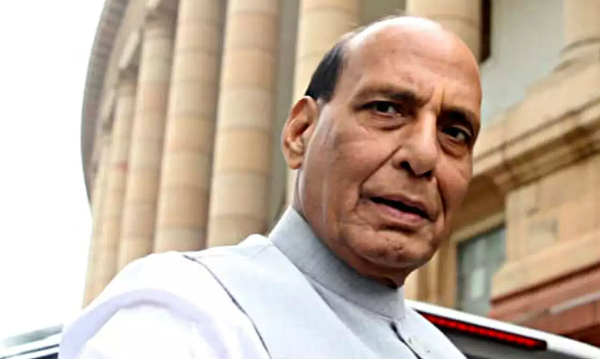
New Delhi, October 27, 2026: Defence Minister Rajnath Singh is set to lead the Indian delegation at the 13th ASEAN Defence Ministers’ Meeting-Plus (ADMM-Plus), scheduled to take place in Cebu, Philippines, from October 28 to 29, 2026. The high-level gathering will bring together defence ministers and senior representatives from Southeast Asian countries and their major international partners to discuss regional security challenges, strengthen military cooperation and promote stability across the Indo-Pacific region.
According to the Ministry of Defence, Rajnath Singh will address the forum during a session dedicated to the exchange of views on regional and international security issues. His participation will provide an opportunity to present India’s perspectives on emerging security challenges and reaffirm its commitment to cooperation with ASEAN countries and other regional partners.
The Defence Minister is also scheduled to hold bilateral meetings with his counterparts from participating countries on the sidelines of the summit. These discussions will focus on reviewing existing defence relationships and identifying opportunities to strengthen strategic partnerships through closer institutional engagement and practical cooperation.
The Philippines, which holds the ADMM-Plus chairmanship for 2026, will host the gathering as part of the established ASEAN-led framework for regional defence dialogue.
ASEAN Defence Ministers’ Meeting-Plus Brings Together Major Indo-Pacific Partners
The ASEAN Defence Ministers’ Meeting is the highest defence consultative and cooperative mechanism within the Association of Southeast Asian Nations. It provides a framework through which member countries can discuss common security concerns and develop cooperation in defence-related matters.
The ADMM-Plus expands this mechanism by bringing together ASEAN member states and eight dialogue partners. These partners comprise India, the United States, China, Russia, Japan, South Korea, Australia and New Zealand.
The ASEAN members participating in the framework include Brunei, Cambodia, Indonesia, Lao PDR, Malaysia, Myanmar, the Philippines, Singapore, Thailand, Timor-Leste and Vietnam.
The participation of major regional and international powers makes ADMM-Plus an important platform for discussing security developments affecting Southeast Asia and the wider Indo-Pacific.
The mechanism also provides opportunities for defence establishments to maintain communication, develop professional relationships and pursue cooperation despite differing national security priorities.
The inaugural ADMM-Plus meeting was held in Hanoi, Vietnam, on October 12, 2010. Since 2017, ministerial meetings have been conducted annually to strengthen defence cooperation between ASEAN members and their dialogue partners.
The 2026 meeting will continue this institutional engagement under the Philippines’ chairmanship.
Rajnath Singh to Address Regional and International Security Challenges
During the upcoming meeting, Defence Minister Rajnath Singh will address participating delegations on regional and international security issues.
The discussions come at a time when the Indo-Pacific region is experiencing important changes in its strategic environment, including developments concerning maritime security, military modernisation, international trade routes and emerging defence technologies.
Southeast Asia occupies a particularly significant position in the Indo-Pacific because of its geographical location along major international maritime routes connecting the Indian and Pacific Oceans.
Maintaining peace and stability in these waters is important for regional economies, commercial shipping and international connectivity.
For India, the Indo-Pacific represents an area of considerable economic and strategic importance. India’s maritime interests are closely connected with developments affecting the eastern Indian Ocean, the Strait of Malacca and adjoining sea routes.
Participation in the ADMM-Plus provides an opportunity for India to engage with regional partners on shared security concerns while supporting established mechanisms for dialogue and cooperation.
The Ministry of Defence has confirmed Rajnath Singh’s participation in the security discussions but has not yet released the detailed contents of his scheduled address.
Bilateral Defence Meetings to Strengthen Strategic Partnerships
An important component of Rajnath Singh’s visit will be bilateral meetings with defence ministers representing participating countries.
According to the Ministry of Defence, these interactions will provide opportunities to review ongoing defence cooperation and explore ways to strengthen strategic relationships.
India maintains defence partnerships with several ASEAN countries, involving military training, maritime exercises, professional exchanges and cooperation between defence institutions.
Bilateral engagements during multinational gatherings can help governments assess the progress of existing initiatives and identify opportunities for future collaboration.
Such discussions may also contribute to greater familiarity between the armed forces and defence establishments of participating countries.
India’s defence engagement with Southeast Asia has expanded through naval deployments, military exercises and institutional dialogue.
The forthcoming bilateral meetings will allow India to continue these discussions within the wider framework of Indo-Pacific security cooperation.
However, the Ministry of Defence has not announced the complete schedule of bilateral meetings or identified any new defence agreements expected to be signed during the visit.
India and Malaysia Co-Chair ASEAN Counterterrorism Working Group
India’s engagement with ADMM-Plus extends beyond participation in ministerial meetings.
Under the ADMM-Plus framework, India is jointly chairing the Experts’ Working Group on Counter-Terrorism with Malaysia for the 2024–2027 cycle.
The arrangement provides an institutional mechanism for cooperation involving professional exchanges, capacity-building activities and the sharing of experience concerning counterterrorism challenges.
Counterterrorism remains an important security priority for countries across the Indo-Pacific, where governments face different forms of transnational security threats.
Cooperation through multilateral mechanisms can help participating defence establishments improve their understanding of common challenges and develop procedures for coordinated responses.
India’s role as co-chair reflects its continuing participation in the practical activities undertaken through ADMM-Plus.
The working group also provides opportunities for India and Malaysia to strengthen their bilateral defence relationship while contributing to wider regional security cooperation.
The Ministry of Defence has identified this co-chairmanship as an important component of India’s involvement in ASEAN-led defence mechanisms.
Maritime Security Remains Important to India–ASEAN Cooperation
Maritime security forms a significant part of India’s broader defence engagement with Southeast Asian countries.
The region contains some of the world’s important commercial shipping routes, connecting major manufacturing centres, energy markets and international ports.
These maritime connections are essential for the movement of goods, energy supplies and industrial materials between Asia and other regions.
India has maintained regular naval engagement with ASEAN countries through port visits, bilateral exercises and multilateral maritime activities.
Such cooperation contributes to professional familiarity between naval forces and provides opportunities to exchange experience concerning maritime operations.
In September 2026, Indian Naval Ships INS Sahyadri and INS Kulish participated in an ADMM-Plus Maritime Security Joint Cooperation Activity hosted in the Philippines.
The engagement included professional exchanges, operational coordination and maritime activities designed to improve cooperation among participating naval forces.
The deployment demonstrated India’s continuing participation in ASEAN-led maritime security initiatives.
The forthcoming defence ministers’ meeting provides an opportunity to build upon this broader pattern of maritime engagement.
Act East Policy Guides India’s Defence Engagement with Southeast Asia
India’s participation in ADMM-Plus forms part of its Act East Policy, which seeks to strengthen relationships with countries across Southeast Asia and the wider Indo-Pacific.
India became an ASEAN dialogue partner in 1992, establishing an important foundation for its subsequent diplomatic, economic and security engagement with the regional grouping.
Over the following decades, cooperation expanded into areas involving trade, connectivity, maritime security, defence exchanges and institutional partnerships.
The Act East Policy places particular emphasis on developing stronger relations with Southeast Asian countries through practical engagement and sustained cooperation.
Defence diplomacy has become an increasingly important dimension of this approach.
India’s participation in military exercises, naval deployments and defence dialogues provides opportunities to strengthen regional partnerships and contribute to cooperative security arrangements.
The ADMM-Plus mechanism offers a platform for pursuing these objectives within an established ASEAN-led institutional framework.
India’s involvement also reflects its support for ASEAN’s central role in regional security discussions.
Emerging Technologies and Defence Cooperation in the Indo-Pacific
Technological developments are increasingly influencing the security priorities of countries across the Indo-Pacific.
Modern defence cooperation involves not only military exercises and training but also discussions concerning emerging technologies, cybersecurity, unmanned systems and advanced military capabilities.
India has been strengthening its domestic defence manufacturing and research capabilities through programmes involving indigenous equipment, electronics, aerospace technologies and maritime systems.
These developments have created opportunities for wider cooperation with international partners in areas such as defence technology, training and industrial engagement.
Earlier ASEAN–India defence dialogues have addressed subjects including artificial intelligence, maritime domain awareness, unmanned platforms and resilient defence supply chains.
The ASEAN–India Defence Think Tank Forum held in New Delhi on October 14–15, 2026, also examined opportunities for strengthening cooperation in emerging security technologies.
Such institutional engagements provide a broader context for India’s participation in the upcoming ADMM-Plus meeting.
However, the Ministry of Defence’s October 26 announcement does not identify a specific technology-transfer agreement, defence manufacturing contract or new equipment procurement arrangement associated with Rajnath Singh’s visit.
Any such developments would require separate confirmation following the relevant bilateral discussions.
Philippines Hosts Summit Amid Expanding India–Philippines Defence Relations
The selection of Cebu as the venue for the 2026 ADMM-Plus meeting places the Philippines at the centre of this year’s regional defence dialogue.
India and the Philippines have expanded their defence engagement through military cooperation, maritime exchanges and institutional contacts.
The relationship received additional attention following the establishment of the India–Philippines Strategic Partnership in August 2025.
Defence cooperation between the two countries includes professional interactions and engagement involving maritime security.
The Indian Navy’s participation in the September 2026 ADMM-Plus Joint Cooperation Activity at Subic Bay provided a recent example of this engagement.
The deployment of Indian naval vessels enabled personnel to interact with counterparts from the Philippines and other participating countries through professional and operational activities.
Rajnath Singh’s visit for the forthcoming summit will provide another opportunity for engagement within the ASEAN-led defence framework.
The Philippines’ role as host also underscores its responsibility for facilitating dialogue among the participating defence establishments during its 2026 chairmanship.
India Seeks Greater Regional Security Cooperation
The 13th ASEAN Defence Ministers’ Meeting-Plus represents an important opportunity for India to strengthen its participation in regional defence diplomacy.
The gathering will bring together Southeast Asian countries and major international partners to discuss security challenges and explore opportunities for practical cooperation.
For India, the meeting provides a platform to reinforce its Act East Policy, maintain engagement with ASEAN defence institutions and review bilateral partnerships.
Its continuing co-chairmanship of the ADMM-Plus Counter-Terrorism Experts’ Working Group with Malaysia also demonstrates participation in the mechanism’s practical security activities.
The scheduled bilateral meetings may contribute to stronger defence relationships, while the wider ministerial discussions will provide opportunities for exchanging perspectives on developments affecting the Indo-Pacific.
As regional security challenges evolve, established mechanisms such as ADMM-Plus remain important channels for communication and professional engagement among participating countries.
Rajnath Singh’s participation in the October 28–29 summit therefore reflects India’s continuing commitment to defence cooperation with Southeast Asia and its broader interest in maintaining peace, stability and collective growth across the Indo-Pacific region.
References
- Ministry of Defence, Government of India. “Raksha Mantri to Lead Indian Delegation at 13th ADMM-Plus in Philippines.” Press Information Bureau, 26 October 2026.
https://www.pib.gov.in/PressReleseDetailm.aspx?PRID=2328397 - Ministry of Defence, Government of India. “Indian Naval Ships Sahyadri and Kulish Arrive at Subic Bay, Philippines for ADMM-Plus JCA.” Press Information Bureau, 21 September 2026.
https://www.pib.gov.in/PressReleasePage.aspx?PRID=2312842 - Ministry of Defence, Government of India. “Indian Naval Ships Sahyadri and Kulish Conclude Participation in ADMM-Plus Maritime Security Joint Cooperation Activity.” Press Information Bureau, 27 September 2026.
https://www.pib.gov.in/PressReleasePage.aspx?PRID=2315585 - Ministry of Defence, Government of India. Official announcement concerning the ASEAN–India Defence Think Tank Forum, held in New Delhi on 14–15 October 2026. Press Information Bureau, October 2026.
https://www.pib.gov.in/PressReleasePage.aspx?PRID=2323085
You may also like
-
Bengaluru Startup Paar Autonomy Develops AI-Powered Drone Systems for GPS-Denied Environments
-
Sigma Advanced Systems Secures Fresh ₹973 Crore NATO Artillery Ammunition Order
-
India Advances Indigenous Defence and Space Technologies Through Naval Innovation, Drones and Advanced Electronics
-
Thales Seeks Indian Partnerships for Next-Generation Missiles, Radars and Electronic Warfare Systems
-
Indian and Australian Armies Conduct Jungle and Coastal Warfare Drills in AUSTRAHIND 2026
