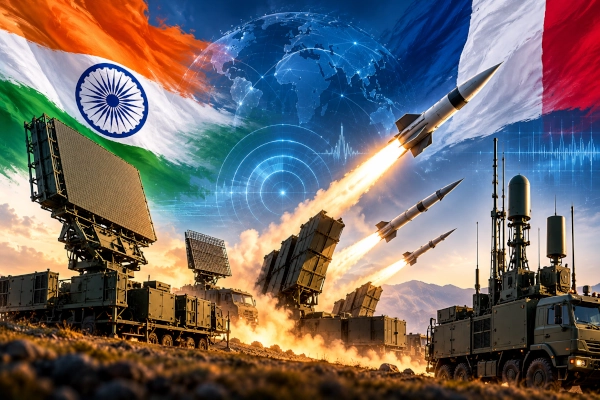
French aerospace and defence technology company Thales Group is seeking to deepen its industrial cooperation with India through the joint development of next-generation missile systems, advanced radars and electronic warfare equipment. The company aims to expand the role of Indian manufacturers and engineering teams in developing sophisticated defence technologies for domestic and international markets.
Thales Group Chief Executive Officer Patrice Caine outlined these ambitions in an interview with The Economic Times, published on 26 October 2026. He highlighted India’s expanding industrial capabilities, engineering expertise and competitive manufacturing ecosystem as important factors supporting the company’s plans for future technological collaboration.
According to Caine, Thales has already procured more than €1.2 billion worth of products and services from India over the preceding five years. The company now intends to build on these relationships by involving Indian suppliers in higher-value activities, including product development, systems engineering and design responsibilities.
The proposed expansion marks a shift towards deeper technological cooperation rather than limiting Indian participation to the manufacture of components or assembly of existing defence equipment.
Thales Identifies India as a Partner for Advanced Defence Technologies
Patrice Caine identified advanced radar systems, missile technologies and electronic warfare equipment as areas where Indian companies could contribute to future Thales programmes.bHe stated that India’s domestic industrial base possesses engineering capabilities, manufacturing expertise and technical competencies relevant to the development of sophisticated defence systems.
Thales has worked with Indian industrial partners for several years, developing relationships with manufacturers and engineering organisations capable of supplying components and specialised services for its international operations.
The company now sees opportunities to strengthen these partnerships by involving Indian organisations in the development of future defence technologies.
This approach would allow Indian engineering teams to participate in selected stages of technology development, including system design, product refinement and integration.
The initiative is particularly significant because modern defence equipment increasingly depends on advanced electronics, specialised software, sensors and complex engineering systems.
However, the October 2026 statements outline Thales’ strategic intentions. They do not constitute an announcement of newly signed contracts covering specific missile, radar or electronic warfare development programmes.
Indian Suppliers Contribute More Than €1.2 Billion to Thales’ Global Supply Chain
One of the most significant disclosures in the interview concerns the scale of Thales’ existing industrial procurement from India.
According to Caine, the company purchased products and services worth more than €1.2 billion from Indian suppliers over the preceding five years.
This procurement reflects the established participation of Indian manufacturers in the company’s wider international supply chain.
Thales operates across several technology-intensive sectors, including defence electronics, aerospace, space systems, cybersecurity and digital technologies. Its suppliers provide a wide range of products and services required for developing, manufacturing and supporting these systems.
The company’s existing sourcing relationships demonstrate that Indian industrial participation is not limited to supplying equipment for domestic defence projects.
Indian-manufactured products already form part of Thales’ international operations, with components and services contributing to systems intended for global markets.
Caine indicated that the company expects this sourcing activity to increase as it expands cooperation with Indian suppliers.
Greater participation in global supply chains can provide Indian companies with opportunities to strengthen production quality, develop specialised engineering capabilities and establish relationships with international customers.
Moving Beyond Manufacturing Towards Defence Design Authority
A major element of Thales’ proposed strategy involves expanding Indian participation beyond conventional manufacturing arrangements.
Caine explained that the company sees opportunities to transfer greater design responsibilities to Indian partners, allowing them to contribute more directly to the development and evolution of defence systems.
In defence engineering, design authority generally refers to responsibility for defined aspects of a product’s design, technical configuration and engineering decisions.
The precise scope of such authority depends on contractual arrangements, intellectual property rights, regulatory requirements and the nature of the technology involved.
Participation in design activities can provide industrial partners with opportunities to develop deeper technical expertise than would be available through manufacturing alone.
It may also support the creation of domestic engineering teams capable of modifying, integrating and improving complex systems for different operational requirements.
Thales’ stated approach is to develop products in India that can contribute to the company’s international business rather than restricting locally developed technologies to the Indian market.
Nevertheless, the CEO’s remarks describe a strategic direction. They do not establish that unrestricted design authority or complete intellectual property ownership has been transferred to Indian companies for any newly proposed system.
Advanced Radar Systems Offer Opportunities for Joint Development
Radar technology represents an established area of cooperation between Thales and India’s defence industry.
Modern military radars are used for surveillance, target detection, tracking, air defence and the coordination of weapon systems.
Their development requires expertise in radio-frequency engineering, antenna technology, signal processing, electronics, software and systems integration.
India has developed capabilities in several of these areas through defence research establishments, public sector enterprises and private technology companies.
Thales’ interest in expanding radar development partnerships builds upon existing industrial relationships involving Indian manufacturers.
An important example is BEL-Thales Systems Limited, a joint venture between Bharat Electronics Limited and Thales.
Established in August 2014 and based in Bengaluru, the company focuses on the design, development, marketing, supply and support of civilian and selected defence radar systems.
According to BEL, the joint venture is engaged in the co-development of a multi-target tracking radar with Thales Netherlands. The programme is intended to address requirements associated with future Indian weapon systems and international markets.
This existing partnership provides a concrete example of Indian participation in radar engineering and development.
The October 2026 statements suggest that Thales intends to explore additional opportunities in similar technology-intensive areas, although no new radar development agreement was identified in the interview.
Next-Generation Missile Systems Form Another Area of Cooperation
Missile technologies are another important area identified by the Thales chief executive.
The company has experience developing and supplying missile-related systems, including short-range air defence weapons and associated electronics.
Caine highlighted the importance of cost-effective weapons suited to modern military requirements, referring to smart rockets and short-range missile systems.
Among the products discussed were the STARStreak air defence system and the Lightweight Multirole Missile.
These technologies represent different approaches to addressing aerial and other tactical threats.
Short-range air defence systems are particularly relevant to military forces seeking protection against aircraft, helicopters and certain unmanned aerial threats operating within their engagement envelopes.
The growing use of relatively inexpensive drones has also increased interest in defensive technologies that balance effectiveness with sustainable operating costs.
Thales has previously established cooperation with Indian defence manufacturer Bharat Dynamics Limited in the missile sector.
In January 2021, Thales and BDL announced a teaming agreement concerning the STARStreak air defence system, providing an established foundation for cooperation involving missile technologies.
The latest statements indicate an interest in expanding Indian participation in future programmes. However, they do not identify a newly signed joint-development contract for a specific next-generation missile.
Electronic Warfare Systems Highlight India’s Defence Electronics Capabilities
Electronic warfare constitutes another major area in which Thales sees potential for cooperation with Indian technology companies.
Modern electronic warfare systems use electromagnetic technologies to detect, analyse and respond to electronic signals associated with military operations.
Such capabilities can support situational awareness, electronic protection and countermeasures against hostile electronic systems.
Their development requires specialised knowledge of sensors, radio-frequency components, signal processing, software and system integration.
India’s expanding defence electronics sector includes companies working in several of these technological areas.
Thales has an established presence in electronic warfare technologies, including systems associated with military aircraft and other defence platforms.
The company previously announced an industrial partnership with Reliance Defence in 2017 intended to develop Indian capabilities in radar and electronic warfare sensor integration and maintenance.
That arrangement formed part of Thales’ wider efforts to strengthen its industrial presence in India.
The October 2026 comments indicate that electronic warfare remains an area of interest for future cooperation, although the company did not identify a new electronic warfare contract or development programme arising from the interview.
Existing Partnerships Provide a Foundation for Expansion
Thales’ proposed cooperation builds upon established relationships with India’s defence manufacturing sector.
The BEL-Thales Systems joint venture demonstrates the company’s participation in Indian radar development and technical support.
Its earlier agreement with Bharat Dynamics Limited concerning STARStreak provides another example of collaboration in defence technologies.
Thales has also developed industrial relationships associated with aerospace systems, defence electronics and engineering services.
These partnerships illustrate different forms of cooperation, ranging from joint ventures and technology agreements to component sourcing and specialised engineering activities.
They also provide experience in working within India’s defence procurement and manufacturing environment.
The company’s proposed expansion would seek to build on this industrial foundation while exploring opportunities for more advanced engineering responsibilities.
Existing partnerships should, however, be distinguished from future proposals. The presence of established agreements does not mean that new programmes have automatically received contractual approval.
India Becomes an Important Engineering Centre for Global Defence Products
Thales increasingly views India as more than a market for defence and aerospace equipment.
According to Caine, the company considers India an important location for developing products that can serve international customers.
This approach reflects the combination of industrial manufacturing capabilities, technical expertise and engineering talent available in the country.
Developing products for global markets requires attention to international quality standards, product reliability, technical documentation and long-term support.
Indian participation in these activities can contribute to the growth of specialised engineering capabilities and strengthen the competitiveness of domestic suppliers.
Thales maintains engineering operations in India, including centres in Bengaluru and Noida.
The company has previously announced plans to expand its engineering workforce in hardware, software and systems development.
These activities provide a foundation for increasing local contributions to advanced technological programmes.
The proposed transfer of greater design responsibilities could further strengthen India’s role within the company’s global technology and manufacturing network.
Thales Also Explores Cooperation with Indian Space Launch Companies
Beyond defence electronics and missile systems, Thales is examining opportunities for cooperation with Indian companies developing satellite launch capabilities.
Caine identified the expanding commercial space sector as another area where Indian engineering and industrial capabilities could support future international requirements.
Thales is active in the satellite industry through its space technology operations and associated partnerships.
Satellite manufacturers depend on reliable launch services to deploy spacecraft into their intended orbits.
As global demand for satellite deployment changes, launch availability, cost and scheduling flexibility remain important considerations.
Caine suggested that Indian launch service providers could benefit from potential changes in international launch capacity towards the end of the decade.
His comments included a forecast concerning possible constraints on the availability of SpaceX launch services in 2029. This remains the executive’s assessment rather than a confirmed industry-wide outcome.
India’s expanding commercial launch ecosystem provides opportunities for international satellite manufacturers to explore additional launch service partnerships.
Thales’ interest in this sector indicates that its proposed industrial engagement with India extends beyond conventional defence manufacturing.
However, the October 2026 interview did not announce a signed satellite launch services contract with an Indian company.
Industrial Cooperation Supports India’s Defence Manufacturing Ambitions
The proposed expansion of Thales’ Indian partnerships aligns with India’s broader efforts to strengthen domestic defence manufacturing and technological capabilities.
Indian defence policy increasingly emphasises indigenous development, manufacturing capacity, research and greater participation by private companies.
International technology partnerships can contribute to these objectives when they involve meaningful engineering collaboration, domestic production and the development of local expertise.
For Indian suppliers, participation in advanced radar, missile and electronic warfare programmes could provide opportunities to enter more technologically demanding segments of the defence industry.
Such programmes may also support investment in specialised manufacturing equipment, workforce training, electronics development and testing infrastructure.
The potential benefits extend beyond individual contracts because experience gained through advanced engineering programmes can support future domestic product development.
At the same time, the precise contribution of any proposed collaboration will depend on contractual terms, the scope of technology sharing, intellectual property arrangements and the responsibilities assigned to Indian partners.
The October 2026 statements establish Thales’ interest in pursuing deeper cooperation but do not provide a detailed timetable for the proposed programmes.
Defence Cooperation Reflects the Wider India–France Strategic Relationship
India and France maintain an established defence relationship involving military equipment, aerospace technologies and industrial cooperation.
French companies have participated in several major Indian defence programmes, while Indian manufacturers have progressively expanded their involvement in the production and support of associated technologies.
Thales contributes technologies across aerospace and defence platforms, including systems associated with military aircraft, sensors, communications and electronic warfare.
Its interest in deeper engineering partnerships reflects the importance of India’s industrial capabilities within the wider defence relationship.
Co-development programmes can provide opportunities for companies from both countries to combine specialised expertise and address emerging technological requirements.
The emphasis on internationally competitive products also suggests that future partnerships may be designed to support markets beyond India.
However, the current announcement represents a corporate strategic statement rather than a new bilateral government agreement.
Any future programmes involving government procurement, defence technology approvals or regulated exports would require the applicable authorisations and contractual arrangements.
Expanding India’s Role in Next-Generation Defence Development
Thales Group’s plans to deepen cooperation with Indian industry represent an important development in the country’s international defence manufacturing relationships.
The company’s existing procurement of more than €1.2 billion from Indian suppliers over five years demonstrates the scale of industrial engagement already established.
Its proposed expansion into next-generation missiles, radar technologies and electronic warfare systems places greater emphasis on engineering participation and advanced product development.
The intention to move beyond manufacturing towards selected design responsibilities is particularly significant because it could create opportunities for Indian companies to contribute more directly to the technological evolution of sophisticated defence equipment.
Existing partnerships with organisations such as Bharat Electronics Limited and Bharat Dynamics Limited provide an established foundation for continued collaboration.
As Thales evaluates future programmes, the involvement of Indian manufacturers and engineering teams will depend on the development of specific partnerships, technical arrangements and commercial agreements.
The company’s October 2026 statements nevertheless identify India as an important prospective contributor to its future defence technology programmes and global industrial supply chain.
References
- The Economic Times, 26 October 2026. Indian Capabilities Will Help Develop Next-Gen Weapons: Patrice Caine, CEO, Thales Group. Interview by Manu Pubby.
https://economictimes.indiatimes.com/news/defence/indian-capabilities-will-help-develop-next-gen-weapons-patrice-caine-ceo-thales-group/articleshow/135197042.cms - Bharat Electronics Limited, official company information. BEL-Thales Systems Limited. Details of the joint venture and multi-target tracking radar development.
https://bel-india.in/bel-thales-systems-limited/ - Thales Group, 14 January 2021. Thales and Bharat Dynamics Limited Bringing STARStreak Air Defence System to India. Official company press release.
https://www.thalesgroup.com/en/print/pdf/node/10601 - Thales Group, 21 June 2017. Thales and Reliance Defence Limited to Form Joint Venture. Official company announcement concerning radar and electronic warfare technology cooperation.
https://www.thalesgroup.com/en/print/pdf/node/17056 - Thales Group, February 2025. Official Aero India 2025 announcement concerning industrial partnerships and engineering operations in India.
https://www.thalesgroup.com/en/print/pdf/node/6621
You may also like
-
Indian and Australian Armies Conduct Jungle and Coastal Warfare Drills in AUSTRAHIND 2026
-
Sagar Defence Unveils Autonomous Vessel at SWAVLAMBAN 2026, Expands Manufacturing
-
Rajnath Singh Calls for Aatmanirbharta 2.0 in Defence at SWAVLAMBAN 2026
-
Defence Acquisition Council Clears ₹2.12 Lakh Crore Proposals, 82% Earmarked for Indian Industry
-
Manastu Space Secures ₹116 Crore Government Support to Develop Indigenous Green Propulsion Systems
