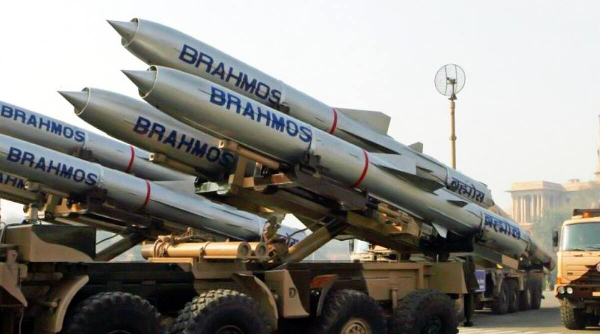
India and Indonesia have taken a major step forward in defence cooperation with key agreements involving the BrahMos supersonic cruise missile system and the Astra beyond-visual-range air-to-air missile. The move reflects a deeper strategic understanding between two important Indo-Pacific nations that share maritime interests, security concerns and a long civilisational connection across the Indian Ocean.
The agreements show India’s growing position as a reliable defence technology partner. For Indonesia, the cooperation offers access to proven Indian missile capability. For India, it strengthens defence exports, maritime partnerships and its broader role in shaping a secure Indo-Pacific region.
BrahMos and Indonesia’s Maritime Security Needs
Indonesia is the world’s largest archipelagic country. Its geography gives it a special maritime responsibility. It sits close to major sea lanes, important straits and strategic chokepoints that connect the Indian Ocean and the Pacific Ocean. Protecting these waters requires strong surveillance, rapid response capability and credible deterrence.
The BrahMos missile system fits naturally into this requirement. Known for its speed, precision and destructive power, BrahMos gives a country the ability to strike hostile naval targets with great force. For an island nation like Indonesia, such a system can strengthen coastal defence, protect critical maritime zones and improve sea-denial capability.
The missile’s relevance goes beyond simple firepower. BrahMos can become part of a larger maritime defence network involving coastal radars, naval ships, command centres and surveillance systems. In a region where maritime pressure, grey-zone activities and naval competition are increasing, such capability gives Indonesia a stronger security shield.
Astra Opens a New Air-Combat Partnership
The Astra missile agreement is equally significant. Astra is India’s indigenous beyond-visual-range air-to-air missile, developed to give fighter aircraft the ability to engage enemy aircraft from long distances. Modern air warfare depends heavily on such missiles because combat is often decided before opposing aircraft come within visual range.
Cooperation on Astra shows that India’s defence exports are moving beyond basic platforms and support equipment. It places India in the advanced air-combat technology space. For Indonesia, Astra cooperation can support the modernisation of its air force and improve its ability to defend national airspace.
The missile also represents India’s growing confidence in indigenous research, testing, guidance systems, propulsion, seeker technology and weapons integration. Astra is not only a missile; it is a symbol of India’s progress in high-end aerospace defence.
A Boost for India’s Defence Export Ambition
The BrahMos and Astra agreements are a strong boost to India’s defence export vision. For many decades, India was seen mainly as a defence importer. That image is changing. India is now developing and exporting missiles, radars, naval platforms, artillery systems, electronic warfare equipment, protective gear and aerospace components.
BrahMos has already become one of India’s most visible defence export products. Its growing demand reflects trust in Indian engineering and operational performance. Astra adds a new layer to this export basket by bringing air-to-air combat capability into the picture.
This supports the larger goal of Atmanirbhar Bharat. Every successful defence export strengthens Indian industry, creates confidence among partner countries and encourages domestic companies to invest in higher technology. It also gives Indian public-sector and private-sector defence firms a larger role in global supply chains.
Defence Cooperation Beyond Missiles
The India–Indonesia defence partnership is not limited to missile systems. It includes joint exercises, naval cooperation, maritime security, defence industry engagement, training, maintenance, technology transfer and capacity building. This wider framework makes the relationship more durable.
For any defence partnership to succeed, long-term support is as important as the original system. Missiles require training, storage, maintenance, command integration and periodic upgrades. Aircraft weapons need platform compatibility, operational doctrine and technical support. By building a wider defence relationship, India and Indonesia can ensure that cooperation remains practical and sustainable.
This approach also makes India different from traditional arms suppliers. India is offering partnership, not just products. That is important for countries like Indonesia, which want to strengthen their own defence industry while acquiring modern capability.
Maritime Security and the Indo-Pacific Balance
The Indo-Pacific is now one of the world’s most important strategic regions. Trade, energy movement, naval deployments and geopolitical competition all pass through this vast maritime space. India and Indonesia are natural partners in this environment.
India’s Andaman and Nicobar Islands and Indonesia’s western maritime region are located near key sea routes. Greater cooperation between the two countries can improve maritime domain awareness, logistics, port connectivity and naval coordination. This is important for monitoring illegal fishing, piracy, trafficking, disaster response and suspicious movement at sea.
A stronger Indonesia also supports a more balanced Indo-Pacific. When regional countries build credible national capabilities, they reduce dependence on distant powers and contribute to stability. India’s defence cooperation with Indonesia therefore has a larger strategic meaning. It strengthens a regional security framework based on partnership, sovereignty and shared responsibility.
Strategic Value of Sabang and the Andaman Sea
The Andaman Sea is an important bridge between India and Indonesia. Cooperation around ports, shipping, repair facilities and maritime infrastructure can turn this geography into a strategic advantage. Sabang, located near the entrance of the Malacca Strait, is especially important because of its proximity to one of the busiest sea lanes in the world.
For India, closer cooperation in this zone supports the strategic relevance of the Andaman and Nicobar Islands. For Indonesia, it brings stronger maritime infrastructure, defence coordination and economic opportunity. Together, both countries can build a more connected maritime corridor between the eastern Indian Ocean and Southeast Asia.
Military Medicine and Support Cooperation
A modern defence partnership also includes support systems such as military medicine, logistics and pharmaceuticals. India has a strong pharmaceutical base and can support partner countries with affordable and reliable medical supplies. For armed forces, this is highly relevant because operational readiness depends not only on weapons, but also on medical care, emergency response and supply-chain resilience.
Military medicine cooperation adds a human security dimension to the defence partnership. It can support disaster relief, field medical preparedness, peacekeeping operations and joint humanitarian missions. In a region vulnerable to earthquakes, floods, cyclones and maritime emergencies, such cooperation has practical value.
A Message to the Region
The BrahMos and Astra agreements send a clear message: India is ready to play a larger role as a defence technology partner in the Indo-Pacific. The agreements also show that countries in Southeast Asia are looking at India as a serious and dependable security partner.
This does not mean militarisation for its own sake. It means building deterrence, strengthening national defence and creating a regional balance where countries can protect their interests. In the Indo-Pacific, peace is best protected when responsible nations have the ability to defend their waters, skies and critical infrastructure.
Conclusion
The India–Indonesia defence agreements involving BrahMos and Astra mark a major moment in India’s defence diplomacy. BrahMos strengthens maritime deterrence. Astra expands air-combat cooperation. Together, they represent India’s rise as a defence exporter and Indonesia’s confidence in Indian military technology.
The partnership also fits into a wider strategic vision: secure sea lanes, stronger regional defence cooperation, deeper industrial engagement and a more balanced Indo-Pacific. For India, this is a proud Atmanirbhar Bharat milestone. For Indonesia, it is a meaningful capability upgrade. For the region, it is a step toward greater stability through trusted partnerships.
You may also like
-
Exercise Tarang Shakti 2026 Concludes in Jodhpur, Showcasing India’s Air Power, Indigenous Defence Technology
-
US Double Standards in Foreign Policy: 16 Recent Cases Involving India, Russia, China and Global Trade
-
Indian Navy Vice Chief Inspects Japan’s Mogami-Class Stealth Frigate as India-Japan Shipbuilding Cooperation Expands
-
Philippine Marine Wargames Reportedly Show BrahMos Can Penetrate Chinese Destroyer Air Defences
-
Safran Signs 18 Agreements with Indian Aerospace Suppliers, Expanding Make in India Manufacturing Partnerships
