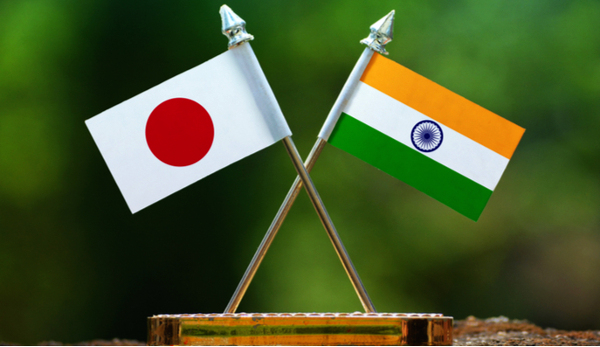
India and Japan are strengthening their Special Strategic and Global Partnership through high-level diplomatic engagements focused on defence cooperation, economic security, advanced manufacturing, semiconductors, critical minerals and emerging technologies. The renewed engagement reflects the growing strategic convergence between the two Asian economies as they seek to strengthen industrial resilience, technological cooperation and maritime security in the Indo-Pacific.
Defence Minister Rajnath Singh and External Affairs Minister Dr. S. Jaishankar arrived in Tokyo on 18 November 2026 for the fourth India–Japan Foreign and Defence Ministers’ Dialogue, commonly known as the 2+2 Ministerial Dialogue. The meeting, scheduled for 19 November, brings together the foreign and defence ministers of both countries to review their strategic partnership and identify opportunities for deeper cooperation.
The diplomatic engagements coincide with discussions at Raisina Tokyo 2026, where Jaishankar emphasised the importance of strengthening cooperation between India and Japan in economic security, semiconductor manufacturing, critical minerals, clean energy, advanced manufacturing and defence.
Fourth India–Japan 2+2 Dialogue to Review Strategic Cooperation
The fourth India–Japan 2+2 Ministerial Dialogue is being co-chaired by Defence Minister Rajnath Singh and External Affairs Minister S. Jaishankar, alongside Japanese Defence Minister Shinjiro Koizumi and Foreign Minister Toshimitsu Motegi.
The dialogue provides an institutional framework for coordinating foreign policy and defence priorities between the two countries. Discussions are expected to cover bilateral security cooperation, defence equipment and technology partnerships, maritime security, joint military exercises and developments affecting regional and international stability.
India and Japan share a commitment to maintaining a free, open, inclusive and rules-based Indo-Pacific. Their growing cooperation reflects the importance both countries attach to freedom of navigation, maritime security and the peaceful resolution of disputes in accordance with international law.
The previous India–Japan 2+2 Ministerial Dialogue was held in New Delhi on 20 August 2024. The latest meeting provides an opportunity to review progress made since then and examine additional areas of cooperation in defence technology, operational coordination and strategic industries.
Rajnath Singh Reviews Maritime Defence Capabilities in Japan
During his visit to Japan, Defence Minister Rajnath Singh was received by his Japanese counterpart, Shinjiro Koizumi, and accorded a ceremonial guard of honour.
The two ministers also visited the Funakoshi area in Yokosuka, where they inspected JS Natori, a Mogami-class multi-mission stealth frigate of the Japan Maritime Self-Defence Force.
The visit provided an opportunity to examine Japanese naval capabilities and technologies relevant to modern maritime operations. Japan’s experience in naval shipbuilding, maritime surveillance and advanced defence systems offers potential avenues for cooperation with India’s expanding indigenous defence manufacturing ecosystem.
The two defence ministers have maintained regular engagement during 2026, including meetings in New Delhi in August and on the sidelines of the ASEAN Defence Ministers’ Meeting-Plus in Cebu, Philippines, in October.
Such exchanges contribute to sustained communication between the defence establishments of both countries and support efforts to strengthen cooperation in maritime security, military training and defence technologies.
Semiconductors and Advanced Manufacturing Emerge as Strategic Priorities
Economic security and technological cooperation have become increasingly important components of the India–Japan partnership.
Addressing the inaugural event of Raisina Tokyo 2026, External Affairs Minister S. Jaishankar called for stronger cooperation in advanced manufacturing, semiconductors, critical minerals, clean energy and defence. He emphasised that changing global conditions have increased the importance of trusted partnerships, diversified supply chains and stronger domestic industrial capabilities.
Semiconductors are essential to modern electronic systems, telecommunications, automobiles, artificial intelligence, industrial automation and defence equipment. Their strategic importance has encouraged countries to examine the resilience of semiconductor supply chains and reduce vulnerabilities arising from excessive dependence on individual manufacturing locations.
Japan possesses established capabilities in semiconductor materials, precision manufacturing, specialised chemicals, production equipment and industrial technologies. India, meanwhile, is developing its semiconductor ecosystem through domestic manufacturing initiatives, investments in electronics production and programmes supporting semiconductor design and fabrication.
Closer cooperation between the two countries could support industrial partnerships involving semiconductor materials, specialised equipment, component manufacturing, research and workforce development.
The complementary capabilities of India and Japan provide a foundation for strengthening the semiconductor value chain, although specific projects and investments will depend on subsequent agreements and commercial decisions.
Critical Minerals Cooperation to Support Industrial Resilience
Critical minerals represent another important area of potential cooperation between India and Japan.
Minerals such as lithium, cobalt, nickel and rare earth elements play important roles in electric vehicles, battery storage, renewable energy technologies, electronics, aerospace equipment and advanced defence systems. Their availability and processing capabilities have become central concerns for countries seeking to strengthen technological and industrial security.
Japan has considerable experience in advanced materials, mineral processing, resource efficiency and industrial supply-chain management. India is expanding efforts to identify mineral resources, strengthen processing capabilities and develop international partnerships for securing essential raw materials.
Greater cooperation could involve mineral exploration, processing technologies, recycling, research and the development of more diversified supply chains.
Such partnerships would support India’s ambitions in advanced manufacturing while contributing to Japan’s efforts to maintain reliable access to materials required by its technology-intensive industries.
The importance of critical minerals extends beyond resource availability. Refining capabilities, processing technologies, transport infrastructure and specialised manufacturing are equally significant in developing resilient industrial ecosystems.
Economic Security Becomes Central to Bilateral Relations
Jaishankar’s remarks at Raisina Tokyo highlighted the increasing connection between economic policy, technological development and national security.
The External Affairs Minister observed that the rapidly changing international environment has made trusted partnerships and supply-chain diversification increasingly important. He also highlighted India’s improving infrastructure and business environment as factors supporting greater Japanese investment.
Economic security encompasses the ability of countries to maintain reliable access to essential technologies, industrial components, raw materials and infrastructure. Disruptions affecting these areas can have consequences for manufacturing, economic growth and national security.
India and Japan possess complementary economic strengths. Japan has established expertise in precision engineering, industrial automation, manufacturing technologies and advanced materials, while India offers a large domestic market, expanding infrastructure, engineering talent and a growing technology ecosystem.
These strengths create opportunities for cooperation in electronics, transportation, renewable energy, advanced manufacturing and industrial research.
Japanese companies have played an important role in India’s industrial development, particularly in automobiles, manufacturing equipment and infrastructure. The expansion of cooperation into semiconductors, critical minerals and emerging technologies represents an important direction for the bilateral economic relationship.
Defence Technology and Industrial Cooperation
Defence industrial cooperation forms another major component of the India–Japan strategic partnership.
India is expanding indigenous defence production through initiatives designed to strengthen domestic manufacturing, encourage private-sector participation and develop advanced military technologies.
Japan possesses established capabilities in naval engineering, precision manufacturing, electronics, sensors and advanced materials. These capabilities provide opportunities for cooperation in areas relevant to modern defence systems.
The forthcoming ministerial discussions are expected to examine defence equipment and technology collaboration, industrial partnerships and ways to enhance the scale and complexity of bilateral military exercises.
The Indian Navy and Japan Maritime Self-Defence Force already maintain cooperation through maritime engagements and multilateral naval exercises. Such activities contribute to interoperability, professional exchanges and familiarity with operating procedures.
Industrial cooperation could complement these operational engagements by supporting technological exchanges and partnerships involving research institutions, manufacturers and defence enterprises.
Strengthening Cooperation in the Indo-Pacific
The Indo-Pacific remains a central element of the strategic relationship between India and Japan.
Both countries are major maritime economies with substantial interests in maintaining secure sea lanes, uninterrupted commercial shipping and regional stability.
India’s geographical position in the Indian Ocean and Japan’s location in the western Pacific give the partnership considerable relevance to maritime security and regional connectivity.
Their cooperation encompasses bilateral diplomatic engagement, defence exchanges and participation in regional and multilateral forums, including the Quadrilateral Security Dialogue involving India, Japan, Australia and the United States.
The India–Japan relationship also contributes to wider discussions on infrastructure development, supply-chain resilience, technological standards and economic connectivity across the Indo-Pacific.
A stronger partnership between the two countries supports a regional environment in which economic development, maritime cooperation and technological progress can advance through dialogue and mutually beneficial arrangements.
India–Japan Partnership Enters a Technology-Focused Phase
The latest diplomatic engagements demonstrate the increasing breadth of India–Japan relations, with traditional defence and foreign policy cooperation being complemented by a growing emphasis on economic security and strategic technologies.
The fourth 2+2 Ministerial Dialogue provides an opportunity to strengthen defence and security coordination, while the discussions at Raisina Tokyo underline the potential for deeper cooperation in semiconductors, critical minerals, clean energy and advanced manufacturing.
Together, these developments reflect the importance of combining diplomatic engagement with technological and industrial partnerships.
For India, the expansion of cooperation with Japan offers opportunities to strengthen domestic manufacturing, access advanced industrial expertise and develop more resilient supply chains. For Japan, India’s growing economy, engineering capabilities and expanding industrial infrastructure provide opportunities for long-term engagement.
As both countries work to translate their shared strategic priorities into practical cooperation, the India–Japan partnership is positioned to make an increasingly important contribution to technological development, economic resilience and stability across the Indo-Pacific.
You may also like
-
The Saptāṅga Theory: Why Kauṭilya Considered the State a System of Seven Interdependent Elements
-
Mārīca’s Warning to Rāvaṇa: When Strategic Advice Is Ignored by Political Leadership
-
India and ASEAN Expand Cooperation in Space, Cybersecurity and Critical Minerals at Manila Summit
-
INS Sahyadri and Japanese Warship JS Ise Conduct Bilateral Naval Exercise JAIMEX 2026
-
India and Philippines Strengthen Defence and Strategic Cooperation at Manila Meeting
