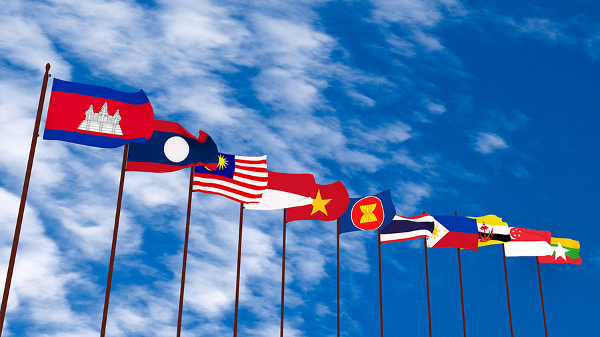
India and the Association of Southeast Asian Nations (ASEAN) announced a series of initiatives to strengthen cooperation in space technology, cybersecurity, critical minerals, nuclear energy, maritime security and scientific research during the 23rd ASEAN–India Summit held in Manila, Philippines, on 17 November 2026.
Prime Minister Narendra Modi presented the proposals while addressing ASEAN leaders, emphasising the importance of developing technological capabilities, strengthening regional connectivity and expanding cooperation in strategically important sectors.
The initiatives include an ASEAN–India Space Hackathon, a Joint Cyber Forensics Training Programme, cooperation in mining and critical minerals, nuclear energy technical exchanges and a long-term maritime cooperation plan covering scientific research, maritime domain awareness and seafarers’ security.
The announcements reflect the expanding scope of the ASEAN–India Comprehensive Strategic Partnership, which increasingly encompasses advanced technologies, economic resilience, maritime security and scientific collaboration alongside traditional trade and diplomatic relations.
Prime Minister Modi emphasised that India and ASEAN should work towards becoming co-creators of advanced technologies rather than remaining dependent solely on technologies developed elsewhere. He also highlighted the importance of developing human resources and strengthening the technological capabilities of participating countries.
ASEAN–India Space Hackathon to Promote Scientific and Technological Cooperation
One of the major announcements at the summit was the proposal to organise an ASEAN–India Space Hackathon to encourage cooperation in space-related technologies and innovation.
The initiative is intended to create opportunities for researchers, students, technology developers and innovators from India and ASEAN countries to collaborate on challenges involving space science and technology.
Space-based applications have become increasingly important for environmental monitoring, disaster management, agricultural planning, communication systems and infrastructure development.
India’s experience in satellite development, remote sensing, navigation and space applications provides a foundation for expanding scientific exchanges with Southeast Asian countries.
The Indian Space Research Organisation has developed extensive capabilities in Earth observation and satellite applications that support agriculture, weather forecasting, natural resource management and disaster monitoring.
Several ASEAN countries also operate national space programmes or use satellite technologies for economic planning, environmental protection and communications.
A collaborative innovation platform could encourage the exchange of technical expertise and support the development of applications addressing common regional requirements.
The official summit announcement identifies the Space Hackathon as a proposed initiative. Its detailed programme, participating institutions, implementation schedule and specific research themes have not yet been announced.
Joint Cyber Forensics Training Programme to Strengthen Regional Cybersecurity
India also proposed a Joint Cyber Forensics Training Programme to strengthen technical capabilities and institutional cooperation in addressing cybercrime across the region.
The initiative is intended to support capacity-building in digital investigations, cyber forensics and responses to emerging cyber threats.
As economies become increasingly dependent on digital communications, electronic payments, cloud computing and interconnected information systems, cybersecurity has become an important component of national security and economic stability.
Cyber forensics involves the identification, collection, preservation and analysis of digital evidence associated with criminal activities.
Such capabilities are important for investigating online fraud, financial cybercrime, unauthorised network access and other offences involving digital technologies.
The proposed training programme provides a framework for sharing technical knowledge and strengthening the investigative capabilities of participating countries.
For India, cooperation in cyber forensics is particularly relevant because of its expanding digital economy and growing experience in managing large-scale digital public infrastructure.
The proposed initiative is focused on capacity-building and should be distinguished from a newly established regional cybersecurity operational network or intelligence-sharing arrangement.
India Proposes East Asia Summit Cybercrime Conference
Cybersecurity cooperation also featured prominently during the 21st East Asia Summit held in Manila.
Prime Minister Modi proposed hosting an East Asia Summit Cyber Crime Conference at India’s National Forensic Sciences University.
The proposed conference would address emerging threats from cross-border cybercrime, including online financial fraud and other technology-enabled criminal activities.
Online fraud has become an increasingly complex international challenge because criminal networks can operate across multiple jurisdictions while targeting individuals and financial institutions in other countries.
Effective responses often require cooperation among law enforcement agencies, financial institutions, cybersecurity professionals and forensic investigators.
The National Forensic Sciences University provides an institutional platform for developing specialised forensic expertise and promoting professional training.
Hosting the proposed conference would create opportunities for engagement among participating countries on digital investigations, emerging cybercrime techniques and institutional capacity-building.
The initiative complements the proposed ASEAN–India Joint Cyber Forensics Training Programme by addressing cybersecurity challenges through a wider regional dialogue.
Cooperation in Critical Minerals and Mining
Another major announcement was the proposal to expand ASEAN–India cooperation in mining and critical minerals.
Critical minerals have become strategically important because they are essential for manufacturing advanced industrial products, electronic equipment, renewable energy technologies, electric vehicles and several categories of defence equipment.
Lithium, cobalt, nickel, graphite and rare earth elements are among the materials used in batteries, electrical systems, permanent magnets and other specialised industrial applications.
The availability of these resources and the ability to process them into usable industrial materials have become important considerations in global manufacturing and energy security.
India has been strengthening its domestic critical mineral ecosystem through exploration, mineral block auctions, recycling initiatives and international partnerships.
Cooperation with ASEAN countries offers opportunities to explore complementary capabilities in mineral resources, geological expertise, processing technologies and industrial supply chains.
Several Southeast Asian countries possess significant mineral resources and established mining industries, making the region relevant to discussions concerning the diversification of critical mineral supply chains.
The initiative also aligns with India’s broader efforts to support domestic manufacturing in electronics, clean energy, electric mobility and advanced industrial technologies.
The Manila announcement establishes critical minerals as an area for expanded cooperation. It does not identify specific new mining projects, investment commitments or mineral supply agreements concluded during the summit.
Nuclear Energy Technical Exchanges
India and ASEAN also announced an initiative for technical exchanges in nuclear energy.
The proposal is intended to create opportunities for exchanging knowledge and expertise concerning nuclear technologies and their peaceful applications.
India possesses an established civilian nuclear energy programme supported by domestic research institutions, nuclear power facilities and specialised engineering organisations.
Nuclear technologies have applications beyond electricity generation, including medicine, agriculture, food preservation, industrial testing and scientific research.
Technical exchanges can support dialogue among researchers, regulators and technical institutions on areas of common interest.
For ASEAN countries, where national policies and levels of nuclear technology development vary, such exchanges provide opportunities to understand relevant technologies, scientific practices and institutional frameworks.
The official outcomes document does not specify the participating nuclear institutions, technologies to be exchanged or any new nuclear power project arising from the proposal.
Long-Term Maritime Cooperation Plan Includes Scientific Research
The summit also announced a proposed long-term ASEAN–India Maritime Cooperation Plan covering maritime connectivity, scientific research, disaster management, Coast Guard cooperation, maritime domain awareness and seafarers’ security.
The initiative reflects the strategic importance of the Indian Ocean and Southeast Asian maritime routes in international trade and regional connectivity.
India and ASEAN countries share extensive maritime interests because major international shipping routes connect the Indian Ocean with the South China Sea and the wider Pacific region.
Maritime domain awareness involves understanding activities occurring at sea through information obtained from ships, coastal systems, surveillance platforms and other sources.
Strengthening cooperation in this field can support maritime safety, improve awareness of shipping activity and assist responses to emergencies.
Scientific research is another important component of maritime cooperation because oceans play a central role in climate regulation, marine biodiversity, fisheries and coastal livelihoods.
India’s oceanographic research institutions and maritime agencies possess capabilities that can contribute to collaborative scientific programmes.
The proposed maritime cooperation plan provides a framework for exploring these shared priorities while strengthening regional engagement between India and Southeast Asian nations.
Disaster Management Cooperation Receives Institutional Support
India and ASEAN adopted a Joint Statement on Cooperation in Disaster Management during the Manila summit.
The statement provides an institutional basis for strengthening cooperation in disaster preparedness, emergency response and resilience.
Disaster management is an important area of cooperation because India and several ASEAN countries regularly experience cyclones, floods, earthquakes, tsunamis and other natural hazards.
Space-based observation systems, meteorological monitoring, communication networks and geographical information technologies have become essential tools for disaster forecasting and emergency coordination.
The proposed Space Hackathon and expanded maritime scientific cooperation are therefore relevant to the wider objective of strengthening regional disaster management capabilities.
The joint statement also demonstrates the importance attached by India and ASEAN to practical cooperation addressing challenges shared by their populations.
Unlike the proposed technology initiatives, the disaster management joint statement was formally adopted during the summit.
Expanding Cooperation in Research, Education and Innovation
The summit’s announcements also addressed education, youth engagement and scientific collaboration.
India proposed an ASEAN–India Youth Connect initiative involving youth summits, exchanges among young parliamentarians and start-up hackathons.
The Prime Minister also announced proposals to enhance scholarships for students from ASEAN countries at Nalanda University.
These initiatives are intended to strengthen educational exchanges and encourage closer engagement among young professionals, students, researchers and entrepreneurs.
Scientific and technological cooperation increasingly depends on the availability of skilled researchers, engineers, developers and specialised technical personnel.
The proposed Space Hackathon and cyber forensics programme complement these educational objectives by encouraging practical technological learning and international collaboration.
For India, stronger educational engagement with ASEAN countries supports the development of long-term institutional relationships and provides opportunities for Indian universities and research institutions to strengthen their international partnerships.
India–ASEAN Partnership Enters a New Phase
India and ASEAN have developed an extensive relationship encompassing diplomacy, trade, connectivity, maritime cooperation, security and cultural exchanges.
The partnership is a central component of India’s Act East Policy and its broader vision for the Indo-Pacific.
The year 2026 is being observed as the ASEAN–India Year of Maritime Cooperation, highlighting the importance of oceans and maritime connectivity in bilateral and regional engagement.
The year 2027 will mark 35 years of ASEAN–India dialogue relations and five years since the establishment of their Comprehensive Strategic Partnership.
The ASEAN–India Plan of Action for 2026–2030 provides a framework for advancing cooperation across multiple sectors.
During the Manila summit, Prime Minister Modi emphasised the importance of strengthening technological capabilities and developing partnerships based on shared priorities.
The announcements concerning space, cybersecurity, critical minerals and nuclear energy reflect the increasing significance of technology and economic security in India–ASEAN relations.
Strategic and Economic Significance for India
The initiatives announced in Manila are important for India because they connect several strategic sectors with the country’s wider industrial, scientific and technological development objectives.
Space cooperation provides opportunities to expand India’s scientific engagement with Southeast Asia and encourage innovation involving satellite applications and space technologies.
Cyber forensics cooperation is relevant to protecting digital infrastructure and strengthening institutional capabilities against cross-border cybercrime.
Critical mineral partnerships support discussions concerning resource security and the development of supply chains required for advanced manufacturing, renewable energy and electric mobility.
Nuclear energy technical exchanges provide another avenue for scientific cooperation, while the maritime cooperation plan strengthens the regional dimension of India’s ocean research and security partnerships.
The educational initiatives also complement these objectives by encouraging the development of technical skills, research collaboration and entrepreneurship.
Together, the proposals demonstrate India’s intention to expand its engagement with ASEAN beyond conventional diplomatic and commercial exchanges into areas involving advanced technology, scientific capability and industrial resilience.
The 23rd ASEAN–India Summit in Manila has therefore established a wider agenda for cooperation in sectors that are increasingly important to economic development and regional security.
Through sustained institutional engagement and the implementation of mutually agreed initiatives, India and ASEAN have an opportunity to build stronger technological partnerships, improve regional capabilities and contribute to a more connected, secure and prosperous Indo-Pacific.
You may also like
-
INS Sahyadri and Japanese Warship JS Ise Conduct Bilateral Naval Exercise JAIMEX 2026
-
India and Philippines Strengthen Defence and Strategic Cooperation at Manila Meeting
-
India and Japan to Strengthen Defence Technology, Maritime Security and Industrial Cooperation at 2+2 Dialogue
-
India and Egypt Strengthen Strategic Partnership, Target USD 12 Billion Bilateral Trade
-
Quad Leaders Announce New Maritime Security, AI and Cybersecurity Initiatives at Manila Summit
