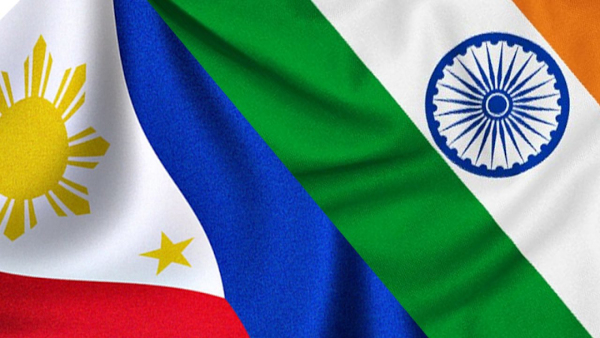
India and the Philippines reviewed their growing strategic partnership and discussed strengthening cooperation in defence, security, maritime affairs, space technology, railway infrastructure, financial technology, trade and investment during a bilateral meeting between Prime Minister Narendra Modi and Philippine President Ferdinand R. Marcos Jr. in Manila on 17 November 2026.
The meeting took place on the sidelines of the ASEAN Summit, providing an opportunity for both leaders to assess progress in bilateral relations following the elevation of India–Philippines ties to a Strategic Partnership during President Marcos’s State Visit to India in August 2025.
The two leaders welcomed the increasing momentum in bilateral cooperation across several sectors and exchanged views on important regional and international developments. Their discussions reflected the growing strategic significance of relations between India and the Philippines, particularly in the context of India’s Act East Policy and its engagement with Southeast Asia.
Prime Minister Modi congratulated the Philippines on its successful chairmanship of ASEAN in 2026 and appreciated Manila’s role as ASEAN’s country coordinator for India since 2024. He also acknowledged the Philippines’ contribution to strengthening relations between India and the regional grouping.
Defence Cooperation Emerges as a Major Pillar of Bilateral Relations
Defence and security cooperation has become an increasingly important component of India–Philippines relations, supported by military exchanges, defence equipment cooperation and closer engagement between the armed forces of both countries.
India and the Philippines established a formal framework for defence cooperation through an agreement signed in 2006. The arrangement provided a foundation for military exchanges, training activities, defence consultations and cooperation in areas of mutual security interest.
The relationship acquired greater strategic significance with the Philippines’ acquisition of India’s BrahMos supersonic cruise missile system. The procurement established the Philippines as the first overseas customer for the Indian-developed missile system, marking an important milestone in India’s defence export programme.
India began delivering BrahMos missile systems to the Philippines in April 2024, supporting the country’s efforts to strengthen its coastal defence capabilities.
The acquisition also demonstrated the expanding role of India’s indigenous defence manufacturing ecosystem in meeting the requirements of international partners.
The latest discussions in Manila reviewed the broader strategic partnership against the background of this growing defence relationship.
BrahMos Missile Cooperation Strengthens Maritime Defence Partnership
The BrahMos missile agreement represents one of the most significant developments in defence cooperation between India and the Philippines.
The Philippines signed a contract worth approximately US$375 million in January 2022 for the acquisition of shore-based anti-ship missile systems.
The missile system is designed to engage naval targets at high speed, providing coastal defence forces with the capability to respond to potential maritime threats.
For the Philippines, an archipelagic nation comprising thousands of islands, coastal defence capabilities are important for protecting maritime approaches and supporting territorial security.
The BrahMos programme has also strengthened India’s position as an exporter of advanced defence technology.
Developed through cooperation between India’s Defence Research and Development Organisation and Russia’s NPO Mashinostroyenia, BrahMos has become an important component of India’s missile manufacturing and defence export capabilities.
The Philippines contract demonstrated that Indian defence systems could meet the requirements of foreign armed forces while supporting India’s wider objective of expanding defence exports.
The missile agreement predates the November 2026 bilateral meeting, and no additional BrahMos procurement contract was announced in the official account of the Manila discussions.
Expansion of Military-to-Military Engagement
Beyond defence equipment cooperation, India and the Philippines have been expanding institutional engagement between their armed forces.
During President Marcos’s State Visit to India in August 2025, the two countries agreed to strengthen defence cooperation through additional mechanisms for military consultations and exchanges.
These included arrangements concerning interactions between their respective armed services and enhanced cooperation between their coast guards.
Such institutional mechanisms are important for maintaining regular communication between defence establishments and identifying areas where operational expertise, training and technical knowledge can be exchanged.
India’s growing defence engagement with the Philippines also reflects the importance of developing partnerships with Southeast Asian nations that share interests in maritime safety, freedom of navigation and regional stability.
Cooperation between the Indian Navy, the Philippine Navy and other maritime security organisations provides opportunities to exchange experience in maritime surveillance, training and security operations.
Maritime Security and the Indo-Pacific
Maritime security forms an important strategic dimension of India–Philippines relations because both countries occupy significant geographical positions along major Indo-Pacific sea routes.
India’s extensive coastline and strategic location in the Indian Ocean give it a central role in maritime connectivity between West Asia, Africa and Southeast Asia.
The Philippines occupies a strategically important position in the western Pacific, close to major international shipping routes connecting the Pacific Ocean with Southeast Asian waters.
Both countries have emphasised the importance of maintaining a free, open and inclusive Indo-Pacific, respecting international law and ensuring the peaceful settlement of maritime disputes.
Strengthening maritime cooperation contributes to these shared objectives by supporting dialogue, information-sharing and closer coordination between maritime security institutions.
For India, stronger maritime partnerships with Southeast Asian countries complement its efforts to improve maritime domain awareness and enhance regional security cooperation.
Strategic Partnership Established in August 2025
The elevation of bilateral ties to a Strategic Partnership during President Marcos’s visit to India in August 2025 provided a broader framework for expanding cooperation.
The two countries adopted a Plan of Action for 2025–2029 to guide the implementation of their partnership across defence, security, economic cooperation, technology and people-to-people relations.
During the visit, India and the Philippines concluded and exchanged 14 agreements and arrangements covering several areas of bilateral engagement.
These included cooperation concerning military consultations, coast guard engagement, legal assistance and economic negotiations.
The two countries also established terms of reference for negotiations towards a preferential trade agreement, reflecting their interest in expanding commercial exchanges.
The November 2026 meeting in Manila provided an opportunity for the two leaders to review the progress of cooperation under this existing strategic framework.
Space Technology, Railways and Financial Technology Cooperation
An important aspect of the Manila meeting was the recognition that bilateral cooperation extends beyond traditional defence and diplomatic relations.
The two leaders welcomed progress in space cooperation, railway infrastructure, financial technology and trade and investment.
India’s expanding space sector provides opportunities for cooperation in satellite applications, scientific research and the use of space-based technologies for civilian development.
Railway infrastructure represents another potential area of cooperation, particularly in the context of transportation development and infrastructure modernisation.
Financial technology cooperation is relevant to India’s growing experience in digital payments and the development of technology-enabled financial services.
The inclusion of these sectors in the bilateral discussions demonstrates the broadening scope of the India–Philippines Strategic Partnership, linking security cooperation with economic development and technological engagement.
Trade and Investment Relations Continue to Expand
Economic cooperation has become another important component of bilateral relations.
According to News On AIR, bilateral trade between India and the Philippines reached approximately US$3.34 billion during the 2024–25 financial year.
The two countries have been exploring opportunities to expand commercial engagement, improve market access and strengthen private-sector partnerships.
Pharmaceuticals constitute an important area of India’s exports to the Philippines, while opportunities also exist in information technology, manufacturing, infrastructure and other industrial sectors.
The proposed preferential trade agreement offers a framework for examining ways to strengthen bilateral trade. However, the agreement remains subject to negotiations and should not be regarded as having entered into force.
The discussions in Manila reaffirmed the importance attached by both governments to expanding trade and investment under their Strategic Partnership.
Philippines’ ASEAN Chairmanship Strengthens Regional Engagement
The meeting also highlighted the Philippines’ role in promoting cooperation between India and ASEAN.
Prime Minister Modi congratulated President Marcos on the Philippines’ successful chairmanship of ASEAN in 2026 and appreciated Manila’s contribution as ASEAN’s country coordinator for India.
The Philippines has held this coordinating role since 2024, supporting dialogue and cooperation between New Delhi and the regional grouping.
India regards ASEAN as an important component of its Act East Policy and its wider Indo-Pacific engagement.
The bilateral relationship with the Philippines therefore operates alongside India’s broader partnerships with Southeast Asian countries in trade, maritime security, connectivity, technology and regional development.
The Manila meeting also followed an earlier interaction between Prime Minister Modi and President Marcos on the sidelines of the BRICS Summit in New Delhi in September 2026, demonstrating the continuity of high-level diplomatic engagement.
Strategic Importance for India
The expanding partnership between India and the Philippines is significant because it combines defence cooperation with economic, technological and diplomatic engagement.
The BrahMos missile contract established an important foundation for defence industrial cooperation and demonstrated India’s growing ability to supply advanced military equipment to international partners.
Closer military exchanges and maritime cooperation support India’s broader efforts to strengthen security partnerships across the Indo-Pacific.
At the same time, engagement in space, railway infrastructure, financial technology and trade provides opportunities to diversify the relationship beyond defence.
The Strategic Partnership established in August 2025 has created an institutional framework for coordinating these different areas of cooperation.
The bilateral meeting in Manila on 17 November 2026 reaffirmed both countries’ commitment to building upon that framework and maintaining regular high-level engagement.
As India continues to expand its diplomatic, economic and security partnerships across Southeast Asia, cooperation with the Philippines represents an important component of its Act East Policy and its wider Indo-Pacific vision.
You may also like
-
India and Japan to Strengthen Defence Technology, Maritime Security and Industrial Cooperation at 2+2 Dialogue
-
India and Egypt Strengthen Strategic Partnership, Target USD 12 Billion Bilateral Trade
-
Quad Leaders Announce New Maritime Security, AI and Cybersecurity Initiatives at Manila Summit
-
From Enemy Prince to Allied King: Vibhīṣaṇa and the Politics of Strategic Realignment
-
Data Patterns Advances Indigenous Counter-Drone Systems, Electronic Warfare Technologies and Microsatellites
