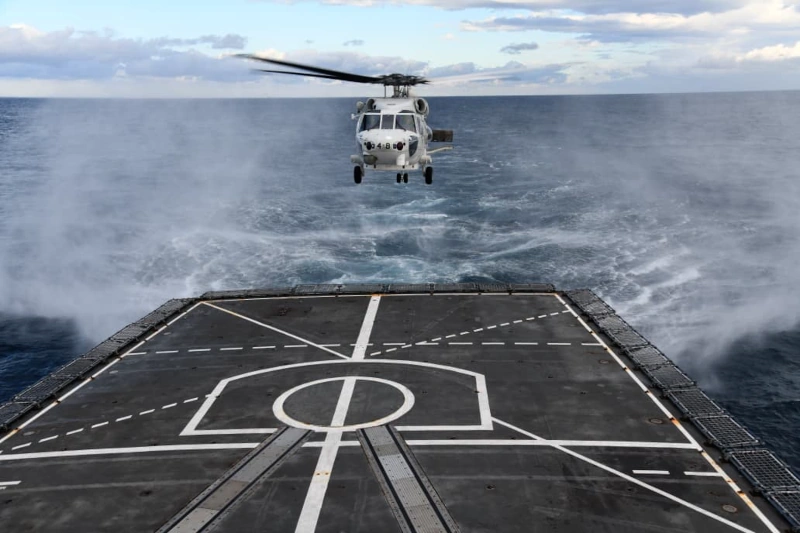
The Indian Navy’s indigenously built stealth frigate INS Sahyadri participated in the bilateral naval exercise JAIMEX 2026 with the Japan Maritime Self-Defense Force (JMSDF) on November 13–14, 2026, strengthening operational cooperation and interoperability between the two maritime forces. The exercise involved coordinated naval manoeuvres, communication drills and cross-deck helicopter operations, reflecting the growing depth of defence cooperation between India and Japan in the Indo-Pacific region.
According to the Ministry of Defence, INS Sahyadri operated alongside the Japanese warship JS Ise during the two-day exercise. The participating vessels conducted a series of maritime engagements designed to improve operational coordination, enhance mutual understanding of naval procedures and strengthen their ability to undertake coordinated operations at sea.
The exercise formed part of the continuing naval engagement between India and Japan, two important maritime nations that share an interest in maintaining secure sea lanes, promoting regional stability and strengthening cooperation across the Indo-Pacific.
INS Sahyadri and JS Ise Undertake Coordinated Maritime Operations
During JAIMEX 2026, INS Sahyadri and JS Ise carried out tactical manoeuvres intended to improve coordination between the participating naval units. These activities provided opportunities for both navies to practise operating in close proximity while maintaining effective communication and coordinated ship movements.
Tactical manoeuvring is an important component of naval exercises because warships operating together must maintain precise coordination while responding to changing operational requirements. Such drills help bridge differences in operating procedures and allow naval personnel to develop a better understanding of the capabilities and handling characteristics of participating vessels.
The engagements also included communication exercises intended to improve information exchange and operational coordination between the Indian Navy and the JMSDF. Effective communications are essential for naval forces undertaking coordinated operations, particularly when ships from different countries operate together under shared exercise objectives.
Through these activities, the participating crews gained practical experience in coordinating maritime operations and applying established naval procedures in a bilateral environment.
Cross-Deck Helicopter Operations Strengthen Interoperability
Cross-deck landings formed an important part of JAIMEX 2026, providing opportunities for the participating navies to practise aviation-related coordination between their ships.
Cross-deck operations involve a helicopter landing on a ship other than its usual operating platform. Such activities require coordination between the helicopter crew, ship’s aviation personnel, flight deck teams and command authorities to ensure that operations are conducted safely and effectively.
These exercises are particularly valuable in multinational naval operations because different navies may employ distinct aviation procedures, communication protocols and flight deck arrangements. Familiarity with the operating practices of partner navies can improve coordination during joint exercises and other authorised maritime activities.
The inclusion of cross-deck landings in JAIMEX 2026 demonstrated the emphasis placed by both navies on practical operational cooperation. The activity provided a platform for exchanging professional experience and strengthening familiarity with shipborne aviation procedures.
INS Sahyadri Represents India’s Indigenous Naval Capabilities
INS Sahyadri is a Shivalik-class guided-missile stealth frigate of the Indian Navy, built under Project 17 at Mazagon Dock Shipbuilders Limited in Mumbai. The warship represents an important stage in India’s indigenous naval shipbuilding programme, combining stealth-oriented design features with sensors, weapons and aviation facilities intended for a range of maritime operations.
The frigate is designed to undertake multiple naval roles, including surface warfare, anti-submarine operations, maritime surveillance and fleet operations. Its participation in international naval exercises reflects the Indian Navy’s ability to deploy indigenous frontline warships for sustained maritime engagement with partner countries.
INS Sahyadri’s participation in JAIMEX 2026 also highlighted the contribution of India’s domestic warship construction capabilities to the country’s naval diplomacy. Indigenously built vessels operating alongside foreign naval forces provide opportunities to demonstrate operational competence while strengthening professional relationships with partner navies.
The deployment reinforced India’s emphasis on developing a capable, technologically advanced and increasingly self-reliant naval force capable of contributing to maritime security and international cooperation.
Japanese Warship JS Ise Participates in Bilateral Exercise
The Japan Maritime Self-Defense Force was represented by JS Ise, a Hyūga-class helicopter destroyer designed to support a range of maritime operations, including helicopter aviation, anti-submarine warfare and fleet coordination.
JS Ise possesses a full-length flight deck and facilities for operating multiple helicopters, making aviation an important element of its operational capabilities. The vessel’s participation provided an opportunity for the Indian and Japanese navies to undertake coordinated activities involving ships with different designs and operational roles.
The interaction between INS Sahyadri and JS Ise reflected the complementary capabilities of the two naval platforms. While INS Sahyadri is a multirole stealth frigate equipped for surface and underwater warfare, JS Ise is designed with a particular emphasis on helicopter operations and maritime task-group support.
Operating together during the bilateral exercise allowed personnel from both navies to gain greater familiarity with different maritime platforms and their associated procedures.
JAIMEX 2026 Enhances Operational Coordination Between Both Navies
The principal objective of JAIMEX 2026 was to strengthen interoperability between the Indian Navy and the Japan Maritime Self-Defense Force through practical maritime engagements.
Interoperability refers to the ability of military forces from different countries to operate together effectively through compatible procedures, communication practices and coordinated operational planning. In the maritime environment, this includes ship manoeuvring, aviation coordination, communications and the exchange of operational information.
The tactical manoeuvres, communication exercises and cross-deck landings conducted during JAIMEX 2026 provided practical opportunities to improve these capabilities. The participating naval units also exchanged professional experiences and developed greater familiarity with each other’s operational practices.
Such exercises contribute to building trust between naval personnel while supporting more effective cooperation during future bilateral or multinational maritime engagements.
India–Japan Naval Cooperation Supports Indo-Pacific Maritime Security
India and Japan maintain an expanding maritime relationship shaped by their shared interest in the security and stability of the Indo-Pacific region. Both countries depend heavily on maritime connectivity for international trade, energy transportation and economic activity, making the security of major sea lanes an important area of mutual concern.
The Indian Navy and JMSDF conduct regular professional engagements and participate in bilateral and multilateral exercises intended to strengthen operational coordination. These activities provide opportunities to exchange experience, improve maritime understanding and develop familiarity with each other’s naval capabilities.
JAIMEX forms an important component of this bilateral naval relationship, complementing broader defence cooperation between India and Japan. The continued interaction between the two forces reflects their commitment to strengthening maritime partnerships through regular training and operational engagement.
The exercise also demonstrates the practical dimension of India–Japan strategic cooperation, with naval forces translating broader defence relationships into coordinated activities at sea.
Exercise Reinforces India–Japan Strategic Maritime Partnership
The successful conduct of JAIMEX 2026 on November 13–14 marks another development in the growing relationship between the Indian Navy and the Japan Maritime Self-Defense Force.
The participation of INS Sahyadri and JS Ise provided opportunities to enhance coordination through tactical manoeuvres, communication drills and cross-deck aviation activities. These engagements strengthened professional interaction between the participating crews and reinforced established mechanisms for naval cooperation.
The exercise also highlighted India’s continued maritime engagement with Japan and the role of the Indian Navy in maintaining partnerships with friendly naval forces across the Indo-Pacific.
As India and Japan deepen their defence relationship, regular naval exercises remain an important mechanism for building operational familiarity, strengthening mutual trust and improving their capacity to cooperate in the maritime domain.
JAIMEX 2026 reaffirmed the enduring India–Japan maritime partnership and the shared commitment of both countries to promoting a secure, stable and cooperative Indo-Pacific through sustained naval engagement.
You may also like
-
India and Philippines Strengthen Defence and Strategic Cooperation at Manila Meeting
-
India and Japan to Strengthen Defence Technology, Maritime Security and Industrial Cooperation at 2+2 Dialogue
-
India and Egypt Strengthen Strategic Partnership, Target USD 12 Billion Bilateral Trade
-
Quad Leaders Announce New Maritime Security, AI and Cybersecurity Initiatives at Manila Summit
-
From Enemy Prince to Allied King: Vibhīṣaṇa and the Politics of Strategic Realignment
