GI Produce of India — 10
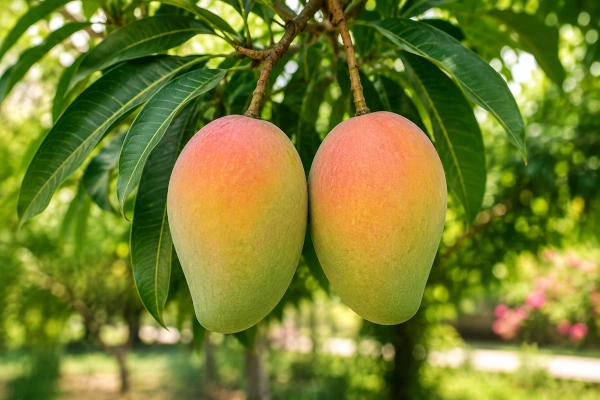
Among Goa’s many mango varieties, none occupies quite the same place in local affection as the Mankurad. For generations, the arrival of the first Mankurad mangoes has signalled the approach of the Goan summer, and the earliest fruit can command extraordinary prices because supply is limited while demand from local consumers remains intense. The variety is prized for its sweet, richly flavoured flesh, distinctive aroma, substantial pulp and small seed, qualities that have made it Goa’s most celebrated table mango.
The fruit is also known by several related names, including Mankur, Mancurad, Malcorado, Malcorada, Kurad and Corado, reflecting centuries of linguistic and horticultural history on the Konkan coast. Its relationship with Goa was formally recognised when Goa Mankurad Mango received Geographical Indication registration on 1 August 2023, giving legal protection to a mango whose reputation had developed long before the modern GI system existed. The official Intellectual Property India record identifies Goa as the geographical area and records the registration as valid until 13 December 2030.
Goa’s Most Cherished Mango
Mankurad is not simply one of several commercial mangoes available in Goa. It is the variety against which many Goan consumers instinctively compare other mangoes, particularly when judging flavour, aroma and eating quality. Its status has developed through generations of household cultivation, village orchards and local markets rather than through the creation of vast industrial plantations.
The Goa Directorate of Agriculture identifies mango as one of the state’s important fruit crops, alongside cashew, coconut, banana, pineapple and jackfruit. Mankurad occupies the premium end of this horticultural landscape because its reputation rests principally on fresh consumption rather than large-scale processing, making eating quality especially important to its commercial identity.
The enthusiasm surrounding the variety becomes particularly visible when the first mangoes appear. Early fruit has historically sold at exceptionally high prices in Goa because consumers are willing to pay a premium for the first genuine Mankurads of the season, while prices gradually fall as larger quantities enter the market. This intense seasonal demand demonstrates that the mango carries a cultural value extending well beyond its weight as agricultural produce.
Malcorado, Mankur and Mankurad — The Story Behind the Name
The history of the name reflects Goa’s centuries of interaction with the Portuguese language. The mango was historically called Malcorado or Malcorada, a Portuguese-derived name generally interpreted as referring to poor or unattractive colour, while over time local pronunciation transformed the term into forms such as Mankur and Mankurad. The Konkani word aamo simply means mango, making Mankurad Aamo a familiar local expression for the fruit.
The irony of the old name is striking because colour is one of the least important reasons Goans value Mankurad. What may once have been regarded as an unimpressive external appearance became attached to a fruit whose internal quality, perfume and sweetness established an exceptional reputation. The transformation from Malcorado to Mankurad therefore mirrors the larger story of a mango whose sensory quality ultimately mattered far more than conventional visual perfection.
Several spellings remain in circulation today, including Mancurad and Mankurad, while official listings themselves are not completely uniform. Intellectual Property India uses Goa Mankurad Mango, whereas APEDA lists the product as Goa Mankur Mango (Malcorado or Mankurad), demonstrating how the old Portuguese and modern Konkani-linked names continue to coexist within the fruit’s identity.
The Portuguese Period and Goa’s Grafting Revolution
The history of Mankurad belongs to a much wider transformation in Indian mango cultivation. ICAR’s historical account of Indian agriculture notes that the Portuguese introduced or greatly advanced the practice of mango grafting in Goa around the sixteenth century, with the technique remaining strongly associated with the region for nearly two centuries before spreading more widely across India.
This development was enormously important because mangoes grown from seed do not reliably reproduce the characteristics of their parent fruit. Seedlings generate genetic variation, meaning an exceptional mango may produce descendants with very different sweetness, fibre content, size, shape or maturity period. Grafting allowed Goan horticulturists to preserve selected trees and reproduce their desirable characteristics repeatedly.
Goa consequently became an important centre of named mango cultivars. Instead of orchards containing only unpredictable seedling trees, growers could maintain recognised varieties through vegetative propagation, creating a horticultural tradition in which particular mangoes acquired distinct names, reputations and loyal followings. The Mankurad emerged from this larger culture of selection and grafting that became deeply embedded in Goan agriculture.
The Konkan Geography Behind the Fruit
Goa occupies a narrow but extraordinarily diverse landscape between the Arabian Sea and the Western Ghats. Rivers including the Mandovi, Zuari, Chapora, Terekhol and Sal cut across the state before reaching the coast, while inland plateaus, valleys, foothills and coastal plains create numerous local environments within a relatively small geographical area.
Much of Goa’s soil is lateritic, with the familiar reddish colour created by high concentrations of iron and aluminium oxides. Along river valleys and some inland areas, alluvial and loamy soils occur, while coastal zones contain sandier formations. The Goa government notes that laterite dominates much of the state while alluvial and loamy soils are found particularly inland and along riverbanks, creating conditions suitable for plantation crops and fruit trees.
The state’s agricultural profile describes Goa as tropical, warm and humid for most of the year, with temperatures broadly ranging from about 17°C to 35°C. The southwest monsoon normally begins around June and supplies roughly 2,500 to 3,200 mm of rainfall, while the months preceding the monsoon become increasingly hot and dry. These seasonal conditions strongly influence mango flowering, fruit development and harvest timing.
Laterite, Heat and the Coastal Mango Orchard
Lateritic soils can appear harsh because they are often acidic and comparatively poor in some nutrients, yet generations of Goan farmers developed agricultural systems adapted to precisely these conditions. Well-drained lateritic uplands support numerous perennial crops, while more fertile loamy pockets around settlements and valleys can provide particularly favourable sites for fruit trees.
Mango trees benefit from deep, aerated soil because their root systems expand considerably as the trees mature. In Goa, the combination of lateritic drainage, accumulated organic matter around long-established homesteads and seasonal moisture from the monsoon allows mango trees to survive through the long dry season once sufficiently established.
The dry months before flowering are particularly important because mangoes require a seasonal pause in vigorous vegetative growth for good floral induction. Once fruit has set, increasing spring temperatures support development and sugar accumulation, while growers must ensure that trees have enough moisture to carry the crop through the hottest months before the rains return.
A Mango Built for the Table
Mankurad is fundamentally a table mango, valued above all for eating fresh. Government-supported studies describe Goa Mankur as a medium-sized, ovate mango that becomes yellow at maturity, while commercial descriptions emphasise a small-to-medium fruit with an oblique oval form, sweet taste and thick, pulpy flesh.
The internal characteristics explain its premium reputation more clearly than external shape alone. A good Mankurad possesses abundant pulp, comparatively little troublesome fibre and a small, relatively flat stone, allowing a large proportion of the fruit to be eaten. Its aroma intensifies as ripening progresses and becomes one of the strongest indicators that the fruit is approaching its ideal eating stage.
The flavour is characteristically rich rather than simply sugary. Sweetness, fragrance and the dense texture of the pulp combine to produce the sensory profile Goan consumers associate with a genuine Mankurad, which is why fruit that looks superficially similar does not necessarily command the same respect in local markets.
Colour Can Be Misleading
The historic term Malcorado is particularly appropriate when considering how deceptive mango colour can be. Mankurad does not depend upon a dramatic crimson blush or perfectly uniform golden surface to demonstrate quality, and individual fruits can show considerable variation in colour as they mature.
Consumers experienced with the variety therefore rely on more than appearance. Aroma near the stem, gentle softening, fruit maturity, characteristic shape and familiarity with the season all help distinguish a properly ripened Mankurad from immature or incorrectly labelled fruit.
This matters commercially because high prices encourage substitution. During periods of limited supply, mangoes resembling Mankurad may be mixed with other varieties or sold before reaching proper maturity, making traceability and producer identification increasingly important as the GI develops.
The First Mangoes of the Goan Summer
Mankurad is known as an early mango, and this characteristic contributes considerably to its desirability. In a normal year, the first commercial fruit may begin appearing around February or March, while larger quantities become available as the summer progresses towards April and May. Seasonal temperatures and flowering conditions can shift this calendar substantially from one year to another.
The earliest fruit commands the greatest excitement because it arrives before the main abundance of the mango season. Prices can be exceptionally high when only a few growers possess mature fruit, while increased arrivals gradually bring the mango within reach of a much broader range of consumers.
This early-season characteristic distinguishes Mankurad from several other celebrated Goan cultivars that mature later. Goa’s mango heritage contains varieties extending the season far beyond the first Mankurads, but it is Mankurad that traditionally opens the premium mango calendar and generates the strongest early-market attention.
Flowering Begins Months Before the Market Notices
The harvest visible in March, April or May is the result of biological processes that began much earlier. Mango trees initiate flowering during the dry season, and successful fruiting depends heavily on temperature, humidity, tree condition and the absence of disruptive rainfall during critical flowering stages.
Mango flowers are produced in large branching panicles containing numerous individual flowers, yet only a very small proportion eventually become mature fruit. Changes in weather during flowering can therefore produce dramatic differences in yield, explaining why one season may bring abundant Mankurad while another produces limited supply and unusually high prices.
Once fruit set occurs, the surviving mangoes develop through Goa’s increasingly hot pre-monsoon months. The tree must maintain adequate moisture and nutrition while supporting fruit growth, and growers must simultaneously manage pests and diseases capable of damaging a crop whose value increases sharply as harvest approaches.
Grafting Keeps a Mankurad a Mankurad
The genetic identity of Mankurad survives through grafting rather than seed reproduction. A seed collected from an excellent fruit may produce a vigorous mango tree, but there is no guarantee that the resulting fruit will reproduce the same flavour, fibre content, size or season as the parent.
Growers therefore use scion wood taken from a recognised Mankurad tree and join it to a suitable rootstock. The rootstock provides the underground root system, while the scion produces the canopy and fruit carrying the selected cultivar’s genetic identity.
This technique allows desirable characteristics to be reproduced across generations. The ancient tree itself does not need to survive forever because its genetic material can continue through grafts taken from established descendants, creating a living lineage extending across orchards and generations.
The Problem of Variation Within Mankurad
One of the interesting challenges surrounding Mankurad is that considerable variation exists among trees marketed under the same general name. Goa’s GI initiative specifically identified the need to select high-quality Mankurad types that combine fibreless pulp, improved keeping quality and stronger resilience before multiplying them through reliable propagation programmes.
This variation partly reflects the long history of mango cultivation in Goa. Seedlings, old selections, locally named strains and generations of informal grafting created a rich but complex horticultural landscape in which not every tree carrying a familiar market name is genetically identical.
GI protection therefore creates an opportunity to strengthen varietal authenticity rather than merely advertise an existing name. Selecting superior mother trees, maintaining documented scion material and supplying growers with high-quality grafts can gradually improve consistency without erasing the wider genetic diversity found in Goa’s mango heritage.
Cardozo Mankurad and Scientific Selection
Modern horticultural science has already demonstrated how selection within Goa’s mango population can improve desirable characteristics. ICAR developed Cardozo Mankurad, a promising selection compared with the standard Goa Mankurad, with characteristics including regular bearing, attractive colour, larger fruit, greater fibreless pulp, higher yield and better shelf life.
ICAR reports that mature Cardozo Mankurad trees around eight to ten years old can produce approximately 400 to 500 fruits under suitable conditions. The selection remains moderately susceptible to mango hoppers and powdery mildew, illustrating that improved fruit and bearing characteristics do not remove the need for careful orchard protection.
The development of Cardozo Mankurad demonstrates an important relationship between traditional horticulture and modern agricultural science. Goa’s old mango diversity provides the biological material, while researchers identify superior trees and systematically evaluate traits that could make cultivation more productive and commercially reliable.
Alternate Bearing and the Uncertain Harvest
Traditional Mankurad trees can display alternate or irregular bearing, producing a heavy crop in one season followed by stronger vegetative growth and a smaller crop in the next. This characteristic contributes to fluctuations in market supply and helps explain why prices may vary dramatically between years.
Alternate bearing is influenced by several interacting factors, including the previous crop load, tree nutrition, vegetative growth and seasonal weather. A tree that invests heavily in one large harvest may have less energy available for the growth required to produce another equally heavy crop immediately afterwards.
Improved selections and better orchard management can reduce some of this instability, but traditional cultivars remain biologically complex. For growers, maintaining income therefore requires understanding individual trees, managing nutrition carefully and avoiding dependence on the assumption that every orchard will produce identical yields each year.
Mango Hoppers, Powdery Mildew and Fruit Flies
High-value mangoes attract not only consumers but a range of pests and diseases. ICAR identifies mango hoppers and powdery mildew among concerns affecting Mankurad-related selections, while fruit flies present another serious threat as mangoes approach ripeness.
Mango hoppers can damage flowering by feeding on tender tissues and producing honeydew that encourages secondary problems. Powdery mildew can attack flower panicles and young fruit during susceptible weather, potentially reducing the crop before most mangoes have even begun developing.
Fruit flies become particularly damaging as fruit matures. Integrated pest management, orchard sanitation, traps and carefully timed control measures can reduce losses while limiting unnecessary pesticide use, which becomes especially important if growers wish to develop premium and export-oriented markets.
The Short Shelf-Life Challenge
One of Mankurad’s greatest commercial strengths is exceptional eating quality, but this is accompanied by a practical weakness: the fully ripened fruit is relatively delicate. Premium Mankurad can deteriorate rapidly once it reaches eating maturity, which historically restricted the distance over which fruit could be transported while retaining peak quality.
This limitation helps explain why Mankurad remained overwhelmingly associated with Goa and Goan consumers even as varieties with stronger transport characteristics established larger interstate and export markets. The very qualities that create soft, rich, aromatic pulp can also make the mango more vulnerable to bruising and deterioration.
Better cold-chain handling, careful harvest timing, protective packaging and improved selections such as Cardozo Mankurad offer ways to extend the commercial reach of the fruit. The challenge is ensuring that greater shelf life does not come at the expense of the sensory qualities responsible for the mango’s reputation.
Mango Trees in Gardens, Villages and Small Orchards
Goa’s Mankurad economy differs from regions dominated by large specialised mango estates. Many Goan trees grow within household compounds, village properties, mixed farms and relatively small orchards, creating a dispersed production system rather than a landscape of continuous commercial plantations.
This pattern has helped preserve extraordinary varietal diversity because households often maintained several different mangoes rather than planting only one commercial cultivar. At the same time, fragmented production makes grading, traceability, collective marketing and export aggregation more complicated.
Producer organisations can help bridge this gap by connecting growers who individually produce limited quantities. The creation and development of the All Goa Mango Growers Association became particularly important in the GI process because it provided an organised platform through which growers could collectively defend and promote the identity of Mankurad.
The Road to Geographical Indication Recognition
The formal journey towards GI protection began when the application for Goa Mankurad Mango was filed on 14 December 2020. Intellectual Property India records the application as No. 728, under Class 31 for agricultural goods, with Goa identified as the geographical area.
The GI initiative was supported by collaboration involving growers, the Goa State Council for Science & Technology and ICAR-Central Coastal Agricultural Research Institute. In October 2021, ICAR-CCARI organised a technical seminar on mango production, processing and marketing in which the importance of securing GI recognition for Mankurad was specifically highlighted, bringing together mango farmers and state institutions.
The application was subsequently published in GI Journal No. 173, made available on 31 March 2023. Formal registration followed on 1 August 2023, when Certificate No. 497 was issued, giving Mankurad legal recognition as a geographically identified agricultural product of Goa.
GI Details at a Glance
- Geographical Indication: Goa Mankurad Mango
- State: Goa
- Product: Agricultural
- Class: 31
- Application Number: 728
- Date of Filing: 14 December 2020
- GI Journal: No. 173
- Journal Availability Date: 31 March 2023
- Certificate Number: 497
- GI Certificate Date: 1 August 2023
- Registered Proprietor: Department of Science & Technology & Waste Management, Government of Goa
- Geographical Area: Goa
- Registration Valid Until: 13 December 2030
Why the Applicant and Registered Proprietor Records Look Different
An unusual detail appears when the official records are compared. The current Intellectual Property India application page identifies the All Goa Mango Growers Association as the applicant associated with Application No. 728, while APEDA’s official Goa GI listing identifies the Department of Science & Technology & Waste Management, Government of Goa, as the registered proprietor.
This does not alter the fundamental registration details, which agree on the application number, geographical area, class, certificate number and validity period. For the “GI Details at a Glance” section, the registered-proprietor field above follows APEDA’s explicit current listing, while the role of the All Goa Mango Growers Association remains important because it was the grower body directly involved in filing and pursuing the GI application.
The distinction also illustrates how GI registration frequently involves collaboration between producer organisations and government institutions. Unlike an ordinary commercial trademark owned by a single company, a geographical indication is intended to protect the collective reputation of producers connected with a particular region.
What the GI Tag Actually Protects
The geographical indication does not mean that a mango tree related to Mankurad can biologically grow only inside Goa. Mango graftwood can be transported, and related cultivars or selections are found in neighbouring parts of the Konkan and western coastal region.
The GI protects the geographical identity Goa Mankurad Mango and the reputation attached to fruit produced within the recognised area. This distinction between cultivar genetics and geographical origin becomes especially important once famous regional products command premium prices.
A mango may resemble Mankurad or even possess related genetic material without automatically having the right to claim the protected geographical identity. The purpose of the GI is to ensure that the commercial reputation created by Goan growers remains connected with genuine produce from Goa.
Authorised Users Bring the GI Into the Orchard
The current Intellectual Property India database lists a growing group of authorised users connected with Goa Mankurad Mango. Their locations include areas such as Marcaim, St Estevam, Calangute, Ribandar, Siolim, Orlim, Goa Velha and Ponda, demonstrating that the protected mango is connected with growers spread across several parts of the state.
Authorised-user registration is important because GI protection becomes economically meaningful only when genuine producers can use the protected identity. A certificate stored in a government registry does little for farmers unless the name eventually appears on traceable fruit, recognised packaging and organised market channels.
The development of a wider authorised-user network can therefore help transform Goa Mankurad from a famous local mango into a more clearly authenticated regional product. This is particularly important when fruit is sold outside Goa, where buyers cannot rely on personal knowledge of individual growers or orchards.
The Fight Against Fake Mankurad
Premium prices naturally create incentives for mislabelling. Mangoes of other varieties can be presented as Mankurad, particularly during the beginning of the season when genuine fruit is scarce and consumers are willing to pay unusually high prices.
This problem affects growers as well as buyers. If inferior fruit is repeatedly sold under the Mankurad name, consumers may lose confidence in the reputation built by authentic producers, while farmers maintaining genuine trees receive no reward for preserving quality.
GI-based labelling, grower registration, standardised packaging and better traceability can gradually reduce this problem. The success of the system will depend upon making authenticity easy enough for consumers to recognise and commercially worthwhile for producers to maintain.
From Local Prestige to a Wider Market
Mankurad has traditionally enjoyed a strong market among Goans, including members of the Goan diaspora who actively seek the fruit during mango season. Its limited shelf life and dispersed production base have historically constrained long-distance trade, but improved logistics are beginning to create new possibilities.
Cold-chain movement allows fruit harvested at the correct stage to travel farther while retaining acceptable quality. Better packaging can reduce bruising, while collective grading can help ensure that boxes sold under a premium geographical identity contain fruit of reasonably consistent size and maturity.
The long-term opportunity is not necessarily to convert Mankurad into a mass-market commodity. Its greatest economic potential may lie precisely in remaining a premium, geographically authenticated mango sold at higher value to consumers who recognise its distinctive origin and eating quality.
GI Recognition and Goa’s Wider Food Heritage
Mankurad now belongs to an expanding family of geographically protected products that Goa is using to document and promote its distinctive food and agricultural heritage. Government programmes have highlighted the mango alongside products such as Feni, Goa Cashew, Goan Bebinca, Khola Chilli, Harmal Chilli, Myndoli Banana and other regional foods and crops.
The significance of this movement goes beyond tourism promotion. GI registration can help protect traditional production systems, create stronger identities for small producers and make regional foods more visible within national markets dominated by standardised commodities.
For Goa, this is especially valuable because agricultural diversity forms part of a cultural landscape often overshadowed by the state’s international reputation for beaches and tourism. Mankurad provides a way of telling a different Goan story, centred on orchards, village knowledge, seasonal food and the agricultural inheritance of the Konkan coast.
Mankurad and Goa’s Extraordinary Mango Diversity
Although Mankurad receives the greatest attention, Goa possesses a remarkably rich mango heritage. Traditional varieties include Hilario, Malgesh, Monserrate or Mussarat and numerous locally maintained selections, while additional Goan mango identities are increasingly receiving formal documentation and geographical recognition.
This diversity reflects centuries of selection and grafting. Different villages and families preserved trees distinguished by ripening period, aroma, fibre content, fruit shape, colour and keeping quality, producing a horticultural landscape far more complex than a commercial orchard planted with only one cultivar.
The continued popularity of Mankurad should therefore strengthen rather than diminish interest in Goa’s lesser-known mangoes. Genetic diversity provides options for future breeding, climate adaptation and extended harvest seasons, while also preserving a living record of local horticultural history.
Climate Variability and the Future of Goa’s Favourite Mango
Mankurad’s early flowering and premium market position make it sensitive to changing weather patterns. Warm spells, unseasonal rain or high humidity during flowering can alter fruit set, while extreme heat during fruit development may increase moisture stress and affect final fruit size and quality.
Goa’s dependence on the southwest monsoon creates another challenge. Most annual rainfall arrives within a few months, meaning orchards must endure a pronounced dry season before suddenly experiencing intense rainfall and humidity. Changes in the timing or intensity of this seasonal transition can affect flowering, disease pressure and tree health.
Improved selections, better irrigation management, canopy maintenance, pest monitoring and more reliable weather advisories can help growers respond to these changes. The GI initiative itself has highlighted the value of selecting Mankurad types with better climate tolerance, suggesting that conservation and adaptation will increasingly have to develop together.
Conserving the Mother Trees
The future of Mankurad ultimately depends upon living trees rather than certificates. High-quality mother plants must be identified and maintained so that nurseries can obtain authentic scion wood and produce grafts preserving the characteristics consumers expect from the variety.
This work becomes more urgent as old village trees disappear through development, neglect, disease or natural ageing. Once a genetically valuable tree is lost without its material being preserved, the exact combination of characteristics it carried may disappear permanently.
Seed banks, field gene banks and documented mother-tree collections can therefore support the GI by preserving superior Mankurad material. The objective should not be to reduce the cultivar to one genetically uniform clone, but to identify and conserve high-quality lines while retaining the diversity that developed across Goa.
Keeping Mango Cultivation Economically Attractive
Orchard conservation cannot succeed through sentiment alone. Land in Goa faces intense competition from construction and other economic uses, and a mango tree occupying valuable property must generate enough benefit for families to see a reason to maintain it.
Premium pricing can help, but growers need a larger share of the value attached to the Mankurad name. Organised marketing, GI authentication, direct sales, high-quality graft production and access to premium consumers can make orchard maintenance more economically attractive.
Tourism may also create opportunities because visitors increasingly seek regional foods with identifiable origins. A properly developed Mankurad season could support farm visits, mango festivals, tastings and direct orchard sales without converting the fruit into a generic tourist souvenir.
The Mango That Opens the Goan Summer
Few fruits are as closely connected with anticipation as Goa’s Mankurad. The first mangoes appear while summer is still building, often in quantities too small to satisfy demand, and their arrival immediately becomes a subject of discussion in markets and households across the state.
As the season progresses, prices fall and the fruit becomes more abundant. A ripe Mankurad gradually develops the aroma, sweetness and rich pulp that explain why Goans continue to place it above far larger or more visually dramatic mangoes.
Its history connects Goa’s coastal geography with the spread of grafting, the Portuguese-era name Malcorado with modern Konkani Mankurad, and generations of household mango trees with a twenty-first-century system of GI protection. The 1 August 2023 geographical indication registration placed legal recognition around this relationship, but the reputation itself had been established through centuries of cultivation and eating.
Today, Mankurad stands at a crossroads between tradition and modern horticulture. Better selections such as Cardozo Mankurad, improved propagation, authenticated growers, cold-chain handling and geographical branding can expand its economic possibilities, while the survival of old orchards and genuine mother trees remains essential to preserving the qualities that made the mango famous in the first place.
Goa Mankurad Mango is therefore more than Goa’s favourite summer fruit. It is a living expression of the Konkan coast, shaped by lateritic soil and monsoon climate, preserved through centuries of grafting and transformed from the old Malcorado into one of India’s most distinctive geographically protected mango traditions.
You may also like
-
Adani Green Energy Expands Battery Storage to 6.63 GWh at Khavda, Strengthening India’s Renewable Power Infrastructure
-
Manastu Space Secures ₹116 Crore Government Support to Develop Indigenous Green Propulsion Systems
-
GeM’s AABHAR Collection Showcases 294 Indigenous Products, Strengthens Market Access for Indian Artisans
-
Balaghat Chinnor Rice of Madhya Pradesh: The Fragrant Heritage Grain with GI Recognition
-
Indian Semiconductor Companies Propose New Manufacturing and Chip Design Investments in Madhya Pradesh
