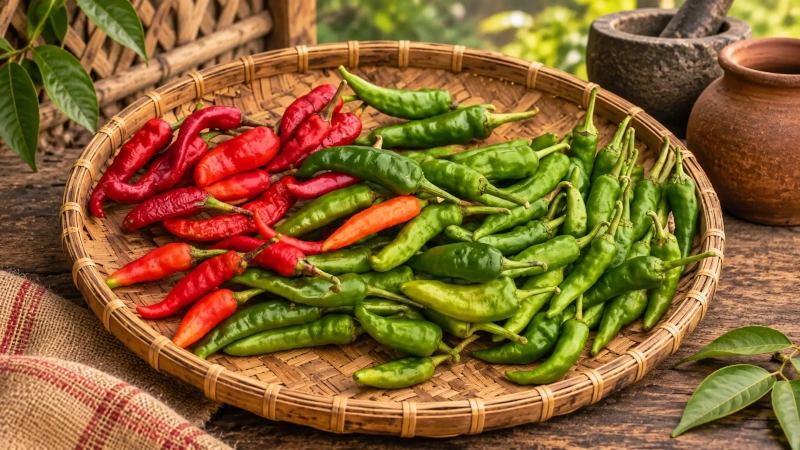
GI Heritage of India Series | Kerala | Agricultural Products
In the agricultural landscape of Malappuram district in northern Kerala, a distinctive chilli variety has been cultivated and preserved by farming communities for more than a century. Known as Edayur Chilli, or Edayur Mulaku in Malayalam, this traditional cultivar is celebrated not for extreme pungency but for its mild heat, characteristic aroma and exceptional suitability for preparing some of Kerala’s most popular traditional accompaniments.
Unlike many Indian chilli varieties valued primarily for their intense heat, Edayur Chilli possesses a distinctive combination of low pungency, appealing flavour and comparatively large fruits. These characteristics make it particularly suitable for frying and preparing Mulaku Kondattam, a traditional Kerala delicacy made from chillies preserved in a seasoned curd mixture and dried before frying.
The chilli derives its name from Edayur, a village in Malappuram district where its cultivation has been maintained through generations of farming families. Its association with the region’s agricultural environment, traditional cultivation practices and culinary heritage has established Edayur Chilli as an important component of Kerala’s indigenous agricultural diversity.
Recognising these distinctive qualities, Edayur Chilli received Geographical Indication registration on 14 September 2021, formally establishing its protected geographical identity. Registered under GI Application No. 662, the recognition has strengthened efforts to preserve the variety while creating opportunities for farmers to expand its commercial presence.
Historical Origins and Agricultural Heritage
Edayur Chilli belongs to the species Capsicum annuum L., a member of the Solanaceae family. Although chilli peppers originated in the Americas and were introduced into India through maritime trade, different regions gradually developed locally adapted cultivars suited to their environments and culinary requirements.
The cultivation history of Edayur Chilli is generally traced back approximately 150 years, according to agricultural documentation associated with the region. During this period, farmers in the Edayur area developed and preserved a chilli variety distinguished by its mild pungency, characteristic flavour and suitability for traditional food preparation.
A particularly interesting account of its origin survives in local agricultural tradition. According to the story recorded by Kerala’s official GI portal, a man who travelled to Malaysia seeking employment returned to Malappuram carrying chilli seeds. Although his journey had not produced the employment he sought, the seeds he brought back were planted in local soil and are believed to have contributed to the development of the chilli eventually known as Edayur Mulaku.
This traditional account also associates the variety with the name Malayi Mulaku, reflecting its supposed Malaysian connection. However, the precise botanical relationship between the seeds mentioned in the story and the present cultivar has not been conclusively established through documented historical or genetic evidence.
Over generations, local farmers continued cultivating Edayur Chilli, selecting and preserving planting material suited to the region’s climate and soil conditions. Through this process, the chilli developed a strong association with the agricultural landscape of Edayur and the surrounding areas.
Its cultivation became particularly important because of its culinary characteristics. The relatively mild flavour allowed the chilli to be prepared and consumed as a substantial food accompaniment rather than merely being used in small quantities as a pungent seasoning.
In traditional households, Edayur Chilli became closely associated with fried chilli preparations and curd-preserved chillies, contributing to its reputation as a speciality agricultural product of Malappuram.
Geographical Origin and Cultivation Region
Edayur Chilli originates from the Edayur region of Malappuram district in Kerala, where its cultivation has historically been concentrated.
The traditional production area extends across several local administrative regions within the Valanchery and Angadippuram blocks. The principal cultivation areas include Edayur, Athavanad, Marakkara, Irimbiliyam and Kalpakanchery, along with Valanchery and neighbouring localities in the Valanchery block. Cultivation also occurs in Moorkanad and Kuruva in the Angadippuram block.
Although the GI Registry identifies Kerala as the state associated with the registered product, the chilli’s distinctive geographical and agricultural identity is specifically linked to the traditional cultivation belt of Malappuram district.
The region is characterised by a tropical monsoon climate, seasonal rainfall, warm temperatures and lateritic soils. The agricultural landscape includes gently undulating terrain, hillocks, cultivated homesteads and small farming plots.
Lateritic soils are particularly important in the traditional cultivation areas. These soils, together with local climatic conditions and agricultural management practices, influence the growth and development of the chilli.
The distinctive characteristics of Edayur Chilli are associated with the interaction of its genetic constitution, the environmental conditions of the cultivation region and traditional farming practices.
The relationship between the crop and its geographical origin forms the foundation of its recognised Geographical Indication identity.
Distinctive Characteristics of Edayur Chilli
Edayur Chilli is distinguished by its low pungency, characteristic aroma, appealing flavour and comparatively large fruits.
The plant grows as an annual, semi-upright shrub, generally reaching a height of approximately 75–85 centimetres. Its stems are angular, while the leaves are green, lanceolate and arranged alternately.
The plant produces solitary, drooping flowers with white petals and light purple or lavender-coloured anthers. Its stems and branches are relatively fragile, requiring care during cultivation and harvesting.
The fruits are drooping berries with a moderately triangular shape and smooth surface. One of the distinctive characteristics of this cultivar is the variation in fruit dimensions as the chillies develop.
During the earlier stages of fruit development, the chillies may measure approximately 11.5–17.4 centimetres in length, with a diameter ranging from 1.4 to 2.9 centimetres. At later stages, the recorded fruit dimensions may reduce to approximately 6.5–13 centimetres in length and 1.0–2.6 centimetres in diameter.
Immature fruits are green, while fully mature fruits develop red coloration.
The chilli’s principal distinguishing characteristic is its relatively low pungency. Unlike extremely hot varieties such as Naga Mircha, Edayur Chilli contains comparatively low concentrations of capsaicinoids, the naturally occurring compounds responsible for chilli heat.
Its mild pungency allows the fruit to be consumed in larger quantities, particularly after frying or processing into traditional preserved preparations.
The distinctive taste and aroma of Edayur Chilli are also important to its reputation. These characteristics make the variety especially suitable for food products in which the flavour of the chilli itself is intended to remain prominent.
The combination of fruit size, smooth surface, mild heat and characteristic flavour distinguishes Edayur Chilli from many other commercially cultivated chilli varieties.
Traditional Cultivation Practices
Edayur Chilli has traditionally been cultivated in the agricultural fields and homestead gardens of Malappuram district, where farmers maintain the variety through locally preserved planting material.
Cultivation generally involves raising seedlings before transplanting them into prepared fields. Farmers select suitable planting material and maintain the crop through regular agricultural management, including irrigation, nutrient application and protection from pests and diseases.
The region’s tropical climate and seasonal monsoon rainfall influence cultivation schedules. Farmers generally establish the crop around the pre-monsoon and early monsoon periods, depending on local conditions and the intended production cycle.
Traditional seed selection has played an important role in maintaining the distinctive characteristics of Edayur Chilli. Farmers preserve seeds from desirable fruits, helping maintain the locally adapted variety across successive generations.
The chilli is often cultivated on relatively small agricultural holdings, where household farming practices remain closely connected with local food requirements and regional markets.
The comparatively delicate nature of the plant requires attention during crop management. Excessive handling and physical damage can affect branches and developing fruits, making careful harvesting particularly important.
Scientific support from agricultural institutions has contributed to improving cultivation practices while maintaining the traditional identity of the crop.
The involvement of Kerala Agricultural University and ICAR’s Krishi Vigyan Kendra, Malappuram, has been especially significant in documenting the variety’s characteristics, supporting cultivation and strengthening awareness of its agricultural importance.
Edayur Chilli in Kerala’s Culinary Traditions
Edayur Chilli occupies a distinctive place in the food traditions of Malappuram and the wider Valluvanad region of Kerala.
Its most celebrated culinary application is the preparation of Mulaku Kondattam, a traditional accompaniment commonly served with rice and other Kerala meals.
Kondattam is generally prepared by treating chillies with a seasoned curd or buttermilk mixture and drying them before frying. The process allows the chillies to develop a distinctive flavour while making them suitable for preservation.
Edayur Chilli is particularly valued for this preparation because its low pungency permits the chilli to be consumed as a substantial side dish. The combination of mild heat, characteristic aroma and the flavour developed during processing makes it especially suitable for traditional meals.
The chilli is also used in fried preparations, where mature fruits may be slit, seasoned and fried in coconut oil.
Such preparations are widely appreciated in the region because they provide a distinctive combination of flavour and texture without the extreme pungency associated with some other chilli varieties.
The traditional importance of Edayur Chilli extends beyond everyday food preparation. Agricultural accounts from the region describe the custom of presenting the chillies to relatives, friends and visitors during the harvest season.
This practice reflects the cultural value associated with the crop and its reputation as a distinctive local speciality.
Edayur Chilli therefore represents more than an agricultural commodity. It is closely connected with the food culture, hospitality traditions and regional identity of the communities that have cultivated it.
Economic Importance and Rural Livelihoods
Edayur Chilli has traditionally provided an important source of agricultural income for farming households in the Edayur region.
Its specialised culinary applications and established local reputation have contributed to demand in regional markets, where consumers recognise the variety for its distinctive characteristics.
Historical accounts indicate that Edayur Chilli was once considered sufficiently valuable to be sold by individual count rather than exclusively by weight. This practice illustrates the importance attached to the product within local agricultural commerce.
The Government of Kerala’s GI portal has documented cultivation across approximately 26 hectares in the traditional production region. This figure reflects the reported scale of cultivation during the period covered by the source and should not be treated as a current agricultural census.
The portal has also recorded prices reaching approximately ₹250 per kilogram for Edayur Chilli. Actual farmgate and retail prices vary according to season, quality, market demand and prevailing trading conditions.
The crop’s commercial value is supported by its suitability for processing. Farmers and local enterprises can sell the chillies fresh or convert them into preserved food products, particularly fried chillies and Kondattam preparations.
These value-added applications offer opportunities to increase the economic returns available from cultivation.
For small farmers, organised marketing and cooperative processing can help improve access to larger markets while reducing dependence upon local intermediaries.
The recognition of Edayur Chilli as a Geographical Indication product has provided an additional foundation for promoting its regional identity and strengthening its commercial reputation.
The Role of Kerala Agricultural University and Farmer Organisations
The formal recognition of Edayur Chilli resulted from cooperation between local farmers, agricultural institutions and government-supported organisations.
The Edayoor Chilli Grovers Association was established to represent the interests of cultivators and undertake the process of obtaining geographical indication protection.
The association worked with agricultural institutions, including Kerala Agricultural University, whose Intellectual Property Rights Cell played an important role in facilitating the GI registration process.
The Edayur Krishi Bhavan also contributed to organising farmers and supporting the documentation required to establish the crop’s geographical and agricultural identity.
Scientific documentation was particularly important because GI registration requires evidence demonstrating that a product possesses characteristics or a reputation attributable to its geographical origin.
For Edayur Chilli, the supporting documentation highlighted its distinctive plant and fruit characteristics, low pungency, traditional cultivation practices and association with the agricultural environment of Malappuram.
The registration process brought together traditional farming knowledge and modern scientific documentation, providing a formal institutional foundation for protecting the crop’s identity.
The involvement of local farmer organisations remains important for ensuring that GI recognition produces tangible benefits for the communities responsible for preserving the variety.
Commercial Potential and Value Addition
Edayur Chilli possesses considerable potential for value-added food processing because of its distinctive flavour, low pungency and established association with traditional Kerala cuisine.
Its principal commercial applications include fresh chillies, fried chilli products, dried Kondattam chillies, pickles and speciality condiments.
The preparation of packaged Mulaku Kondattam offers particular opportunities because the product is closely associated with regional food traditions and can be marketed to consumers seeking authentic Kerala culinary products.
Improved processing methods, hygienic drying and moisture-resistant packaging can help maintain product quality and extend shelf life.
Standardised grading and traceable sourcing can further strengthen consumer confidence, particularly when products are marketed using their protected geographical identity.
Local farmer organisations have also explored additional processed products, including chilli-based sauces and other speciality preparations.
The development of such products can help extend the commercial value of Edayur Chilli beyond the fresh agricultural market.
However, successful commercial expansion requires continued attention to product authenticity. GI-based branding should be supported by appropriate quality controls and compliance with authorised-user requirements.
The combination of traditional processing knowledge and modern food technology offers opportunities to strengthen the market presence of this distinctive Kerala agricultural product.
GI Tag Journey of Edayur Chilli
The Geographical Indication recognition of Edayur Chilli represents an important milestone in the protection of Kerala’s traditional agricultural heritage. Cultivated for approximately 150 years in the Edayur region of Malappuram district, the chilli developed a distinctive identity through its low pungency, characteristic flavour and traditional use in preparing fried chillies and Mulaku Kondattam.
The formal registration process began on 3 October 2019, when the Edayoor Chilli Grovers Association filed GI Application No. 662. Following examination and publication in the Geographical Indications Journal, Edayur Chilli received Certificate No. 388 on 14 September 2021. The registration established formal recognition of its geographical identity and association with Kerala’s traditional agricultural practices.
Historical and GI Registration Milestones
| Year / Date | Milestone | Historical and Agricultural Significance |
|---|---|---|
| Historical period | Introduction and establishment of chilli cultivation in Kerala. | Chilli peppers became incorporated into the agricultural and culinary traditions of Kerala following their introduction into India through maritime trade. |
| Approximately 150 years ago | Traditional cultivation of Edayur Chilli became established in the Malappuram region. | Farming communities developed and maintained a locally adapted chilli variety characterised by low pungency, distinctive flavour and suitability for traditional food preparation. |
| Traditional agricultural period | Local tradition associates the chilli’s origins with seeds brought from Malaysia. | The account reflects the region’s historical connections with overseas migration and agricultural exchanges, although the precise botanical origin remains unverified. |
| Generations of traditional cultivation | Preservation of Edayur Chilli through local seed selection and farming practices. | Farmers maintained the distinctive cultivar and established its reputation as a speciality chilli of the Edayur region. |
| Traditional culinary development | Edayur Chilli became closely associated with fried chilli and Mulaku Kondattam. | Its mild pungency and characteristic flavour made it particularly suitable for traditional Kerala preserved chilli preparations. |
| Modern agricultural development | Scientific documentation and farmer organisation strengthened efforts to protect Edayur Chilli. | Kerala Agricultural University, the local Krishi Bhavan and farmer organisations contributed to identifying and documenting the crop’s distinctive characteristics. |
| 3 October 2019 | Edayoor Chilli Grovers Association filed GI Application No. 662. | The application initiated formal geographical protection under Class 30 for the traditional chilli cultivar. |
| 30 October 2019 | GI Registry issued the Formality Check Report. | The application underwent preliminary administrative examination. |
| 18 November 2019 | Applicant submitted its response to the Formality Check Report. | Supporting documentation was provided as part of the registration process. |
| 27 February 2020 | GI Registry issued its examination report. | The application underwent substantive examination concerning the product’s geographical identity and supporting evidence. |
| 12 March 2020 | Applicant submitted responses to the examination report. | Additional clarifications and supporting information were provided during the examination process. |
| 29 May 2020 | Edayur Chilli appeared in Geographical Indications Journal No. 137. | The application entered the official publication stage of the registration process. |
| 30 July 2021 | Government of India parliamentary records identified Edayur Chilli as an advertised GI application. | The registration process remained under consideration following its publication in the GI Journal. |
| 14 September 2021 | GI Certificate No. 388 issued for Edayur Chilli. | The chilli received formal geographical indication recognition, protecting its established association with Kerala. |
| October 2021 | GI recognition received wider public attention. | Agricultural institutions and farmer organisations highlighted the importance of the registration for protecting the variety and improving market opportunities. |
| 2 October 2029 | Current GI registration validity date. | Edayur Chilli remains registered until this date, subject to further renewal under the applicable GI legislation. |
The registration timeline illustrates how a traditional agricultural product cultivated by generations of farmers can receive formal protection through cooperation between producer organisations and scientific institutions. The Edayoor Chilli Grovers Association played the central role in securing registration, while Kerala Agricultural University and local agricultural authorities contributed technical support and documentation.
The recognition of Edayur Chilli also demonstrates the importance of protecting products valued for characteristics other than extreme pungency. Its distinctive mild flavour, culinary suitability and connection with the agricultural environment of Malappuram provide a foundation for preserving traditional food heritage while developing new commercial opportunities.
GI Details at a Glance
| Particular | Details |
|---|---|
| Geographical Indication | Edayur Chilli (Edayur Mulaku) |
| State | Kerala |
| District | Malappuram |
| Other Names | Edayur Mulaku, Edayoor Chilli |
| Botanical Name | Capsicum annuum L. |
| Botanical Family | Solanaceae |
| Product Category | Agricultural |
| GI Class | 30 |
| Application Number | 662 |
| Date of Filing | 3 October 2019 |
| Registered Proprietor | Edayoor Chilli Grovers Association (ECGA) |
| Registered Proprietor’s Address | C/o Edayur Krishi Bhavan, Pookkattiri, Edayur, Malappuram, Kerala – 676552 |
| Geographical Area | Kerala; traditional cultivation concentrated in Malappuram district |
| Principal Cultivation Areas | Edayur, Athavanad, Marakkara, Irimbiliyam, Kalpakanchery, Valanchery, Moorkanad and Kuruva |
| GI Journal | No. 137 |
| GI Journal Availability Date | 29 May 2020 |
| GI Certificate Number | 388 |
| GI Certificate Date | 14 September 2021 |
| Registration Valid Until | 2 October 2029 |
| Current GI Status | Registered |
| Plant Type | Annual, semi-upright shrub |
| Plant Height | Approximately 75–85 cm |
| Leaf Shape | Lanceolate |
| Flower Colour | White, with light purple or lavender-coloured anthers |
| Fruit Shape | Drooping, moderately triangular berry with a smooth surface |
| Fruit Colour | Green when immature, developing red coloration upon maturity |
| Fruit Length During Early Growth | Approximately 11.5–17.4 cm |
| Fruit Length During Later Growth | Approximately 6.5–13 cm |
| Fruit Diameter During Early Growth | Approximately 1.4–2.9 cm |
| Fruit Diameter During Later Growth | Approximately 1.0–2.6 cm |
| Pungency | Characteristically low |
| Principal Pungent Compounds | Capsaicin and dihydrocapsaicin |
| Characteristic Flavour | Mild pungency, distinctive aroma and appealing taste |
| Traditional Cultivation Region | Lateritic agricultural soils of the Edayur–Valanchery region |
| Traditional Uses | Fried chilli, Mulaku Kondattam and other Kerala culinary preparations |
| Commercial Applications | Fresh chillies, dried chillies, Kondattam products, pickles, sauces and speciality condiments |
The official Geographical Indications Registry identifies Edayur Chilli as a registered agricultural product associated with Kerala, with the Edayoor Chilli Grovers Association serving as the registered proprietor. The distinctive characteristics recorded in agricultural and GI documentation establish the relationship between the traditional cultivar, its geographical environment and the farming knowledge maintained in the Malappuram region.
The registration provides legal protection for the geographical identity of Edayur Chilli while creating opportunities for authorised producers to strengthen product authenticity, improve market recognition and develop commercially viable value-added products.
Preserving Edayur Chilli’s Agricultural Heritage
The future of Edayur Chilli depends upon preserving the locally adapted cultivar and the farming knowledge that has sustained its cultivation for approximately 150 years.
Traditional seed preservation remains particularly important because the distinctive flavour, fruit characteristics and low pungency of Edayur Chilli are closely associated with its genetic identity.
Agricultural institutions can support conservation by maintaining suitable planting material, documenting crop characteristics and providing scientific guidance on cultivation practices.
The development of organised farmer groups, improved processing facilities and effective marketing networks can also help sustain interest in cultivating this speciality variety.
As agricultural markets become increasingly competitive, GI recognition offers producers an opportunity to distinguish genuine Edayur Chilli from similar products cultivated elsewhere.
However, the long-term success of the geographical indication depends upon ensuring that farmers receive meaningful economic benefits from preserving the crop.
The continuation of Edayur Chilli cultivation therefore requires cooperation between local producers, agricultural research institutions, government agencies and food-processing enterprises.
A Distinctive Expression of Kerala’s Agricultural and Culinary Heritage
Edayur Chilli represents an important part of Kerala’s regional agricultural diversity. Its distinctive mild flavour, characteristic aroma and association with traditional preparations such as Mulaku Kondattam have given it a unique identity among India’s chilli varieties.
The granting of Geographical Indication recognition in 2021 established formal protection for this identity and acknowledged the agricultural knowledge preserved by farming communities in the Malappuram region.
As demand for authentic regional food products continues to expand, Edayur Chilli offers opportunities for value-added processing, organised marketing and the preservation of traditional culinary practices.
Its commercial future remains closely connected with the farmers who have maintained the variety and the communities that continue to value its distinctive qualities.
Edayur Chilli is more than a traditional spice. It is a living expression of Malappuram’s agricultural heritage, Kerala’s culinary diversity and the enduring relationship between local farming knowledge and regional food traditions.
You may also like
-
Farrukhabad Exports First Consignment of Frozen Vegetables to Qatar
-
India Strengthens Its Indigenous Telecom Technology Ecosystem
-
India’s Unincorporated Services Sector Records 33% Employment Growth
-
India Targets USD 40–45 Billion Space Economy Within a Decade
-
ISRO Pushes Indigenous Satellite Manufacturing and Semiconductor Self-Reliance
