Health

News and Articles on Ayurveda, Yoga, Kundalini and other Indian way of health and medicines.

Siddha Bheshaja Manimala: The Ayurvedic Garland of Proven Medicines

The work is traditionally associated with Mahakavi Shri Krishnaram Bhatta, a scholar-physician known for combining Ayurvedic knowledge with poetic expression. He belonged to a learned Ayurvedic family tradition and is remembered as a physician, teacher and literary figure. His strength lay in presenting medical knowledge in a memorable and refined style, making difficult ideas easier for students and practitioners to understand.

Abhinava Chintamani: Odisha’s Sanskrit Jewel of Ayurvedic Health Knowledge

The title itself is meaningful. “Abhinava” means new, fresh or renewed, while “Chintamani” refers to the mythical wish-fulfilling jewel. In the Ayurvedic context, the title suggests a new jewel of medical reflection, a work intended to guide physicians with useful, tested and carefully organised knowledge. It is a book of health, disease management and medical wisdom, created within the Sanskrit intellectual world but preserved through Odisha’s rich palm-leaf manuscript tradition.

Kṣemakutūhalam: The Forgotten Sanskrit Masterpiece on Food, Health and Ayurvedic Cooking

The title itself is beautiful. Kṣema means welfare, health, well-being, safety and auspicious living. Kutūhala means curiosity, interest or wonder. Kṣemakutūhalam may therefore be understood as “the curiosity for well-being” or “the delightful inquiry into health.” This is a fitting title because the book is not merely about recipes. It is about the complete relationship between food and human life. It asks how food should be selected, cooked, served, eaten, digested and adjusted according to season, constitution, appetite and health.

Siddhānna Prakaraṇa: The Ancient Indian Science of Cooked Food in Bhojanakutūhalam

This is not a casual cookbook. It is a serious work of Indian dietetics where food is studied as nourishment, medicine, discipline, taste, ritual and daily health practice. In the Indian tradition, cooking was never seen as merely the transformation of raw ingredients into meals. It was the refinement of nature through fire, water, ghee, spices, timing, vessel, season and digestive intelligence. Siddhānna Prakaraṇa preserves this worldview with great clarity.

Camphor in Ayurveda: Karpura, the Fragrant Cooling Jewel of Indian Medicine

The Sanskrit name Karpura refers to camphor, traditionally obtained from the camphor tree, botanically known as Cinnamomum camphora. In Indian homes, it is often called Karpooram, Kapur, Karpuram or Pachai Karpooram, depending on language and region. Ayurveda values Karpura for its strong aroma, subtle action, cooling impression, lightness and ability to awaken the senses. It belongs to the group of substances where even a tiny quantity carries powerful influence.

Bhojana Kutuhala: The Ayurvedic Book That Turned Food Into a Complete Science of Health

The text is attributed to Raghunatha Ganesa Navahasta, also known as Raghunatha Suri, a 17th-century Maratha scholar. He belonged to a period when Sanskrit learning, Ayurveda, temple culture, royal patronage and regional culinary traditions were all active. Bhojana Kutuhala stands at this meeting point. It gathers the older wisdom of Ayurvedic classics and combines it with practical knowledge of cooking, diet, food processing and daily eating.

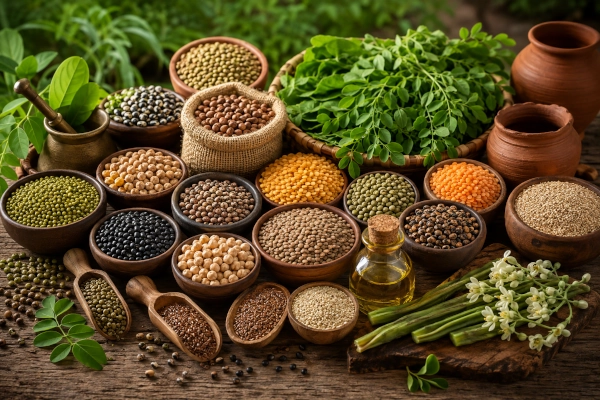
Horse Gram in Ayurveda: Kulattha, the Ancient Pulse of Strength, Warmth and Deep Cleansing

The botanical identity of horse gram is Macrotyloma uniflorum, also historically recorded under Dolichos biflorus. It belongs to the legume family and grows well in dry, difficult conditions. This hardy nature reflects its food character. It is dense in strength, warming in action, and suitable for people who need energy, lightness and stimulation of sluggish digestion. Traditional communities used it especially in rainy and cold seasons, after heavy meals, in states of excess Kapha, and in food routines meant to reduce heaviness.

Categories