Defense

News , articles and essays on Indian Defense

First Made-in-India C-295 Takes Flight: A New Chapter in India’s Defence Aviation Industry

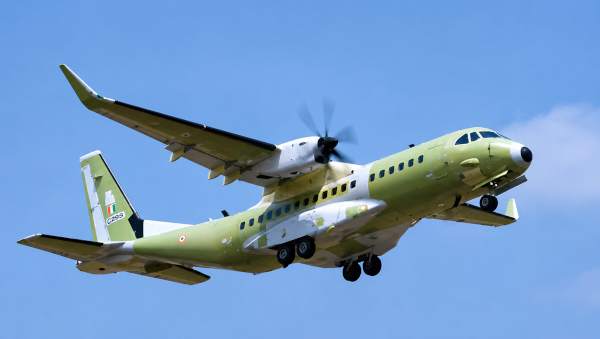
The C-295 programme is not just an aircraft delivery project. It is a shift in India’s defence manufacturing model. For decades, India depended heavily on foreign suppliers for military aircraft platforms. The Vadodara line now shows that India is moving from simple assembly and component supply toward full-scale aircraft manufacturing, testing, integration and delivery.
Night Warfare in the Ramayana: Fighting Through Darkness, Fear and Confusion

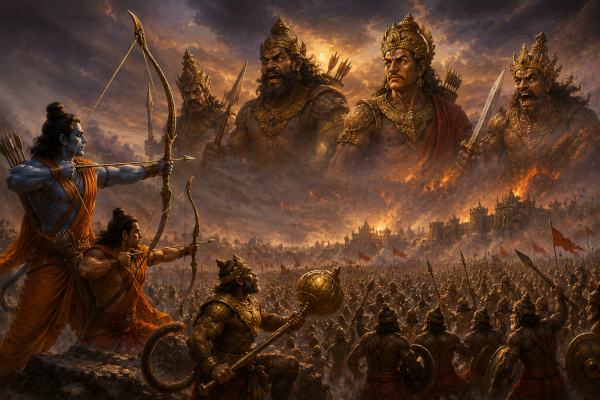
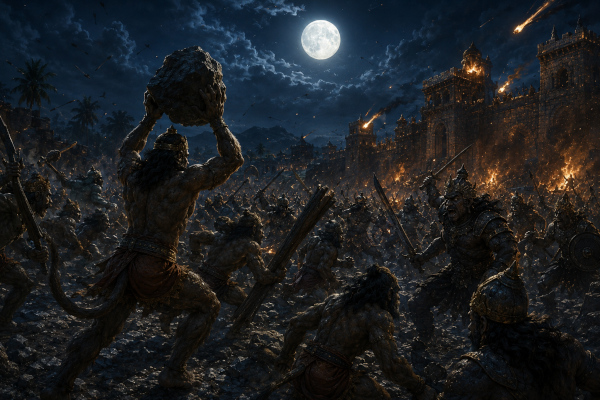
Command and control become critical at night. A commander must know where his troops are, where the enemy is moving and where the objective lies. In darkness, a small error in direction can break formation. A delayed message can isolate a unit. A loud rumour can spread fear. Rama’s campaign shows the importance of leadership that keeps the army focused even when the battlefield becomes unclear. Night rewards armies that move with purpose and punish armies that fight as scattered individuals.

Peacekeeper-Agniveg: Indian Army Gets Indigenous Kamikaze Drones for Long-Range Precision Strike

Kamikaze drones, also known as loitering munitions or suicide drones, have changed modern warfare across the world. They combine the eyes of a drone with the destructive effect of a precision munition. A conventional drone observes and returns. A kamikaze drone searches, tracks and strikes the target by destroying itself on impact. This gives commanders a flexible weapon for time-sensitive targets, mobile assets, radar sites, logistics nodes and command positions.

Indian Navy Recovers Unexploded Missile Warhead from Merchant Tanker off Kochi

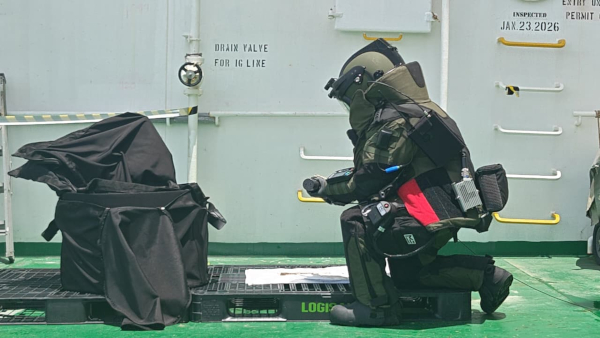
MT Olympic Life is a Marshall Islands-flagged crude oil tanker that was sailing from Fujairah in the UAE to Kochi. The tanker reported an explosion in its hull while it was off the coast of Oman on 26 May 2026. The vessel later reported the presence of unexploded ordnance as it continued its movement towards Kochi. The ship did not have any Indian nationals onboard, but the Indian Navy responded because the situation carried serious maritime safety risks.

Targeting Enemy Commanders in the Ramayana: Breaking the Head of the War Machine

A battlefield commander acts as the nervous centre of a formation. He reads the ground, directs movement, commits reserves, controls retreat and inspires soldiers during pressure. When that figure disappears, the unit loses its voice. Orders become unclear. Local officers hesitate. Soldiers begin to think about survival instead of victory. The Ramayana captures this reality through Prahasta’s fall. His death turns an organised advance into disorder, because the army loses the man who holds its immediate purpose together.

K-15 Sagarika and INS Aridhaman: India’s Short-Range Undersea Nuclear Spear

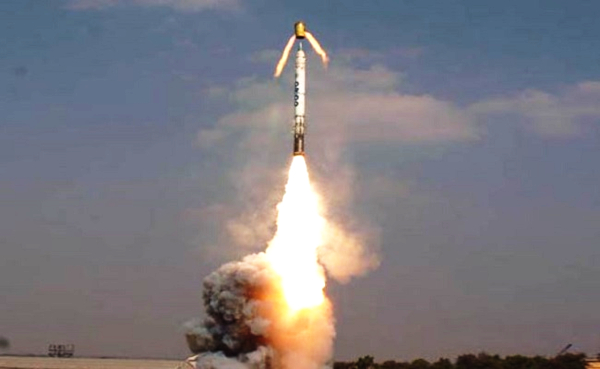
The K-15 is also known as Sagarika, B-05 or PJ-08. It belongs to India’s K-series family of underwater-launched missiles. It was developed by DRDO as part of the long effort to complete India’s nuclear triad: land-based missiles, air-delivered weapons and sea-based missiles. The land and air legs give India visible deterrence. The sea leg gives India hidden deterrence. A submarine carrying ballistic missiles can remain concealed beneath the ocean, making it harder for an enemy to destroy India’s retaliatory capability in a first strike.

SURGE Drone Jammer Gun: Armory’s Indigenous Answer to the Low-Sky Threat

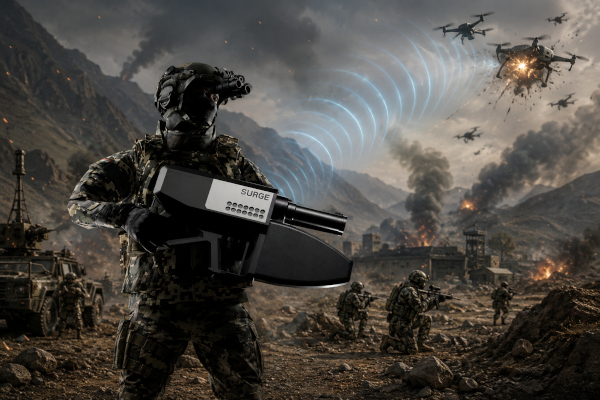
The strength of SURGE lies in its modular design. Armory has presented the system in handheld, tripod and vehicle-mounted forms. This gives commanders flexibility. A handheld or manpack version can move with soldiers in difficult terrain. A tripod version can protect gates, checkpoints, camps and perimeters. A vehicle-mounted version can move with convoys and patrol columns. This modular approach is important for India because drone threats appear across deserts, mountains, plains, coastal zones, cities and border belts.

Zojila Tunnel Breakthrough: India’s Himalayan Lifeline to Ladakh Takes Shape

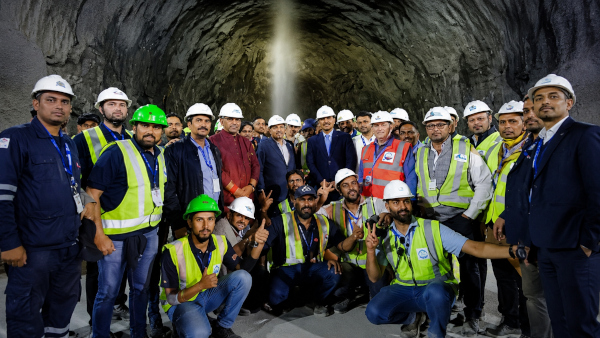
The main Zojila Tunnel is about 13.153 km long and runs between Baltal near Sonamarg in Jammu and Kashmir and Meenamarg in the Drass sector of Ladakh. It lies on the vital Srinagar–Kargil–Leh axis, the road that links the Kashmir Valley with Ladakh. NHIDCL lists the Zojila Tunnel Project on NH-01 as an ongoing Sonamarg–Kargil project involving a bi-directional tunnel across Zojila Pass in the Union Territories of Jammu & Kashmir and Ladakh.

India’s Navy Gets Indigenous GNSS Jammers in ₹449 Crore Defence Push

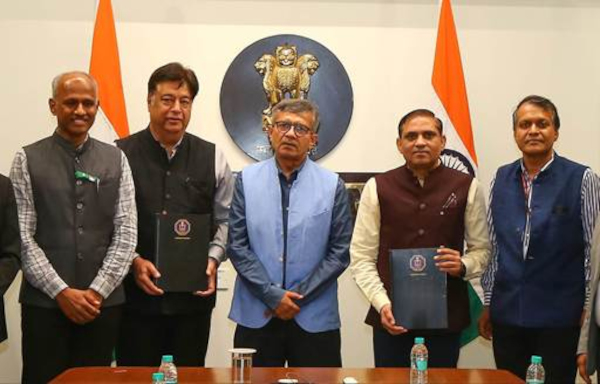
The new jammers are meant to protect Indian Navy warships in a maritime battlespace where satellite navigation, precision weapons, drones, unmanned platforms and networked sensors are becoming central to modern combat. Global Navigation Satellite Systems are used for positioning, timing, navigation and target coordination. In a high-threat environment, an adversary’s dependence on such signals becomes a point of vulnerability. The ECGNSS jammers are designed to degrade hostile satellite signal acquisition and tracking, while also supporting spoofing or deceptive jamming against enemy receivers.

Leadership Discipline in the Ramayana: Rama’s Rebuke to Sugriva and the Military Value of Command Control

Rama’s rebuke gives the episode its military meaning. He tells Sugriva that such rash conduct does not suit a king. This is a lesson in command responsibility. A ruler carries more than his own life into battle. He carries the morale of his soldiers, the stability of alliances, the rhythm of the campaign and the confidence of the command system. A commander’s personal bravery must serve the army’s mission. When a leader acts alone from impulse, the entire force may be forced to react to his decision.

Categories