Defense

News , articles and essays on Indian Defense

HAL Penalises GE Aerospace As Engine Delays Stall Tejas MK-1A Deliveries

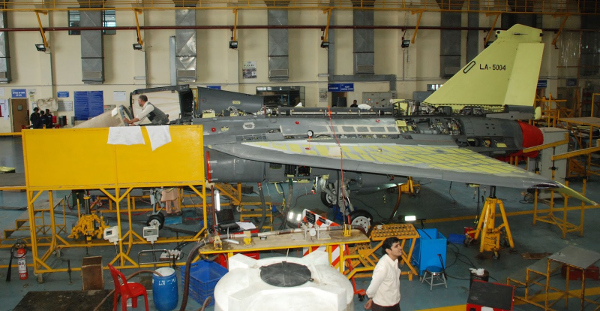
What has changed now is HAL’s response. Instead of treating the delay as a generic supply-chain inconvenience, the company has begun imposing liquidated damages or penalty clauses on GE for each delayed engine, according to multiple reports. That signals a harder contractual line from the Indian side and reflects growing frustration within the defence establishment over slippages in a programme that is central to both IAF force regeneration and the wider Aatmanirbhar Bharat aerospace narrative.

India’s Defence Export Story Is Changing Shape with Make in India

For France and United States’s markets, India is often not exporting complete front-line weapon platforms. Instead, Indian companies are increasingly embedded in global aerospace and defence supply chains, supplying fuselages, empennages, aerostructures, electronics, precision parts and specialist subsystems to global OEMs. That is a different export model, but an equally important one.

INS Aridhaman And The Quiet Strengthening Of India’s Sea-based Nuclear Deterrent

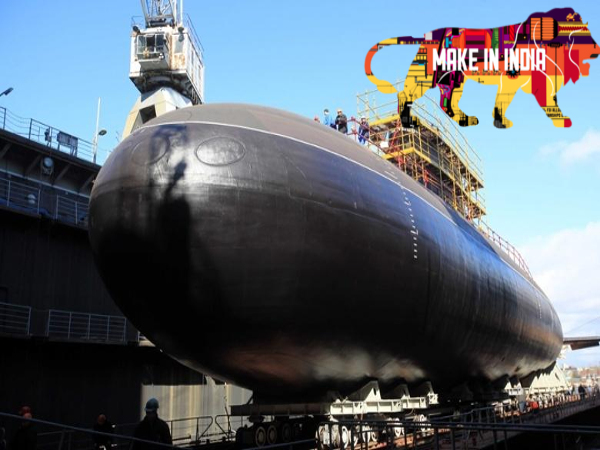
In practical terms, that means India must be able to absorb a first strike and still retain the capacity to respond. Submarines are the most survivable leg of that triad because, unlike aircraft on bases or missiles in known locations, an SSBN at sea is difficult to detect, track, and target. That is why the expansion of the Arihant-class fleet is strategically consequential even when much of the programme remains officially opaque.

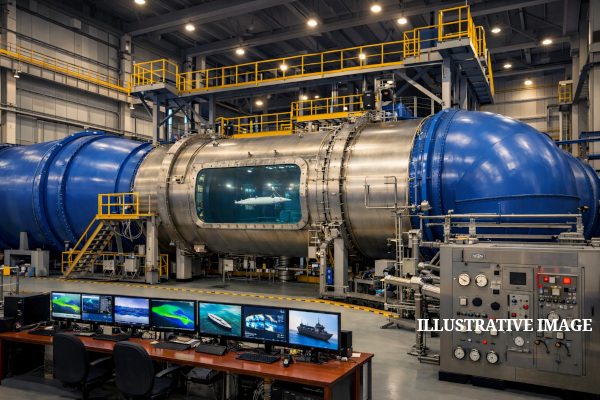
Rajnath Singh Lays Foundation Stone for Large Cavitation Tunnel at NSTL, Visakhapatnam

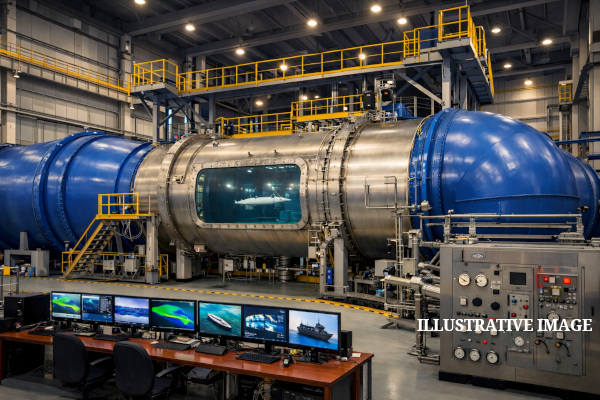
Addressing scientists and researchers at NSTL, Singh said the new facility would allow India to design, develop and test critical naval equipment, systems and sub-systems within the country, reducing dependence on overseas testing infrastructure. He described the LCT as more than just a new installation, calling it an enabling backbone for advances in propulsion, noise reduction and stealth technologies that are central to modern naval engineering.

Swayam Raksha Kavach: India’s Indigenous Electronic Shield for the Tejas Mk1A

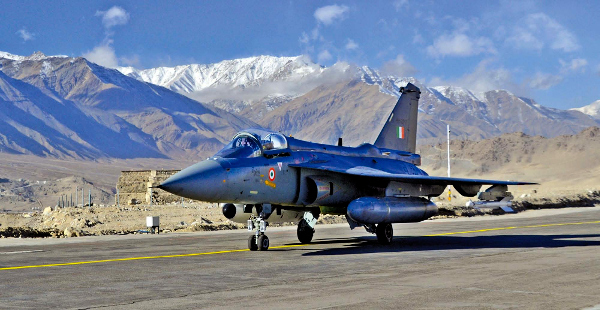
A useful way to think about Swayam Raksha Kavach is as part of India’s effort to reduce dependence on imported “black-box” avionics and survivability electronics. In fighter procurement, imported EW suites are often among the most tightly controlled technologies, with source code, mission data flexibility, reprogramming rights, emitter library control and future upgrade freedom all becoming strategic issues.

India, Mozambique deepen defence ties at fifth Joint Defence Working Group meeting in Maputo

The Indian delegation was led by Amitabh Prasad, Joint Secretary in the Ministry of Defence, and included senior representatives from the Ministry of Defence, the Indian Armed Forces and the Indian Coast Guard. India’s High Commissioner to Mozambique, Robert Shetkintong, and the Defence Attaché also participated in the meeting. The Mozambican side was led by Casimiro Augusto Muieo, Permanent Secretary for Defence.