Defense

News , articles and essays on Indian Defense

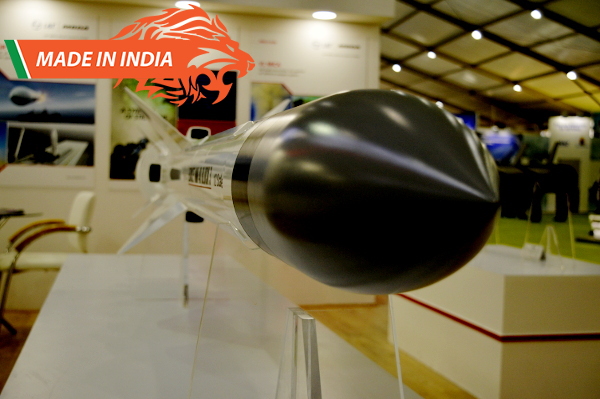
Bhargavastra: India’s Indigenous Hard-Kill Answer to the Drone-Swarm Age

The system is described as a two-layer counter-drone shield. The first layer uses unguided micro-rockets designed to defeat drone swarms through a lethal blast radius. Reports say these rockets can neutralise drone swarms within a lethal radius of around 20 metres. The second layer uses guided micro-missiles for more precise interception of selected targets, especially individual drones or higher-value aerial threats requiring pinpoint engagement.

From Akshauhini to Integrated Battle Groups: Army Organisation and Battlefield Structure in the Mahabharata

The Mahabharata repeatedly presents armies as mixed forces, and Adi Parva gives a precise mathematical structure for the Akshauhini, beginning with one chariot, one elephant, three horses and five foot soldiers as one Patti. This creates a battlefield system where mobility, shock power, speed and ground-holding capacity move together as one fighting organism.

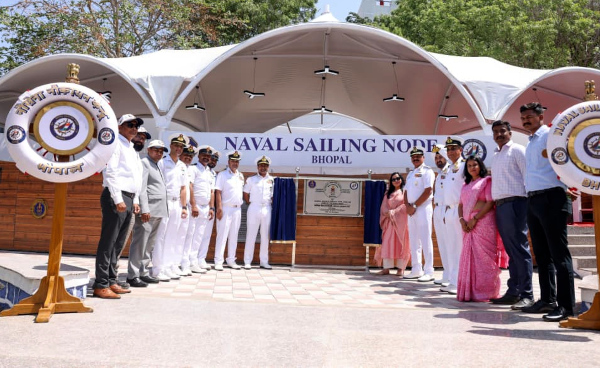
Indian Navy Opens Premier Naval Sailing Node at Bhopal’s Bhojtal

The new sailing node is designed as a state-of-the-art training facility for the Indian Navy Sailing Team, as well as the Navy’s rowing, canoeing and kayaking teams. It will also be used by the National Cadet Corps, giving young cadets greater exposure to disciplined water-sports training and naval-style adventure activities.

Operation Sindoor and India’s Shift to Non-Contact, Multi-Domain Warfare

Operation Sindoor was launched in May 2025 after the Pahalgam terror attack, with Indian forces carrying out precision strikes against terror infrastructure in Pakistan and Pakistan-occupied Kashmir. In later assessments, the operation has increasingly been presented not merely as a punitive military response, but as a demonstration of India’s evolving warfighting model — one that combines air power, intelligence, drones, electronic systems, information dominance and joint operational planning.

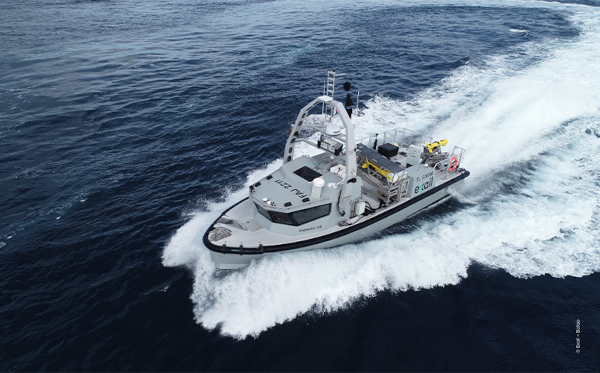
L&T–Exail Unmanned Mine-Countermeasure Suite: Why India’s Next MCMV Programme Could Change Naval Mine Warfare

The Indian Navy’s separate RFI for unmanned MCM suites gives a clearer picture of the kind of equipment being sought. It states that the Ministry of Defence intended to procure 12 unmanned MCM suites comprising autonomous surface vessels, heavyweight autonomous underwater vehicles and remotely operated vehicles for use onboard Indian naval MCMVs. It also places the procurement within Indian acquisition categories under Defence Acquisition Procedure 2020, including Buy Indian-IDDM, Buy Indian and Buy & Make Indian.

GMR Aero Technic–Boeing Pact Puts Hyderabad on India’s Defence MRO Map

The P-8I is the Indian Navy’s variant of Boeing’s P-8 maritime patrol aircraft and is designed for long-range maritime reconnaissance, anti-submarine warfare, anti-surface warfare and intelligence, surveillance and reconnaissance missions. The Indian Navy describes the aircraft as a multi-role Long Range Maritime Reconnaissance Anti-Submarine Warfare platform that can be equipped with air-to-ship missiles and torpedoes. It also supports maritime surveillance, strike roles, electronic warfare missions, search and rescue, targeting support and time-critical surveillance in the Indian Ocean Region.

UP Police Inducts 2,000 Made-in-India M72 Carbines from SSS Defence

The delivery is being described as part of a broader police modernisation push aimed at replacing older weapons with lighter, more compact and more responsive firearms suited for contemporary security duties. Reports say the order was originally awarded in March 2025, and the handover of 2,000 units has now been completed.

Rajnath Singh’s Vietnam–South Korea Visit Signals India’s Sharper Indo-Pacific Defence Push

Defence Minister Rajnath Singh is expected to undertake a two-nation visit to Vietnam and South Korea from May 18, in a move that underlines India’s growing focus on defence partnerships across the Indo-Pacific. The visit comes soon after high-level engagements with both Hanoi and Seoul, and is expected to centre on maritime security, defence-industrial cooperation, advanced military technology and regional strategic coordination.

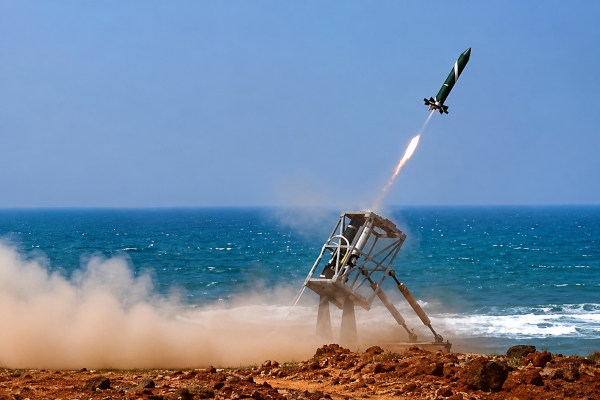
Pralay Missile System: India’s Home-Grown Quasi-Ballistic Weapon

Its quasi-ballistic profile makes it more dangerous than a simple ballistic projectile. A conventional ballistic missile follows a relatively predictable path, but a quasi-ballistic missile can fly on a depressed or manoeuvrable trajectory, making interception more difficult. This is especially relevant in modern battlefields where air defence systems, missile shields and radar networks are becoming more advanced. Pralay is designed not only to reach the target, but to complicate the enemy’s ability to detect, track and intercept it.