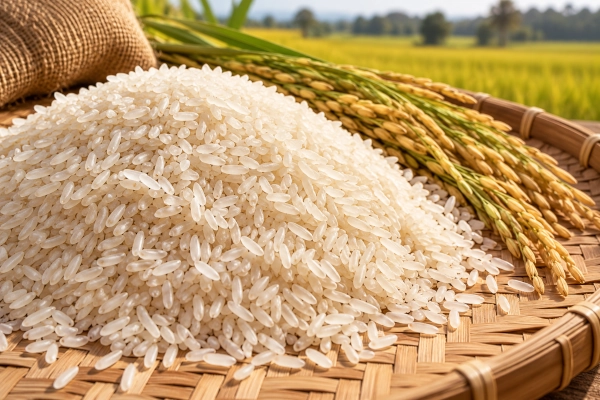
In the fertile plains of eastern Maharashtra, the Bhandara district has preserved a remarkable tradition of rice cultivation for generations. Among its most distinctive indigenous varieties is Bhandara Chinoor Rice (भंडारा चिन्नोर तांदूळ), an aromatic rice celebrated for its natural fragrance, delicate texture and traditional culinary importance. Cultivated in the agricultural landscape of Vidarbha, Chinoor represents an important part of Maharashtra’s indigenous rice heritage.
Bhandara is popularly known as the “Rice Bowl of Maharashtra”, owing to its extensive paddy cultivation and established rice-processing industry. The district supports several traditional aromatic varieties, including Chinoor, Dubhraj and Kalikammod. Among these, Chinoor has developed a distinct reputation for its pleasing aroma, attractive grains and cooking qualities.
Unlike the long-grained Basmati varieties associated with northern India, Bhandara Chinoor belongs to the traditional non-Basmati aromatic rice group. Its grains possess a characteristic fragrance, mild sweetness and tender texture after cooking. These qualities have helped preserve its popularity among households that value indigenous rice varieties for traditional meals and special occasions.
Bhandara Chinoor Rice received Geographical Indication (GI) recognition on 1 July 2023, establishing its protected geographical identity under Indian law. The registration recognised the rice’s association with Maharashtra’s Bhandara district and acknowledged the contribution of local farming communities to preserving its distinctive agricultural heritage.
Historical Origins and Traditional Heritage of Bhandara Chinoor Rice
The history of Bhandara Chinoor Rice is closely connected with the agricultural traditions of the Wainganga River basin in eastern Maharashtra. The region has supported rice cultivation for centuries, aided by seasonal monsoon rainfall, fertile agricultural lands and an extensive network of local water resources.
Historical accounts identify Chinoor, also written as Chinnor or Chinnur, as one of the traditional aromatic rice varieties associated with Bhandara. The variety has been cultivated by farming families for generations, with its fragrance and grain quality contributing to its reputation as a premium local rice.
References to Chinoor appear in older agricultural literature examining India’s indigenous rice varieties. Historical accounts associate the variety with Bhandara during the nineteenth century, although the precise date of its origin remains undocumented.
The significance of Chinoor lies in its preservation through traditional agricultural practices. Farmers maintained the variety by selecting suitable seeds from previous harvests, allowing its characteristic fragrance, grain appearance and cooking properties to survive across generations.
Traditionally, aromatic rice varieties often occupied a special place in household consumption. Families valued them for festive occasions, celebrations and meals where rice quality mattered more than maximum agricultural productivity.
Bhandara Chinoor emerged from this agricultural environment as a recognised regional variety. Its survival demonstrates the important role of farmers in maintaining indigenous crop diversity despite the increasing cultivation of modern commercial rice.
The Origin of the Name Chinoor
The name Chinoor is traditionally associated with the physical and aromatic qualities of the rice. Regional explanations connect the word with characteristics such as smoothness, pointed grain shape and fragrance.
One commonly cited interpretation derives Chinoor from expressions describing rice with an appealing surface texture, a pointed grain and a distinctive aroma. The interpretation reflects the importance traditionally placed on appearance and fragrance when identifying premium rice varieties.
The rice is also known locally as Chinnor, Chinnur or Chinnaur, reflecting variations in pronunciation and regional usage.
The Geographical Indications Registry uses Bhandara Chinoor Rice as the official registered name. This designation distinguishes the Maharashtra product from similarly named rice varieties cultivated in neighbouring regions.
Although the traditional explanation of the name is widely repeated, its precise linguistic origin has not been conclusively established. The established geographical identity of the variety rests on its cultivation history and characteristic qualities rather than a particular interpretation of its name.
Geographical Origin and Cultivation Areas
Bhandara Chinoor Rice is associated with Bhandara district in the Vidarbha region of Maharashtra, where paddy cultivation forms an important part of the rural economy.
The district lies within the Wainganga River basin and shares geographical and agricultural connections with neighbouring parts of eastern Maharashtra and Madhya Pradesh. Its landscape includes fertile agricultural plains, seasonal watercourses, reservoirs and extensive paddy-growing areas.
Chinoor cultivation is associated with several talukas, including Bhandara, Pauni, Tumsar, Mohadi, Sakoli, Lakhani and Lakhandur. These areas form part of the district’s established rice-production landscape.
The Wainganga River and its tributaries contribute to the agricultural environment. Seasonal rainfall supports kharif paddy cultivation, while irrigation infrastructure helps farmers manage water availability during the growing season.
The district’s agricultural soils, climatic conditions and traditional farming practices have supported the development and preservation of indigenous aromatic rice varieties.
The Government of Maharashtra formally recognises rice as one of Bhandara’s products under the One District One Product initiative. The district administration identifies Chinoor, Dubhraj and Kalikammod among the aromatic rice varieties associated with the region.
Although the GI Registry records Maharashtra as the geographical area, the specific historical and agricultural identity of Bhandara Chinoor is centred on Bhandara district.
Unique Characteristics of Bhandara Chinoor Rice
Bhandara Chinoor belongs to the species Oryza sativa L. and is recognised for its natural fragrance, distinctive grain structure and desirable cooking properties.
The rice generally possesses relatively small to medium-sized grains with a slender, slightly pointed appearance. The milled grains are white, while the cooked rice develops a tender texture and characteristic aroma.
Its most celebrated quality is its natural fragrance. Aromatic rice varieties derive much of their distinctive scent from volatile compounds, particularly 2-acetyl-1-pyrroline, commonly known as 2AP. This compound contributes to the characteristic fragrance associated with many traditional scented rice varieties.
Bhandara Chinoor is also appreciated for its delicate flavour and pleasant mouthfeel. The cooked rice can retain a desirable grain structure while developing the softness associated with premium traditional rice.
Its appearance differs from Basmati, which is primarily recognised for long, slender grains and considerable elongation during cooking. Chinoor represents a different category of aromatic rice in which fragrance, flavour and traditional culinary suitability contribute strongly to its value.
The combination of these characteristics gives Bhandara Chinoor a distinct market identity. Its geographical association and traditional cultivation further distinguish it within India’s diverse collection of indigenous aromatic rice varieties.
Traditional Cultivation and Agricultural Practices
Farmers cultivate Bhandara Chinoor primarily during the kharif season, when the southwest monsoon supplies much of the water required for paddy production.
Traditional cultivation involves field preparation, nursery development, transplantation or other locally suitable establishment methods, seasonal crop management and harvesting after grain maturity. Water availability remains especially important because paddy cultivation forms a major component of Bhandara’s agricultural economy.
Farmers have historically preserved Chinoor through seed selection. Maintaining suitable planting material helps conserve its characteristic aroma, grain appearance and cooking qualities.
Traditional aromatic rice varieties often face competition from modern cultivars developed for higher yields, shorter crop duration and greater uniformity. Their continued cultivation therefore depends partly on consumer demand for distinctive grain quality.
The Bhandara district administration has introduced agricultural development measures through its One District One Product programme. During 2022–23, more than 100 farmer field schools were organised through agricultural departments and associated agencies to demonstrate improved cultivation practices.
The district also conducted rice value-chain workshops and training programmes involving farmer groups. These initiatives covered agricultural techniques, crop management and opportunities to improve rice production and marketing.
Although these programmes support the district’s wider rice sector rather than exclusively targeting Chinoor, they provide an institutional framework that can benefit producers of traditional aromatic rice.
Improved seed management, appropriate cultivation practices and better post-harvest handling can strengthen Chinoor production while preserving the qualities responsible for its reputation.
Culinary Importance and Traditional Uses
Bhandara Chinoor occupies a distinctive place in the culinary traditions of eastern Maharashtra, where rice remains a staple food and an important component of festive meals.
Its natural fragrance makes it particularly suitable for preparations in which the aroma and flavour of rice remain prominent. Plain steamed rice allows the variety’s characteristic qualities to be appreciated without elaborate seasoning.
Chinoor can also be used in traditional pulao, khichdi, sweet rice preparations and kheer. Its delicate texture and pleasant flavour make it suitable for dishes that require naturally aromatic grains.
In Vidarbha, rice is commonly consumed alongside traditional lentil preparations, vegetables and regional accompaniments. Aromatic rice varieties add a distinctive character to these meals.
The association of Chinoor with household food traditions has helped maintain its reputation across generations. Families familiar with the variety continue to value it for qualities that differ from those of standard commercially cultivated rice.
This relationship between traditional cuisine and agricultural production contributes to the conservation of indigenous varieties. Consumer preference for distinctive flavour and fragrance encourages farmers to maintain crops whose value extends beyond yield alone.
Bhandara Chinoor and the Rice Heritage of Vidarbha
Eastern Maharashtra possesses a longstanding tradition of rice cultivation, particularly in districts where monsoon rainfall and local water resources favour paddy agriculture.
Bhandara occupies a prominent position within this agricultural landscape. The district’s identity as the Rice Bowl of Maharashtra reflects both its paddy production and its established network of rice-processing enterprises.
Traditional aromatic varieties such as Chinoor demonstrate the diversity within this agricultural system. Farmers have maintained different types of rice to meet household preferences, local market requirements and agricultural conditions.
The wider Vidarbha region also shares agricultural connections with adjoining districts of Madhya Pradesh. These connections have contributed to the movement of agricultural practices, crop varieties and food traditions across regional boundaries.
Bhandara Chinoor represents a particularly valuable part of this heritage because its reputation remains closely associated with a recognised geographical origin.
Its GI registration helps distinguish the traditional variety from ordinary rice marketed without a verified regional identity. The recognition also draws attention to the contributions of local farmers in conserving varieties that form part of Maharashtra’s agricultural biodiversity.
Geographical Indication Recognition of Bhandara Chinoor Rice
Bhandara Chinoor Rice received formal GI registration under the Geographical Indications of Goods (Registration and Protection) Act, 1999.
The application was submitted by Bhandara Chinoor Dhan Utpadak Sangh, a producer organisation based in Asgaon, Pauni taluka, Bhandara district, Maharashtra. The organisation sought recognition of the variety’s established geographical identity and distinctive agricultural characteristics.
The application was filed on 1 May 2020, under Application No. 688.
Following scrutiny and examination, the Geographical Indications Registry published the application in Journal No. 158 on 15 July 2022. The publication formed part of the statutory process for considering and registering geographical indications in India.
The GI Registry subsequently issued Certificate No. 485 on 1 July 2023, formally registering Bhandara Chinoor Rice under Class 31.
The registration established legal protection for the geographical indication and recognised the association between the product and its region of origin. It also created opportunities for eligible producers to seek authorised-user registration and market authentic Bhandara Chinoor under its protected identity.
For local farmers, GI recognition provides a foundation for distinguishing traditional Chinoor from other aromatic rice varieties sold in agricultural markets. Its commercial benefits depend on maintaining authenticity, quality standards and effective market access.
GI Tag Journey of Bhandara Chinoor Rice
The journey of Bhandara Chinoor Rice towards Geographical Indication recognition reflects the efforts of local farmers, producer organisations and agricultural institutions to preserve the variety’s identity and strengthen its commercial recognition.
- Traditional Agricultural Heritage: Farmers in Bhandara district preserved Chinoor through generations of cultivation and seed selection. Its fragrance, grain characteristics and culinary reputation established its identity as a traditional aromatic rice of Vidarbha.
- 1 May 2020 – GI Application Filed: Bhandara Chinoor Dhan Utpadak Sangh submitted the application under Application No. 688.
- 22 May 2020 – Formality Check Report: The Geographical Indications Registry issued its initial formality examination report.
- 5 February 2021 – Applicant’s Response: The producer organisation submitted its reply to the formality check report.
- 9 June 2022 – Examination Report: The GI Registry issued its examination report assessing the application.
- 14 July 2022 – Response to Examination: The applicant submitted its reply to the examination report.
- 15 July 2022 – Publication in GI Journal: Bhandara Chinoor Rice appeared in Geographical Indications Journal No. 158 as part of the statutory registration process.
- 30 March 2023 – Quality Analysis Report: The GI Registry’s application record includes a quality analysis report concerning the rice.
- 11 April 2023 – Amendment Request: The registry recorded a request for amendments during the final stages of the application process.
- 1 May 2023 – Amended Application Submitted: The applicant submitted amended registration documentation.
- 1 July 2023 – GI Certificate Issued: The Geographical Indications Registry issued Certificate No. 485, formally registering Bhandara Chinoor Rice as a Geographical Indication.
- 30 April 2030 – Registration Validity: The current registration remains valid until this date, subject to renewal under India’s geographical indications legislation.
GI Details at a Glance
- Geographical Indication: Bhandara Chinoor Rice
- State: Maharashtra
- Product: Agricultural
- Class: 31
- Application Number: 688
- Date of Filing: 1 May 2020
- GI Journal: No. 158
- Journal Availability Date: 15 July 2022
- Certificate Number: 485
- GI Certificate Date: 1 July 2023
- Registered Proprietor: Bhandara Chinoor Dhan Utpadak Sangh, Asgaon, Pauni taluka, Bhandara district, Maharashtra
- Geographical Area: Maharashtra, with traditional cultivation centred on Bhandara district
- Registration Valid Until: 30 April 2030
Bhandara Chinoor and Balaghat Chinnor: Two Distinct GI Identities
An important aspect of Bhandara Chinoor’s geographical recognition is its relationship with Balaghat Chinnor Rice, a traditional aromatic variety associated with neighbouring Madhya Pradesh.
Bhandara district in Maharashtra and Balaghat district in Madhya Pradesh belong to adjoining agricultural regions. Both areas possess longstanding paddy-growing traditions and share geographical connections through the wider Wainganga River basin.
Chinnor-type aromatic rice has historically been cultivated across parts of this landscape. Similarities in grain appearance, fragrance and local naming traditions reflect the agricultural connections between the two regions.
However, Bhandara Chinoor Rice and Balaghat Chinnor Rice have separate Geographical Indication registrations.
Balaghat Chinnor represents the rice-growing heritage of Balaghat district in Madhya Pradesh, while Bhandara Chinoor represents the corresponding agricultural tradition of Bhandara in Maharashtra.
Balaghat Chinnor received GI recognition in 2021, preceding the registration of Bhandara Chinoor in July 2023.
The existence of separate GI registrations is particularly significant because geographical indications protect products associated with recognised regions and documented characteristics. Similarity in variety names does not automatically establish that products from different geographical areas share the same registered identity.
For consumers and agricultural traders, accurate geographical identification is therefore important. Rice marketed under either GI name should comply with the applicable geographical origin and product specifications.
The two registrations demonstrate how neighbouring agricultural regions can possess closely related traditional products while maintaining separate legally recognised geographical identities.
Bhandara Chinoor and the One District One Product Initiative
Bhandara’s rice sector has received institutional support through the Government of India’s One District One Product (ODOP) initiative, which seeks to strengthen district-level economic activity by promoting products associated with local agricultural and industrial capabilities.
The Bhandara district administration identifies rice and mineral ores as its ODOP products. Rice receives particular attention because of the district’s established production base and network of processing enterprises.
The district has developed an action plan covering improved agricultural practices, productivity, processing infrastructure, marketing and market access.
During 2022–23, the district organised more than 100 farmer field schools. These programmes introduced growers to cultivation techniques, nursery management and other agricultural practices intended to improve farm performance.
Ten rice value-chain development workshops were also organised. In Sakoli taluka, agricultural training conducted through Krishi Vigyan Kendra and associated agencies involved 380 farmers from 15 farmer groups.
The district administration has also supported efforts to strengthen rice processing. Official ODOP documentation refers to a common facility centre associated with a cluster of approximately 243 rice mills, predominantly micro-scale enterprises.
These initiatives address important parts of the agricultural value chain, including processing, packaging, quality assurance, food safety and marketing.
For Bhandara Chinoor, such infrastructure offers opportunities to develop more consistent product quality and improve access to organised markets. Although the district’s ODOP measures serve the broader rice sector, producers of GI-registered Chinoor can benefit from stronger agricultural and processing capabilities.
Market Development and Agricultural Promotion
Bhandara’s agricultural development initiatives have included exhibitions, buyer-seller interactions and export-awareness programmes designed to strengthen connections between farmers and markets.
On 26 September 2022, the district conducted an export conclave under the ODOP initiative. More than 100 participants attended the programme, which provided information on export procedures, agricultural marketing and related commercial requirements.
The district subsequently organised Krishi Mahotsav from 17 to 21 March 2023. The exhibition showcased locally produced rice varieties and rice-based products, offering consumers opportunities to purchase agricultural produce directly.
Buyer-seller meetings were also organised to connect producers, farmer groups and commercial buyers. These initiatives sought to improve market access and encourage closer relationships between agricultural producers and enterprises.
The district administration has identified branding, packaging and online marketing among its priorities for the rice sector. It has also explored cooperation with research and management institutions to strengthen product development.
Such measures are important for GI-tagged products because geographical recognition creates commercial opportunities only when producers can communicate product authenticity and maintain consistent quality.
For Bhandara Chinoor, organised marketing can help translate its traditional reputation into a stronger commercial identity. Better packaging, grading and traceability can support consumer confidence while preserving its association with Bhandara.
Preserving an Indigenous Aromatic Rice Variety
The conservation of Bhandara Chinoor Rice is important for maintaining the agricultural biodiversity of Maharashtra’s Vidarbha region. Traditional rice varieties represent a valuable component of India’s crop genetic resources, often possessing distinctive characteristics developed through generations of cultivation and farmer selection.
Chinoor’s continued cultivation helps preserve qualities that may receive less emphasis in modern high-yielding varieties. These include its fragrance, grain structure, cooking characteristics and adaptation to traditional agricultural practices.
Seed conservation remains central to this process. Farmers must maintain suitable planting material to preserve the variety’s identity and prevent unintended mixing with other rice cultivars.
Scientific agricultural support can complement traditional knowledge through seed-quality assessment, crop management and studies of grain characteristics. Such efforts can help producers maintain the attributes that distinguish Chinoor while addressing practical cultivation challenges.
The availability of authentic seed material also becomes increasingly important as GI recognition expands market opportunities. Greater demand can encourage cultivation, but maintaining product identity requires consistent agricultural practices and reliable verification.
Preserving Bhandara Chinoor therefore supports both biodiversity conservation and the continuation of traditional agricultural knowledge within local farming communities.
Economic Importance and Opportunities for Farmers
Bhandara Chinoor Rice offers opportunities for farmers interested in specialised markets for indigenous aromatic agricultural products.
Its distinctive fragrance, recognised geographical origin and traditional reputation provide a foundation for product differentiation. Rather than competing exclusively on price with ordinary rice, Chinoor can develop a market identity based on authenticity and quality.
The economic potential extends beyond paddy cultivation. Cleaning, milling, grading, packaging and distribution can create additional value within the district’s agricultural economy.
Bhandara’s existing network of rice mills provides an advantage in developing local processing capabilities. Improvements in quality assurance, storage and product presentation can help producers reach organised retail markets.
Farmer producer organisations and cooperatives can strengthen these opportunities by coordinating production and marketing. Collective participation can help smaller farmers access processing facilities, establish commercial relationships and improve their negotiating position.
GI registration also provides a legal framework for protecting the recognised geographical name. Authorised-user registration enables eligible producers to participate formally in the protected indication, strengthening product traceability and market confidence.
Commercial development must remain connected to the farmers responsible for preserving the variety. Transparent sourcing, fair procurement practices and effective producer participation can help ensure that the value associated with Bhandara Chinoor benefits local agricultural communities.
Bhandara Chinoor Rice and Maharashtra’s GI Agricultural Heritage
Maharashtra possesses a diverse collection of agricultural products recognised under India’s Geographical Indications system. These products reflect the state’s varied environments, traditional farming practices and distinctive regional specialisations.
Bhandara Chinoor Rice forms part of this heritage alongside GI-registered rice varieties such as Ambemohar Rice and Ajara Ghansal Rice.
Each variety represents a different agricultural landscape within Maharashtra. Ambemohar is associated with the traditional aromatic rice-growing regions around Pune, while Ajara Ghansal reflects the paddy cultivation heritage of Kolhapur near the Western Ghats.
Bhandara Chinoor represents eastern Maharashtra’s aromatic rice traditions, particularly those associated with the Wainganga basin and the agricultural communities of Vidarbha.
The registration of these varieties demonstrates that Maharashtra’s rice heritage extends beyond a single geographical region. Different farming communities have preserved varieties with distinctive fragrances, textures and culinary characteristics.
The GI system provides a framework for recognising these regional identities and protecting the traditional products associated with them.
For Bhandara, Chinoor adds a distinct geographical identity to an agricultural sector already recognised for substantial rice production. It strengthens the district’s position within Maharashtra’s traditional food heritage while providing opportunities for specialised product development.
Future Prospects for Bhandara Chinoor Rice
The future of Bhandara Chinoor Rice depends on preserving its indigenous characteristics while strengthening the agricultural and commercial systems that support its cultivation.
Improved seed conservation, scientific crop management and access to agricultural extension services can help farmers maintain the variety’s distinctive grain quality and fragrance.
The district’s ODOP initiatives provide a foundation for strengthening the wider rice value chain. Better processing facilities, packaging standards and market connections can support the development of premium regional rice products.
Greater consumer awareness offers another opportunity. India’s indigenous aromatic rice varieties are increasingly recognised for qualities that distinguish them from conventional commercial rice, including flavour, fragrance and geographical heritage.
Bhandara Chinoor’s legally recognised identity provides a basis for developing trustworthy regional branding. Effective quality control and traceable sourcing can help strengthen consumer confidence and protect the interests of local farmers.
The variety also offers opportunities for food-processing enterprises and rural businesses seeking to develop products based on distinctive regional agricultural resources.
Bhandara Chinoor Rice represents the enduring relationship between Vidarbha’s fertile agricultural landscape, traditional farming communities and Maharashtra’s aromatic rice heritage. Its GI recognition protects a distinctive geographical identity, while continued cultivation preserves generations of agricultural knowledge. With stronger farmer participation, scientific support and organised market development, Bhandara Chinoor can carry the fragrance and agricultural heritage of eastern Maharashtra to a wider national market.
References
- Geographical Indications Registry, Government of India — Bhandara Chinoor Rice, Application No. 688, Certificate No. 485, dated 1 July 2023. Official registration record, application history, journal publication and validity.
https://search.ipindia.gov.in/GIRPublicSearch/Application/Details/688 - District Administration, Bhandara, Government of Maharashtra — One District One Product: Bhandara. Official documentation covering rice cultivation, Chinoor and other aromatic varieties, agricultural development priorities and district-level marketing initiatives.
https://bhandara.gov.in/one-district-one-product/ - District Administration, Bhandara, Government of Maharashtra — ODOP Activities Undertaken in Bhandara. Details of farmer field schools, rice value-chain workshops, processing infrastructure, agricultural exhibitions and buyer-seller meetings.
https://bhandara.gov.in/one-district-one-product-bhandara/ - Office of the Controller General of Patents, Designs and Trade Marks, Government of India — State-wise Registered Geographical Indications of India. Official listing of Bhandara Chinoor Rice under Maharashtra.
https://ipindia.gov.in/writereaddata/Portal/Images/pdf/State_wise_Registered_GI_of_India_26_07_2024.pdf - National Portal of India, Government of India — One District One Product: Bhandara Chinoor Rice. Government recognition of Bhandara Chinoor as a GI-tagged agricultural product.
https://www.india.gov.in/
You may also like
-
Northeast India Records 1.51 Crore Domestic Tourist Visits in 2025 as Tourism Sector Grows 58%
-
India’s Pharmaceutical Exports Rise 4.9% to $16.14 Billion as European and Asian Markets Expand
-
Pratt & Whitney Signs Over $40 Million in Aerospace Supply Agreements with Indian Manufacturers
-
India Emerges as Global Leader in Green Hydrogen Offtake Commitments Exceeding 5.55 Lakh Tonnes Annually
-
India Post and UTI Mutual Fund Expand Partnership to Provide Doorstep KYC Verification Across India
