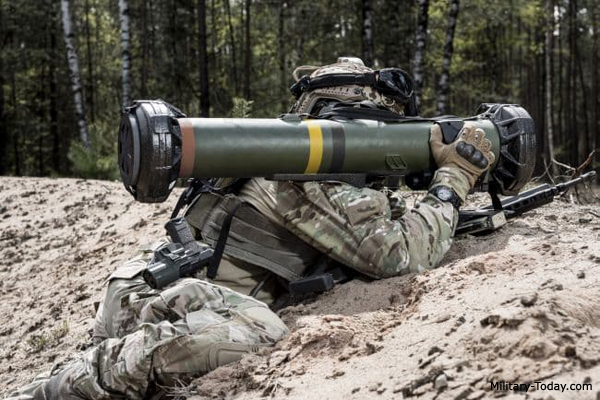
India has taken another significant step toward domestic production of advanced anti-tank guided weapons, with Bharat Dynamics Limited (BDL) confirming that localised production of Rafael’s Spike LR2 fifth-generation anti-tank guided missile is now being executed in India.
The development is disclosed in BDL’s newly released Annual Report for FY2025-26, where the Defence PSU says its strategic collaboration with Israel’s Rafael Advanced Defense Systems has progressed to local production of the Spike LR2. More importantly, BDL states that dedicated manufacturing lines have been commissioned for the programme, indicating that the partnership has advanced beyond the earlier agreement and technology-transfer stage toward an industrial production framework.
The latest milestone follows several years of cooperation between BDL and Rafael. At Aero India 2025, the companies advanced plans for a Technical Collaboration Agreement covering Indian manufacture of the Spike LR2. Rafael said at the time that the arrangement was intended to transfer manufacturing capabilities and critical technologies to BDL while meeting India’s indigenous-content requirements under the Make in India initiative.
The new disclosure therefore represents an important progression. Instead of merely planning future manufacture, BDL now describes itself as executing localised production, supported by dedicated infrastructure established for the missile programme. The annual report does not, however, disclose the present percentage of indigenous content, production numbers or a delivery schedule.
The Spike LR2 is a fifth-generation, electro-optically guided precision missile designed for employment from ground, vehicle, naval and airborne platforms. Rafael lists a range of up to 5.5 kilometres for the ground-launched system, while its earlier technical documentation gives an extended range of up to 10 kilometres when launched from helicopters. The missile itself weighs roughly 13 kg.
Rather than depending solely on GPS-based guidance, the Spike LR2 uses an advanced electro-optical seeker combining infrared and high-definition daylight sensors. Rafael says the system supports several engagement modes, including fire-and-forget, fire-and-observe and fire-to-target-coordinates, while its data link allows the operator to retain interaction with the weapon after launch. The missile is also designed to operate in GPS-jammed environments.
Its anti-armour configuration incorporates a tandem HEAT warhead, designed for heavily protected armoured targets, while a multipurpose warhead option broadens its application against other battlefield targets. The LR2 also retains substantial compatibility with the wider Spike family of launchers, allowing it to be integrated across infantry, armoured vehicle, helicopter and maritime configurations.
Local manufacturing is particularly important because BDL already serves as one of India’s principal missile-production and weapon-system integration companies. The Hyderabad-headquartered Defence PSU manufactures surface-to-air, air-to-air and anti-tank missiles as well as underwater weapons for India’s armed forces, and has increasingly used partnerships with foreign OEMs to absorb manufacturing technologies while building domestic supply chains.
The Spike LR2 programme fits directly into that strategy. Manufacturing the missile through BDL can progressively bring assembly, testing, subsystem production and supporting industrial processes into India while reducing reliance on complete imported rounds. The extent to which critical components will eventually be sourced domestically will depend on the localisation programme and technology-transfer arrangements between Rafael, BDL and Indian suppliers.
BDL and Rafael are also cooperating on the longer-range Spike ER2 family. Rafael disclosed in 2025 that the companies were working toward an Indian production framework for the ER2 as well, particularly with a view to helicopter applications.
The commissioning of dedicated Spike LR2 manufacturing lines therefore marks a tangible step in India’s shift from purchasing sophisticated foreign missile systems toward manufacturing them domestically. For BDL, it also adds another modern anti-tank weapon to a production portfolio that already spans indigenous and technology-transfer missile programmes.
With localised Spike LR2 production now under execution, the next indicators to watch will be the level of Indian content achieved, qualification of locally manufactured rounds, production volumes and eventual deliveries. Those milestones will determine how deeply the programme moves from licensed manufacture toward a broader Indian industrial supply chain for fifth-generation anti-tank missile technology.
You may also like
-
Solar Industries to Acquire Sivasakthi Industrial Explosives for ₹115 Crore, Expands Manufacturing Business
-
India and Vietnam Strengthen Counter-Terrorism and Cybersecurity Cooperation at 4th Security Dialogue in New Delhi
-
GRSE Signs ₹1,032 Crore Contract with ONGC to Build Four Hybrid Platform Supply Vessels
-
Mumbai-Based Kusumgar Signs Long-Term Aerospace Supply Agreement with France’s Safran
-
India and Mongolia Strengthen Defence Cooperation at 14th Joint Working Group Meeting in Ulaanbaatar
