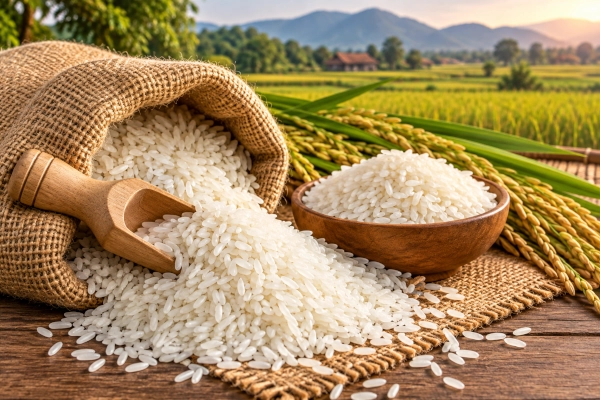
In the fertile paddy fields of Madhya Pradesh’s Balaghat district grows Chinnor, an indigenous aromatic rice celebrated for its delicate fragrance, fine grains and exceptional culinary qualities. Cultivated by generations of local farmers, Balaghat Chinnor represents an important part of the region’s agricultural biodiversity and traditional food heritage.
Unlike ordinary commercial rice varieties, Chinnor is particularly valued for its aroma, taste and softness after cooking. These qualities have earned it a special place in traditional meals, marriage celebrations, religious ceremonies and community feasts. Its reputation has developed through centuries of cultivation by the tribal and non-tribal farming communities of Balaghat.
The rice received Geographical Indication (GI) registration on September 14, 2021, formally recognising its association with Madhya Pradesh and its distinctive geographical identity. The recognition has helped strengthen its commercial reputation while encouraging efforts to preserve an indigenous crop that remains closely connected with local agricultural traditions.
Today, Balaghat Chinnor is also recognised under the Government of India’s One District One Product (ODOP) initiative, creating opportunities for improved cultivation, processing, marketing and farmer incomes.
GI Details at a Glance
- Geographical Indication: Balaghat Chinnor
- State: Madhya Pradesh
- Product: Agricultural – Rice
- Class: 30
- Application Number: 663
- Date of Filing: 3 October 2019
- GI Journal: 133
- Journal Availability Date: 23 March 2020
- Certificate Number: 382
- GI Certificate Date: 14 September 2021
- Registered Proprietor: Balaghat Chinnor Utpadak Sahkari Samiti Maryadit Balaghat
- Registered Proprietor’s Address: Jodapat, Kaydi, Waraseoni, District Balaghat – 481331, Madhya Pradesh
- Geographical Area: Madhya Pradesh
- Registration Valid Until: 2 October 2029
The Geographical Indications Registry confirms these registration details under Application Number 663. The registration recognises the identity of Balaghat Chinnor as an agricultural product associated with its geographical origin. Intellectual Property India
Origins and History of Balaghat Chinnor Rice
Balaghat Chinnor belongs to the rich collection of indigenous rice varieties traditionally cultivated in southeastern Madhya Pradesh. The district has long supported paddy agriculture, with farming communities preserving numerous locally adapted rice varieties through successive generations.
According to the Balaghat district administration, the region’s tribal and non-tribal communities have conserved its traditional rice biodiversity for centuries. Chinnor emerged as one of the most valued varieties because of its fragrance, softness and distinctive taste.
The precise date when Chinnor first entered cultivation remains uncertain. Nevertheless, its longstanding association with ceremonial meals, religious occasions and traditional agricultural practices demonstrates its deep connection with the region’s history.
Farmers traditionally selected seeds from mature crops and preserved them for subsequent cultivation. This practice helped maintain the variety’s characteristics long before modern commercial seed-production systems became widespread.
Over time, the name Chinnor became closely associated with Balaghat itself. The rice’s reputation eventually developed into a regional agricultural identity, leading to its recognition as Balaghat Chinnor.
The official district administration describes the variety as a traditional heritage crop whose distinctive qualities have made it particularly popular during marriage celebrations and religious ceremonies.
The Geography and Climate Behind Balaghat Chinnor
Balaghat lies in the southeastern part of Madhya Pradesh, within the upper valley of the Wainganga River and the southeastern extension of the Satpura landscape.
The district contains agricultural plains, forested hills and riverine environments that support diverse farming systems. Seasonal monsoon rainfall provides much of the moisture required for paddy cultivation, while irrigation facilities support rice production in suitable agricultural areas.
Although Chinnor is cultivated across Balaghat district, official agricultural documentation identifies Waraseoni, Lalbarra, Khairlanji and Katangi as important areas for producing high-quality grain.
These areas possess established rice-growing traditions, with farmers selecting fields according to suitability for Chinnor cultivation. Local soil conditions, seasonal weather and traditional crop-management practices contribute to the agricultural environment in which the variety has been maintained.
Balaghat’s biodiversity also includes numerous other rice landraces, reflecting the region’s importance as a centre of traditional paddy cultivation.
Chinnor’s identity is therefore connected not only with its grain characteristics but also with the farming landscape and agricultural knowledge that have supported its preservation.
What Makes Balaghat Chinnor Rice Unique?
The most distinctive characteristic of Balaghat Chinnor is its natural fragrance, which becomes particularly noticeable during cooking.
The rice produces slender grains and develops a tender texture when prepared. Its delicate aroma and softness distinguish it from many ordinary rice varieties grown primarily for high yields or commercial processing.
The Government of India’s National Portal describes Chinnor as an aromatic rice recognised for its slender appearance, pleasing fragrance and tender texture.
These characteristics make the grain suitable for traditional dishes where the natural flavour and consistency of rice are especially important.
Its reputation also depends on the preservation of varietal purity. Farmers who maintain authentic Chinnor seed material help protect the grain characteristics that consumers associate with the registered product.
The combination of fragrance, softness and regional culinary tradition has established Chinnor as one of Madhya Pradesh’s recognised speciality rice varieties.
Traditional Cultivation and Farmer-Managed Seed Conservation
Balaghat Chinnor has survived through agricultural practices developed and maintained by local farming communities.
Farmers traditionally preserve seed material from mature rice plants, selecting suitable panicles for planting in the following agricultural season. This practice helps maintain the genetic identity and desirable characteristics of the variety.
The documentation supporting Balaghat Chinnor’s GI recognition identifies farmer-managed seed conservation as an important element of its cultivation history.
Careful field preparation, water management and crop protection remain essential for successful cultivation. Like other paddy varieties, Chinnor requires appropriate growing conditions to produce healthy plants and good-quality grain.
The Balaghat district administration has introduced technical training programmes covering irrigation, pest management, disease management, seed production and harvesting.
These initiatives aim to improve agricultural productivity while protecting the distinguishing characteristics of the traditional variety.
The administration has also identified natural and organic production methods as areas for development. Such practices may help farmers diversify cultivation systems, although formal organic certification requires separate compliance and verification.
The continued involvement of local farmers remains essential because traditional rice varieties depend on active cultivation rather than conservation in seed collections alone.
Balaghat Chinnor in Traditional Cuisine and Ceremonial Meals
Chinnor occupies a distinctive place in Balaghat’s regional cuisine, particularly during important social and religious occasions.
The district administration identifies marriage celebrations, religious ceremonies and community feasts among the traditional settings in which Chinnor rice is highly valued.
One of its notable culinary associations is Bhata-Bhatt, a popular traditional preparation of the Balaghat region. Documentation on Madhya Pradesh’s Geographical Indications identifies Chinnor as the rice traditionally preferred for the bhatt component of this local dish.
The rice’s natural fragrance enhances the sensory appeal of ceremonial meals, while its soft texture makes it suitable for preparations served during family gatherings.
Chinnor can also be used in fragrant rice dishes, sweet preparations and everyday meals where the aroma of the grain is allowed to remain prominent.
Unlike heavily seasoned dishes in which spices dominate the flavour, traditional Chinnor preparations can highlight the rice’s own distinctive fragrance and taste.
Its culinary importance demonstrates how indigenous crops become part of regional identity through repeated use in social customs and food traditions.
Geographical Indication Recognition in 2021
Balaghat Chinnor received its Geographical Indication registration under India’s Geographical Indications of Goods (Registration and Protection) Act, 1999.
The application was filed on October 3, 2019, by Balaghat Chinnor Utpadak Sahkari Samiti Maryadit, a cooperative organisation based in the Waraseoni area of Balaghat district.
The Geographical Indications Registry published the application in Journal Number 133 on March 23, 2020. Following the registration process, Balaghat Chinnor received its GI certificate on September 14, 2021.
The registration recognises the geographical identity and established reputation of this traditional rice variety. It also provides a legal framework for protecting the registered geographical indication against unauthorised commercial use.
For farmers, GI recognition offers an opportunity to distinguish genuine Balaghat Chinnor from ordinary aromatic rice marketed under similar descriptions. However, maintaining the benefits of geographical protection requires consistent product quality, authentic seed material and effective traceability.
The recognition also acknowledges the generations of farming communities whose cultivation practices helped establish Chinnor’s reputation.
One District One Product Initiative Strengthens Chinnor Cultivation
Balaghat Chinnor has been selected as the district’s speciality agricultural product under the One District One Product initiative.
The programme aims to promote products closely associated with particular districts while strengthening production, processing, marketing and local employment opportunities.
The Balaghat district administration has identified farmer clusters in suitable cultivation areas, particularly Waraseoni, Lalbarra, Khairlanji and Katangi.
These clusters receive agricultural support covering crop management, seed production, pest control and harvesting practices. The district has also established mechanisms for determining procurement rates, grading, packaging and testing.
Two farmer producer organisations play an important role in these activities: Chinnor Valley Producer Company Limited, Waraseoni, and Lalbarra Chinnor Farmer Producer Company Limited, Lalbarra.
Both organisations participate in rice production, seed multiplication, processing, value addition and marketing. Their activities help connect individual farmers with organised agricultural markets and supporting infrastructure.
The district administration has also identified expansion of cultivation and promotion of natural and organic production as important development priorities.
Agricultural Infrastructure Supports Production and Marketing
The development of Balaghat Chinnor has benefited from investments in agricultural infrastructure and organised processing facilities.
According to the Balaghat district administration, 67 primary processing units, 35 custom hiring centres and 26 warehouses have been established through initiatives associated with the Agriculture Infrastructure Fund.
Primary processing facilities support activities such as cleaning, grading and preparing harvested agricultural produce for further processing or marketing.
Custom hiring centres provide farmers access to agricultural machinery without requiring every individual cultivator to purchase expensive equipment.
Warehousing infrastructure supports safer storage of harvested crops and helps farmers manage the period between harvesting and sale.
The district administration also reports that more than 20 processors and traders participate in the processing, value addition and marketing of Balaghat Chinnor.
Together, these facilities strengthen the agricultural value chain and create opportunities for farmers to sell a differentiated product rather than rely exclusively on conventional paddy markets.
ICAR Research Highlights the Economic Benefits for Farmers
Balaghat Chinnor has attracted attention from the Indian Council of Agricultural Research because of its potential to generate better returns for farmers cultivating speciality rice.
In its Annual Report 2023–24, ICAR highlighted the experience of farmers supported by Krishi Vigyan Kendra, Balaghat.
The report identified Chinnor as a traditional, finely scented rice variety whose GI recognition and market promotion had contributed to improved commercial opportunities.
ICAR reported that the rice was commanding prices ranging from approximately ₹70 to ₹150 per kilogram in the markets examined during the reporting period.
The report recorded an average productivity of approximately 20 quintals per hectare and cultivation across about 1,500 hectares at the time of assessment.
According to the case study, farmers cultivating Chinnor could obtain better net returns than those growing certain conventional rice varieties. The report cited net returns of approximately ₹35,000–₹55,000 under the Chinnor cultivation model, compared with ₹20,000–₹25,000 for the conventional variety used in its comparison.
These figures represent the specific agricultural conditions and market circumstances examined by ICAR rather than guaranteed returns for every farmer.
The findings demonstrate how the market reputation of an indigenous crop can create economic value when supported by appropriate cultivation, quality management and access to buyers.
Premium Pricing Creates Opportunities for Local Farmers
Balaghat Chinnor’s distinctive qualities allow it to participate in a speciality rice market where fragrance, taste and geographical identity influence consumer preferences.
The Balaghat district administration reports that farmers have received prices of approximately ₹5,000–₹6,500 per quintal for Chinnor paddy under its development programme.
Some farmers undertaking their own processing have also marketed the finished rice at approximately ₹10,000–₹12,000 per quintal.
These reported prices illustrate the potential value of direct processing and marketing, although actual farm income depends on production costs, milling recovery, quality and prevailing market conditions.
Local farmer producer organisations have an important role in helping growers participate in these opportunities.
By coordinating production, maintaining seed quality and organising sales, producer groups can strengthen farmers’ bargaining positions and improve access to speciality agricultural markets.
The combination of GI recognition and organised marketing creates a foundation for developing Balaghat Chinnor as a distinctive agricultural product of Madhya Pradesh.
Preserving the Genetic Diversity of Balaghat’s Traditional Rice
The importance of Balaghat Chinnor extends beyond its commercial value.
Balaghat district possesses a rich diversity of indigenous rice landraces that farming communities have maintained through traditional cultivation.
These landraces contain genetic characteristics shaped by local environmental conditions and generations of farmer selection.
The replacement of traditional varieties with a small number of commercially popular cultivars can reduce agricultural genetic diversity. Once a landrace disappears from cultivation, recovering its original characteristics may become difficult.
Preserving authentic Chinnor seed material therefore remains an important agricultural priority.
Traditional seed selection, community seed conservation and support from agricultural research institutions can help maintain varietal identity.
Research into crop performance, disease resistance, soil management and sustainable cultivation practices can also improve production while protecting the grain characteristics responsible for its reputation.
The continued cultivation of Chinnor contributes to the preservation of Madhya Pradesh’s indigenous rice heritage and provides valuable genetic resources for future agricultural development.
The Future of Balaghat Chinnor in India’s Speciality Rice Market
The growing appreciation of traditional grains and geographically recognised agricultural products creates opportunities for Balaghat Chinnor.
India’s speciality rice market includes several varieties valued for distinctive aromas, grain characteristics and regional culinary traditions. Balaghat Chinnor occupies a place within this market because of its natural fragrance, fine texture and cultural identity.
Improved packaging, transparent product labelling and reliable quality standards can help consumers identify authentic GI-recognised rice.
Farmer producer organisations can also explore value-added products, including carefully packaged rice, traditional food preparations and premium agricultural offerings.
Expanding market access will require maintaining consistent grain quality and ensuring that increased production does not compromise the characteristics that distinguish Chinnor from other varieties.
The district administration’s efforts to develop processing facilities, producer organisations and cultivation support provide an institutional foundation for these activities.
Balaghat Chinnor’s commercial development can also serve as an example of how traditional agricultural biodiversity contributes to rural economic opportunities.
Balaghat Chinnor: A Living Symbol of Madhya Pradesh’s Agricultural Heritage
Balaghat Chinnor represents the close relationship between agriculture, geography, community knowledge and culinary tradition in Madhya Pradesh.
Its fragrant grains have been preserved through generations of cultivation and remain closely associated with the marriage celebrations, religious ceremonies and traditional meals of Balaghat.
The GI recognition granted in 2021 formally acknowledges this regional agricultural identity, while the One District One Product initiative has created opportunities for stronger farmer organisations, improved processing infrastructure and wider market access.
ICAR’s research highlights the economic potential of cultivating distinctive heritage crops when farmers receive appropriate technical and marketing support.
Beyond its commercial importance, Chinnor remains a valuable component of India’s indigenous rice diversity. Its preservation safeguards traditional seed systems, agricultural knowledge and a unique regional food tradition.
With continued farmer participation, scientific support and growing consumer awareness, Balaghat Chinnor can strengthen rural livelihoods while carrying the agricultural heritage of Madhya Pradesh to wider markets.
References
- Geographical Indications Registry, Intellectual Property India — Balaghat Chinnor, Application Number 663. Official registration details, applicant, geographical area, journal publication and certificate validity.
https://search.ipindia.gov.in/GIRPublicSearch/Application/Details/663 - Agricultural and Processed Food Products Export Development Authority (APEDA) — Geographical Indications of Madhya Pradesh. Official information on Balaghat Chinnor’s GI registration.
https://apeda.gov.in/Madhya_Pradesh - District Administration, Balaghat, Government of Madhya Pradesh — One District One Product: Balaghat Chinnor. Traditional cultivation, growing regions, farmer organisations, agricultural infrastructure and marketing initiatives.
https://balaghat.nic.in/en/odop/ - Indian Council of Agricultural Research — Annual Report 2023–24. Krishi Vigyan Kendra Balaghat case study examining Chinnor cultivation, production economics and farmer incomes.
https://www.icar.org.in/sites/default/files/2025-04/ICAR%20Annual%20Report%202023-24-english.pdf - National Portal of India — Balaghat Chinnor, One District One Product. Official description of the rice’s fragrance, texture and regional culinary identity.
https://www.india.gov.in/explore-india/odop/details/balaghat-chinnor - Confederation of Indian Industry — Geographical Indications of Madhya Pradesh. Background information on Balaghat Chinnor, geographical characteristics, traditional cultivation and seed conservation.
https://www.ciiipr.in/pdf/geographical-indications-mp.pdf
You may also like
-
GeM’s AABHAR Collection Showcases 294 Indigenous Products, Strengthens Market Access for Indian Artisans
-
Indian Semiconductor Companies Propose New Manufacturing and Chip Design Investments in Madhya Pradesh
-
CSIR-CRRI Partners with Industry to Develop Advanced Indigenous Airport Runway and Pavement Materials
-
Paras Semiconductors Secures 43 Acres in Madhya Pradesh for Proposed ₹6,200 Crore Advanced Chip Packaging Facility
-
Petronet LNG Plans ₹1,200 Crore Joint Venture for Ten Compressed Biogas Plants Across India
