Kautilya

Arjuna and the Wild Boar: The Hunter on Indrakila Who Was Shiva

Arjuna believed that mastering greater weapons would strengthen the Pandavas for the struggle that lay ahead. Yet before he could receive the most terrible weapon of all, he would first have to face an opponent whose identity he could not recognise. That encounter would begin with the sudden appearance of a monstrous wild boar and end with Arjuna discovering that the mysterious hunter before him was none other than Mahadeva.

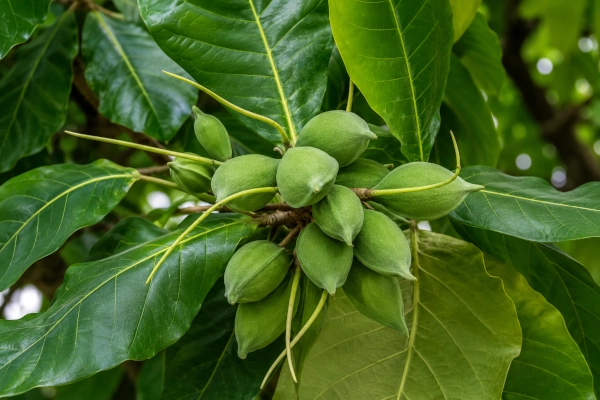
Jangli Badam (Terminalia catappa): Indian Almond in Traditional Medicine, Nutrition and Tropical Healing

Botanically known as Terminalia catappa L., Jangli Badam belongs to the Combretaceae family. Royal Botanic Gardens, Kew recognises it as an accepted species with a natural range extending across tropical and subtropical Asia, parts of the western Indian Ocean, the Pacific and northern Australia. It is now cultivated widely throughout the tropics for shade, food and several traditional uses.

From Textile Machinery to Space Rockets: How Coimbatore’s LMW Built a High-Technology Aerospace Business

LMW, however, does not manufacture textiles itself. It manufactures the sophisticated machinery used by textile mills. That distinction helps explain a transformation that has largely taken place outside public attention: the engineering company that perfected machines for turning cotton into yarn is now manufacturing rocket structures, aircraft assemblies, aero-engine components and advanced carbon-fibre composites.

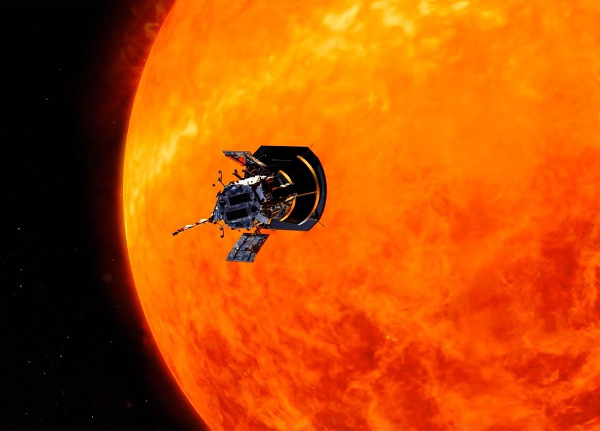
Aditya-L1 Detects Early Warning Signs Hours Before Major Solar Flares

The research has been published in the Monthly Notices of the Royal Astronomical Society, one of the world’s leading peer-reviewed astronomy journals, under the title Multiwavelength Diagnostics of Pre-Flare Evolution with Aditya-L1: From the Solar Chromosphere to the Corona. The study was published online on 27 July 2026 and appears in Volume 551 of the journal.

Light Guide Optics Emerges L1 in ₹3.7 Crore DRDO-CHESS Collimated Fibre Laser Array Programme

The programme is significant because CHESS is one of the DRDO establishments associated with high-energy technologies and directed-energy research. A collimated fibre laser array represents an important class of optical technology for generating, conditioning and directing multiple laser outputs with controlled beam characteristics, capabilities that have relevance to the broader development of scalable high-power laser systems.