Kautilya

India’s CLEAR Breakthrough Could Transform Protein Imaging for Cancer and Neurological Research

Traditional immunofluorescence imaging has been one of the most useful tools for studying proteins in their natural cellular environment. Its limitation, however, has been multiplexing capacity. Conventional methods are usually restricted to around four or five protein targets because different fluorescent dyes overlap spectrally and become difficult to separate cleanly. The CLEAR platform tackles this bottleneck by allowing the same sample to be labelled, imaged, erased and labelled again in repeated cycles.


India Opens ₹15,000 Crore AMCA Race as Indigenous Stealth Fighter Programme Enters Decisive Industry Phase

The AMCA is more than another aircraft project. It is India’s attempt to enter the small league of nations capable of designing, testing and producing a stealth combat aircraft with advanced sensors, internal weapons carriage, network-centric operations and survivability against modern air defence systems. For the Indian Air Force, the aircraft is expected to become a major pillar of combat capability from the mid-2030s, when legacy fleets will be under pressure and regional air warfare will be shaped increasingly by stealth aircraft, long-range weapons, unmanned systems and electronic warfare.

BSNL’s Turnaround Story: Indigenous 4G, Rising Revenue and the Return of India’s Public Telecom Network

According to the Minister, the revival effort began by identifying practical problem areas: work culture, tower condition and outdated infrastructure. In states such as Andhra Pradesh, tower uptime was earlier around 75%, and the target was raised to 95%. BSNL replaced 50,000 batteries across 50,000 towers, upgraded power plants and replaced ageing cables to improve service reliability.

India Post’s Revenue Touches ₹15,373 Crore as the Postal Network Reinvents Itself for Digital India

The biggest technology push is coming through the ₹5,800 crore Advanced Postal Technology initiative under IT 2.0. The goal is to create a seamless, end-to-end digital postal system where citizens can buy savings instruments, purchase insurance products such as Postal Life Insurance and Rural Postal Life Insurance, download digital certificates and receive matured policy payments directly into bank accounts without visiting a post office.

PAIMANA Tracks 1,981 Central Infrastructure Projects Worth ₹42.78 Lakh Crore as India Sharpens Project Monitoring

A large share of the monitored projects is already at an advanced stage. Around 801 projects, or roughly 40%, have achieved more than 80% physical progress, while 277 projects, or about 14%, have crossed 80% financial completion. This is a crucial indicator because it shows that a significant portion of the infrastructure pipeline is moving towards completion, while another group of newly started projects is entering the implementation cycle.

India’s Telecom Market Crosses 1.33 Billion Subscribers as Broadband Becomes the Core of Digital Growth

The data reveals a clear pattern: India’s telecom story is now overwhelmingly wireless-led, broadband-heavy and increasingly shaped by digital demand beyond voice calling. Out of the total subscriber base, wireless connections accounted for 1,288.96 million, while wireline connections stood at 48.58 million. Wireless services contributed around 95% of the net subscriber additions during April, showing that mobile connectivity remains the main engine of India’s communication economy.

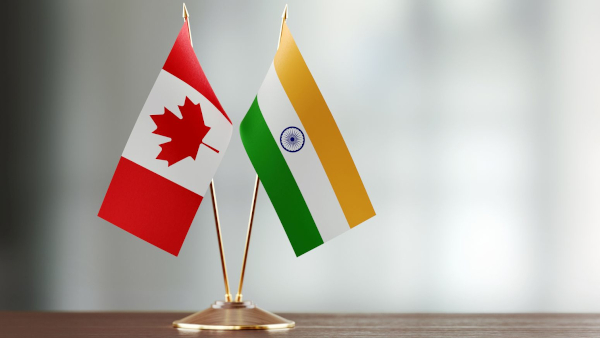
India and Canada Push for Economic Reset as CEPA Talks Gather Pace in Ottawa

A major highlight of the visit was the discussion around CEPA, which Canada’s Prime Minister described as a potential “game changer” for opening a large new market. Both sides have reaffirmed their intention to work towards a balanced, commercially meaningful and ambitious agreement that benefits businesses, investors and citizens in both countries. The target is to conclude a mutually beneficial agreement by the end of 2026.

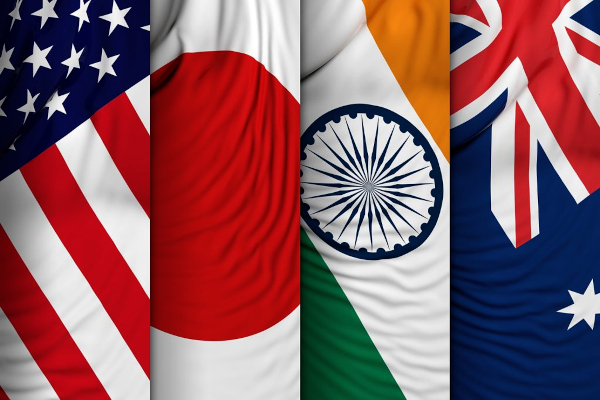
Quad’s Maritime Surveillance Push: A Practical Security Net for the Indo-Pacific, Not a Military Bloc

The need for such a system has become sharper because of the rise of “dark ships” — vessels that switch off tracking systems, hide their identity or operate in ways that make monitoring difficult. These ships can be linked to illegal fishing, smuggling, sanctions evasion, grey-zone maritime activity or other unlawful operations. MEA officials have pointed to growing congestion in international waterways and the movement of such vessels as a reason for improving surveillance capability across the region.