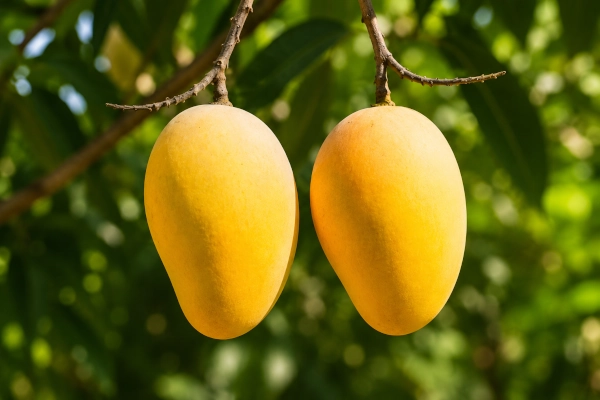
GI Produce of India — 01
Few fruits in India are associated as closely with a landscape as the Alphonso mango is with Maharashtra’s Konkan coast. Known locally as Hapus, the Alphonso has become much more than a summer fruit. For generations of growers in Ratnagiri, Sindhudurg, Devgad and adjoining parts of coastal Maharashtra, it represents an agricultural inheritance shaped by the Arabian Sea, the Western Ghats, lateritic terrain, monsoon rainfall and centuries of careful selection and grafting.
Its reputation extends far beyond Maharashtra. Alphonso mangoes command premium prices in Indian cities, travel as prized seasonal gifts between families and are sought by buyers overseas for their intense fragrance, smooth flesh and distinctive balance between sweetness and acidity. Yet the qualities that created this reputation are closely connected with geography. This connection ultimately resulted in Alphonso receiving Geographical Indication registration on 3 October 2018, formally recognising an agricultural identity that had developed over centuries.
A Mango Known as Hapus
Alphonso belongs to the species Mangifera indica, but among the enormous diversity of mango varieties cultivated across India it developed a character of its own. The National Horticulture Board places Alphonso among the important mid-season mango varieties and identifies Ratnagiri, Sindhudurg and Raigad among Maharashtra’s principal mango-growing belts. India possesses an extraordinary diversity of mangoes, with around a thousand varieties known nationally, although only a much smaller number are commercially cultivated on a large scale.
Along the Konkan coast, however, Alphonso is rarely introduced by its formal English name. It is simply Hapus. The name evokes boxes of carefully arranged mangoes arriving in Mumbai and Pune during summer, orchards spread across hills overlooking the Arabian Sea and the intense perfume released when a naturally ripened fruit is opened.
Alphonso’s reputation rests on several characteristics appearing together. A good fruit develops richly coloured flesh ranging towards golden or saffron-yellow, a powerful aroma, a firm yet tender texture and remarkably little fibre. APEDA describes the Alphonso as having firm, fibreless pulp with a favourable sugar-acid balance responsible for its characteristic flavour and aroma.
The result is not simply extreme sweetness. One of the attractions of genuine Alphonso is the contrast between sugar, gentle acidity and volatile aromatic compounds. The flesh is smooth enough to eat directly with a spoon, yet sufficiently firm for slicing. These characteristics also make Alphonso valuable for pulp, desserts, beverages, ice cream, shrikhand, aamras and premium processed products.
A History Connected With the Portuguese Era
The early history of Alphonso is surrounded by tradition, and not every detail can be established with documentary certainty. The generally accepted historical association links the variety with the Portuguese presence on India’s western coast and particularly with the development of grafted mango varieties in Goa.
The name Alphonso is widely believed to derive from Afonso de Albuquerque, the Portuguese commander who became one of the principal figures of Portuguese expansion in India during the early sixteenth century. Historical accounts associate Portuguese and Jesuit horticulturists in Goa with extensive experimentation in mango grafting during the sixteenth century. Instead of relying entirely on mango trees raised from seed, grafting allowed desirable characteristics of a particular tree to be reproduced much more reliably.
That development was important. Mango seedlings can display considerable variation because the fruit produced by a seedling does not necessarily reproduce all the characteristics of its parent. Vegetative propagation through grafting allows cultivators to preserve a selected variety generation after generation.
Over time, several grafted mango cultivars carrying Portuguese names appeared along India’s western coast. Alphonso became the most famous among them. The precise sequence by which the cultivar developed and spread northward cannot be reconstructed with complete certainty, but the variety eventually found an exceptional ecological home along the Konkan coast.
The historical narrative should therefore be understood not as the creation of mango cultivation in India—which stretches far deeper into Indian antiquity—but as one chapter in the continuing evolution of India’s enormous mango diversity.
When Hapus Met the Konkan
The extraordinary reputation of Alphonso cannot be explained by genetics alone. The same cultivar can be planted in different regions, but the fruit it produces need not possess precisely the same sensory characteristics.
This is where the Konkan landscape becomes central to the story.
Between the Arabian Sea and the Western Ghats lies a narrow coastal region of undulating plateaus, valleys, rocky slopes and heavy monsoon rainfall. Ratnagiri and Sindhudurg became particularly associated with Hapus orchards. Maharashtra government agricultural literature has long highlighted the combination of the region’s climate and soil as fundamental to the quality for which Konkan Alphonso became famous.
Mango trees require a seasonal rhythm. Dry conditions before flowering encourage successful blossoming, while rainfall during flowering can interfere with pollination. Moisture becomes useful later during fruit development, although excessive rain, high winds or adverse weather can damage the crop. The National Horticulture Board identifies this relationship between rainfall distribution, dry flowering weather and successful fruit development as an important part of mango cultivation.
For Konkan farmers, therefore, Hapus cultivation is a negotiation with weather. Flowering, fruit set and harvesting can change significantly from one season to another depending on temperature, untimely rainfall, humidity and wind.
Orchards Built Through Grafting
An Alphonso orchard is not simply created by planting mango stones and waiting for identical trees to emerge. Commercial cultivars are normally propagated vegetatively so that the selected characteristics of the mother plant are preserved.
Modern Indian horticultural guidance recognises several grafting techniques for mango, including veneer grafting, side grafting and stone grafting. Epicotyl or stone grafting is particularly widely practised in Maharashtra’s Konkan region, where very young germinated mango seedlings can be used as rootstocks for grafting desired varieties.
This is one reason orchard knowledge becomes intergenerational. Farmers must understand which trees provide suitable scion material, how young grafts respond to moisture, when trees require pruning or protection and how flowering should be managed.
Unlike a factory product whose characteristics can be reproduced almost exactly by controlling machinery, an orchard crop remains dependent on biological cycles. A Hapus tree responds to its soil, microclimate, rainfall, nutrition, pests and the skill of its grower. Every successful harvest is therefore the combined product of cultivar and environment.
The Long Wait Before the Summer Harvest
The Alphonso season is short enough to contribute to the fruit’s mystique. Flowering normally begins during the cooler and drier portion of the year, followed by fruit development through the following months. Harvest then becomes one of the defining agricultural events of the Konkan summer.
Mangoes intended for distant markets are generally harvested when physiologically mature rather than after becoming completely soft on the tree. Proper harvesting is critical because immature fruit may never develop the aroma, colour or sweetness expected from a premium Alphonso.
Post-harvest handling is equally important. Fruit has to be sorted, graded, transported and ripened without excessive mechanical damage or heat exposure. Export consignments face an additional layer of phytosanitary, traceability, residue-monitoring, treatment and pack-house requirements.
The transformation between a mature greenish mango leaving an orchard and the fragrant golden fruit opened by a consumer days later is therefore part of the Alphonso supply chain itself.
Ratnagiri and Devgad — Two Names Closely Associated With Hapus
Within the Konkan reputation, Ratnagiri and Devgad acquired particularly strong identities of their own.
Ratnagiri district stretches along a dramatic coastline punctuated by lateritic plateaus, valleys and creeks. Mango orchards have become an important element of this agricultural landscape. The term “Ratnagiri Alphonso” consequently became widely recognised in Indian markets.
Farther south, Devgad in Sindhudurg district developed another exceptionally strong Hapus identity. Devgad growers built a reputation around carefully managed orchards and premium fruit, and “Devgad Hapus” itself became a powerful commercial description.
These local reputations also influenced the eventual GI process. Applications relating to regional Alphonso identities were pursued during the wider effort to obtain geographical protection for the fruit. The eventual registered GI, however, is formally recorded by Intellectual Property India simply as “Alphonso.”
The Road to GI Recognition
The formal journey towards geographical protection took a decade.
The application for the Alphonso Geographical Indication was filed on 22 September 2008 by the Director of Research at Dr. Balasaheb Sawant Konkan Krishi Vidyapeeth, Dapoli, Ratnagiri.
The application was assigned GI Application No. 139 under Class 31 for agricultural goods.
It appeared in GI Journal No. 106, with an availability date of 1 June 2018.
The registration certificate—Certificate No. 324—was issued on 3 October 2018.
The registered geographical area is recorded as Maharashtra, and following renewal the registration is presently valid until 21 September 2028.
GI Details at a Glance
Geographical Indication: Alphonso
State: Maharashtra
Product: Agricultural
Class: 31
Application Number: 139
Date of Filing: 22 September 2008
GI Journal: No. 106
Journal Availability Date: 1 June 2018
Certificate Number: 324
GI Certificate Date: 3 October 2018
Registered Proprietor: Director of Research, Dr. Balasaheb Sawant Konkan Krishi Vidyapeeth, Dapoli
Registration Valid Until: 21 September 2028
What a GI Tag Actually Protects
A Geographical Indication is different from an ordinary trademark. A trademark identifies the commercial source of a product or service from a particular enterprise. A GI instead identifies goods whose reputation, qualities or characteristics are associated with a defined geographical origin.
Importantly, a GI is not private property that can simply be sold to another company. Intellectual Property India describes geographical indications as community rights belonging to producers of the concerned goods. Registered proprietors and authorised users can also act against misleading use that falsely represents the geographical origin of protected goods.
For Hapus growers, this distinction is crucial.
An Alphonso-type mango tree can physically be cultivated beyond its famous traditional belt. But a geographical indication is intended to protect the reputation arising from the relationship between product and place. It prevents the market from treating geography as meaningless when geography is precisely one of the factors that created the product’s reputation.
The Problem of the “Alphonso” Name
Premium prices inevitably create incentives for substitution.
Every summer, consumers encounter mangoes sold using terms such as Alphonso, Hapus, Ratnagiri Hapus and Devgad Hapus. Yet visual appearance alone is not always sufficient to determine origin. Mangoes of the same cultivar may also be grown elsewhere, while other varieties can sometimes be marketed in ways that create confusion.
That creates two separate questions: What variety is the mango? And where was it grown?
The first concerns genetics. The second concerns geographical origin.
The GI framework becomes valuable because premium agricultural markets increasingly depend on traceability. If consumers are paying substantially more because they believe they are purchasing fruit connected with a particular geographical reputation, reliable identification protects both the buyer and the genuine producer.
This is especially important for small growers. A farmer maintaining an orchard through an uncertain flowering season cannot easily compete against cheaper fruit being passed off under the same premium geographical identity.
A New GI Question Emerges From Gujarat
The significance of geographical identity has become even clearer through a currently unresolved development.
A separate application for “Valsad Hapus” was filed with India’s GI Registry on 13 February 2023 by the Bharatiya Kisan Sangh, Gandhinagar, and Navsari Agricultural University. The application is numbered 1058 and covers agricultural goods under Class 31.
As of August 2026, Intellectual Property India’s official database lists the application status as “Opposed.” No registration certificate has been issued for Valsad Hapus. The official record also shows procedural filings continuing during 2026, including documents filed as recently as 13 August 2026.
The matter illustrates an important principle underlying geographical indications. Mango cultivars do not necessarily stop at modern political boundaries, and similar horticultural traditions can develop in neighbouring regions. GI proceedings therefore have to examine the evidence linking a proposed geographical name, its producers and the claimed characteristics of the product.
Until those proceedings are resolved, the correct position is straightforward: Alphonso is a registered Maharashtra GI, while the separate Valsad Hapus application remains opposed and pending.
Hapus as an Economic Crop
Behind the prestige of Alphonso lies a large rural economy.
Mango orchards provide income not only to growers but also to nursery operators, agricultural labourers, harvest workers, packaging suppliers, transporters, traders, commission agents, ripening facilities, pack houses, processors and exporters. During the mango season, an entire commercial network begins moving with the harvest.
The premium associated with Hapus is particularly important because orchard agriculture faces inherent risks. Mango trees can experience fluctuations in flowering and yield, and adverse weather at a critical stage can sharply affect marketable production.
A strong geographical reputation consequently acts almost like an agricultural asset. When consumers willingly pay more for a trusted origin, part of that premium can remain within the producing region—provided authenticity is protected and growers have sufficient access to markets.
Alphonso and India’s Mango Export Story
Alphonso is one of the Indian mango varieties with established international recognition, although official export statistics normally aggregate fresh mango varieties rather than reporting Alphonso separately.
India exported 31,819.46 tonnes of fresh mangoes worth about US$53.99 million during 2025–26, according to APEDA data based on DGCIS statistics. The leading destinations were the United Arab Emirates, United Kingdom, United States, Kuwait and Canada.
That international market is strategically important for premium varieties. High-value mangoes can generate significantly greater returns per kilogram than bulk agricultural commodities, but exports demand consistency, traceability and careful post-harvest management.
APEDA has developed systems covering traceability and residue monitoring for export-oriented mango supply chains, while recognised pack houses provide facilities for sorting, treatment, grading, cooling and packaging. Export infrastructure has historically included specialised facilities in both Ratnagiri and Devgad, reflecting the importance of the Konkan Alphonso industry.
India’s wider mango-export ecosystem is also changing. New scientific protocols are extending shelf life and making sea transport increasingly practical for selected mango varieties. Successful sea shipments to Singapore and Dubai during 2026 demonstrated that carefully controlled post-harvest systems can keep mangoes marketable through substantially longer journeys. Such technologies could eventually widen possibilities for premium Indian mango exports by reducing dependence on relatively expensive air freight.
More Than Fresh Fruit
Alphonso’s economic value does not end when the fresh-fruit season closes.
Its pulp is an important ingredient for food processing. Alphonso pulp can be used in beverages, nectars, yoghurt, confectionery, bakery products, desserts and ice cream. India exported 62,864 tonnes of mango pulp worth around US$68.39 million in 2025–26, although this figure covers several varieties rather than Alphonso alone.
Processing can also provide an outlet for fruit that may not possess the perfect appearance demanded by premium fresh markets but retains good internal quality. Developing higher-value processed products therefore offers another route for growers and agricultural enterprises to capture value from the crop.
The Climate Challenge
The same geographical conditions that give Hapus its distinctive identity also leave the crop exposed to changes in weather.
Mango flowering is sensitive to temperature and moisture. Unseasonal rainfall during flowering can interfere with pollination. Excess humidity may increase disease pressure, while strong winds can cause flowers or developing fruit to fall. Changing temperature patterns can alter flowering behaviour itself.
For a premium crop concentrated within a distinctive ecological belt, climate variability therefore creates both agricultural and economic risk.
Future protection of the Alphonso tradition will require more than simply expanding orchard acreage. Growers will increasingly need improved weather forecasting, integrated pest management, scientific canopy management, soil and water conservation, better planting material and climate-resilient orchard practices.
Dr. Balasaheb Sawant Konkan Krishi Vidyapeeth and India’s wider horticultural research system therefore have an important role in ensuring that traditional quality is preserved while cultivation adapts to changing conditions.
Protecting the Mother Trees and Genetic Heritage
The Alphonso story also highlights a larger question confronting Indian agriculture: how should the country preserve its celebrated traditional varieties while modernising production?
Commercial success can sometimes encourage excessive uniformity. Yet India’s strength lies in an enormous reservoir of local cultivars and farmer-selected genetic material. Maintaining healthy mother blocks, certified planting material and genetic repositories is essential if genuine varieties are to remain available to future growers.
A GI should therefore not be viewed merely as a marketing label attached to a box of fruit. At its best, geographical protection can encourage an entire region to value the biological material, cultivation practices and local knowledge that created its reputation.
The Mango That Carries Its Landscape
Alphonso demonstrates why geographical indications are particularly meaningful for agriculture.
Its story cannot be separated into a fruit on one side and a place on the other. The variety, the grafting tradition, orchard management, Konkan climate, coastal geography, local knowledge, harvesting practices and generations of growers have together created what consumers recognise as Hapus.
The 3 October 2018 GI registration gave legal recognition to that relationship, but the reputation itself was built long before the certificate was issued.
Every genuine Alphonso reaching a market carries something of that history with it—from the old grafting traditions of India’s western coast to the orchards of Ratnagiri and Sindhudurg, from monsoon-soaked Konkan hills to the intensely anticipated harvest of an Indian summer.
That is ultimately what makes the Alphonso worthy of beginning a journey through India’s GI-protected produce.
It is not merely one of India’s most famous mangoes.
It is a fruit whose identity was created by a place.
You may also like
-
India Updates Vehicle Rules to Strengthen E85 and E100 Flex-Fuel Technology
-
Adani Green Energy Expands Battery Storage to 6.63 GWh at Khavda, Strengthening India’s Renewable Power Infrastructure
-
Manastu Space Secures ₹116 Crore Government Support to Develop Indigenous Green Propulsion Systems
-
GeM’s AABHAR Collection Showcases 294 Indigenous Products, Strengthens Market Access for Indian Artisans
-
Balaghat Chinnor Rice of Madhya Pradesh: The Fragrant Heritage Grain with GI Recognition
