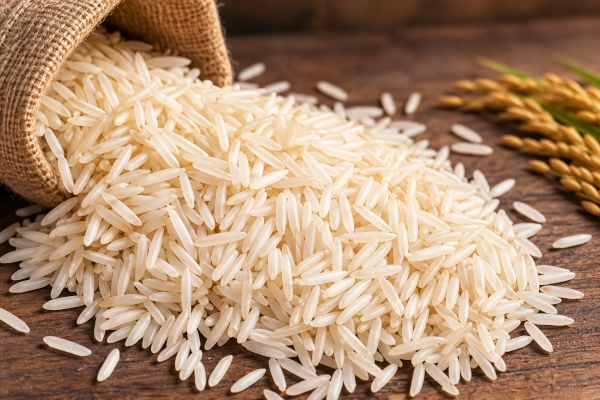
Chhattisgarh, often celebrated as the Rice Bowl of India, possesses an extraordinary diversity of indigenous rice varieties cultivated and preserved by farming communities for generations. Among its most treasured traditional varieties is Nagri Dubraj Rice (नगरी दुबराज चावल), an aromatic rice known for its distinctive fragrance, delicate grains and exceptional culinary qualities. Cultivated primarily in the Nagri region of Dhamtari district, this indigenous variety represents an important part of Chhattisgarh’s agricultural heritage.
Popularly known as the “Basmati of Chhattisgarh,” Nagri Dubraj is prized for its natural aroma and soft texture after cooking. Unlike conventional long-grain Basmati, it possesses relatively small, slender grains that develop a characteristic fragrance during preparation. Its use in traditional meals, festive occasions and regional cuisine has helped preserve its reputation among local communities.
Nagri Dubraj received formal recognition under India’s Geographical Indications (GI) system, with its registration certificate issued on 31 January 2023. The recognition established its identity as a geographically associated agricultural product and strengthened efforts to conserve one of Chhattisgarh’s distinctive aromatic rice varieties.
Historical Origins and Traditional Heritage of Nagri Dubraj Rice
The history of Nagri Dubraj Rice is closely associated with the traditional agricultural settlements of the Nagri and Sihawa regions in present-day Dhamtari district. These areas have supported rice cultivation for generations, with farmers preserving indigenous varieties adapted to local growing conditions.
According to regional tradition, Nagri Dubraj originated in the vicinity of Sihawa, a place associated with the ancient sage Shringi Rishi. Local accounts connect the Sihawa region with traditions surrounding the Ramayana and the sage’s role in the story of King Dasharatha. These associations form part of the region’s cultural memory, although they do not establish a historically verified date for the origin of Nagri Dubraj.
The variety’s documented agricultural history is more recent. Scientific research published in 2015 identified Dubraj as a prominent traditional aromatic rice cultivated mainly in Dhamtari district. Researchers collected traditional Dubraj accessions from farming areas around Sihawa, Nagri and Dhamtari during 2011–12, confirming the variety’s importance within the region’s agricultural biodiversity.
For generations, farming households conserved Dubraj through traditional seed selection and cultivation. Farmers preserved seeds from previous harvests, allowing the variety to remain part of local agriculture despite the increasing cultivation of higher-yielding commercial rice.
Nagri Dubraj also developed a reputation as a premium rice for traditional meals and celebrations. Its aromatic qualities made it particularly desirable for occasions where the fragrance and flavour of rice formed an important part of the dining experience.
Geographical Origin and Cultivation Areas
Nagri Dubraj Rice is particularly associated with Nagri block in Dhamtari district, Chhattisgarh, an agricultural landscape connected with the upper Mahanadi river system and the forested hills of the Sihawa region.
Sihawa is traditionally recognised as an important geographical and cultural landmark near the origins of the Mahanadi River. The surrounding agricultural lands support paddy cultivation through seasonal monsoon rainfall, local water resources and established farming practices.
The Nagri region combines agricultural plains with nearby forested and hilly landscapes. These geographical features influence local farming conditions, including soil characteristics, seasonal water availability and agricultural management.
The geographical association of Nagri Dubraj is especially important because its reputation rests not merely on the wider Dubraj rice family but on the traditional variety cultivated in this particular region.
Although Dubraj-type aromatic rice varieties occur in other parts of central and eastern India, Nagri Dubraj has developed a distinct geographical identity through its traditional cultivation in Dhamtari.
The GI Registry records Chhattisgarh as the geographical area associated with the registered product, while the variety’s documented historical and agricultural identity is centred on Nagri in Dhamtari district.
Unique Characteristics of Nagri Dubraj Rice
Nagri Dubraj belongs to the species Oryza sativa L. and is distinguished by its natural aroma, fine grain structure and desirable cooking characteristics.
Its grains are generally small to medium in length and relatively slender, unlike the elongated grains associated with premium Basmati rice. The processed rice is predominantly white, although traditional Dubraj accessions can exhibit variations in grain appearance.
The variety’s most important characteristic is its fragrance. During cooking, Nagri Dubraj releases an appealing natural aroma that contributes significantly to its reputation as a premium traditional rice.
Another distinctive feature is its texture after cooking. The grains become soft and tender, making the rice suitable for dishes where a delicate texture and pronounced fragrance are preferred.
A scientific study published in Plant Archives in 2015 examined traditional aromatic rice varieties of Chhattisgarh, including Dubraj. Researchers evaluated morphological characteristics and documented variation among accessions maintained by different farmers.
The research highlighted the importance of scientific characterisation and seed purification in conserving traditional aromatic varieties. Such work supports the identification of authentic planting material while helping preserve desirable grain characteristics.
Nagri Dubraj’s appeal therefore comes from the combination of its natural fragrance, culinary qualities and longstanding association with a particular agricultural region.
Traditional Cultivation and Agricultural Practices
Farmers cultivate Nagri Dubraj primarily during the kharif season, taking advantage of the monsoon rainfall that supports paddy agriculture across Chhattisgarh.
The variety belongs to the traditional aromatic rice group, which often requires careful cultivation and seed management. Unlike modern high-yielding rice varieties developed primarily for productivity, traditional Dubraj has been preserved for its grain quality, fragrance and culinary reputation.
Cultivation practices include nursery preparation, transplanting, field management and harvesting according to the seasonal conditions of the region. Farmers have traditionally maintained planting material through seed selection from previous harvests.
Published accounts describe a crop duration ranging from approximately 125 to 145 days, although maturity depends on the particular Dubraj accession, growing environment and cultivation practices.
Traditional Dubraj varieties generally produce lower yields than many modern commercial rice cultivars. However, their distinctive fragrance and market reputation can support higher-value sales.
Scientific studies have examined opportunities to improve Dubraj through selection and breeding while retaining its characteristic aroma and grain quality. Such research is particularly relevant to maintaining its cultivation in an agricultural economy where farmers must balance productivity with market demand.
The preservation of Nagri Dubraj demonstrates the importance of farmer-maintained seed systems in conserving India’s indigenous agricultural diversity.
Culinary Importance and Traditional Uses
Nagri Dubraj occupies a respected place in Chhattisgarh’s traditional food culture, where rice forms the foundation of everyday meals and numerous regional preparations.
Its distinctive aroma makes it especially suitable for festive rice dishes, traditional family meals and occasions where food quality and presentation hold particular importance.
The rice is commonly appreciated in simple steamed preparations, which allow its natural fragrance and flavour to remain prominent. It is also suitable for pulao, kheer and other preparations that benefit from aromatic rice.
Traditional Dubraj rice flour is used in regional dishes such as fara and chila. These preparations form part of Chhattisgarh’s wider culinary heritage, reflecting the versatility of locally cultivated rice varieties.
The association of Nagri Dubraj with traditional celebrations has helped maintain consumer recognition across generations. Its value rests on qualities that distinguish it from ordinary rice rather than on grain length or productivity alone.
The variety also demonstrates the close relationship between regional cuisine and agricultural biodiversity. Traditional food preferences encourage farmers to maintain crops with distinctive flavours, textures and processing characteristics, thereby supporting the survival of indigenous varieties.
Geographical Indication Recognition of Nagri Dubraj Rice
Nagri Dubraj received formal GI registration under the Geographical Indications of Goods (Registration and Protection) Act, 1999. The recognition established a legally protected geographical identity for the traditional aromatic rice variety associated with Chhattisgarh.
The application was submitted by Maa Durga Swayam Sahayata Samooh, a women’s self-help group based in Bagrumnala village, Nagri block, Dhamtari district. The organisation’s involvement reflects the important role of rural women’s groups in conserving traditional agricultural products and strengthening their market identity.
The application was filed on 11 October 2019 under Application No. 669. After examination and publication in the GI Journal, the Geographical Indications Registry issued Certificate No. 435 on 31 January 2023.
Nagri Dubraj became the second traditional rice variety from Chhattisgarh to receive GI recognition, following Jeeraphool Rice. The registration strengthened the state’s reputation for distinctive indigenous aromatic rice varieties and recognised the contribution of local farming communities to their preservation.
GI Tag Journey of Nagri Dubraj Rice
The journey towards GI recognition reflects the collective efforts of local farmers, women’s self-help groups and agricultural institutions to preserve Nagri Dubraj and establish its distinct geographical identity.
- Traditional Heritage: Farming communities in the Nagri and Sihawa regions of Dhamtari preserved Dubraj Rice through generations of cultivation and seed selection. Its natural fragrance and cooking qualities established its reputation as the Basmati of Chhattisgarh.
- 11 October 2019 – GI Application Filed: Maa Durga Swayam Sahayata Samooh submitted the application for Nagri Dubraj under Application No. 669.
- 31 October 2019 – Formality Check: The Geographical Indications Registry issued its initial formality examination report.
- 13 January 2020 – Applicant’s Response: The applicant submitted its response to the formality check report, advancing the registration process.
- 9 June 2022 – Examination Report: The GI Registry issued its examination report assessing the application.
- 22 July 2022 – Response to Examination: The applicant submitted replies to the examination report.
- 30 September 2022 – Publication in GI Journal: Nagri Dubraj appeared in Geographical Indications Journal No. 163 as part of the statutory registration process.
- 31 January 2023 – GI Certificate Issued: The Geographical Indications Registry issued Certificate No. 435, formally recognising Nagri Dubraj as a registered Geographical Indication.
- 10 October 2029 – Registration Validity: The current registration remains valid until this date, subject to renewal under India’s GI legislation.
GI Details at a Glance
- Geographical Indication: Nagri Dubraj
- State: Chhattisgarh
- Product: Agricultural
- Class: 30
- Application Number: 669
- Date of Filing: 11 October 2019
- GI Journal: No. 163
- Journal Availability Date: 30 September 2022
- Certificate Number: 435
- GI Certificate Date: 31 January 2023
- Registered Proprietor: Maa Durga Swayam Sahayata Samooh, Village Bagrumnala, Post Keregaon, Nagri Block, Dhamtari district, Chhattisgarh
- Geographical Area: Chhattisgarh, with traditional cultivation centred on Nagri, Dhamtari district
- Registration Valid Until: 10 October 2029
Preserving an Indigenous Rice Variety
The preservation of Nagri Dubraj has significance beyond its commercial value. Chhattisgarh is recognised for its rich diversity of traditional rice varieties, many of which possess distinctive grain characteristics, aromas and agricultural adaptations.
Farmer-maintained varieties form an important part of this agricultural heritage. Their survival depends on continued cultivation, preservation of suitable seed material and the transmission of traditional farming knowledge.
Scientific research has reinforced the importance of conserving Dubraj. A study published in Plant Archives in 2015 examined traditional aromatic rice varieties, including Dubraj, Bisni, Vishnubhog and Chinnor. Researchers documented variations among traditional accessions and explored opportunities to identify and maintain desirable characteristics.
Such research demonstrates the value of combining traditional seed conservation with scientific evaluation. Improved seed selection can help maintain grain quality and varietal identity while supporting more consistent agricultural performance.
The protection of Nagri Dubraj also contributes to India’s broader efforts to conserve agricultural biodiversity. Traditional rice varieties represent valuable genetic resources, and their continued cultivation helps maintain the diversity of crops available to future generations.
Economic Importance and Opportunities for Farmers
Nagri Dubraj offers opportunities for farmers seeking to participate in premium markets for traditional aromatic rice. Its distinctive fragrance, recognised geographical identity and reputation for quality provide a foundation for product differentiation.
GI recognition can help producer groups establish stronger connections with consumers interested in authentic regional agricultural products. However, achieving higher returns also requires reliable seed quality, consistent processing, appropriate packaging and effective marketing.
Women’s self-help groups have an important role in this process. Maa Durga Swayam Sahayata Samooh’s involvement in the GI registration demonstrates how community-based organisations can participate in protecting traditional agricultural products.
Value addition through cleaning, grading, processing and branded packaging can strengthen the commercial identity of Nagri Dubraj. These activities also create opportunities for rural enterprises involved in agricultural processing and distribution.
The growing market for indigenous aromatic rice provides a favourable setting for expanding consumer awareness. Nagri Dubraj’s established reputation offers a foundation for reaching markets beyond its traditional cultivation region.
Nagri Dubraj Rice and Chhattisgarh’s GI Agricultural Heritage
Chhattisgarh’s agricultural identity is closely connected with rice cultivation. The state possesses numerous indigenous rice varieties that reflect its diverse landscapes, traditional farming systems and regional culinary preferences.
Nagri Dubraj and Jeeraphool Rice represent two important examples of this agricultural heritage. Both varieties have received GI recognition for their distinctive characteristics and geographical associations.
While Jeeraphool Rice is particularly associated with the Surguja region, Nagri Dubraj represents the aromatic rice traditions of Nagri and Dhamtari.
The recognition of these varieties highlights the importance of protecting agricultural products whose value extends beyond conventional measures of grain size and yield. Fragrance, texture, traditional uses and geographical reputation can also establish a meaningful identity in agricultural markets.
GI protection also encourages greater recognition of the farming communities responsible for preserving these products. By linking agricultural heritage with geographical identity, Chhattisgarh can strengthen the visibility of its indigenous rice varieties.
Nagri Dubraj Rice Gains Recognition in International Markets
Nagri Dubraj has begun attracting attention through government-supported initiatives promoting India’s traditional rice varieties in international markets.
In October 2025, the Agricultural and Processed Food Products Export Development Authority (APEDA) organised the Bharat International Rice Conference 2025, where Indian aromatic rice varieties were showcased for their suitability in international cuisines.
Nagri Dubraj was included among the varieties recommended for dishes such as Indonesian Nasi Goreng, fried rice preparations, Saudi Arabian Kabsa and Iraqi Timman bil Jazar. The initiative demonstrated the potential of India’s indigenous rice varieties to find applications beyond their traditional culinary markets.
Further recognition followed in January 2026, when APEDA highlighted Nagri Dubraj and Jeeraphool Rice among Chhattisgarh’s GI-tagged agricultural products with export potential.
During the inauguration of APEDA’s regional office in Raipur on 12 January 2026, the government emphasised opportunities to strengthen agricultural exports from Chhattisgarh through greater support for farmers, producer organisations and agricultural enterprises.
Nagri Dubraj was also included among ten Indian GI-tagged rice varieties presented at the APEDA Pavilion during Gulfood 2026. The international exhibition provided a platform to introduce India’s diverse aromatic rice heritage to global food businesses and consumers.
These initiatives represent an important development in the commercial recognition of Nagri Dubraj. They create opportunities for its traditional reputation to support wider market development while maintaining its association with Chhattisgarh.
Future Prospects for Nagri Dubraj Rice
The future of Nagri Dubraj depends on preserving its traditional identity while strengthening the agricultural and commercial systems that support its cultivation.
Improved seed conservation, scientific crop management and greater access to agricultural research can help farmers maintain the variety’s distinctive characteristics. Strengthening local processing facilities and quality standards can further improve its market readiness.
The involvement of women’s self-help groups and farmer organisations provides a foundation for community-led development. Collective marketing, regional branding and transparent product identification can strengthen the link between Nagri Dubraj and its geographical origin.
APEDA’s initiatives to promote traditional aromatic rice varieties also create opportunities for Nagri Dubraj to reach domestic and international consumers seeking distinctive regional food products.
Nagri Dubraj Rice represents the enduring relationship between Chhattisgarh’s agricultural landscape, indigenous farming traditions and regional food heritage. Its GI recognition protects a distinctive geographical identity, while continued farmer-led conservation preserves the qualities that have made it valuable for generations. With stronger producer participation, scientific support and expanding market recognition, Nagri Dubraj can carry the aromatic heritage of Dhamtari to a wider audience.
References
- Geographical Indications Registry, Government of India — Nagri Dubraj, Application No. 669, Certificate No. 435, dated 31 January 2023. Official application history and registration details.
https://search.ipindia.gov.in/GIRPublicSearch/Application/Details/669 - Press Information Bureau, Ministry of Agriculture and Farmers Welfare — Conservation of traditional crop varieties and GI initiatives relating to Nagri Dubraj.
https://www.pib.gov.in/PressReleaseIframePage.aspx?PRID=1740832 - National Centre for Good Governance — NCGG Internship Compendium 2023, documenting Nagri Dubraj’s geographical identity, production characteristics and GI registration.
https://ncgg.org.in/sites/default/files/lectures-document/NCGG_Internship_Compendium_2023_Batch_1.pdf - Plant Archives, Volume 15, Number 2, 2015, pp. 627–632 — Research on morphological characterisation of traditional aromatic rice varieties, including Dubraj, Bisni, Vishnubhog and Chinnor.
https://plantarchives.org/pdf%2015-2/627-632%20%283107%29.pdf - Press Information Bureau, Ministry of Commerce and Industry — Bharat International Rice Conference 2025 and promotion of traditional Indian rice varieties in international cuisine.
https://www.pib.gov.in/PressReleasePage.aspx?PRID=2182209 - Press Information Bureau, Ministry of Agriculture and Farmers Welfare — APEDA inaugurates regional office in Raipur to strengthen agricultural exports from Chhattisgarh, 12 January 2026.
https://www.pib.gov.in/PressReleasePage.aspx?PRID=2213785 - Press Information Bureau, Ministry of Commerce and Industry — India’s participation at Gulfood 2026, highlighting GI-tagged aromatic rice varieties, including Nagri Dubraj.
https://www.pib.gov.in/PressReleaseIframePage.aspx?PRID=2218903
You may also like
-
BHEL–Coal India Joint Venture Begins Construction of ₹25,016 Crore Indigenous Coal Gasification Project in Odisha
-
PM Modi to Inaugurate RBI’s Tier IV Data Centre and Cybersecurity Training Institute in Bhubaneswar
-
India Creates 11 Crore Digital Farmer IDs Five Months Ahead of Target, Strengthening AgriStack Infrastructure
-
Chak-Hao Black Rice of Manipur and Nagaland: The Aromatic Purple Heritage Grain with GI Recognition
-
Oil India Discovers Natural Gas in Krishna-Godavari Basin, Records Peak Flow of 2 Lakh Cubic Metres Per Day
