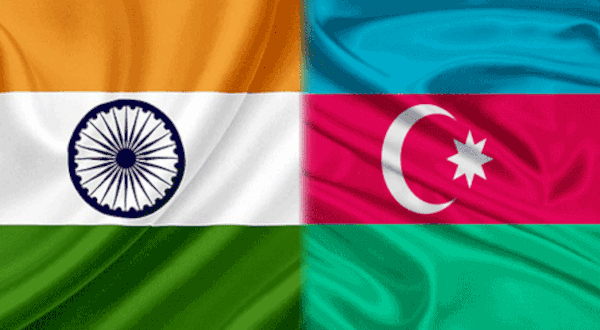
India and Azerbaijan have agreed to expand cooperation in security, trade, investment, energy and regional connectivity following high-level diplomatic discussions in Baku on 23 October 2026. External Affairs Minister Dr. S. Jaishankar held talks with Azerbaijani President Ilham Aliyev and Foreign Minister Jeyhun Bayramov, reviewing bilateral relations and identifying opportunities for strengthening political and economic engagement between the two countries.
The discussions covered cross-border terrorism, regional security challenges, energy investments, international transport corridors and developments in the South Caucasus. Both countries expressed their interest in strengthening bilateral consultations and promoting greater economic cooperation while maintaining dialogue on regional and international issues.
Addressing the media after the meetings, Jaishankar described the discussions as productive and forward-looking. He said the two countries had identified opportunities to strengthen their relationship through greater economic engagement, improved connectivity and expanded cooperation in areas of mutual interest. The visit also provided an opportunity to build on recent diplomatic exchanges and establish a framework for continued dialogue.
Jaishankar Meets Azerbaijani President Ilham Aliyev in Baku
External Affairs Minister S. Jaishankar began his official visit to Azerbaijan with a meeting with President Ilham Aliyev in Baku. During the interaction, he conveyed greetings from President Droupadi Murmu and Prime Minister Narendra Modi and discussed opportunities for strengthening relations between India and Azerbaijan.
The meeting covered the bilateral relationship and important regional and global developments. Both sides examined areas where cooperation could expand, particularly in trade, investment, energy and international connectivity. Jaishankar emphasised that India and Azerbaijan are independent-minded nations that make their own decisions on major international issues.
The discussions also reflected the importance of maintaining direct diplomatic engagement between New Delhi and Baku. The two countries have longstanding cultural connections and growing economic interests, particularly in the energy and transportation sectors. Their geographical positions also provide opportunities for cooperation involving trade routes connecting South Asia, Central Asia and Europe.
Jaishankar’s meeting with President Aliyev followed earlier interactions between the leadership of the two countries. The latest engagement was intended to strengthen communication and support further development of bilateral relations.
India and Azerbaijan Review Cross-Border Terrorism and Security Challenges
Security cooperation formed an important component of the discussions between Jaishankar and Azerbaijani Foreign Minister Jeyhun Bayramov. The two ministers exchanged views on cross-border terrorism, regional instability and common security challenges affecting their countries and the wider international community.
Ministry of External Affairs spokesperson Randhir Jaiswal confirmed that the ministers discussed security issues, terrorism and threats that require greater international cooperation. Both countries agreed to work towards promoting peace, prosperity and security while addressing shared challenges through continued engagement.
India has consistently emphasised the importance of combating terrorism and preventing cross-border threats. The discussions in Baku provided another diplomatic platform for communicating these concerns and examining areas where international cooperation could contribute to regional stability.
The ministers also considered broader security developments affecting Eurasia and West Asia. These regions have experienced significant geopolitical tensions, creating challenges for international trade, energy supplies and economic stability. Both sides recognised that prolonged conflicts and instability can have consequences beyond the countries directly involved.
The discussions established a basis for further dialogue on security matters, although the publicly reported outcomes focused on political consultations and shared concerns rather than announcing a new bilateral security agreement.
Bilateral Trade and Investment Emerge as Important Priorities
Economic cooperation received considerable attention during the meeting between the two foreign ministers. India and Azerbaijan discussed opportunities to increase bilateral trade, encourage investment and expand commercial engagement between businesses in both countries.
Jaishankar highlighted the complementary nature of the Indian and Azerbaijani economies, observing that considerable scope exists for increasing trade and investment. Indian companies already operate in Azerbaijan across several sectors, and the two governments intend to encourage greater interaction between their business communities.
Azerbaijan offers opportunities for cooperation in energy, transportation, logistics and industrial development. India possesses considerable capabilities in pharmaceuticals, information technology, engineering, manufacturing and professional services. Greater commercial engagement could enable enterprises from both countries to explore partnerships across these sectors.
The ministers agreed to encourage exchanges of business and trade delegations as part of efforts to strengthen economic cooperation. Such interactions can help companies identify investment opportunities, establish commercial contacts and understand the regulatory and market conditions in each country.
The discussions also reflected the importance of translating political engagement into practical economic cooperation. Continued interaction between government agencies, industry representatives and investment institutions can provide a foundation for expanding bilateral commercial relations.
Energy Cooperation Remains a Major Pillar of Bilateral Relations
Energy cooperation occupies an important position in India-Azerbaijan economic relations because of Indian investments in Azerbaijan’s oil and gas industry. Azerbaijan is a significant energy producer in the Caspian region, while India is one of the world’s major energy-consuming economies.
ONGC Videsh Limited, the overseas investment arm of India’s Oil and Natural Gas Corporation, has established a presence in Azerbaijan’s energy sector. Its investments include participation in the Azeri-Chirag-Gunashli oilfields and the Baku-Tbilisi-Ceyhan pipeline, which transports crude oil from the Caspian region towards international markets.
These investments represent a substantial component of India’s economic engagement with Azerbaijan. They also demonstrate the importance of overseas energy partnerships in India’s broader strategy of maintaining diversified sources of energy supply and investment.
During the discussions in Baku, Jaishankar acknowledged the significance of existing Indian investments and expressed interest in exploring additional opportunities. Both sides agreed to examine ways of deepening energy cooperation while expanding their economic relationship into other sectors.
The continuation of energy-sector cooperation provides an established commercial foundation upon which India and Azerbaijan can develop wider investment and industrial partnerships.
International North-South Transport Corridor Receives Attention
Regional connectivity emerged as another important subject during the discussions. India and Azerbaijan examined opportunities for closer coordination on the International North-South Transport Corridor (INSTC), a multimodal transportation initiative intended to connect India with markets across Eurasia.
The corridor involves maritime, railway and road transportation networks linking the Indian Ocean region with Iran, the Caspian region, Russia and other Eurasian destinations. It is designed to provide additional trade routes and improve logistical connectivity between participating economies.
Azerbaijan occupies a strategically important geographical position within the western Caspian region. Its transport infrastructure can facilitate the movement of goods between Iran, Russia and other markets connected to wider Eurasian trade networks.
Jaishankar stated that India and Azerbaijan are both invested in the development of the International North-South Transport Corridor and agreed to strengthen coordination on the initiative. Improved cooperation could support trade connectivity and encourage greater use of existing and emerging transport infrastructure.
Azerbaijan also highlighted opportunities associated with its wider transportation network, including the Baku-Tbilisi-Kars railway, the Port of Baku and the Alat Free Economic Zone. These facilities contribute to the country’s ambition to serve as an important logistics and transit centre connecting different regions of Eurasia.
Direct Air Connectivity and Tourism Discussed
The two countries also examined opportunities to strengthen direct air connectivity and expand tourism. Regular air services between India and Azerbaijan have contributed to increasing travel for tourism, business and educational purposes.
Jaishankar acknowledged the availability of daily flights between the two countries and noted that additional connectivity could support the development of bilateral relations. Improved air links can make business travel more convenient, encourage tourism and facilitate interactions between educational and professional institutions.
Azerbaijan has emerged as a destination for Indian travellers interested in its historical architecture, cultural attractions and natural landscapes. Baku, the country’s capital, has become a prominent destination because of its combination of modern urban infrastructure and historic sites.
Greater tourism exchanges can also create opportunities for cooperation between airlines, travel operators, hospitality businesses and other service providers. The discussions indicated an interest in building on existing connectivity and exploring further opportunities as bilateral engagement develops.
People-to-people exchanges remain an important component of the relationship because they provide direct connections between societies beyond government-level interactions.
India Appreciates Azerbaijan’s Assistance to Indian Nationals
During his visit, Jaishankar thanked the Azerbaijani government for assisting Indian nationals, particularly students, during evacuation operations from Iran amid regional hostilities earlier in 2026.
Azerbaijan’s geographical position and transport connections made it an important transit location for people travelling out of the affected region. Cooperation between diplomatic authorities helped facilitate the movement of Indian citizens during a challenging security situation.
The External Affairs Minister acknowledged this assistance as an example of practical cooperation between the two countries. Such coordination illustrates the importance of maintaining dependable diplomatic and consular channels, particularly during emergencies affecting citizens abroad.
The discussions also addressed educational exchanges and opportunities for strengthening institutional relationships. Jaishankar encouraged Azerbaijan to resume and expand participation in India’s Indian Technical and Economic Cooperation programme, which provides training and professional development opportunities to participants from partner countries.
Greater engagement through educational institutions and professional training programmes could support long-term cooperation by developing stronger connections between specialists, students and administrators from both countries.
India Welcomes Azerbaijan-Armenia Peace Efforts
The discussions included developments in the South Caucasus, particularly the peace process between Azerbaijan and Armenia. Jaishankar welcomed the peace agreement reached between the two countries in August 2025 and expressed hope that it would contribute to durable peace in the region.
India reiterated its longstanding position that international disputes should be resolved through dialogue and diplomacy. The External Affairs Minister emphasised the importance of peaceful engagement and regional stability in addressing longstanding disagreements.
Azerbaijani Foreign Minister Jeyhun Bayramov briefed the Indian delegation on developments concerning relations with Armenia, confidence-building measures and ongoing efforts towards normalisation. The Azerbaijani side also discussed reconstruction activities and the challenges associated with landmines in affected territories.
Stability in the South Caucasus carries implications for regional transportation, energy infrastructure and international trade. The region occupies an important geographical position between the Caspian and Black Seas, making peaceful relations relevant to broader connectivity initiatives.
India’s engagement with Azerbaijan on these developments forms part of its wider diplomatic interest in supporting peaceful conflict resolution and maintaining constructive relations with countries across Eurasia.
Regional Conflicts and Their Impact on the Global South
Jaishankar and Bayramov also exchanged views on developments in West Asia, Europe and Eurasia, including the wider economic consequences of continuing international conflicts.
The External Affairs Minister highlighted the challenges that geopolitical instability creates for developing economies. Disruptions in energy markets, transportation networks and international trade can affect the availability and cost of essential commodities.
Jaishankar drew attention to the consequences for food, fuel, fertiliser and finance, areas that have particular importance for countries of the Global South. Rising costs and uncertain supply chains can create additional economic pressures for nations dependent on international markets.
Both ministers recognised the importance of promoting peace and stability through diplomatic engagement. They also discussed the need for international institutions to remain responsive to changing global conditions and emerging challenges.
The discussions reflected a shared interest in strengthening international cooperation while maintaining dialogue on issues affecting economic development and regional security.
Cooperation Through International and Regional Organisations
India and Azerbaijan also reviewed cooperation through multilateral institutions, including the United Nations, the Shanghai Cooperation Organisation and the Conference on Interaction and Confidence Building Measures in Asia (CICA).
Both countries participate in regional and international diplomatic forums that address security, economic cooperation and political dialogue. These platforms provide opportunities to exchange views on regional developments and contribute to discussions concerning international stability.
India has participated in CICA activities since the organisation’s early development and regards it as a forum for promoting dialogue and confidence-building across Asia. Azerbaijan currently plays an important role in the organisation through its chairship.
Jaishankar referred to India’s recent participation in the seventh CICA Summit in Baku and acknowledged Azerbaijan’s contribution to the organisation’s activities. The discussions also covered the importance of reforming and strengthening international institutions to reflect contemporary geopolitical and economic circumstances.
Continued cooperation through these organisations can complement bilateral diplomatic engagement and provide additional opportunities for coordination on matters of shared interest.
Foreign Office Consultations Provide Framework for Engagement
The latest visit builds on diplomatic discussions conducted earlier in 2026. On 3 April, Secretary (West) in India’s Ministry of External Affairs, Sibi George, visited Azerbaijan for the sixth round of India-Azerbaijan Foreign Office Consultations.
The consultations covered bilateral relations, trade, energy, technology, tourism, pharmaceuticals, cultural cooperation and regional security. They also provided an opportunity to discuss issues on which the two countries held differing positions.
Both sides recognised the importance of maintaining political dialogue and strengthening institutional mechanisms for bilateral cooperation. Such consultations allow officials to review ongoing initiatives, identify challenges and prepare the groundwork for higher-level diplomatic engagement.
The October visit provided an opportunity to advance several subjects examined during the earlier consultations. Jaishankar expressed hope that additional bilateral mechanisms would meet in the coming months to sustain progress across different sectors.
He also invited Azerbaijani Foreign Minister Jeyhun Bayramov to visit India, indicating an intention to maintain high-level diplomatic exchanges.
Expanding India-Azerbaijan Relations Through Practical Cooperation
The meetings in Baku represent an effort by India and Azerbaijan to strengthen their relationship through sustained diplomatic engagement and practical economic cooperation.
Trade, investment, energy and connectivity provide established areas for collaboration, while tourism, education and professional exchanges offer opportunities to develop stronger links between their societies. Both countries have also demonstrated an interest in maintaining dialogue on regional security and international developments.
The discussions established priorities for further engagement rather than announcing a comprehensive new economic or security agreement. Their implementation will depend on continued interaction between government institutions, business organisations and other participating agencies.
The decision to deepen political consultations, encourage commercial exchanges and strengthen coordination on regional connectivity provides a framework for advancing bilateral cooperation.
By building on existing energy investments and expanding cooperation into additional sectors, India and Azerbaijan have an opportunity to develop a broader economic relationship. Continued diplomatic dialogue will support this process while helping both countries address regional challenges and strengthen their engagement across the wider Eurasian region.
References
- Ministry of Foreign Affairs, Republic of Azerbaijan, 23 October 2026. Press Release No. 410/26: Meeting of Foreign Minister Jeyhun Bayramov with Indian External Affairs Minister Subrahmanyam Jaishankar.
https://mfa.gov.az/az/news/no41026 - Akashvani News (News on AIR), 24 October 2026. India, Azerbaijan Agree to Strengthen Security and Economic Cooperation.
https://newsonair.gov.in/india-azerbaijan-agree-to-strengthen-security-and-economic-cooperation/ - DD India, 23 October 2026. EAM Jaishankar Holds Talks with Azerbaijan Leadership to Deepen Bilateral Ties.
https://ddindia.co.in/2026/10/eam-jaishankar-holds-talks-with-azerbaijan-leadership-to-deepen-bilateral-ties/ - Akashvani News (News on AIR), 23 October 2026. India and Azerbaijan Discuss Important Regional and Global Developments from Strategic Perspective.
https://newsonair.gov.in/india-and-azerbaijan-discuss-important-regional-and-global-developments-from-strategic-perspective/ - Ministry of Foreign Affairs, Republic of Azerbaijan, 3 April 2026. Press Release on the Meeting of Foreign Minister Jeyhun Bayramov with India’s Secretary (West), Sibi George.
https://www.mfa.gov.az/index.php/en/news/no13926 - Ministry of Foreign Affairs, Republic of Azerbaijan, 1 April 2026. Meeting of Foreign Minister Jeyhun Bayramov with Indian Ambassador Abhay Kumar.
https://mfa.gov.az/index.php/en/news/no13526
You may also like
-
Jaishankar Meets Azerbaijan President Ilham Aliyev in Baku, Discusses Trade, Technology and Strategic Cooperation
-
Piyush Goyal Holds High-Level Talks in Berlin to Strengthen India–Germany Trade, Investment and Industrial Cooperation
-
Indian Navy to Host Indo-Pacific Regional Dialogue 2026 with Experts from 18 Countries on Maritime Science and Technology
-
Russia Ratifies Temporary Employment Agreement with India, Expanding Opportunities for Skilled Workers
-
Indian Navy’s First Training Squadron Arrives in Maldives, Strengthening Maritime Defence Cooperation
