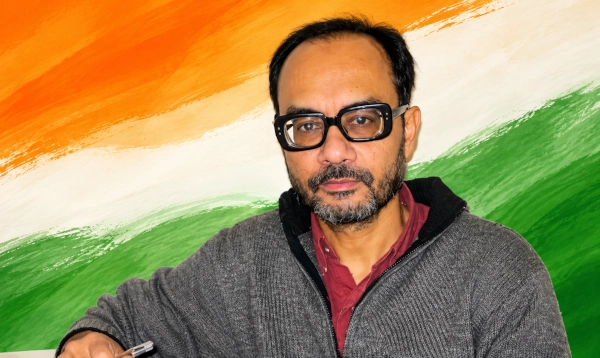
Renowned Indian theoretical physicist Professor Ashoke Sen has become the first Indian recipient of the prestigious Oskar Klein Medal, receiving the 2026 honour for his pioneering contributions to string theory, black-hole physics and the fundamental understanding of gravity. The international recognition celebrates his decades of research into some of the most challenging questions concerning the nature of matter, space, time and the universe.
Professor Sen, who holds the ICTS-Infosys Madhava Chair at the International Centre for Theoretical Sciences (ICTS) in Bengaluru, has played an influential role in developing the mathematical foundations of modern string theory. His research has helped scientists understand connections between different theoretical descriptions of fundamental physical phenomena. He has also contributed extensively to the study of black-hole entropy and the quantum properties of gravity.
The International Centre for Theoretical Sciences, a centre of the Tata Institute of Fundamental Research (TIFR), announced the recognition on 22 October 2026. Professor Sen delivered the Oskar Klein Memorial Lecture at Stockholm University’s AlbaNova Centre in Sweden on the same day. His selection places him among distinguished theoretical physicists previously honoured with the medal, including Stephen Hawking, Peter Higgs, Steven Weinberg and Chen-Ning Yang.
Oskar Klein Medal Recognises Excellence in Theoretical Physics
The Oskar Klein Medal was established in 1988 to commemorate Swedish theoretical physicist Oskar Klein, whose scientific contributions helped advance quantum theory, particle physics and the mathematical understanding of gravity. Klein is particularly remembered for his role in developing Kaluza-Klein theory, which explores the possibility of additional spatial dimensions beyond those experienced in everyday life.
The annual distinction honours researchers whose work has made exceptional contributions to theoretical physics. The award is associated with Stockholm University and the Nobel Committee for Physics of the Royal Swedish Academy of Sciences. Recipients traditionally deliver the Oskar Klein Memorial Lecture, presenting their scientific research and discussing important developments in fundamental physics.
The medal’s earlier recipients include several Nobel laureates and internationally recognised scientists. Chen-Ning Yang received the inaugural award in 1988, followed by Steven Weinberg in 1989 and Hans Bethe in 1990. Later recipients include Stephen Hawking, Peter Higgs and Kip Thorne, whose research substantially advanced modern understanding of cosmology, particle physics and gravitation. Professor Sen’s inclusion in this distinguished group reflects the international influence of his work in string theory and quantum gravity.
Ashoke Sen’s Contributions to String Theory
Professor Sen is widely recognised for his research into string theory, a mathematical framework that attempts to describe the fundamental constituents of nature and the forces governing their interactions. Unlike conventional particle physics, which treats elementary particles as point-like objects, string theory proposes that fundamental particles may arise from different vibrational states of extremely small, one-dimensional strings.
This theoretical approach offers a possible way to reconcile quantum mechanics with Einstein’s general theory of relativity. Quantum mechanics successfully describes the behaviour of matter and energy at microscopic scales, while general relativity explains gravity through the curvature of spacetime. Developing a consistent theoretical framework incorporating both descriptions remains one of the central challenges of modern physics.
Professor Sen’s research has contributed to understanding how different mathematical formulations of string theory may describe related aspects of the same underlying physical reality. His investigations have provided important insights into the behaviour of strings, their interactions and the mathematical relationships connecting apparently different theoretical systems. These contributions have influenced research into quantum gravity, black-hole physics and the fundamental structure of physical laws.
Although string theory remains an area of theoretical investigation without direct experimental confirmation, its mathematical developments have generated important connections with quantum field theory and other areas of fundamental physics. Professor Sen’s work has been central to several of these advances.
Pioneering Research on S-Duality
One of Professor Sen’s most influential achievements concerns S-duality, a mathematical relationship that connects physical theories operating under different interaction strengths. In theoretical physics, duality refers to situations in which two apparently different mathematical descriptions can represent equivalent physical phenomena.
S-duality is especially significant because it can relate a theory involving weak interactions to another description involving strong interactions. This relationship is valuable because mathematical calculations often become extremely difficult when interactions are strong. A dual description can sometimes transform a complicated problem into one that researchers can examine more effectively.
During the 1990s, Professor Sen developed important evidence supporting strong-weak coupling duality in string theory. His research demonstrated mathematical relationships that helped establish deeper connections between different string-theoretic frameworks. These results contributed to the growing understanding that several previously distinct string theories might represent different aspects of a more comprehensive theoretical structure.
The discoveries formed part of the developments associated with the second superstring revolution, which transformed the scientific understanding of string theory during the mid-1990s. Professor Sen’s contributions helped strengthen the mathematical foundations of this emerging framework and influenced subsequent investigations into fundamental interactions and quantum gravity.
Advancing the Understanding of Black-Hole Entropy
Professor Sen has also made major contributions to the study of black-hole entropy, an area of research connecting gravity, quantum mechanics and statistical physics. Black holes are regions of spacetime where gravity becomes so intense that light cannot escape beyond a boundary called the event horizon. Their properties provide scientists with opportunities to investigate physical laws under conditions that are difficult to reproduce experimentally.
Research by Jacob Bekenstein and Stephen Hawking established that black holes possess thermodynamic properties, including entropy and temperature. Black-hole entropy is related to the area of the event horizon rather than the volume enclosed by it. This discovery raised an important question concerning the microscopic origin of black-hole entropy and the quantum states responsible for its thermodynamic behaviour.
Professor Sen’s research has helped explain how microscopic quantum states associated with certain black holes can be counted using string-theoretic methods. His calculations have produced important agreements between microscopic descriptions and macroscopic gravitational predictions. These findings have strengthened the theoretical understanding of how gravity and quantum mechanics may be connected.
His investigations have also examined corrections to black-hole entropy beyond leading approximations, helping researchers test the mathematical consistency of theoretical models. Such work has contributed to a more precise understanding of black-hole thermodynamics and remains influential in contemporary quantum gravity research.
Important Discoveries in String Field Theory
Another area of Professor Sen’s scientific work involves string field theory, which provides mathematical methods for describing interactions and dynamical processes involving strings. The framework extends concepts from conventional quantum field theory and allows researchers to investigate aspects of string theory that may be difficult to understand through simpler mathematical approaches.
Professor Sen made influential contributions to the study of tachyon condensation, a process associated with unstable configurations in string theory. In certain theoretical models, the presence of a tachyonic mode indicates that a system is unstable and can evolve towards a more stable configuration. Understanding this process is important for describing the behaviour and transformation of unstable objects within string theory.
His research on unstable D-branes helped establish a clearer mathematical description of how such configurations can decay or disappear. D-branes are mathematical objects that play an important role in string theory, particularly in describing the behaviour of open strings and certain non-perturbative phenomena.
These investigations provided new insights into string dynamics and contributed to the development of methods for studying theoretical systems beyond conventional approximation techniques. Professor Sen’s work continues to influence research into the mathematical consistency and physical implications of string theory.
Professor Sen Delivers Oskar Klein Memorial Lecture in Stockholm
Professor Sen delivered the 2026 Oskar Klein Memorial Lecture, titled “Gravity from Strings and Strings from Gravity,” at Stockholm University’s AlbaNova Centre on 22 October 2026. The lecture explored the mathematical relationship between gravity and string theory, examining how each provides insights into the theoretical structure of the other.
During the lecture, Professor Sen discussed the role of string theory in developing a consistent quantum description of gravity. He also examined the significance of black-hole research in understanding the relationship between quantum mechanics and gravitational phenomena. These subjects remain central to efforts aimed at developing a more complete theoretical description of the universe.
The lecture addressed the string landscape, which refers to the large number of mathematically possible configurations that can emerge within string theory. This feature creates challenges when researchers attempt to derive unique predictions about the physical universe. However, investigations into black-hole properties and quantum gravitational effects continue to provide valuable opportunities to examine the internal consistency of theoretical models.
The Oskar Klein Memorial Lecture series provides an international platform for researchers whose discoveries have influenced fundamental physics. Professor Sen’s participation highlighted both his scientific achievements and India’s contribution to advanced theoretical research.
Academic Journey and Research Career
Professor Ashoke Sen began his academic journey in India, studying at Presidency College in Kolkata and the University of Calcutta before pursuing doctoral research in the United States. He completed his PhD in physics at the State University of New York at Stony Brook in 1982, establishing the foundation for a research career focused on fundamental theoretical physics.
Over the following decades, he worked at prominent research institutions in India and abroad. His academic associations include the Tata Institute of Fundamental Research and the Harish-Chandra Research Institute in Prayagraj. He has also maintained research connections with international scientific institutions, contributing to collaborations and developments in string theory.
Professor Sen currently holds the ICTS-Infosys Madhava Chair at the International Centre for Theoretical Sciences in Bengaluru. His continuing research addresses fundamental questions involving string theory, quantum gravity and black-hole physics. Through his academic work and interactions with younger researchers, he has contributed to the development of theoretical physics within India’s scientific community.
His career demonstrates the important role of sustained mathematical research and international collaboration in addressing scientific problems that require decades of investigation. The recognition through the Oskar Klein Medal represents another milestone in a career distinguished by influential theoretical discoveries.
International Centre for Theoretical Sciences and India’s Research Ecosystem
The International Centre for Theoretical Sciences is a research centre of the Tata Institute of Fundamental Research, operating in Bengaluru. It promotes advanced investigations in theoretical physics, mathematics and related scientific disciplines while facilitating interactions between researchers from India and other countries.
ICTS organises research programmes, scientific workshops and academic meetings that bring together specialists working on major questions in fundamental science. These activities support the exchange of scientific ideas and provide opportunities for younger researchers to engage with leading experts.
Professor Sen’s association with the institution strengthens its research capabilities in string theory and quantum gravity. His international recognition also draws attention to the contributions of Indian institutions engaged in fundamental scientific investigation.
The development of advanced theoretical research requires sustained institutional support, specialised academic training and access to international scientific networks. Organisations such as ICTS provide an environment in which researchers can pursue challenging mathematical and physical questions over extended periods.
The Oskar Klein Medal recognition highlights the achievements that can emerge from such research environments and reinforces the importance of maintaining strong institutions devoted to fundamental science.
Earlier Honours Include Breakthrough Prize and Dirac Medal
Professor Sen has received numerous national and international honours recognising his contributions to theoretical physics. In 2012, he received the inaugural Breakthrough Prize in Fundamental Physics for his research into string theory and its underlying mathematical structure. The award recognised discoveries that helped establish important relationships between different theoretical descriptions of fundamental interactions.
In 2014, he received the Dirac Medal, an international distinction associated with major achievements in theoretical physics. His earlier honours include the ICTP Prize in 1989, the Shanti Swarup Bhatnagar Prize in 1994 and the Infosys Prize in Mathematical Sciences in 2009.
The Government of India recognised his scientific achievements with the Padma Shri in 2001 and the Padma Bhushan in 2013. Professor Sen was also elected a Fellow of the Royal Society in 1998, reflecting the international recognition of his contributions to fundamental physics.
In April 2026, he was elected an International Honorary Member of the American Academy of Arts and Sciences. These honours reflect the sustained influence of his work across several decades and the importance of his contributions to modern theoretical physics.
Significance for India’s Scientific Research
Professor Sen’s achievement highlights the role of fundamental research in India’s scientific development. Theoretical physics investigates the mathematical principles governing natural phenomena, often without immediate technological applications. Such research seeks to establish deeper explanations of matter, energy, space, time and the forces operating throughout the universe.
Many important developments in science have emerged from investigations that initially appeared distant from practical applications. Research into quantum mechanics, relativity and electromagnetic theory eventually contributed to technologies that transformed communication, computing and modern industry. Theoretical investigations therefore remain an important part of the wider scientific ecosystem, even when their long-term applications cannot be predicted.
String theory and quantum gravity continue to address unresolved questions concerning the relationship between gravity and microscopic physical laws. Although researchers have developed sophisticated mathematical frameworks, a complete experimentally verified theory of quantum gravity has not yet emerged. Continued investigation requires advanced mathematical expertise, sustained funding and collaboration across scientific disciplines.
Indian researchers have made important contributions to these areas through institutions such as ICTS, TIFR and the Harish-Chandra Research Institute. Professor Sen’s international recognition demonstrates the ability of Indian scientific institutions and researchers to contribute to fundamental questions at the frontiers of modern physics.
A Historic Achievement for Indian Theoretical Physics
The award of the 2026 Oskar Klein Medal to Professor Ashoke Sen represents an important recognition of India’s contribution to international theoretical physics. His research has advanced the mathematical understanding of string theory, strengthened the theoretical description of black-hole entropy and revealed important relationships between different formulations of fundamental physical laws.
The honour also celebrates a scientific career built upon sustained research, intellectual curiosity and mathematical innovation. Professor Sen’s discoveries have influenced generations of researchers investigating quantum gravity and the fundamental structure of the universe.
His achievements underline the importance of supporting advanced research institutions and providing opportunities for young scientists to pursue challenging questions in fundamental science. They also demonstrate how researchers working within India’s academic institutions can make contributions recognised across the international scientific community.
As Professor Sen continues his work at the International Centre for Theoretical Sciences, his recognition through the Oskar Klein Medal adds another distinguished chapter to India’s scientific achievements and strengthens the country’s presence in the global pursuit of fundamental knowledge.
References
- International Centre for Theoretical Sciences (ICTS–TIFR), 22 October 2026. Ashoke Sen Awarded Prestigious Oskar Klein Medal.
https://www.icts.res.in/news/ashoke-sen-awarded-prestigious-oskar-klein-medal - Stockholm University, 22 October 2026. Gravity from Strings and Strings from Gravity – Oskar Klein Memorial Lecture 2026.
https://indico.fysik.su.se/event/9785/ - Stockholm University, Oskar Klein Centre. Past Oskar Klein Memorial Lectures.
https://www.okc.albanova.se/english/divisions/oskar-klein-centre/about-the-okc/past-oskar-klein-memorial-lectures - International Centre for Theoretical Sciences, 24 April 2026. Ashoke Sen Elected to American Academy of Arts and Sciences.
https://icts.res.in/news/ashoke-sen-elected-american-academy-arts-and-sciences - Akashvani News (News on AIR), 24 October 2026. Professor Ashoke Sen Becomes First Indian to Receive Oskar Klein Medal.
https://newsonair.gov.in/professor-ashoke-sen-becomes-first-indian-to-receive-oskar-klein-medal/ - International Centre for Theoretical Sciences, Faculty Profile. Professor Ashoke Sen.
https://www.icts.res.in/people/ashoke-sen
You may also like
-
Indian Army’s Northern Command Opens 75-Day Defence Technology Internship Programme for Young Innovators
-
Ayush Patent Filings Rise Eightfold as India Records 4,077 Applications and 711 Grants in 12 Years
-
DRDO Announces Paid Research Internships at Gwalior for Science and Engineering Students
-
PM-SETU: Government Approves ₹1,194.92 Crore to Modernise 25 ITIs Across Maharashtra, Odisha and Jammu & Kashmir
-
Indian Railways Announces 3,548 NTPC Graduate Vacancies, Applications Open Until November 6, 2026
