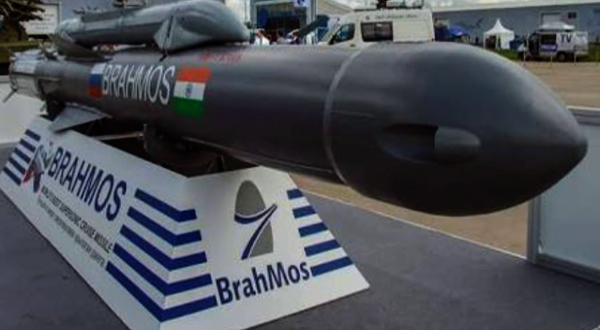
India’s annual defence production reached a record ₹1.78 lakh crore in FY2025–26, marking the highest value ever recorded by the country’s defence manufacturing sector.
The figure represents a 15.6% increase over FY2024–25, when defence production stood at approximately ₹1.54 lakh crore. Compared with FY2020–21, when production was valued at ₹84,643 crore, the sector has more than doubled in five years.
Public Sector Retains Dominant Share
Defence Public Sector Undertakings and other public-sector entities continued to account for the majority of production during FY2025–26.
Public-sector manufacturers contributed approximately 76% of total defence production, while the private sector accounted for the remaining 24%.
The composition reflects the continued importance of established public-sector manufacturers in major defence programmes while also showing the growing presence of private companies across aerospace, electronics, ammunition, armoured systems, shipbuilding and other defence segments.
Private-Sector Defence Production Reaches Record Level
Private-sector defence production rose to an all-time high of around ₹42,000 crore during FY2025–26.
This expansion reflects the increasing participation of Indian private companies in both large defence programmes and specialised subsystem manufacturing.
Private firms are now contributing across areas such as unmanned systems, missiles, communications equipment, electronic warfare, aerospace structures, propulsion systems, precision engineering and naval technologies.
The growth of the private sector has also been supported by procurement reforms, Make in India programmes, indigenisation initiatives and greater involvement of domestic companies in supply chains traditionally dominated by public-sector manufacturers.
Defence Production More Than Doubles in Five Years
The rise from ₹84,643 crore in FY2020–21 to ₹1.78 lakh crore in FY2025–26 represents an increase of roughly 110%.
This growth has been driven by higher domestic procurement, expansion of indigenous manufacturing programmes and the localisation of systems and components previously imported from overseas suppliers.
Large acquisition programmes for aircraft, missiles, warships, artillery systems, radars, armoured vehicles and electronic systems have also contributed to the expansion of domestic production.
Indigenisation Expands Across Defence Platforms
India’s defence manufacturing strategy has increasingly focused on building domestic capability not only for complete platforms but also for engines, sensors, avionics, electronic warfare systems, weapons, propulsion equipment and other critical subsystems.
The Ministry of Defence has progressively introduced positive indigenisation lists covering thousands of items that are intended to be sourced from Indian manufacturers instead of foreign suppliers.
This approach has created opportunities for public-sector companies, established private manufacturers, MSMEs and defence startups to participate in a wider range of programmes.
Defence Exports Also Reach Record High
The increase in domestic production has been accompanied by a sharp rise in defence exports.
India recorded ₹38,424 crore in defence exports during FY2025–26, the highest annual figure achieved so far.
Indian defence equipment is now being supplied to a growing number of overseas markets, with exports covering platforms, ammunition, electronic systems, naval equipment, components and other defence products.
The combination of higher domestic production and rising exports indicates that India’s defence industrial base is expanding beyond its traditional role of supplying the domestic armed forces.
Government Targets ₹3 Lakh Crore Production by 2029
The Government has set a target of increasing annual defence production to ₹3 lakh crore by 2029.
It has also set a defence export target of ₹50,000 crore, requiring continued expansion of manufacturing capacity, localisation and international market access.
Achieving these targets will depend on sustained orders from the armed forces, higher private-sector participation, faster development of indigenous technologies and stronger integration of Indian companies into global defence supply chains.
Defence Manufacturing Base Continues to Broaden
The record FY2025–26 production figure shows the increasing scale of India’s defence manufacturing ecosystem.
Public-sector companies remain the largest contributors, but the rise of the private sector to a 24% share marks an important structural change in the industry.
With domestic production now approaching ₹1.8 lakh crore annually and exports continuing to rise, India’s defence industrial base is moving towards a broader model in which public-sector manufacturers, private companies, MSMEs and technology startups increasingly operate within the same production ecosystem.
References
Press Information Bureau, Ministry of Defence, Government of India — Official release on record defence production in FY2025–26, June 17, 2026.
Ministry of Defence, Government of India — Official data on defence production, indigenisation and private-sector participation.
Press Information Bureau, Government of India — Official release on record defence exports during FY2025–26.
You may also like
-
Hindustan Shipyard Docks Three Vessels Simultaneously in Precision Engineering Milestone
-
BCCL Dispatches First Rake From 5-MTPA Maheshpur Rapid Loading System
-
NPCIL Begins Fuel Loading at RAPP-8 as India’s Fourth Indigenous 700 MWe PHWR Moves Towards Commissioning
-
INS Sahyadri and INS Kulish Reach Philippines for ADMM-Plus Maritime Cooperation
-
FUJIFILM India Dedicates First Serial-Numbered Made-in-India Endoscopy System Through AIIMS New Delhi
