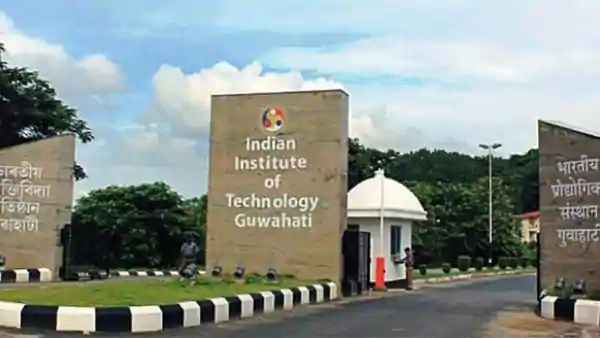
Researchers at the Indian Institute of Technology Guwahati have developed a biological process capable of degrading 98.5 per cent of a persistent textile dye, offering a possible route towards safer and less chemically intensive treatment of industrial wastewater.
The research uses a newly isolated bacterium, Brevundimonas sp. AJZ05, to break down Direct Blue-6, a synthetic azo dye that is difficult to remove through many conventional wastewater-treatment methods.
The team went beyond measuring the disappearance of colour from contaminated water. It also examined the chemical products created when the bacterium degraded the dye and assessed their toxicity. According to IIT Guwahati, the resulting degradation products were found to be non-toxic following bacterial treatment, an important distinction because decolourising wastewater does not necessarily mean that the original pollutants have been rendered harmless.
The work was carried out by researchers from IIT Guwahati in collaboration with the Department of Chemical Engineering and Technology at IIT (BHU), Varanasi, and was supported by the Ministry of Education through the Prime Minister’s Research Fellowship.
Why Azo Dyes Are Difficult to Treat
Azo dyes are widely used by textile and other colour-intensive industries because they produce strong, stable colours that can withstand processing and washing.
That stability also creates an environmental problem.
The dyes contain one or more characteristic azo bonds, represented chemically as –N=N–, which contribute to both their colour and resistance to degradation. When untreated or insufficiently treated wastewater containing these compounds enters rivers or other water bodies, the dyes can persist for extended periods.
Their presence can reduce the penetration of light into water and interfere with aquatic ecosystems. Depending on the compound and its breakdown products, textile dyes can also raise wider environmental and health concerns.
Conventional wastewater-treatment approaches can involve chemical oxidation, coagulation, adsorption and other physicochemical processes. While these methods can be effective, some require substantial quantities of chemicals or energy and may generate additional sludge or secondary waste that itself needs to be managed.
The IIT Guwahati researchers therefore examined whether naturally occurring microorganisms could provide another way of attacking the chemical structure of persistent azo dyes.
Bacterium Isolated From Textile Effluent Site
The researchers isolated Brevundimonas sp. AJZ05 from a textile-effluent discharge environment, meaning the microorganism had already been exposed to conditions associated with dye-contaminated wastewater.
The bacterium was found to produce an enzyme called azoreductase.
Azoreductase can attack the azo bond responsible for the characteristic colour and stability of azo dyes. Breaking this bond is an important step in dismantling the larger dye molecule and converting it into simpler compounds.
The researchers then used a statistical optimisation technique known as Response Surface Methodology to identify conditions under which the bacterium could simultaneously maximise dye degradation and azoreductase production.
Under the optimised conditions, Brevundimonas sp. AJZ05 achieved 98.50 per cent degradation of Direct Blue-6, while azoreductase activity reached 0.761 units per millilitre.
Researchers Checked What Was Left Behind
One of the more significant aspects of the study was the decision to investigate what happened to the dye after treatment.
Wastewater can appear considerably cleaner once its colour disappears, but that visual improvement alone does not establish that the resulting compounds are safe.
Researchers therefore analysed the metabolites created during biodegradation and carried out toxicity assessments on the treated material.
IIT Guwahati said these tests indicated that the degradation products were non-toxic after bacterial treatment.
The finding suggests that the bacterium was doing more than merely altering the visible appearance of the water. It was breaking the dye down into compounds that were significantly safer than the original contaminant.
This is an important requirement for any biological wastewater-treatment system intended for eventual industrial use.
Bacterium Also Tolerates Metal Ions
Industrial wastewater rarely contains only one contaminant.
Textile effluent can include salts, metals, processing chemicals and other compounds introduced during dyeing, washing and finishing operations. A biological treatment process that works only in highly controlled laboratory water may therefore perform poorly when exposed to actual industrial effluent.
The researchers found that Brevundimonas sp. AJZ05 showed tolerance to several metal ions, which could improve its ability to survive in more complicated wastewater environments.
IIT Guwahati considers this characteristic particularly useful because it may allow the microorganism to function under conditions closer to those encountered in real textile-treatment plants.
The result does not yet establish that the bacterial system can treat every type of textile wastewater, since actual effluent composition varies significantly between factories. It does, however, provide an encouraging basis for testing the organism under progressively more realistic conditions.
Next Step Is a Continuous Treatment System
The research remains at the laboratory stage, but the team has already identified the next phase needed to move towards practical application.
Researchers are working on immobilising the bacterium within a suitable support material.
Immobilisation allows microorganisms to remain confined within a treatment system rather than being washed away with wastewater. It can improve bacterial stability, enable repeated use and make it easier to design a continuous-flow reactor suitable for industrial treatment.
The IIT Guwahati team ultimately wants to develop a continuous biological treatment system for azo-dye wastewater.
Such a system could allow contaminated water to pass through a reactor containing the immobilised microorganisms, where the dye would be progressively broken down before the treated water moves to the next stage of purification.
The long-term objective is to convert the laboratory findings into a process that can operate continuously and reliably at industrial scale.
Biological Treatment Could Complement Existing Plants
The technology does not necessarily have to replace existing wastewater-treatment systems.
A biological process based on specialised bacteria could instead be incorporated as one stage within a larger treatment plant.
For example, conventional methods could remove suspended solids and other pollutants while the bacterial stage specifically targets persistent azo dyes. Additional polishing and disinfection could then take place before the water is discharged or reused.
Such a hybrid approach could reduce the quantity of chemicals required to handle certain pollutants while improving the breakdown of compounds that are otherwise difficult to remove.
IIT Guwahati describes the technology as a potential alternative or complementary treatment to conventional chemical and physicochemical methods rather than claiming that it is already ready to replace existing industrial systems.
Potential Beyond Direct Blue-6
Direct Blue-6 served as the model pollutant in the present study, but the underlying mechanism may have wider relevance.
Because azoreductase attacks the azo bond shared by many synthetic dyes, the researchers believe the approach could eventually be investigated against other azo compounds found in industrial wastewater.
This would require separate testing because different dyes have different molecular structures and degradation pathways.
Nevertheless, a microbial platform capable of handling multiple persistent dyes would have considerable value for textile-processing regions where wastewater composition can vary substantially depending on the fabrics, chemicals and colours being used.
The broader objective is therefore not simply to develop a bacterium for one laboratory chemical but to establish a microbial treatment platform that can eventually be adapted for more complex industrial effluents.
From Laboratory Bacterium to Industrial Wastewater Treatment
The study is significant because textile pollution is not simply a question of removing colour from wastewater.
An effective treatment system must destroy or neutralise the underlying pollutant without creating another harmful chemical problem downstream.
By demonstrating 98.5 per cent degradation of Direct Blue-6 and showing that the resulting products were non-toxic after treatment, the IIT Guwahati team has addressed both sides of that problem in the laboratory.
The next challenge is considerably harder. The bacterium must maintain its performance when exposed continuously to real industrial effluent containing changing concentrations of dyes, salts, metals and other contaminants.
For now, the research establishes a promising foundation: a naturally sourced bacterium capable not merely of making polluted water look cleaner, but of breaking down one of its difficult contaminants into products shown to be non-toxic under the conditions tested.
You may also like
-
IIT Bombay Deploys Matsya 7 and Mini Matsya in Tandem at RoboSub 2026, Secures Two First-Place Honours
-
Bihar’s 700-Year-Old Banyan Becomes World’s Oldest Scientifically Dated Ficus benghalensis
-
West Bengal to Build ₹12-Crore Astro Park in Nadia and Regional Biotech Park in Kalimpong
-
IISc Researchers Design Selective Membranes to Recover Uranium From Seawater
-
Indian Scientists Show a Single Timed Operation Can Delay Quantum Entanglement Loss
