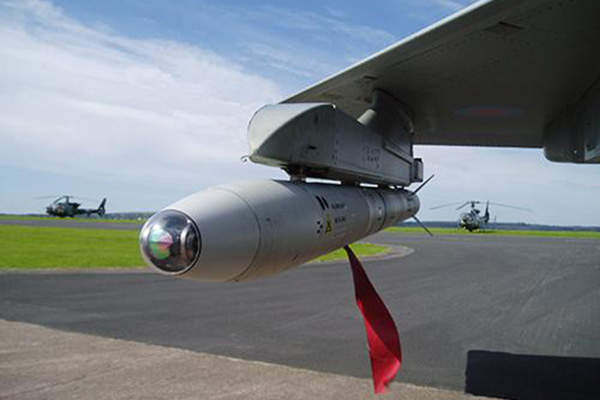
Bharat Dynamics Limited has confirmed that its facility for the final assembly, integration and testing of the ASRAAM short-range air-to-air missile is now fully operational, marking an important step in India’s effort to establish domestic production capability for advanced close-combat missiles.
The development has been disclosed in BDL’s newly released Annual Report for 2025–26, published in September 2026. The state-owned missile manufacturer lists the ASRAAM Final Assembly, Integration and Testing, or FAIT, facility among major infrastructure expansions that have become fully operational.
The facility is located at BDL’s Bhanur unit in Telangana and was formally inaugurated by Raksha Rajya Mantri Sanjay Seth on June 5, 2025. BDL has separately confirmed that the facility was established under its cooperation arrangement with European missile manufacturer MBDA and is intended to prepare ASRAAM missiles for the Indian Air Force.
From Agreement to Operational Production Infrastructure
BDL’s ASRAAM programme has been several years in the making. MBDA and Bharat Dynamics signed an agreement in 2019 to establish Indian final assembly, integration and testing capability for both ASRAAM and Mistral missiles. A subsequent licensing agreement gave BDL the ability to manufacture ASRAAM at Bhanur for the Indian requirement and potentially for future exports through MBDA.
The facility is more significant than a conventional missile assembly line because it creates domestic capability for the crucial final stages before a weapon can be delivered to an operational customer. These include integration, system-level checks and testing of completed missiles.
BDL has also said that the infrastructure has the potential to support maintenance, repair and overhaul of ASRAAM missiles, creating an indigenous lifecycle-support capability in addition to production. The original arrangement also envisaged the possibility of adapting the facility for other MBDA missile systems in the future.
ASRAAM Becoming Part of India’s Air-Combat Architecture
ASRAAM, or the Advanced Short Range Air-to-Air Missile, is an imaging-infrared-guided weapon designed primarily for close and within-visual-range air combat.
MBDA says the missile combines a low-drag aerodynamic design with a large-diameter rocket motor, giving it high speed and manoeuvrability. It supports both Lock-On-Before-Launch and Lock-On-After-Launch engagement modes and uses an imaging infrared seeker. MBDA lists its range as exceeding 25 kilometres, although operational engagement performance depends heavily on launch conditions and target geometry.
The Indian Air Force originally selected ASRAAM as its New Generation Close Combat Missile, with the Jaguar becoming the first Indian combat aircraft identified by MBDA for the weapon. The broader objective has been to establish a modern common short-range missile capability across a larger portion of the IAF’s fighter fleet.
That makes an operational Indian assembly and test line strategically important. As additional aircraft are equipped or planned for integration with the weapon, the IAF could eventually require a substantial inventory not only for frontline carriage but also for training, war reserves and replacement stocks.
Large Requirement Expected, but No 500-Missile Order Confirmed
Recent reports have suggested that the Indian Air Force could eventually require more than 500 locally assembled ASRAAM missiles. Such a requirement would be consistent with the scale of India’s fighter fleet and efforts to standardise modern close-combat weapons.
However, BDL has not announced a confirmed order for 500 or more ASRAAMs, and its 2025–26 Annual Report does not disclose such a contract. The figure should therefore be treated as an anticipated requirement or possible future procurement rather than an awarded order.
What BDL has officially confirmed is more significant in immediate industrial terms: the physical production infrastructure required to undertake ASRAAM final assembly, integration and testing in India is now operational.
Another Step Towards Missile Manufacturing Sovereignty
The ASRAAM facility fits into BDL’s broader expansion of Indian missile-production capacity. The company is simultaneously strengthening manufacturing infrastructure for surface-to-air missiles, air-to-air weapons, anti-tank missiles, underwater weapons and missile propellants.
For India, domestic ASRAAM assembly reduces reliance on completely built-up imports while creating Indian expertise in integration, testing and long-term support of a sophisticated Western air-to-air missile.
You may also like
-
India and Russia Move Into Titanium Sponge Production as Rosatom’s Giredmet Partners Hyderabad-Based ALT Metals
-
NRL’s World-First Bamboo 2G Ethanol Plant Produces Fuel, Moves Toward Commercial Operations
-
IAF Opens Race to Develop Indigenous High-Altitude Pseudo Satellite for Persistent Surveillance
-
DRDO’s Junput Missile Test Facility Back on Track as Bengal Clears 8.73-Acre Coastal Range
-
Pune-Based N3X Labs Flies Scaled WRATH Prototype as Autonomous Aerial Programme Moves Into Hardware Testing
